Written collaboratively by Adam Varenhorst, Philip Rozeboom, Amanda Bachmann, Bradley McManus, and Patrick Wagner.
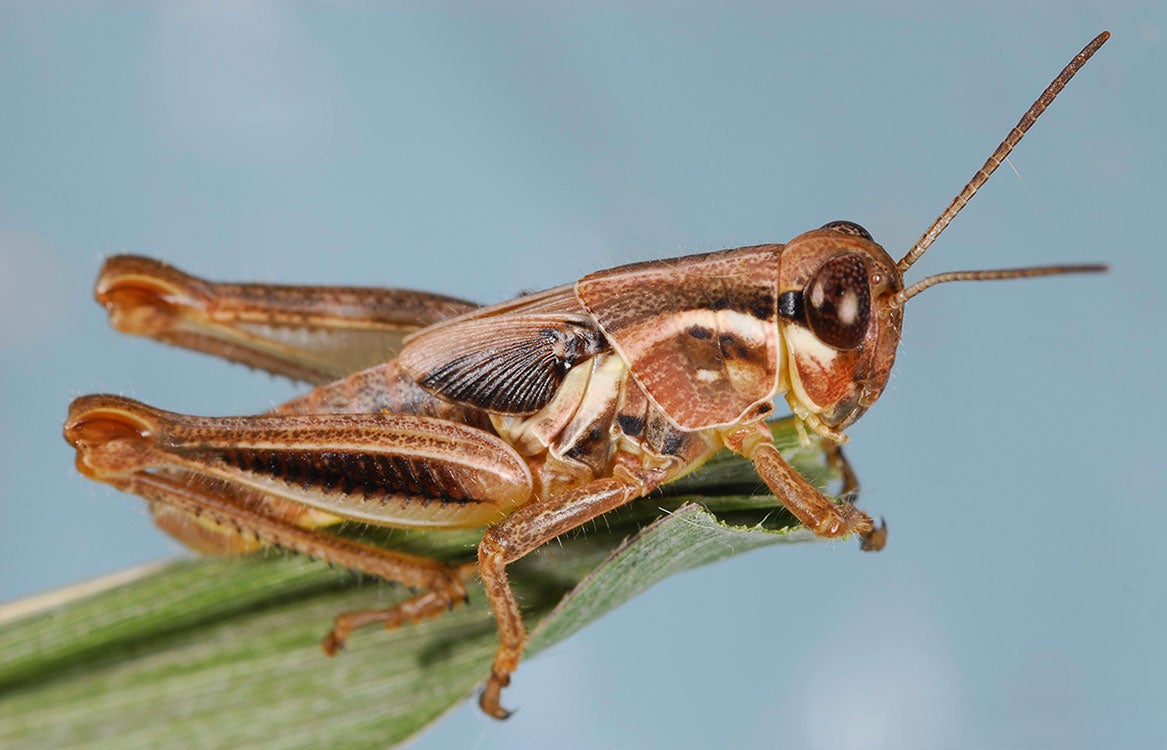
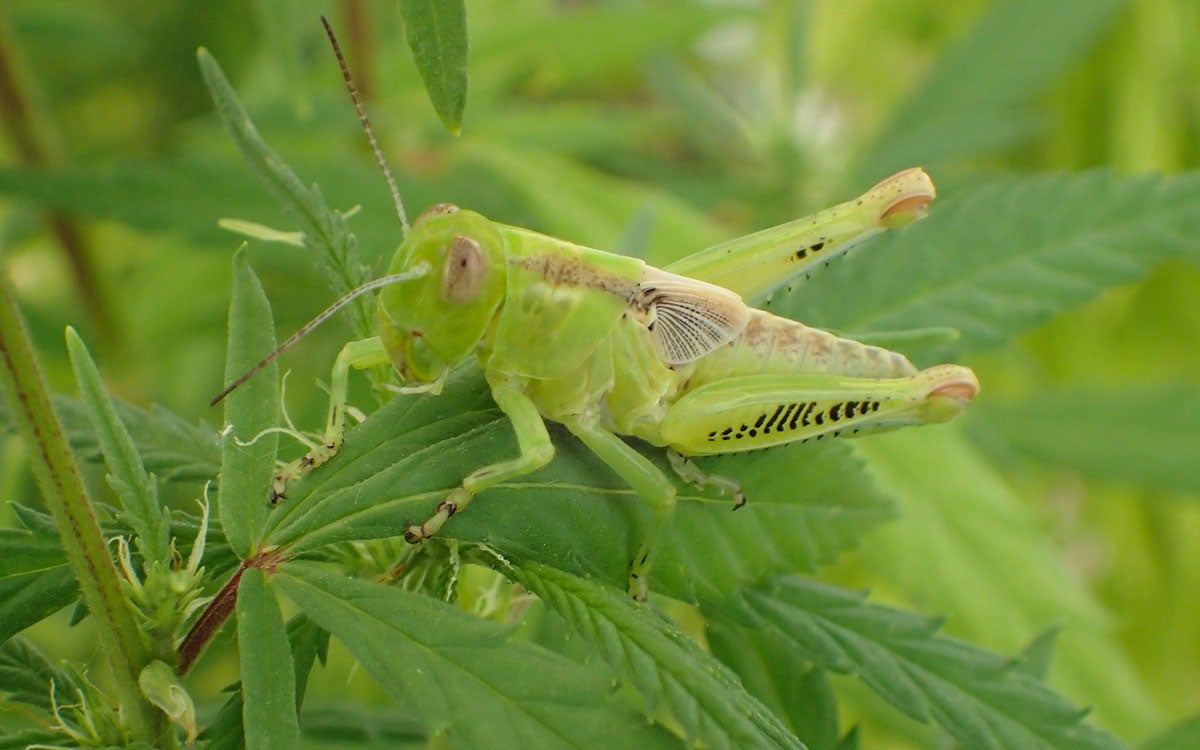
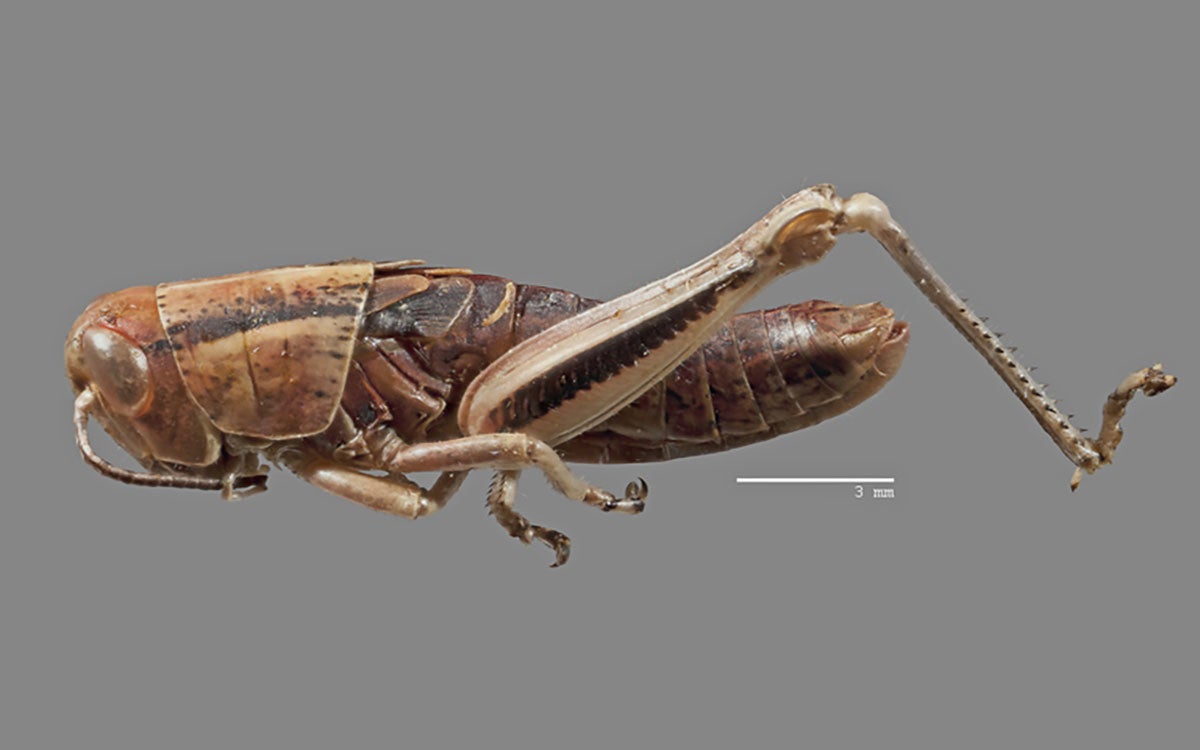
Grasshoppers are a common topic of discussion during the growing season, and things aren’t different this year. For quite a few years, there have been grasshopper population hotspots throughout the state. These populations coupled with the drought conditions being faced in much of the state may result in increased grasshopper related crop injury. While scouting, we have noticed increased grasshopper nymph activity and in some areas these populations are close to threshold levels. Crops in areas that have had high grasshopper populations for the last few years should be regularly scouted to ensure that extensive defoliation doesn’t go unnoticed. The nymphs of the three most likely pest species to be observe in eastern South Dakota during this time of the season are the redlegged grasshopper (Figure 1), the differential grasshopper (Figure 2), and twostriped grasshopper (Figure 3). It’s important to remember that grasshoppers are not picky eaters, and they may be observed in crops, pastures, and gardens.
Redlegged Nymph
Differential Nymph
Twostriped Nymph
Scouting and Management
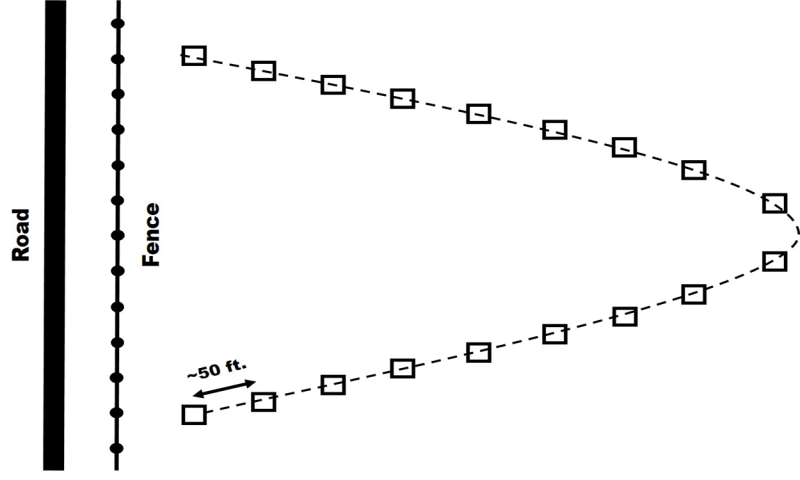
The threshold for grasshoppers is 21-40 grasshoppers per square yard in the field margins or 8-14 grasshoppers per square yard within the field. Grasshoppers are considered easier to manage during the nymphal stage due to their smaller size, and problem populations should be managed before they reach adulthood. Adult grasshoppers are harder to kill, and for many insecticides require a higher rate. As a reminder, always check your product label to ensure that you are using the correct rate. In addition, we do not recommend using the lowest rate labeled for grasshopper management. To scout for grasshoppers, we recommend traveling in a horseshoe pattern and stopping approximately every 50 feet to determine the number of grasshoppers in a square yard (Figure 4). To do this, visualize an approximate square yard around your feet and simply count the number of grasshoppers present in that area. Repeat this process until you are back to the edge of the field. If the threshold is reached, please refer to the current South Dakota Pest Management Guides for a list of insecticides labeled for grasshopper management.