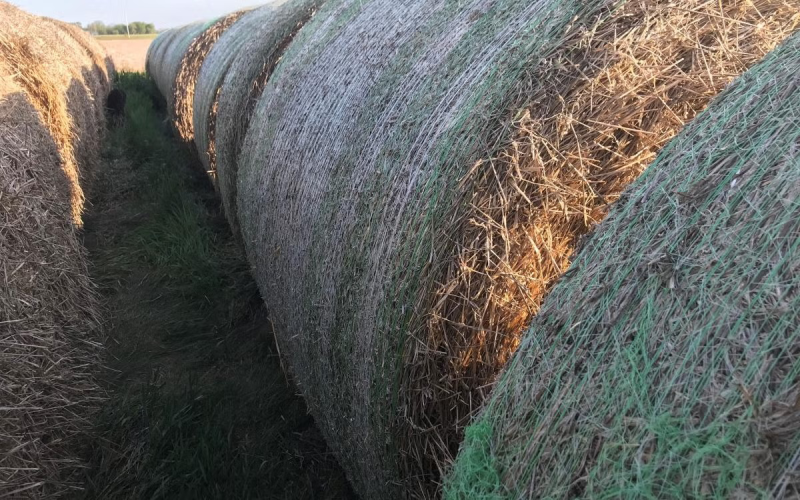
Drought conditions are looking to stay across much of South Dakota. The recent extension of the State of South Dakota’s Drought Emergency Executive Order will provide livestock producers with additional flexibility to transport harvested forage. While the order helps reduce transportation restrictions during this difficult season, it also serves as a reminder that careful planning, safe hauling practices, and proactive forage management remain essential to the overall sustainability of an operation.
With the prolonged dry periods experienced this season, many producers have experienced reduced pasture growth and decreased hay yields which have already increased feed costs this summer. For some operations, this means hauling in hay from other areas of the state or neighboring states may be necessary to maintain livestock throughout the remainder of the season.
What the Executive Order Means
The extended order allows qualifying producers and commercial haulers to continue transporting oversized loads of baled livestock feed under emergency permitting provisions. It also temporarily expands certain commercial driver's license exemptions for qualifying farm vehicle operations traveling within South Dakota.
These provisions are intended to improve access to stored feed supplies during the ongoing drought while reducing delays associated with transportation restrictions. However, the Executive Order is not intended to eliminate all transportation requirements. Producers and haulers must still acquire and maintain all appropriate permits, comply with load dimension limits, and observe posted road and bridge weight restrictions.
Safe Hauling Begins Before Leaving the Yard
Large hay loads can be challenging to transport under the best conditions. Before loading, trucks and trailers should be inspected to ensure they are in proper working condition, along with tires, brakes, lights, and hitch compartments.
Proper load securement is equally important. Hay bales should be evenly distributed on trailers to maintain weight balance. Uneven loads pose a significant danger to roadway users and operators alike.
Using appropriate straps or chains that are rated for the load size and inspecting them for wear and damage before each trip are essential safety practices to follow. It is also recommended to stop in a safe location and retighten tiedowns after traveling for several miles, as loads often settle once moving has begun. Load securement should be monitored throughout the trip.
Know Your Load Dimensions
Although the Executive Order provides additional flexibility, operators are still responsible for understanding the dimensions of their load.
Measure the overall width and height after loading the trailer. It is easy to underestimate the height of stacked large round or square bales when using visual appraisal alone. Overhead obstacles such as utility lines, tree limbs, and bridge clearances can quickly pose danger to roadway users. Knowing exact load dimensions can help reduce some of these risks.
Operators should also remain aware of weight restrictions. Emergency orders do not authorize travel across roads or bridges with posted weight limits. Planning routes in advance can help avoid unnecessary detours or situations where drivers must turn around after encountering a restricted crossing.
Continue Evaluating Forage Supplies
The added transportation flexibility of the Executive Order can help producers access feed more readily, but it does not address the underlying challenge of limited forage availability. Although it might be too late to change much of the outcome for this year, proactive forage management and drought planning during wet years can help reduce the negative impacts during dry years. Regularly evaluating feed inventory and making management decisions early can help prevent more difficult decisions later in the season.
Estimate the amount of hay and pasture needed to carry livestock through the remainder of the season and if additional forage is needed, begin securing supplies earlier rather than waiting until supply becomes more limited and prices become higher. The SDSU Extension Forage Inventory and Demand Calculator is a resource producers can utilize to help inventory available forage resources and determine the amount needed to meet herd feed requirements.
When purchasing hay, request a forage analysis whenever possible. Visual appearance alone is not an accurate indicator of nutritional value. Knowing the specific nutrient content of stored feed and forages is essential to building a balanced ration, avoiding unnecessary supplementation costs, and reducing the risk of under- or over-feeding certain classes of livestock. During drought years specifically, harvested forages are more likely to contain high nitrates which can have severe negative effects on livestock performance. With a hot cattle and sheep market, the cost of a forage nutrient analysis is far less than the cost of dead livestock.
Alternative feed sources can also help stretch forage supplies in the fall and winter. Grazing crop residues, annual forages, cover crops, and by-product feeds, such as dried distillers, wheat middlings, or soy hulls, can provide additional feed options. However, when using certain alternative feed options, there are some specific management considerations to be aware of. Therefore, it is recommended that producers considering alternative feed options work closely with a nutritionist or Extension specialist to ensure rations remain balanced and safe for livestock consumption. When considering alternative feed resources, it is also important for producers to compare feed costs on a per nutrient basis to determine the most cost-effective feed source for their operation. The SDSU Extension Feed Nutrient Comparison Calculator is a resource designed to help producers compare the cost of feedstuffs on a per nutrient basis, assisting producers with feed purchasing decision making and cost-effective ration building.
SDSU Extension also hosts the public Facebook group SDSU Extension Feed & Forage Finder, where producers can connect with others to locate hay, pasture leases, and other feed resources available.
Management Decisions During Drought
Each drought year is different and presents its own set of unique challenges for producers. Regardless, proactive and flexible management often provides more opportunities than waiting until forage supplies are depleted and limited.
During drought years, stocking rates should be regularly monitored and determined based on available forage rather than average production years. Management practices to decrease forage use such as early weaning, strategic culling of less productive and older animals, or decreasing herd size before feed shortages become severe can help reduce feed demand while helping to preserve long-term productivity. In some cases, it might be more economical to move livestock to confined feeding systems rather than staying on pasture. The SDSU Move the Cows or Move the Feed Calculator is a resource designed to help producers determine whether purchasing and hauling stored feed and forage to the operation or hauling cattle to the feed is more economical.
Water availability should also be monitored closely. Lower pond levels, declining water quality, and increased concentrations of salts or other contaminants can affect livestock performance and health during prolonged dry periods. Periodic water testing may be appropriate where concerns exist. For more information on SDSU Extension water testing services, see Livestock Water Testing.
Use Available Resources
Drought affects every operation differently, and no single strategy is a “cure-all.” However, there are resources available that can provide some financial and decision-making relief to producers during dry periods. Producers are encouraged to continually monitor weather forecasts and drought updates as they evolve throughout the season. Staying in contact with local Extension personnel, conservation districts, nutritionists, veterinarians, and agriculture lenders can help ensure you are up to date on the most relevant information and opportunities available to you.
Conditions can change rapidly, and opportunities to secure feed supplies or grazing arrangements may become limited if decisions are delayed. Ultimately, the goal is not simply to endure this year's drought, but to position the operation for long-term success when more favorable growing conditions return.


