Replacement heifers represent one of the largest annual investments in a cow-calf enterprise and are often developed using expensive stored feed and forages. In South Dakota, native range, crop residues, and annual forages can allow for heifers to be developed more economically in forage-based systems compared to traditional drylot environments without sacrificing reproductive performance.
Forage-based development systems offer a lower-cost alternative to drylot programs, but they require intentional management to ensure heifers reach adequate size and reproductive maturity before the breeding season. This article outlines how South Dakota producers can strategically use available forage resources to develop replacement heifers efficiently while maintaining long-term herd productivity and sustainability.
Development Goals
The primary objectives of any heifer development program should be to produce females that conceive early in their first breeding season, calve unassisted, and remain productive members of the cow herd over multiple years. Traditional recommendations suggest developing heifers to 60 to 65% of mature body weight by the start of their first breeding season (Patterson et al., 2000). This guideline is supported by foundational research demonstrating that endocrine mechanisms responsible for puberty are suppressed until heifers achieve sufficient body size and composition to support reproduction (Rawlings et al., 2003).
More recent research, however, indicates that well-managed heifers can achieve comparable pregnancy rates when developed to lighter target rates of 50 to 55% of mature body weight, particularly when compensatory gain occurs prior to breeding (Funston et al., 2012). These findings are especially relevant for forage-based development systems, where nutrient supply can vary seasonally and input costs are closely managed.
Consistency of gain, also known as average daily gain (ADG), during development plays a significant influence on timing of puberty attainment. Research demonstrates that moderate growth rates, rather than rapid growth early on, are sufficient for acceptable reproductive performance, providing heifers ultimately reach their target body weigh prior to breeding. For example, Hall et al. (1995) compared moderate gains (1.3 lb/day) to higher gains (2.2 lb/day) and found that both groups reached reproductive competence when target weights were achieved. Similarly, Smith et al. (1995) reported comparable puberty attainment and pregnancy rates among heifers developed under different gain strategies, although heifers developed with compensatory gain required approximately 12% less feed compared to heifers on an even plane of nutrition. These results support ADG targets of roughly 1.0 to 1.5 lb/day in forage-based development systems, which corresponds to roughly $0.70 to $1.10 per pound of gain depending on performance level of forage and labor costs (Bailey and Thomas, 2021).
Forage Resources in South Dakota
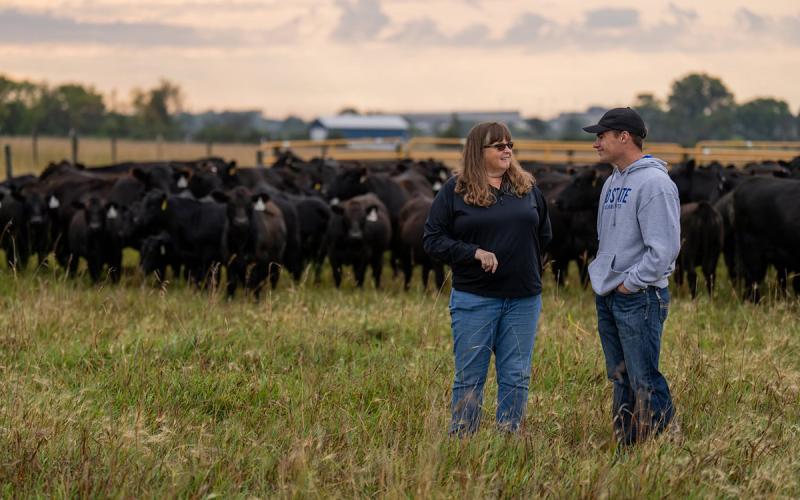
With adequate planning, South Dakota offers a diverse forage base capable of supporting heifer development throughout the year. Introduced pastures can provide high-quality forage early in the grazing season. Alfalfa or alfalfa-grass mixtures can further improve dietary protein and energy intake, which is especially important for growing heifers. During the summer months, native rangelands consisting of cool and warm-season forages provide cost-effective grazing. Following harvest, crop residues are widely available and offer economical fall and winter grazing options. However, crop residues are typically low in protein and energy content, making supplementation necessary to support continued growth and development.
Annual forages and cover crops, including options such as oats, brassicas, turnips, and millet can fill in seasonal forage gaps in the summer and fall extending the grazing season and improving nutrient quality. Creating a system to extend the grazing resources that fits heifer development goals will vary from the nutrient needs of a lactating cow herd. But this could also provide an opportunity to graze forage resources that would otherwise be mechanically harvested with extra labor and equipment expenses. When matched appropriately with heifer nutrient requirements, these resources can play a key role in reducing reliance on harvested feeds and improving profitability.
Nutritional Management and Supplementation Strategies
For heifers in the development stage, particularly those developed on forage, energy is often the first limiting nutrient, followed by protein. This is an especially important consideration when grazing dormant forage or crop residues. However, supplementation should be applied strategically in these situations to correct nutrient deficiencies rather than to maximize rate of gain. The goal should be to maintain a steady growth rate while keeping forage as the primary feed source.
As a general rule, protein supplementation is commonly required when forage quality falls below 7 to 8% crude protein, while energy supplementation may be necessary during periods of limited forage availability, severe weather, or extended winter grazing. Supplementation programs should be flexible and responsive to forage conditions throughout the development period.
Mineral balance is another important, and often overlooked, factor of heifer development. Trace mineral deficiencies can have negative effects on growth, immune function, and reproductive performance. In forage-based systems in particular, it is essential to provide a well-balanced, free-choice mineral to developing heifers. Producers are recommended to work with a nutritionist to formulate a mineral packet that fits their specific production needs and environment.
Designing a Forage-Based System
A typical forage-based heifer development system in South Dakota begins with fall weaning, followed by winter grazing of crop residues or stockpiled forage, and spring or early summer grazing prior to breeding. Strategic manipulation of growth rates throughout this period can improve system efficiency. Figure 1 demonstrates an example of forage-based heifer development post-weaning to breeding, including estimated rates of gain and potential forage options for each season.
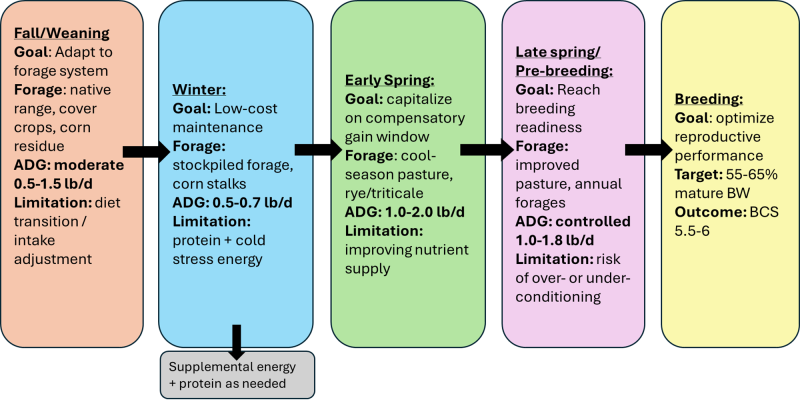
One effective approach is the use of variable growth rates, often referred to as “stair-step” nutrition. This strategy involves periods of restricted gain followed by improved nutrition that allows for compensatory growth. During compensatory phases, heifers often exhibit accelerated growth that partially offsets prior restriction while reducing total feed costs (Horton and Holmes, 1978). Research indicates that heifers developed under stair-step systems can achieve reproductive performance comparable to those developed under continuous gain, provided adequate body weight and condition are attained prior to breeding (Grings et al., 2007). This approach allows producers to utilize lower-cost forages during the winter period and rely on higher-quality spring forage to achieve final target weights, improving economic efficiency without sacrificing reproductive outcomes.
Reproductive Management
To conceive early in the breeding season, heifers must reach puberty before breeding begins. Puberty attainment is primarily influenced by body weight, growth rate, and body composition. Implementing a defined breeding season, typically 45 to 60 days, helps identify heifers that conceive early and are more likely to remain productive over their lifetime. Estrus synchronization can further enhance breeding season control and increase the proportion of heifers conceiving early.
Management environment can also influence reproductive development. Research comparing development systems suggests that heifers raised primarily on pasture may experience different puberty patterns than those developed in confinement. Harvey et al. (2024) reported that heifers developed in drylot settings experienced delayed puberty relative to pasture-developed heifers, potentially due to chronic stress and reduced physical activity. These findings highlight the importance of considering both nutritional and environmental factors in heifer development programs. Heifers developed in drylot systems may require a brief adaptation period when moved to pasture, which can temporarily alter grazing behavior and activity (Walker et al., 2015). If this transition coincides with breeding, it may influence energy balance and estrus expression, although overall pregnancy rates are typically sustained when heifers are maintained on a positive plane of nutrition post turnout.
Economic Considerations
The primary advantage of forage-based heifer development is the reduction in feed costs achieved through the use of grazed resources such as pasture and crop residues. Research across multiple regions demonstrates that forage-based systems consistently lower feed and total development costs while maintaining pregnancy rates comparable to drylot systems, provided heifers reach approximately 55-65% of mature body weight breeding, typically achieved with gains of 1.0 to 1.5 lbs/day (Grings et al., 2007; Speer et al., 2024). As a result, these systems often generate equal or improved economic net returns. Importantly, reproductive performance remains the primary determinant of long-term profitability in replacement heifer programs. Because open heifers retain value as feeder cattle, heifer development represents a lower economic risk than reproductive failure later in life. Consequently, many producers utilize defined breeding seasons and retain only early conceiving heifers, thereby increasing selection pressure for fertility and improving the likelihood of greater cow longevity and lifetime productivity. Females that conceive early in their first breeding season generally remain in the herd longer and wean more calves over their lifetime than later-conceiving contemporaries (Lesmeister et al., 1973; Cushman et al., 2013).
Given the substantial contribution of feed costs to total development expenses, multiple studies have evaluated the economic differences between drylot and forage-based heifer development systems; selected comparisons are summarized in Table 1.
| System | Investment Cost ($/hd) | Differences vs Drylot ($/hd) | Net Present Value ($/hd) | Payback Period (yrs) |
|---|---|---|---|---|
| Native-warm season pasture1 | 1,110 | -610 | 380 | 3.6 |
| Switchgrass pasture1 | 1,080 | -640 | 460 | 3.5 |
| Tall fescue pasture1 | 1,140 | -580 | 275 | 3.9 |
| Drylot2 | 1,723 | - | -876 | 9.6 |
1 Supplemented with blood and fish meal and dried distillers grains with solubles.
2 Supplemented with harvested feeds.
Research from North Dakota State University (Ringwall et al., 1998) showed that forage-based heifer development systems were slightly less expensive than drylot systems. On average, pasture-based systems cost about $240 to $260 per heifer, compared with approximately $250 to $300 per heifer for drylot development, resulting in a savings of roughly $20 to $60 per heifer. Despite these differences in cost, reproductive performance was similar between systems, with final pregnancy rates ranging from 88% to 94% across years.
Challenges and Considerations
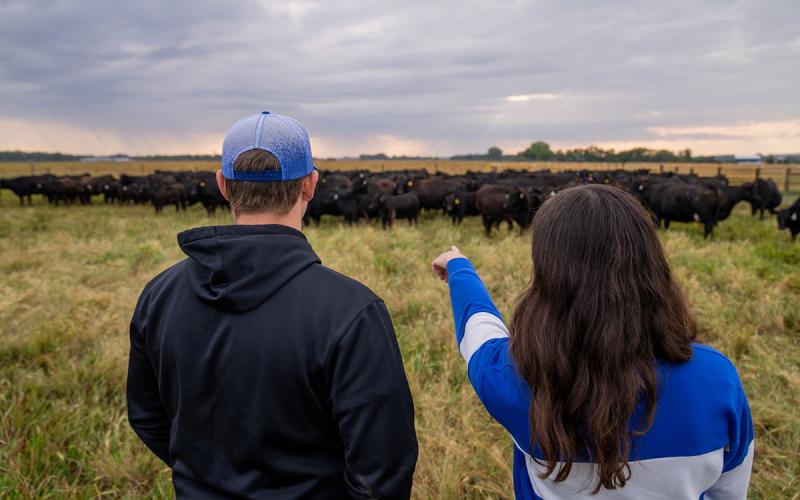
While forage-based systems can reduce development costs, they require careful management to avoid underdevelopment. The greatest risk is inadequate and inconsistent nutrient intake which can delay puberty and reduce pregnancy rates if target weights are not met before breeding. Testing pastures and forages for nutrient content is important to help meet specific development needs. Also, have an accurate weight on animals so the right target is hit. Underestimating body weight or condition could cause an operation to be behind the ball and shortened on time to catch up before breeding season occurs. South Dakota’s variable weather patterns and forage conditions further complicate management, often necessitating flexible supplementation strategies or backup feed resources during drought or severe winter weather conditions.
Close monitoring of body weight and body condition is essential, as gains in forage-based systems can be more variable than those achieved in drylot programs. Ultimately, success depends on meeting defined breeding targets rather than maximizing daily gain, making timely monitoring and management adjustments critical.
Conclusion
Forage-based heifer development systems provide South Dakota producers with a practical opportunity to reduce input costs while maintaining acceptable reproductive performance. By effectively utilizing available forage resources, heifers can be developed efficiently with reduced reliance on harvested feeds.
Successful implementation depends on depends on maintaining adequate growth and body condition, with heifers reaching approximately 55 to 65% of mature body weight prior to the breeding season. Strategic supplementation, planned use of compensatory gain, and regular monitoring of body condition are key components of these systems.
Although forage-based programs may require greater management attention and flexibility, particularly in response to weather and forage variability, they can produce productive, long-lived females when properly executed. Focusing on reproductive outcomes and cost efficiency, rather than maximum daily gains, is central to a successful replacement heifer development program.
Sources
- Bailey, E.A. and J.M. Thomas. 2026. Nutritional Management of Developing Heifers: Intensive vs. Extensive Systems. University of Missouri Extension.
- Cushman, R.A., L.K. Kill, R.N. Funston, E.M. Mousel, and G.A. Perry. 2013. Heifer calving date positively influences calf weaning weights through six parturitions. J Anim Sci. 91(9):4486-4491.
- Funston, R.N., J.L. Martin, D.M. Larson, and A.J. Roberts. 2012. Physiology and Endocrinology Symposium: Nutrition of developing replacement heifers. J Anim Sci. 90(4):1166-1171.
- Grings, E.E., T.W. Geary, R.E. Short, and M.D. MacNeil. 2007. Beef heifer development within three calving systems. J Anim Sci. 85(8):2048-2058.
- Hall, J.B., R.B. Staigmiller, R.A. Bellows, R.E. Short, W.M. Moseley, and S.E. Bellows. 1995. Body composition and metabolic profiles associated with pubertal beef heifers. J of Anim Sci. 73(11):3409-3420.
- Harvey, K.M., R.F. Cooke, A.T. Pickett, J. Cordero, M.E. Drewery, L.W. Rahmel, C.L. Daigle, T. Martins, and S.J. Mackey. 2024. Effects of a moderate exercise regimen on development and puberty attainment of beef heifers reared in drylots at a high stocking rate. J Anim Sci. 102:skae150.
- Horton, G.M.J. and W. Holmes. 1978. Compensatory Growth by Beef Cattle at Grassland or on an Alfalfa-Based Diet. J Anim Sci. 46(1):297-303.
- Lesmeister, J.L., P.J. Burfening, and R.L. Blackwell. 1973. Date of First Calving in Beef Cows and Subsequent Calf Production. J Anim Sci. 36(1-6).
- McFarlane, Z.D., C. Boyer, and J.T. Mulliniks. 2018. Profitability of Developing Beef Heifers on Stockpiled Winter Forages. J of Appl Farm Econ. 2(2):1.
- Patterson, D.J., S.L. Wood, and R.F. Randle. 2000. Procedures that support reproductive management of replacement heifers. J Anim Sci. 77(E-2000):1-15.
- Rawlings, N.C., A.C.O. Evans, A. Honaramooz, and P.M. Bartlewski. 2003. Antral follicle growth and endocrine changes in prepubertal cattle, sheep and goats. Anim Reprod Sci. 78(3-4):259-270.
- Ringwall, K.A., K.J. Helmuth, G.L. Ottmar, J.L. Nelson, and J. Dhuyvetter. 1998. Production and Associated Costs of Heifer Development: The Benchmark Values. North Dakota State University Dickinson Research Extension Center Research Reports.
- Smith, J.M., G. Lamb., J.E. Minton, R.T. Brandt, and R. Cochran. 1995. Influence of timing and rate of gain on puberty and reproductive performance of beef heifers. Kansas Agriculture Experiment Station Research Reports 1(1): 101-103. DOI:10.4148/2378-5977.1991
- Speer, H.F., R.A. Cushman, H.C. Freetly, J. Parsons, J. Windh, and M.E. Drewnoski. 2024. Effect of beef heifer development systems utilizing corn residue and late summer planted cover crops on growth, reproductive performance, and economics. Transl Anim Sci. 8:txae111.
- Walker, J. 2015. Grazing Behavior of Drylot-developed Beef Heifers and the Influence of Postinsemination Supplementation on Artificial-insemination Pregnancy Success. South Dakota State University Animal Science Faculty Publications. 32.