Oats
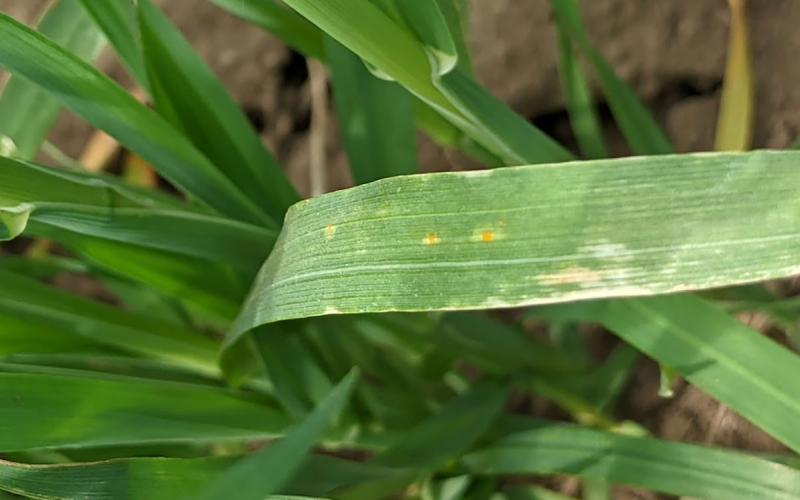
Crown Rust of Oats
Fact sheet on Crown Rust of Oats for agronomist and growers.
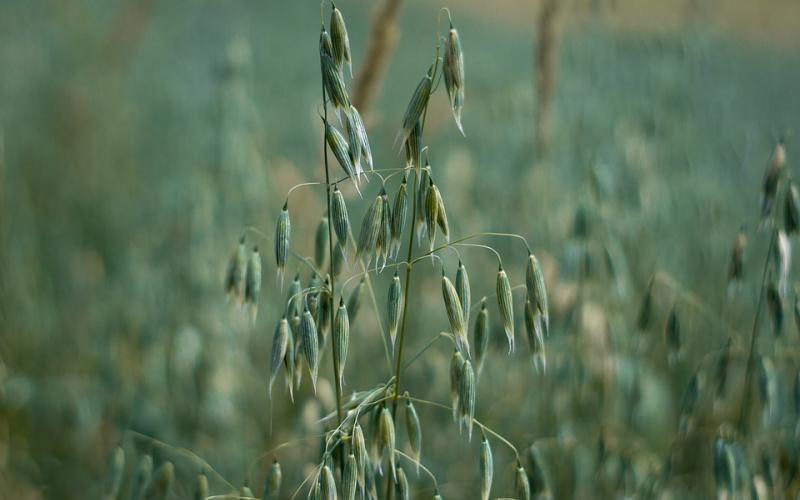
2020 Plant Disease Summaries for Small Grains
A number of field trials were implemented in the 2020 growing season with the general objective of assessing various disease management practices suitable for South Dakota growers and the Great Plains.
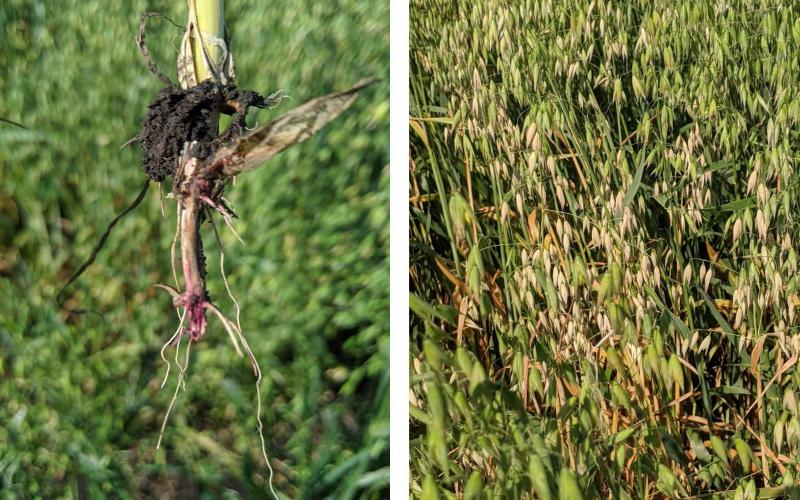
Fusarium Crown and Root Rot Observed in Oats
Some oat fields are showing plants wilting with tillers dying prematurely and heads looking bleached. Inspecting the crown and sub-crown area reveals the discoloration and rotting and sometimes a pinkish color can be observed. These are typical symptoms of Fusarium root and crown rot.
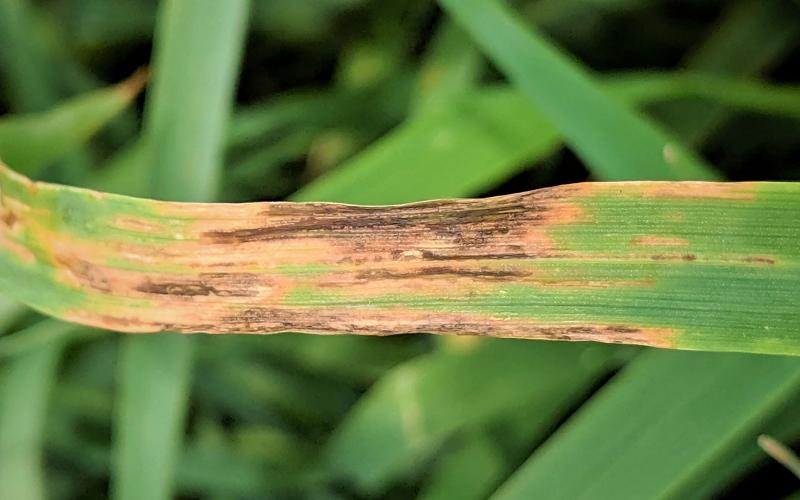
Bacterial Blight Developing in Oats
Oats scouted in a few fields in the Eastern and South Central parts of the state were found with bacterial blight developing on the lower leaves. Plants infected have leaves with water-soaked brown longitudinal lesions in the top-half of the leaf. Severe symptoms can lead to premature leaf death.

2018 Field Plot Summaries for Oat and Sorghum Foliar Disease Management Trials
An oat crown rust integrated management trial and a sorghum foliar fungicide trials were conducted to determine the efficacy of fungicides to manage crown rust and fungal diseases in oat and sorghum respectively. Crown rust is one of the most devastating diseases of oat in the state. Stragego fungicide was applied at three different timings to determine the most effective timing for crown rust management. For sorghum, the study investigated the efficacy of two different rates of Nexicor for managing sorghum foliar diseases. The oat field experiment was maintained at Northeast Research Farm (NERF), Southeast research farm (SERF) and Volga research farm. The sorghum experiment was at Volga.
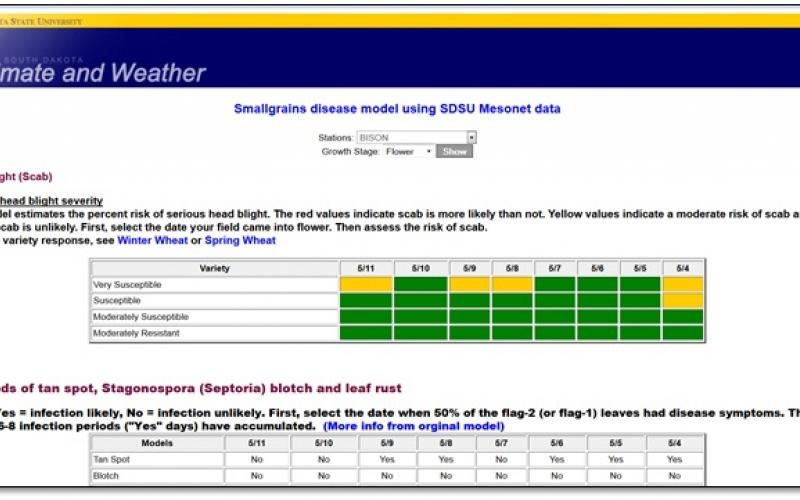
The Small Grains Disease Forecasting System Could Save Producers Money
The South Dakota State University Small Grains Plant Pathology program has partnered with the Small Grains Plant Pathology program at North Dakota State University to deploy a small grains disease forecasting system for South Dakota. The system uses weather variables including rainfall, temperature, and relative humidity to predict the likelihood of disease development. This new tool has the potential to save growers money by helping them avoid unnecessary fungicide applications, or knowing when to apply a rescue fungicide treatment.
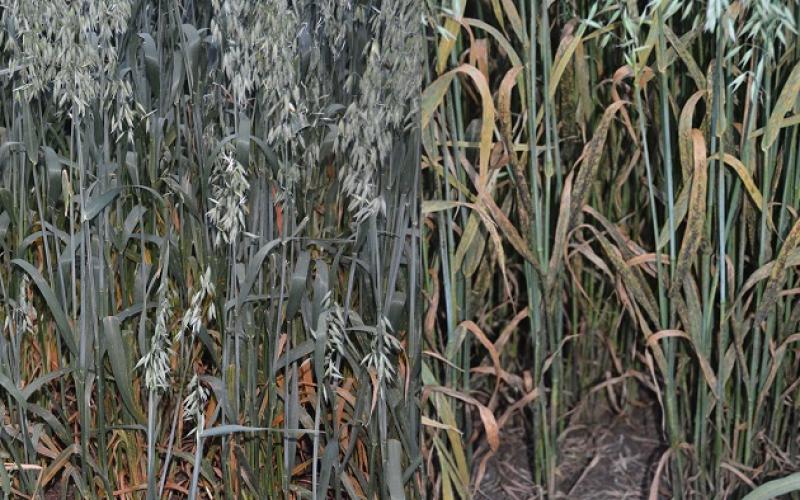
Utilize a Fungicide For Crown Rust Prevention in Oats
If you are growing oats this year for grain, be sure to scout and plan a fungicide application to protect the oats from crown rust.
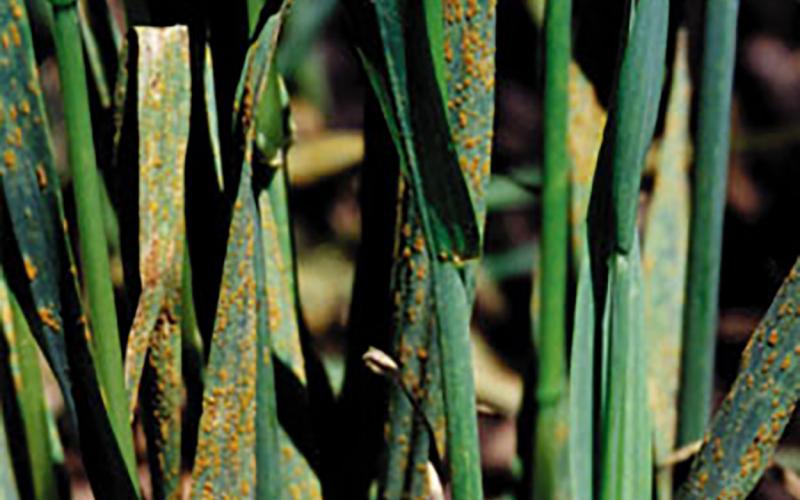
Does Crown Rust in Oats Cause Problems for Livestock?
When wet, cool conditions predominate in the spring, crop producers may have to deal with crown rust in oats. When this crop disease is abundant, questions from livestock producers arise. Could crown rust in oats harm livestock if it’s present on pasture or in hay?
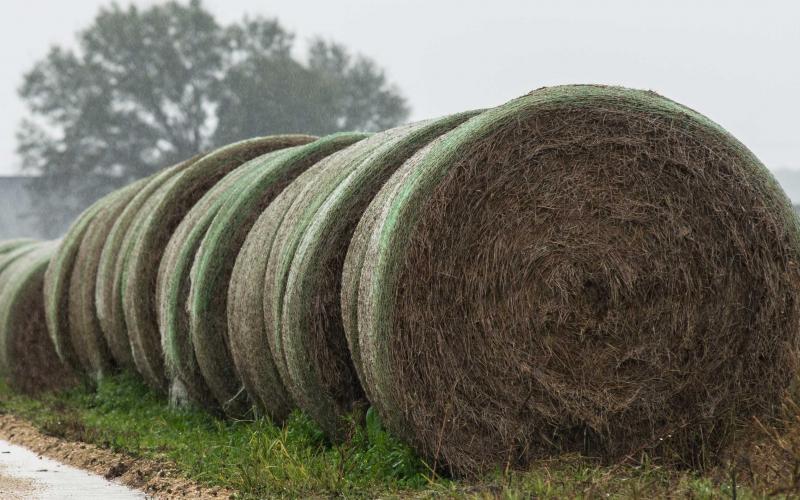
Round Bale Storage Conservation
Fact sheet discussing conservation of round bale storage.
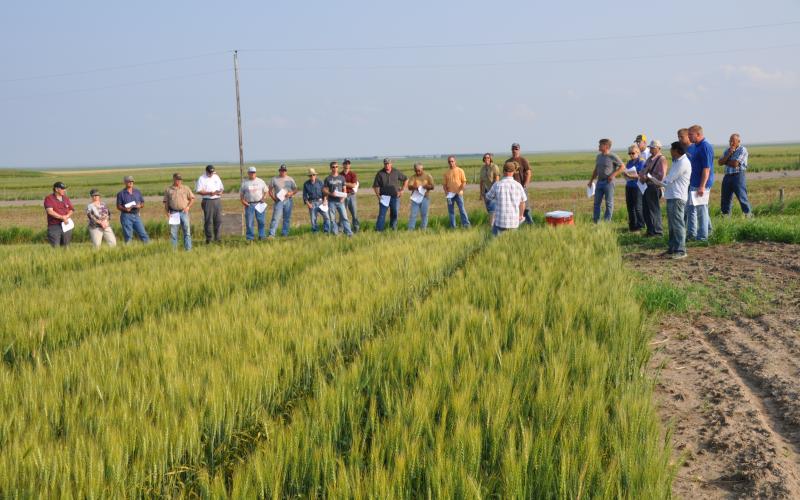
SDSU Extension to Host Small Grain Variety Tours
June 08, 2021
On June 17, South Dakota State University Extension will kick off its annual statewide Small Grain Variety Tours in Ideal.