Written collaboratively by Adam Varenhorst, Philip Rozeboom, Patrick Wagner, and Brad McManus.
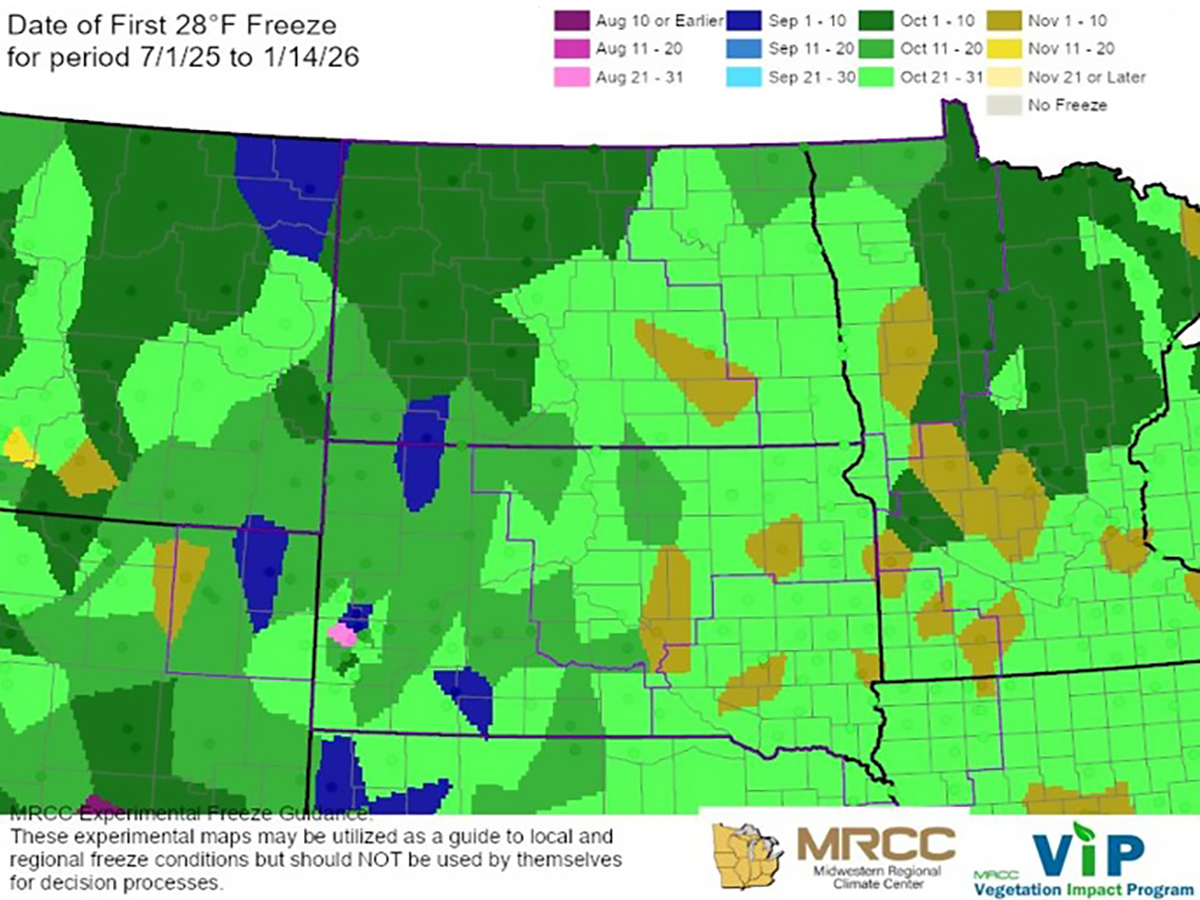
Almost every year in South Dakota, there is a risk that grasshopper populations will reach levels capable of causing issues for rangeland, crops, as well as yards and gardens. Unfortunately, our prediction for the 2026 growing season won’t change the trend of the last few years. The first hard freeze in the fall of 2025 was late in many areas (Figure 1). Although I think most of us enjoy later cold weather in South Dakota, the later the first hard frost, the more time that adult grasshoppers have to remain active and lay eggs. This can result in increased grasshopper populations during the following year.
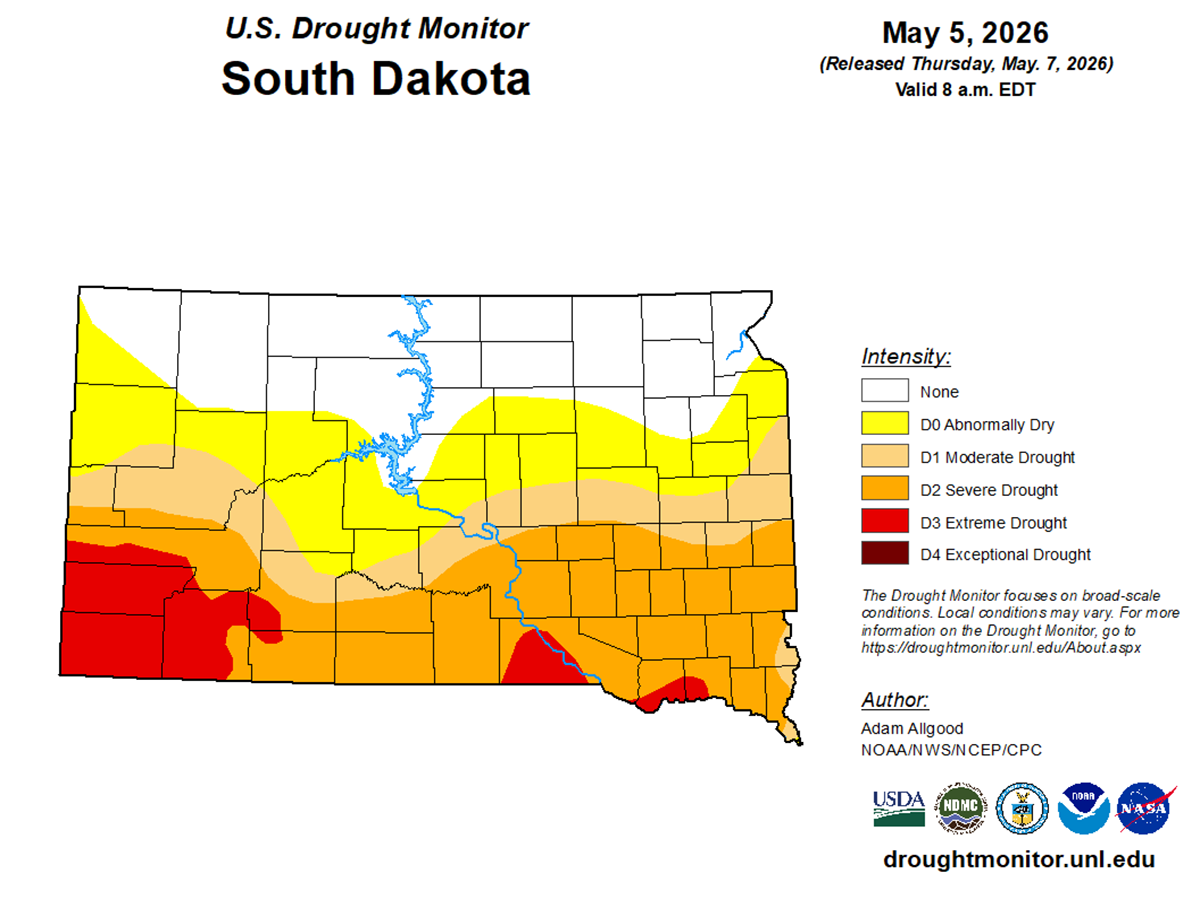
In addition to the later hard freeze dates, much of South Dakota is currently experiencing some level of drought (Figure 2).
Observations of grasshoppers tend to increase during drought conditions as the alternative food sources are not as abundant. This causes the grasshoppers to seek additional options including crops.
Annual Grasshopper Survey

The Animal and Plant Health Inspection Service (APHIS) of the USDA conducts an annual survey of grasshoppers in western South Dakota rangelands. The results from the 2025 survey indicate that there were very isolated areas that were at or above threshold (Figure 3). However, SDSU Extension numerous reports of grasshopper activity and severe crop cross in western South Dakota during 2025 that are not represented on the map. In addition, many reports were received in 2025 from areas in South-eastern South Dakota. Large populations of grasshoppers during the previous year are normally an indicator that grasshoppers will also be an issue during the following season. This is especially true when conditions increase the risk of grasshopper activity.
Scouting for grasshopper populations should begin shortly after planting in areas where grasshoppers were problematic in 2025 and continue throughout the growing season. Grasshoppers can reduce stand counts early in the season, cause extensive defoliation throughout the season, and prior to harvest damage the harvestable parts of the plants causing varying amounts of yield loss.
Some of the worst economic injury caused by grasshoppers in 2025 was due to grass being cut and bailed without consideration of the impact on neighboring crop fields. Prior to cutting an established pasture/field scout to determine grasshopper activity.
Identification
Although there are numerous grasshopper species present in South Dakota, there are only three species that routinely reach large populations. These include the two-striped grasshopper, redlegged grasshopper, and the differential grasshopper.
Two-Striped
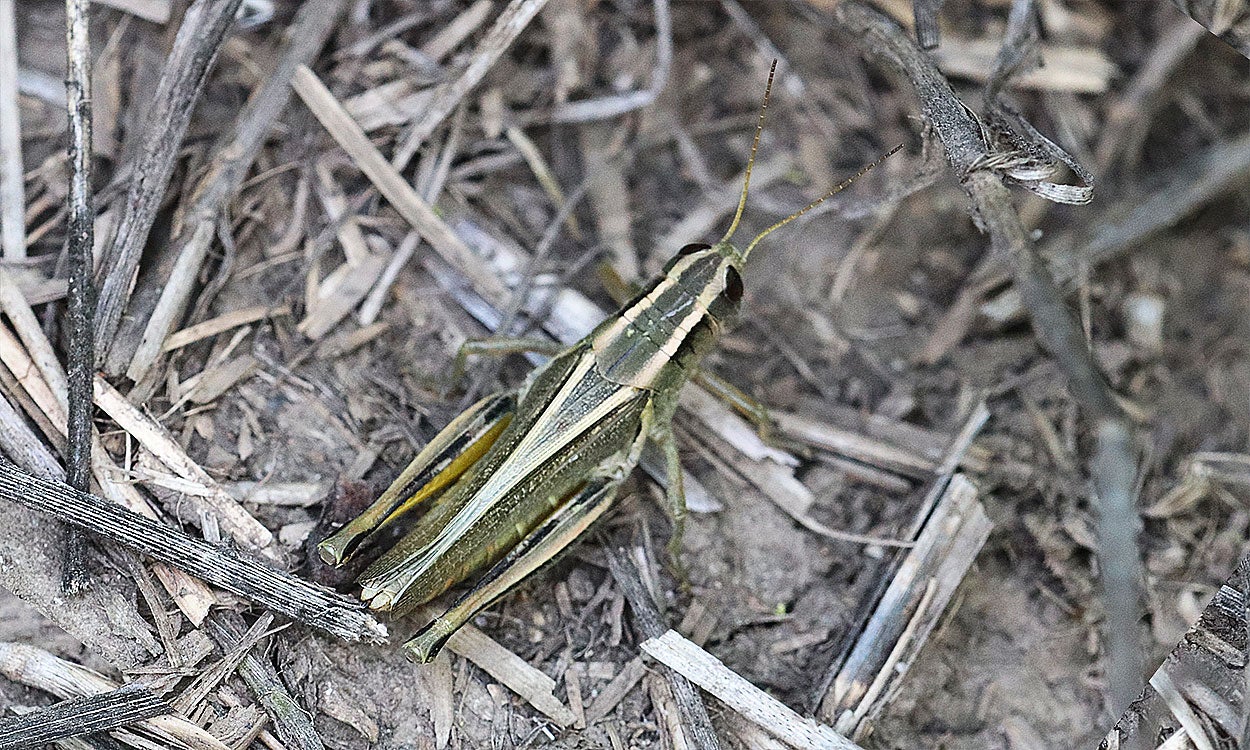
Two-striped grasshoppers get their name because of the two light yellow lines that are present on the back of their head, thorax, and abdomen (Figure 4). The lines eventually converge in the middle of the abdomen. Two-striped grasshoppers are tan to brown in color. Adults are approximately 1-1.5 inches long.
Redlegged
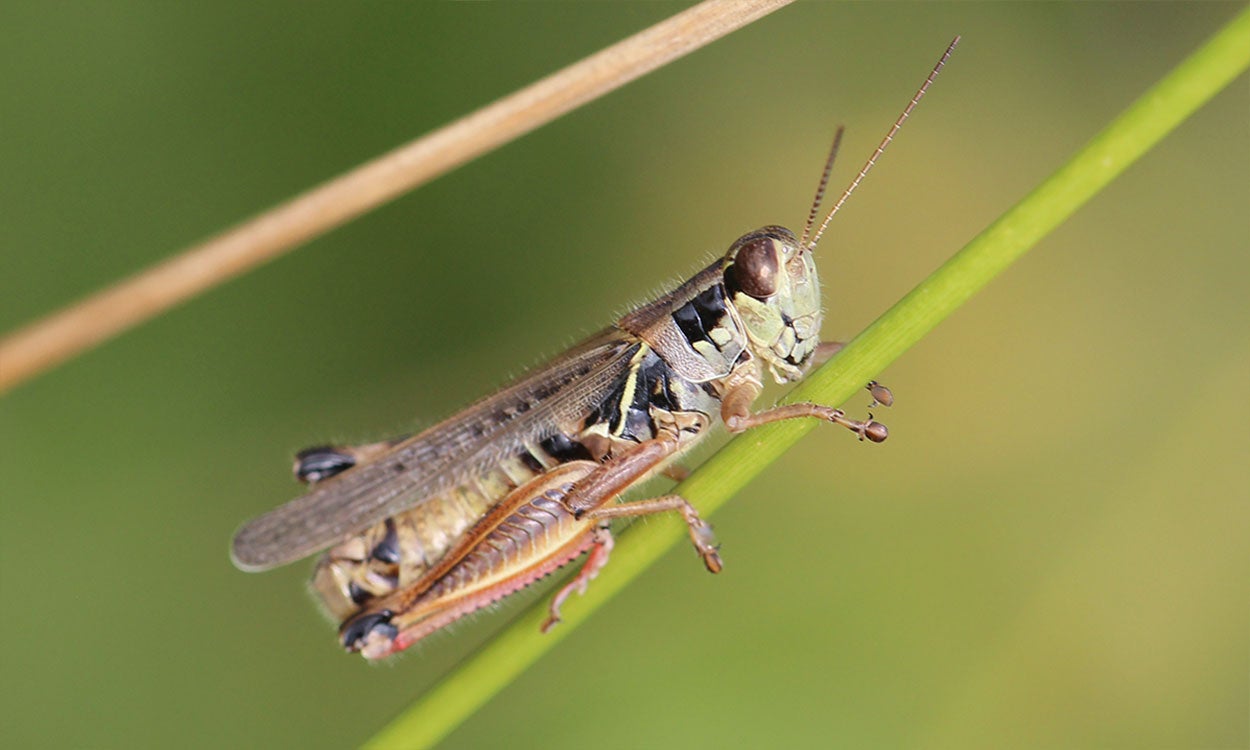
Redlegged grasshoppers get their name from their red hind leg segment (Figure 5). Their bodies range in color from green to tan with black markings and the adults are 0.66 of an inch to 1 inch long.
Differential
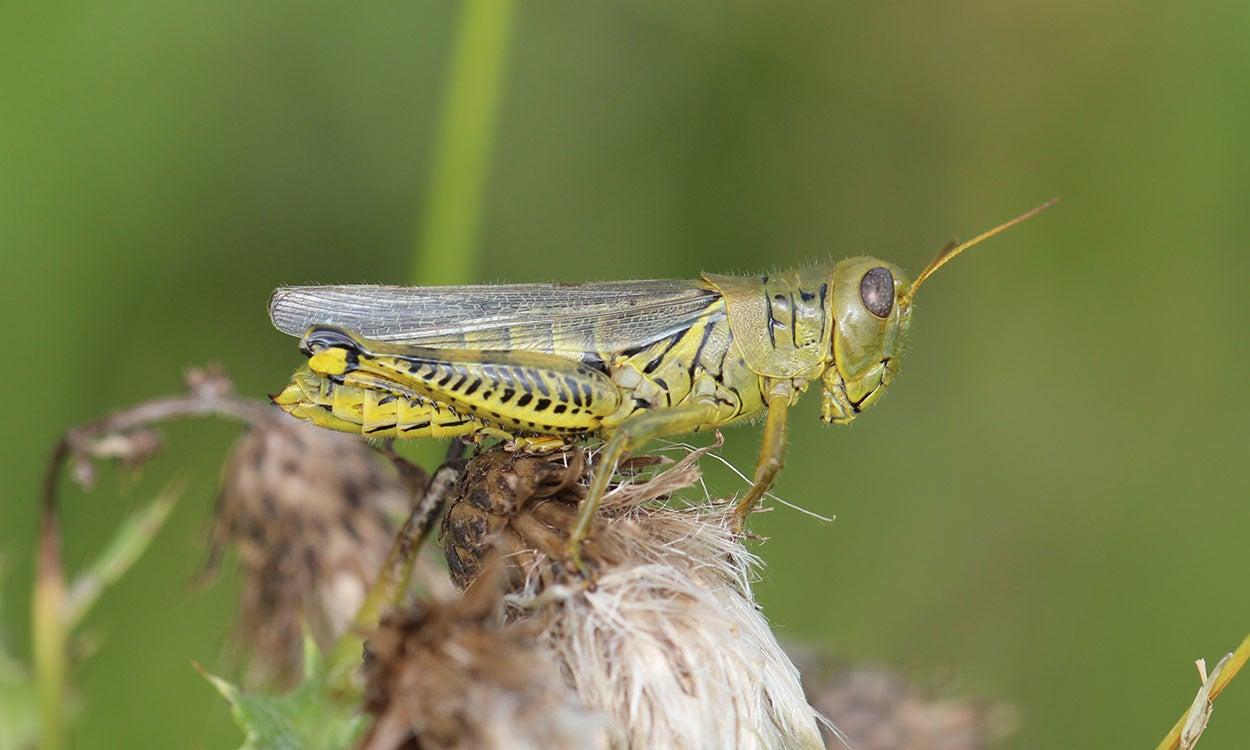
Differential grasshoppers vary in size from 1 to 1.5 inches long. Their bodies are green to yellow in color and they have black chevron markings on their hind legs (Figure 6).
Scouting and Management Options
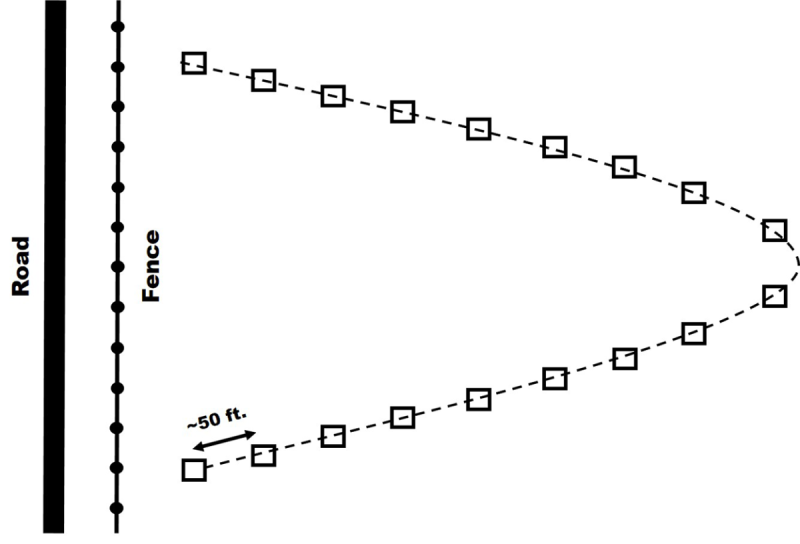
There are two scouting methods that can be used to determine if grasshopper populations are at or above threshold. The first method is visual counts. For visual counts, estimate a square yard in front of you and count the number of grasshoppers jumping out of the area as you slowly walk towards it. This method works for emerging crops as well as gardens. The second method of scouting is sweep netting. For sweep netting, use a 15-inch diameter sweep net and capture grasshoppers in four pendulum swings (approximately one square yard of area) and count them. With either sampling method, we recommend repeating it several times in a pattern, such as the example in Figure 7, and calculating the average for increased accuracy.
The threshold for grasshopper populations that was established by the United States Department of Agriculture (USDA) for grasslands is 15-20 nymphs or 8-14 adults per square yard.
For crops, we recommend scouting for nymphs and adults in field margins and within the fields. For field margins, management should be considered when nymph populations reach 50-75 per square yard and adult populations reach 21-40 per square yard. In the field, management should be considered when there are 30-45 nymphs per square yard or when there are 8-14 adults per square yard. Later in the season for corn, management should be considered if grasshoppers are clipping silks to within 0.5 inch of the ear tip or if the grasshoppers are feeding on the developing ears. For soybean, management should be considered if there is 20% defoliation present after flowering or if grasshoppers are observed feeding on the on developing pods. For sunflower, management should be considered if grasshoppers are feeding on the developing heads.
If thresholds are exceeded, an insecticide that is labeled for grasshopper management may be considered. A current list of insecticide sprays for use in soybean, corn and alfalfa can be found in the most-recent South Dakota Pest Management Guides.
In pastures and range, spreading poison grasshopper baits or baits containing Nosema locusta spores may be used to reduce populations. An insect growth regulator (IGR) containing diflubenzuron may be applied to inhibit grasshopper development early in the season while the populations are primarily nymphs. However, please note that IGRs have no effect on adult grasshoppers.
It’s also important to remember that large grasshopper populations can lead to increased populations of blister beetles during the following season. Areas that experienced increased grasshopper pressure in 2025 should be monitored for increased blister beetle activity, especially in alfalfa fields.