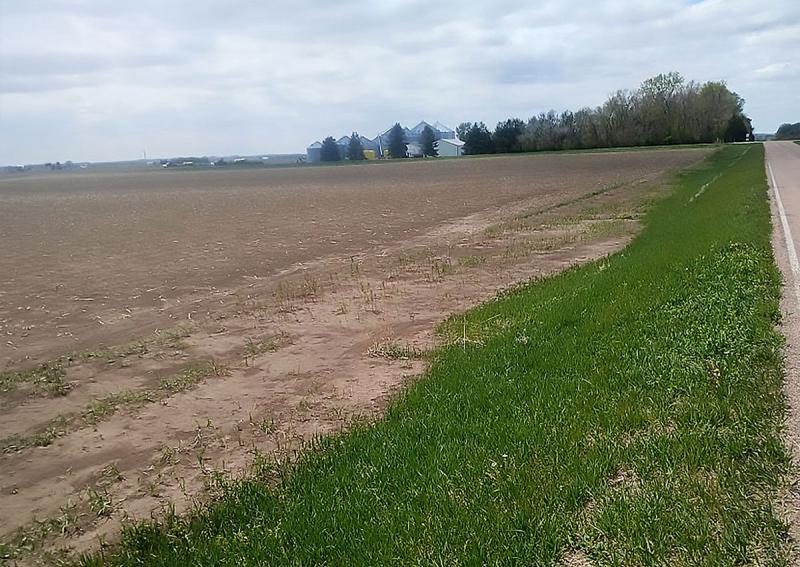
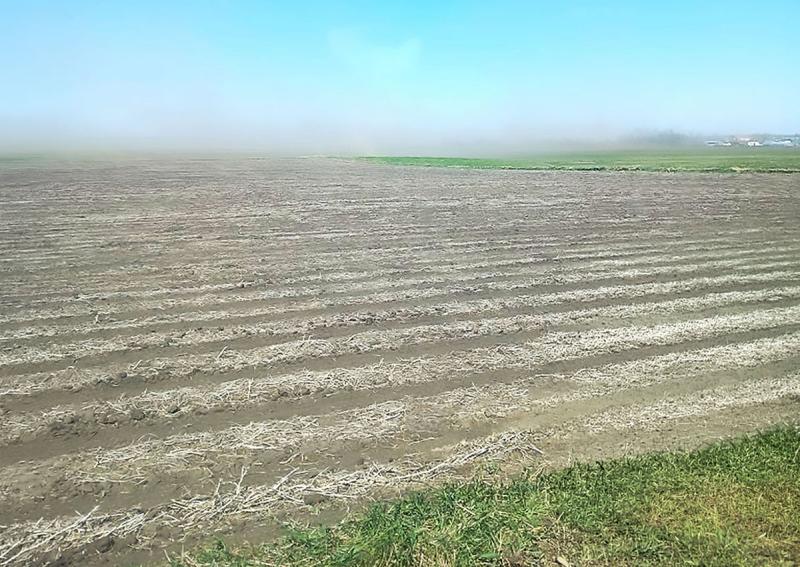
Much of South Dakota is currently experiencing dry conditions, especially in the southern part of the state. During extended periods of dry conditions, soil near the surface can become loose and is prone to wind erosion during high wind events. A picture of a field which has experienced wind erosion is shown in Figure 1. A photo of soil blowing off a field can be seen in Figure 2.
Adopting soil health practices, especially keeping crop residue in the field and reducing tillage, can help to reduce the loss of soil via wind erosion during periods of drought. These same soil health practices also help to conserve soil moisture throughout the entire growing season.
Although this article does not account for residue or tillage practices that were done last fall or already this spring, it does provide information on how to manage fields now or in the future to maintain soil health during periods of dry times.
Cost of Soil Loss Via Wind Erosion
Wind erosion events remove nutrient-rich topsoil containing organic matter and essential macro- and micronutrients needed for plant growth. Soil organic matter concentrations are greatest near the soil surface, making the most productive portion of the soil profile the most vulnerable to loss during wind erosion events. The soil texture at a location has been formed through geology and cannot be changed by management, but soil organic matter can be changed by management practices. Soil organic matter is important for nutrient retention, soil structure formation and water retention. Increasing soil organic matter by 1 % can store about 3400 gallons of water per acre in the 0-6 in depth on a medium textured soil (Cates 2020). Having a higher organic matter content allows more limited rainfall to be retained during dry conditions.
An article written in 2022 estimated about $2967 worth of nutrients and topsoil was lost per inch of topsoil in organic matter and nutrients per acre on a sample collected from a ditch in South Dakota (Bly 2022). A sample collected from a road ditch in North Dakota in 2025 estimated that about $1113 worth of nutrients was lost per acre from an inch of topsoil. When you consider the rising cost of fertilizer since these studies were conducted, the true value of nutrients lost via wind erosion would be even greater. Additionally, blowing soil can damage actively growing plants, reducing stand establishment and crop productivity. Severe wind erosion may expose ungerminated seeds or bury them too deeply within portions of the field, resulting in poor germination and reduced stand counts. Collectively, these impacts can substantially reduce soil productivity and long-term crop performance.
Ways to Protect Soil Surface and Conserve Moisture
Maintaining soil health during droughts primarily involves two of the soil health principles: minimizing disturbance and keeping armor on the soil surface. Soil tillage destroys soil structure and breaks it into smaller pieces which are more prone to wind erosion. This field operation breaks soil aggregates into smaller aggregates or individual soil particles. Soil aggregates smaller than 0.83 mm (0.032 in) are the most susceptible to wind erosion. Tillage also exposes the soil surface directly to solar radiation, increasing soil temperatures and evaporation rates. In contrast, maintaining crop residue on the soil surface helps conserve moisture by insulating the soil, reducing temperature fluctuations, and decreasing evaporative water loss.
How to Manage Residues Following Harvest
Properly managing crop residues following harvest is essential for improving soil health and conserving moisture in dryland agriculture. Leaving crop residue in the field protects the soil surface and helps retain soil moisture. Using a stripper header or cutting corn and small grain residue higher than normal can improve snow capture during the winter and reduce snow movement across the field. Taller standing residue also helps keep surface residues in place and protects young emerging plants from damage caused by strong winds. Planting crops that generally produce a higher amount of residue such as corn, sorghum and small grain crops provide better soil protection and moisture conservation than crops such as soybeans, peas, canola and sunflowers. Proper combine adjustment is also important for residue management. Residue should be spread evenly across the full width of the combine header to maintain uniform soil coverage, promote consistent soil moisture conditions, and improve crop emergence and stand establishment across the field. Effective residue management is essential when adopting no till practices. However, during periods of drought it is ok to harvest crops for hay or silage if supplemental livestock feed is needed.
Planter Set Up During Dry Conditions
Having the planter set up correctly is essential for achieving good crop establishment during dry conditions. Planting the crop into adequate soil moisture is critical for germination and emergence. Sticking a shovel into the soil to evaluate moisture depth can help determine proper planting depth. When conditions are dry, you may want to plant the seeds deeper than normal to ensure they are placed into moisture (2-2.5 in deep). Soils are also generally harder during dry periods than under normal moisture conditions. Make sure that there is adequate downforce on the planter so the seed is consistently placed at the desired depth for successful germination and emergence during dry conditions. Another important planter adjustment is ensuring the closing wheels properly close the seed trench.
Crop Selections During Dry Conditions
Keeping cover on the soil surface and maintaining living roots in the soil is important for building soil health. Planting crops that are naturally adaptive to dry conditions can help maintain productivity and protect the soil surface during drought. Some drought tolerant species include sorghum, wheat, barley, milo, sorghum sudangrass, cowpeas, sunflower and buckwheat. If the soil is too dry to plant the main cash crop, planting a cover crop mixture containing many drought tolerant species and utilizing it for livestock grazing may be a good option for maintaining soil cover while also providing supplemental forage. This approach can also support long-term soil health improvement.
How to Maintain Soil Organic Matter During Dry Conditions
Ways to maintain or increase soil organic matter during periods of drought include skipping tillage, leaving crop residue in the field, maintaining living vegetation, and applying organic amendments such as animal manure or compost. Reducing or eliminating tillage helps maintain soil aggregates, preserves protective residue cover on the soil surface and reduces soil organic matter breakdown and water evaporation. Leaving the crop residue in the field protects the soil surface, adds organic matter back to the soil and helps reduce water evaporation. Maintaining actively growing crops or cover crops does use soil moisture, but it also provides soil cover, contributes organic material to the soil and helps reduce soil loss from wind erosion. Organic matter additions such as animal manure can improve soil organic matter content, soil water holding capacity and soil aggregation.
Summary
Having good soil health is important during both wet and dry growing conditions. During periods of drought, the soil is very susceptible to wind erosion. Wind erosion blows away the most productive part of the soil leading to a loss of both nutrients and soil organic matter concentrated near the soil surface. The value of lost nutrients and organic matter is substantial. Protecting the soil surface through practices such as no tillage and crop residue retention can help to maintain soil health during periods of drought. Properly managing crop residues during harvest is important for water conservation and planting success during dry conditions. Proper planter setup, such as ensuring seeds are planted at the desired depth where adequate moisture exists throughout the field, is important during drought conditions. Selecting drought-tolerant crop species can help maintain living cover in the field and protect the soil surface. Soil organic matter is important for retaining soil water during dry conditions and adopting soil health practices can help increase soil organic matter overtime. Using agricultural management practices that maintain soil cover, minimize disturbance and increase soil organic matter content can help reduce wind erosion and maintain soil health during dry conditions.
Sources
- Bly, A. 2022. The costs of erosion: topsoil’s role in food security. SDSU Extension.
- Cates, A. 2020. The connection between soil organic matter and soil water. University of Nebraska Lincoln Institute of Agriculture and Natural Resources.
- Kalwar, N. 2025: What is the worth of an inch of topsoil. NDSU Extension.