Written collaboratively by Adam Varenhorst, Philip Rozeboom, Patrick Wagner, and Brad McManus.
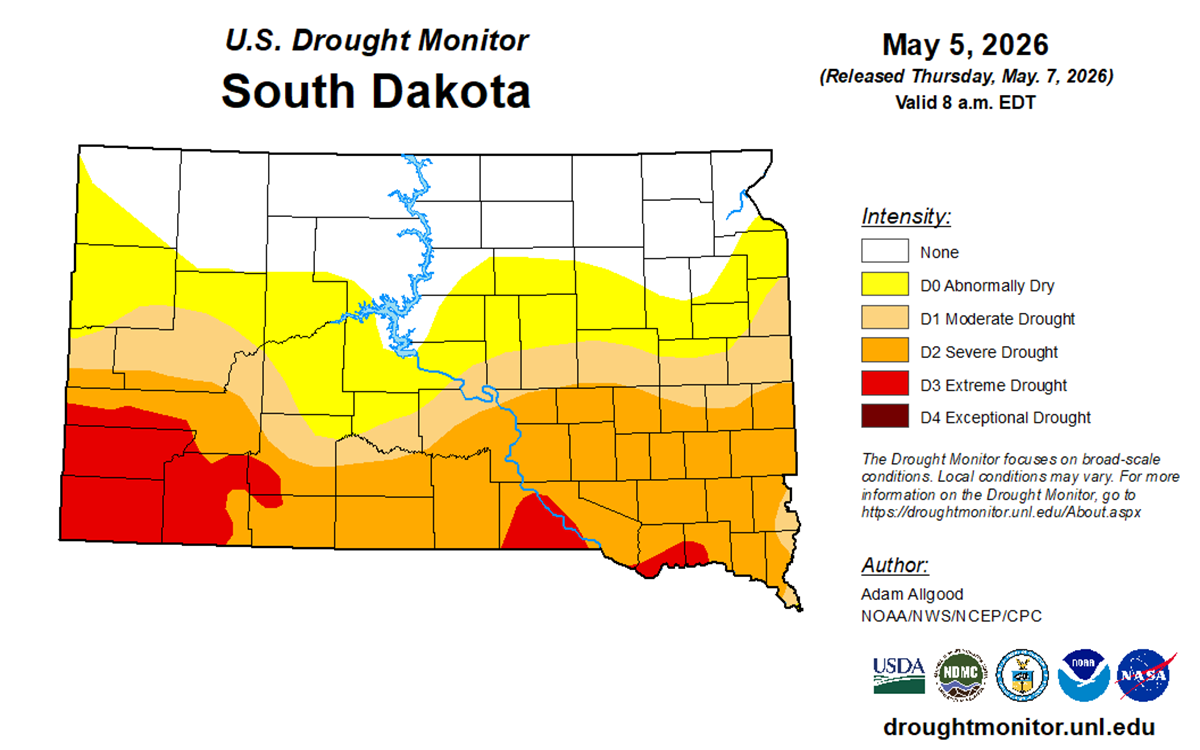
Brown wheat mite infestations have been detected in South Dakota wheat in the south central and western regions of the state. Typically, brown wheat mite infestations are more commonly observed in fields experiencing drought stress, which is currently most of the state (Figure 1). The feeding injury caused by brown wheat mite causes stippling (white or brown spots) on the leaves. The stippling will begin near the leaf tips and is sometimes misidentified as drought stress. Heavily infested fields will have plants with withering or dried leaves (Figure 2).

Identification
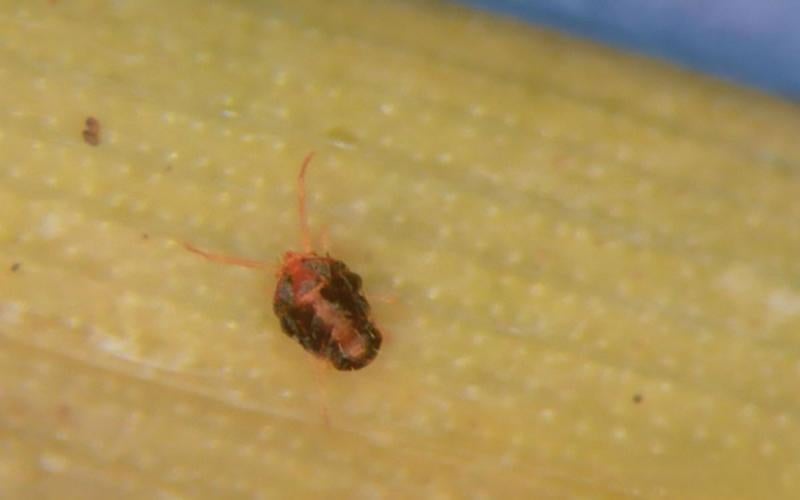
- Approximately the same size as a newspaper print period (identification requires magnification).
- Metallic brown/black bodies.
- Eight legs that are yellow to orange in color.
- Front pair of legs is nearly twice as long as other legs.
Scouting
Brown wheat mites are normally active in the early spring with populations peaking in mid-May. Variable conditions across the state may cause populations to show up in different parts of the state at different times. Brown wheat mites lay red eggs in the fall and white eggs in the late spring. The number of unhatched red eggs can be used as a predictor of whether a population outbreak is going to occur or if populations are in decline. White eggs are laid in the late spring and will over summer and hatch in the fall. Both egg types are found in the soil near the base of wheat plants.
When scouting a field for the presence of brown wheat mites, start at one side of the field and walk in a W or Z pattern and randomly choose plants to examine along each leg of the path. Brown wheat mites are generally found on the leaves, and populations may be higher near the tips of the leaves. See Table 1 for the economic thresholds for the brown wheat mite.
| Wheat Stage | Average Number of Mites per Plant |
|---|---|
| Seedling Stage | 25 to 50 |
| Boot to Heading | 25 to 50 |
Management
If brown wheat mite populations are above the economic threshold, management may be necessary. Prior to insecticide application, check the weather forecast. The brown wheat mite favors drier conditions, but populations may naturally decline if a field receives a driving rain amount to more than 1/3”. For insecticides that are currently labeled for brown wheat mite please refer to the current edition of the South Dakota Pest Management Guide: Wheat.