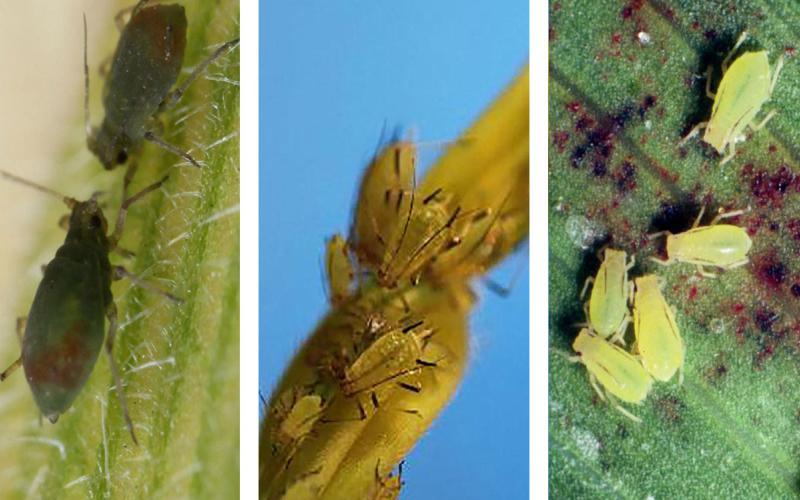
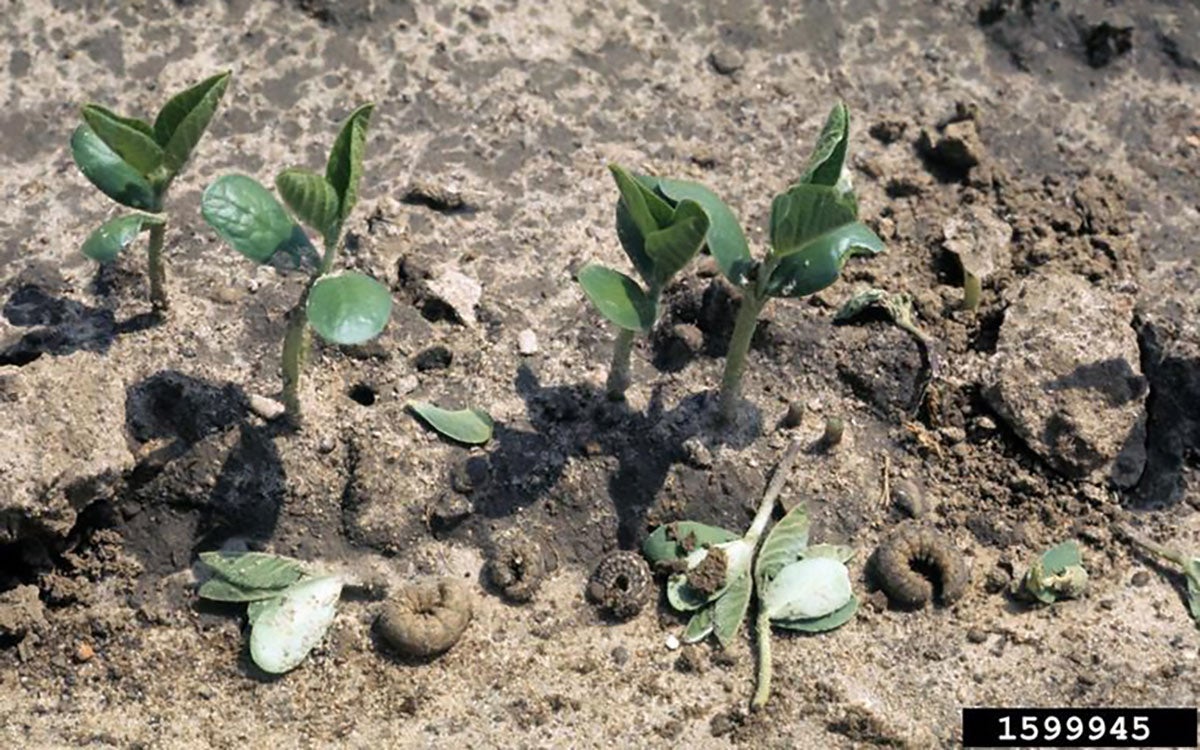
Reports of dingy cutworms feeding on soybean in Central South Dakota have increased during this week. Dingy cutworms are commonly observed in South Dakota during the spring but typically do not reach major pest status. However, when the conditions are right, they can cause substantial feeding injury or cutting to seedling soybeans, as well as corn, wheat, and sunflower (Figure 1, Figure 2). Dingy cutworms are often more abundant in no-till fields with high residue present.
Identification
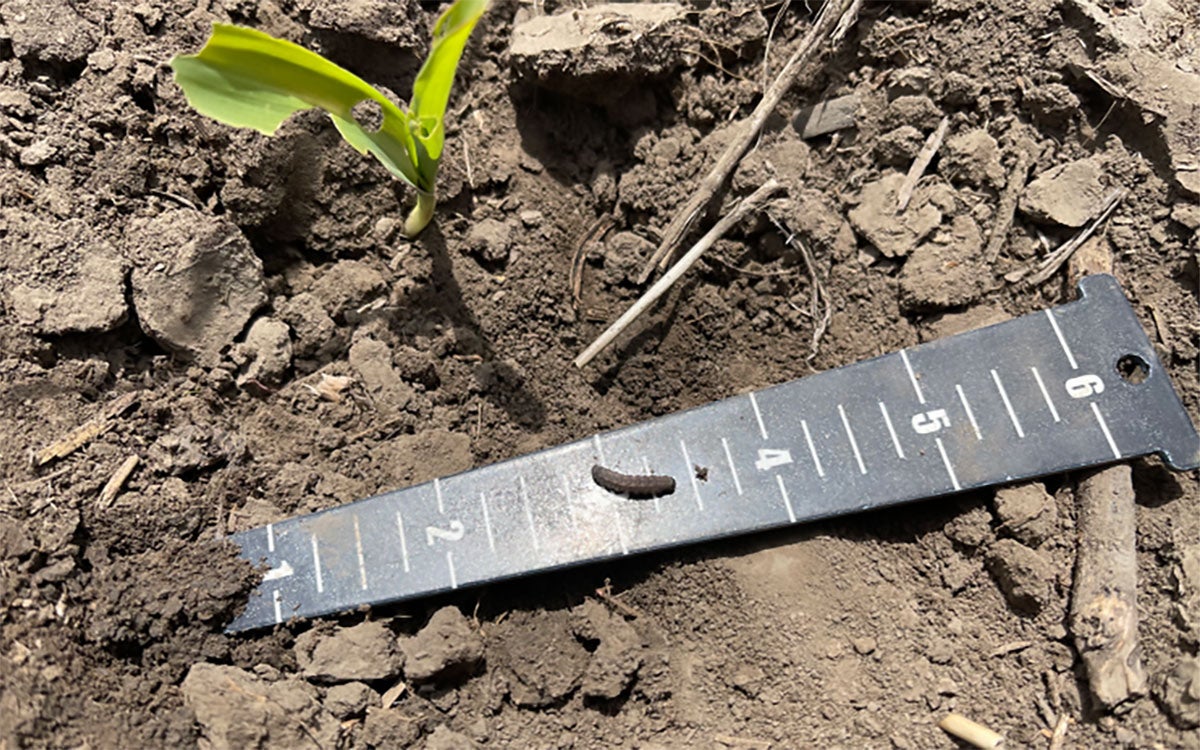
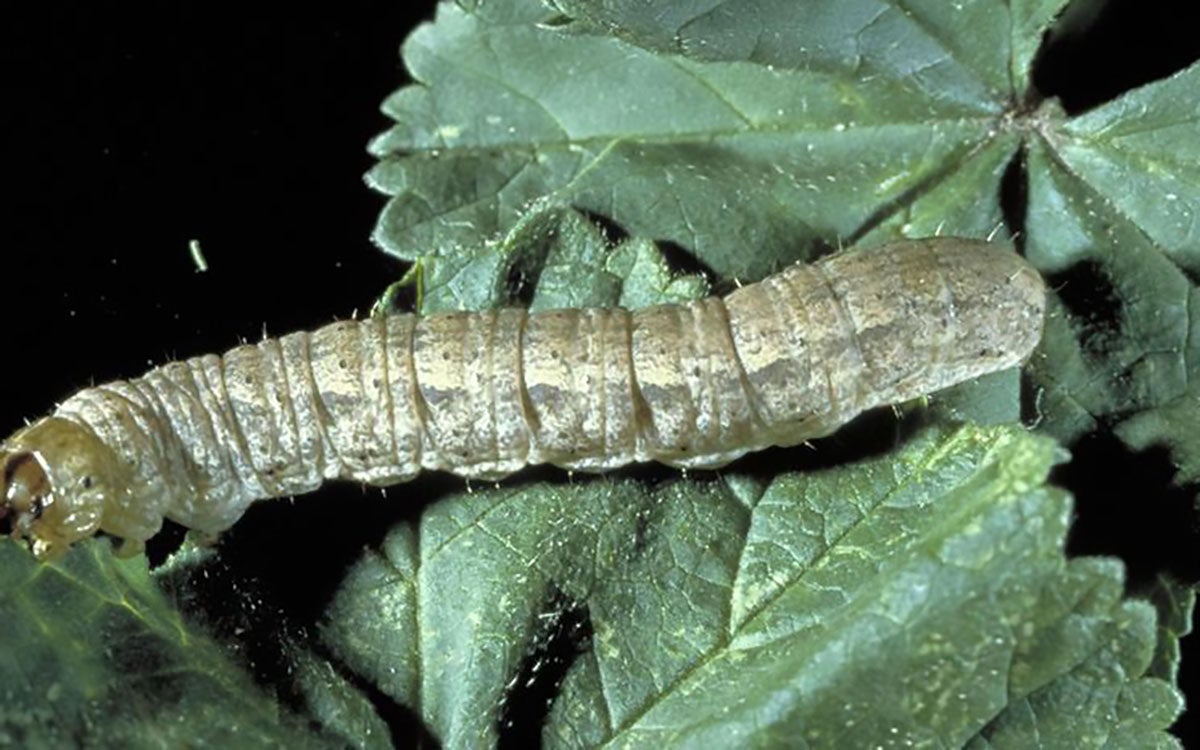
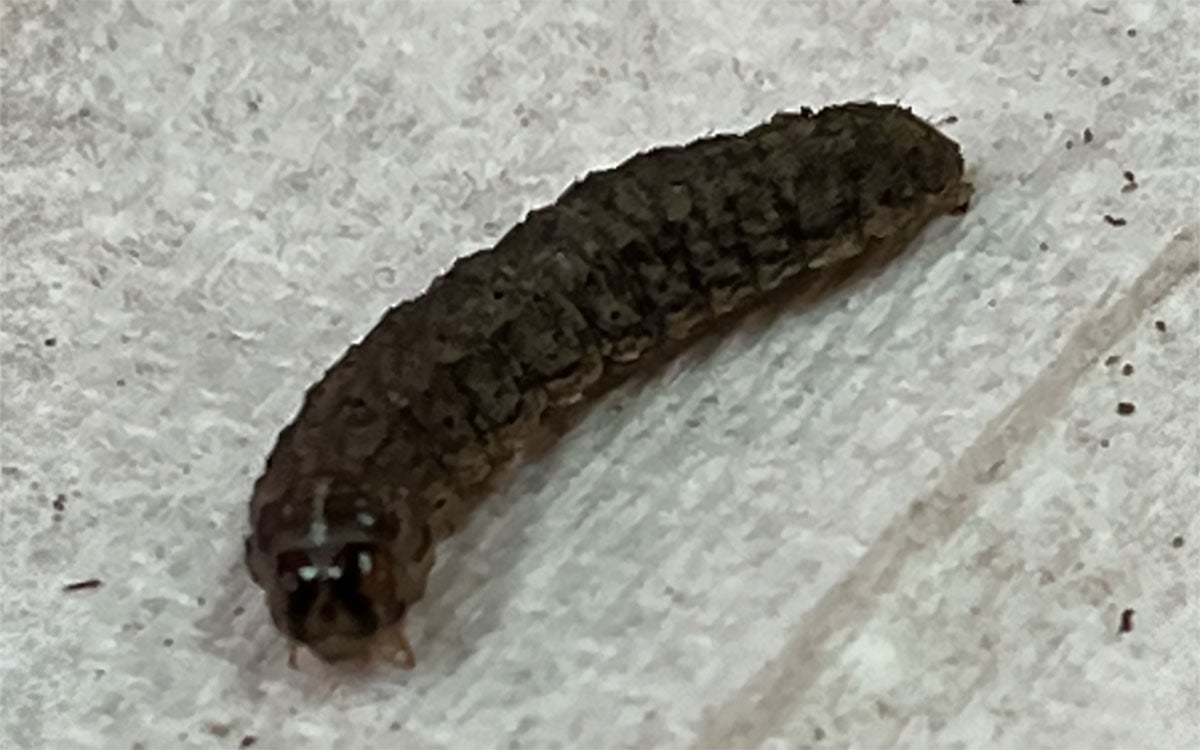
Dingy cutworm caterpillars are nocturnal feeders and are not typically observed on the plants during the day. However, they can be found by moving plant residues or digging 1-2 inches into the soil near defoliated or cut plants. The caterpillars are dull brown to gray in color with a distinct pale gray line that runs down the center of their bodies. The dingy cutworm caterpillars have spots (tubercles) present on the sides of each body segment that are all similar in size to one another (Figure 3). They also have two dark lines on their brown head capsule (Figure 4).
Scouting and Management
Dingy cutworms tend to be more of an issue in fields that have been planted under reduced or no-tillage practices where residue is present, fair to poorly drained fields, or fields with weed or cover crop presence prior to planting. Cutworms can be scouted by examining fields for cut plants and by digging in the soil near cut plants to determine population densities.
To scout for dingy cutworms, examine 20 consecutive plants in five locations throughout the field (100 plants per field) and determine how many are cut or defoliated. Younger cutworm caterpillars may be incapable of cutting the plant. In areas where cut plants are observed, dig into the soil within the row to find any caterpillars that may be present.
Insecticide management should be considered if 20% or more of the scouted plants are cut and the caterpillars are less than 3/4 of an inch or shorter in length. Caterpillars this size will continue to feed on plants and may further reduce stands. Please refer to the current editions of the South Dakota Pest Management Guides for a list of insecticides labeled for the management of dingy cutworms.