Written collaboratively by Adam Varenhorst, Philip Rozeboom, Patrick Wagner, and Brad McManus.
Aphids are present in South Dakota wheat fields, and that means it’s time to start scouting. Currently, the aphid populations are still well below the threshold levels. The species observed include greenbug, bird cherry oat aphid, and English grain aphid. Aphid populations tend to increase unless there is an abundant natural enemy population present or if management occurs. At this time, fields should be scouted regularly to ensure that thresholds are not exceeded.
Aphid Identification
Bird Cherry Oat Aphids
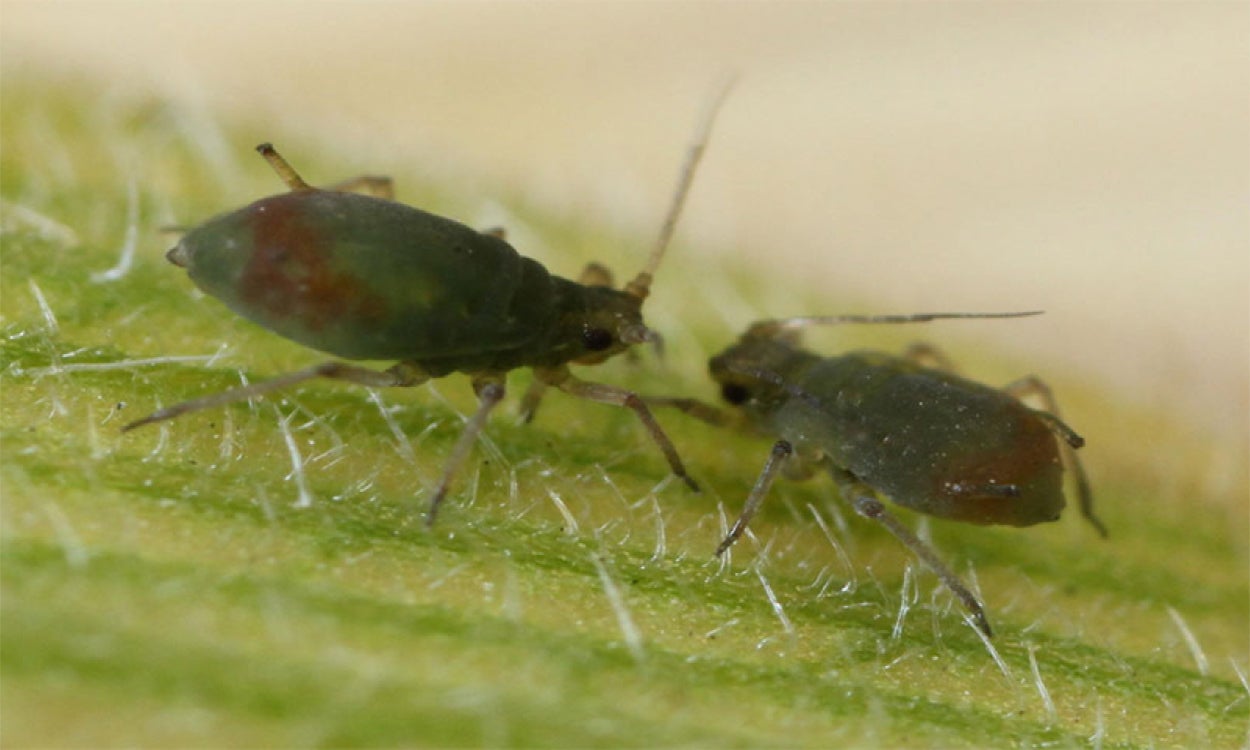
These will vary in color from olive to dark green and can be identified by the characteristic burnt red-orange patch that is present on the end of the abdomen near the cornicles or “tailpipes” (Figure 1). Bird cherry oat aphids can be difficult to scout for without a sweep net due to the defensive behavior of falling off the plant when disturbed. They will typically be present on the underside of the leaves, as well as the stem.
English grain aphids
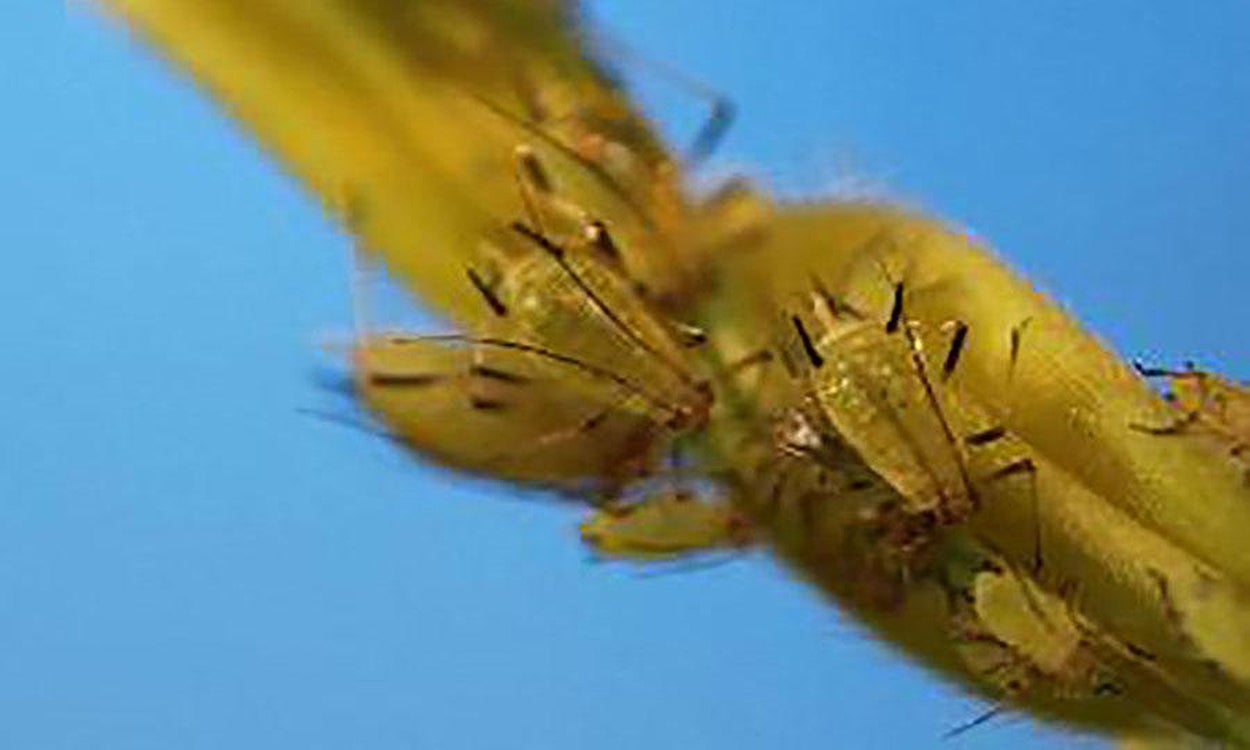
Most will be light to dark green in color, but it is possible to also observe a light-brown variation of English grain aphids. They can be identified by their black antennae, cornicles, and joints of each leg (Figure 2). English grain aphids are large in size. During heavy infestations, they can be present on almost every part of the plant aboveground.
Greenbugs
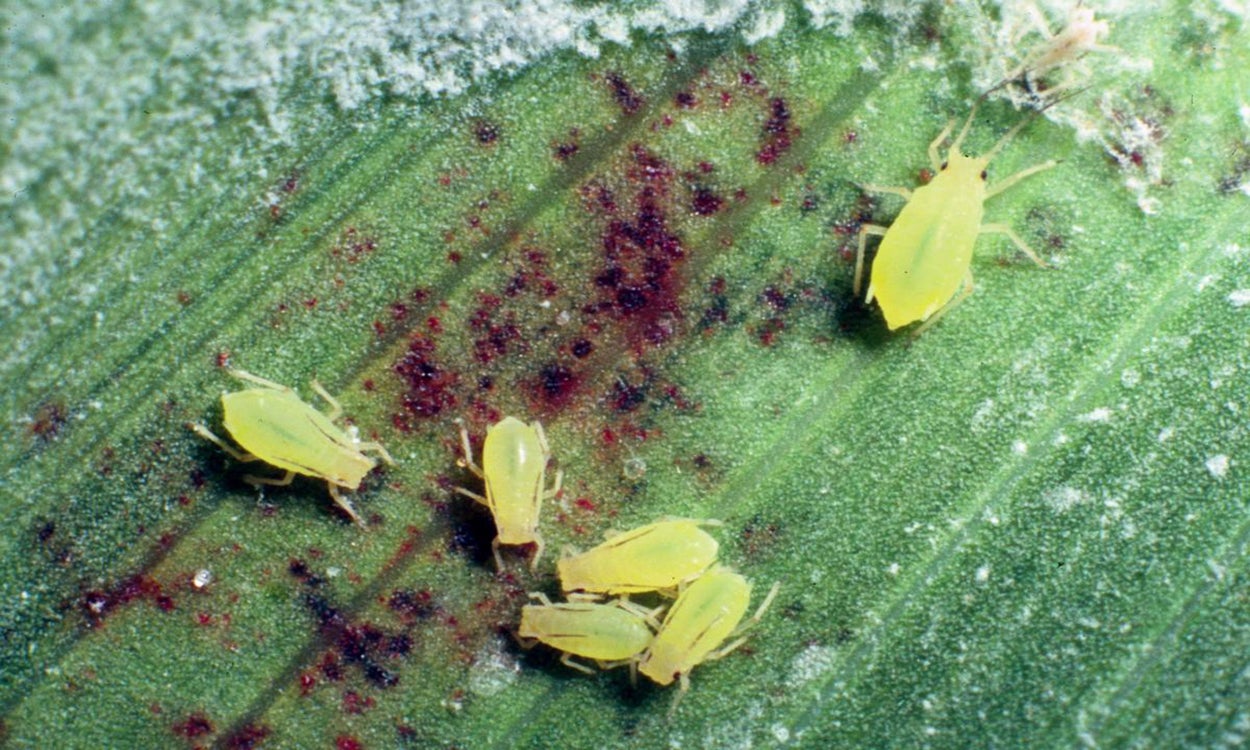
These aphids are light green in color and can be identified by the dark-green stripe present on their back. Feeding by this species causes yellow discoloration and red spots on the leaves, due to a toxin present in its saliva (Figure 3).
Scouting Wheat for Aphids
We recommend scouting for aphids in wheat by starting at the edge of the field and walking in a “W” or zig-zag pattern. While walking the pattern, randomly choose twenty plants from each leg and examine the plants for aphids. During the spring, aphids are typically present on the leaves and stems of the plants. Table 1 contains the economic thresholds for the three aphid species that we observe on wheat in South Dakota.
If populations exceed the thresholds, please refer to the most-current edition of the South Dakota Pest Management Guide: Wheat. It is important to remember that treating wheat when aphids are well below the threshold does not ensure season long suppression. These prophylactic treatments may actually result in aphid increases over time as insect predators are removed in addition to any aphids that are present at the time of insecticide application.
| Pest | Number of Aphids Per Plant | ||||
|---|---|---|---|---|---|
| - | Seedling Stage | Boot to Heading Stage | Flowering Stage | Milky Ripe Stage | Milk to Medium Dough Stage |
| Bird Cherry Oat Aphid | 20 | 30 | >5 | 10 | >10 |
| English Grain Aphid | 30 | 50 | 5 | 10 | >10 |
| Greenbug | 5-15 | 25 | >25 | >25 | >25 |