Written collaboratively by Patrick Wagner, Philip Rozeboom, Brad McManus, and Adam Varenhorst.
Black grass bugs are a common early-season pest of forage grasses in South Dakota. In the spring, black grass bugs feed on grasses as they emerge from dormancy. This feeding activity often results in stunted plants and decreased forage quality.
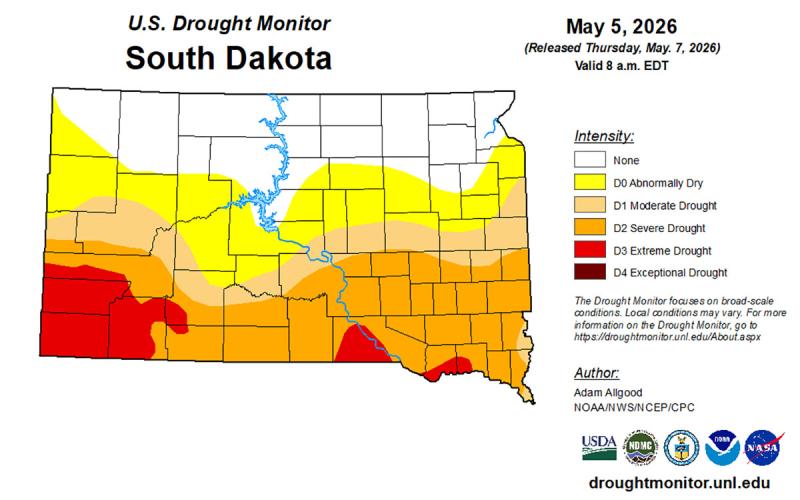
Drought conditions exacerbate the impact of black grass bugs by stressing plants and reducing their ability to tolerate and recover from feeding injury.
According to the latest U.S. Drought Monitor, drought conditions ranging from abnormally dry, moderate drought, severe drought, and extreme drought in bands from east-west South Dakota (Figure 1). Monitoring and potential management of black grass bugs in drought-stricken areas is of increased importance this spring.
Profile
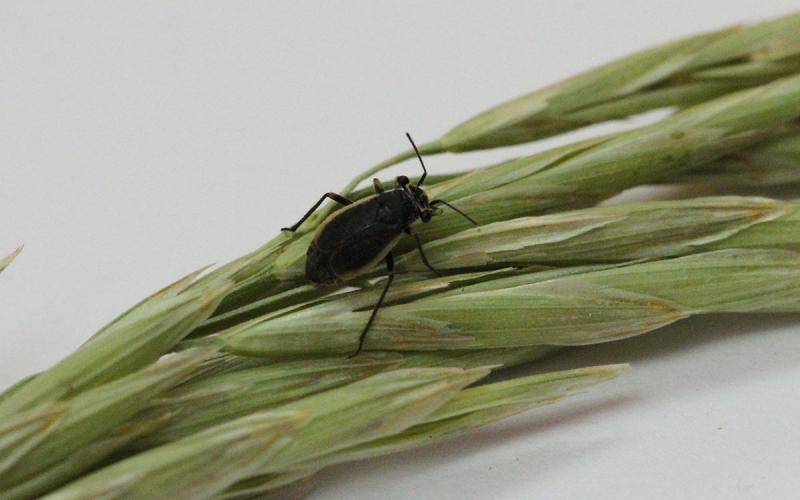
Black grass bugs are small bugs that are uniformly black or black with tan margins along their sides (Figure 2). They are approximately ¼ of an inch long and have large eyes protruding from the sides of their head. Black grass bugs have one generation per year. They overwinter as eggs and hatch out as soon as grass begins to green up in the spring. Upon hatching, nymphs feed on tender new grass and mature over the next 4 to 5 weeks. As adults, they live for several more weeks to mate and lay eggs for the following year.
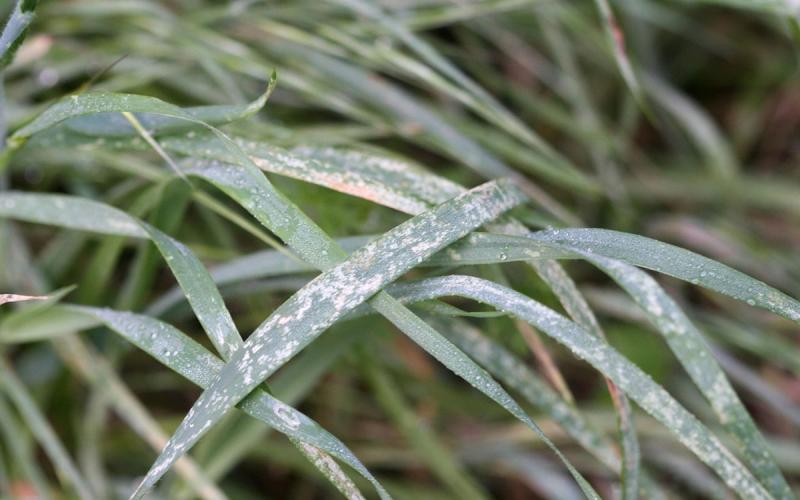
Feeding damage appears as light-colored spots on the leaves, called stippling (Figure 3). Black grass bugs primarily feed on grasses but can may also feed on broadleaf plants. They prefer wheatgrasses including crested and intermediate. Road ditches or pastures composed of wheatgrass monocultures are most susceptible to infestation. Severe infestations may lead to black grass bugs migrating into nearby wheat fields, although injury is often limited to the field edges.
Scouting and Management
There are no established thresholds for black grass bug management. However, early detection is recommended as large populations can quickly cause widespread forage reductions. Check pastures and wheat fields for areas of discoloration. Closer inspection of the plants can reveal characteristic stippling injury and black grass bug nymphs or adults. A sweep net is helpful when scouting, as the bugs usually drop to the ground when disturbed.
Black grass bugs can be managed effectively through proper grazing management, hay removal, burning, or foliar insecticides. For pasture and range situations, intensively grazing livestock in the spring can help reduce black grass bug feeding injury and the survival of egg-laying females. Furthermore, intensive grazing in the fall will remove stems containing eggs, which results in lower populations the following year. This type of seasonal management can also be achieved through mowing or burning. In areas that have been heavily impacted by black grass bugs during the previous year, applying an insecticide, such as Malathion, during spring emergence can be very effective. It is not necessary to manage black grass bugs every year, as it takes several years for their populations to build.