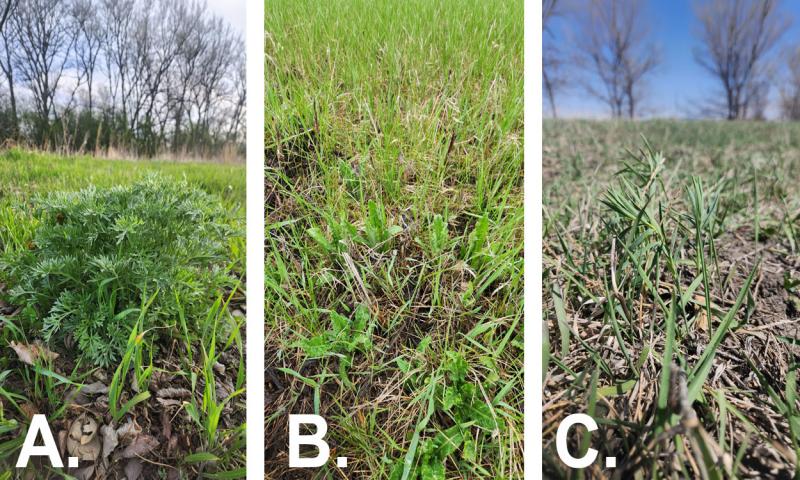
Absinth wormwood, Canada thistle and leafy spurge have emerged and are growing in eastern South Dakota (Figure 1). If not effectively managed, these weeds can displace desirable forage in pasture and rangeland.
Scouting Tips
While these plants are small and actively growing, now is the time to start scouting where infestations are in the landscape and develop a management plan. Plan to allow extra time to scout for these weeds as these plants will blend in with desirable vegetation.
- Record where the weeds and what common species are in the area. This will make implementing management tactics more efficient. Mapping can be as simple as recording on paper or using GPS coordinates.
- Determine what weed species are present in the area. Not all tactics are effective for each weed species; a “one-size fits all” approach is likely not effective. Knowing what weed species are present can help tailor the most effective tactics for each area. Different weed species may require different tactics depending on size/growth stage as well. Continuous scouting will ensure timely treatment.
- Continue to monitor the infested area throughout the growing season to determine the effectiveness of implemented tactics. Management tactics are dependent on weed size/stage to be effective. Constant monitoring can help find new infestations and determine if follow-up tactics are needed.
Management Considerations
While this time of the year is likely too early for herbicide applications, if weeds are taller than or crowding out desirable vegetation, clipping/mowing can be implemented now to help the desirable vegetation become more established than the weeds. While scouting to determine the appropriate timing for an herbicide application, refer to the most-recent SDSU Extension guides for Noxious Weeds and Pasture and Range Weeds for herbicides and other management options.
![A herd of cattle gather around a stock pond on a vast, lush grassland. Courtesy: USDA [CC BY 2.0]](/sites/default/files/styles/teaser_800x500/public/2019-05/W-00231-00-cattle-grazing-grassland-pasture-range.jpg?h=8f818b46&itok=6GS1_Ww0)