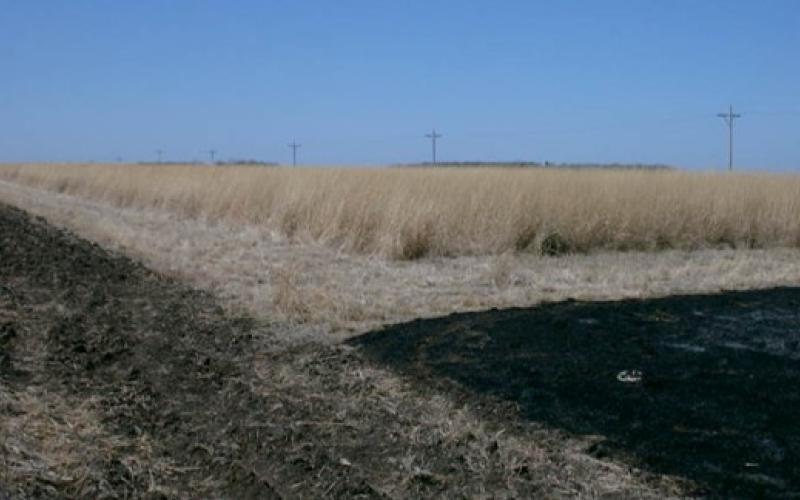
Free nitrate testing is available at various locations across the state. Nitrate testing strips are used to provide a semi-quantitative value of nitrate levels in forages. It allows producers to make decisions based on the presence or absence of nitrates and appropriate timing for cutting. If the results indicate 1000 ppm or higher, the recommendation will be to send the sample to a lab or wait a few days and bring an additional sample in for re-testing. If it is negative, the forage can be cut or grazed without risk of nitrates.
Collecting a Sample for Testing
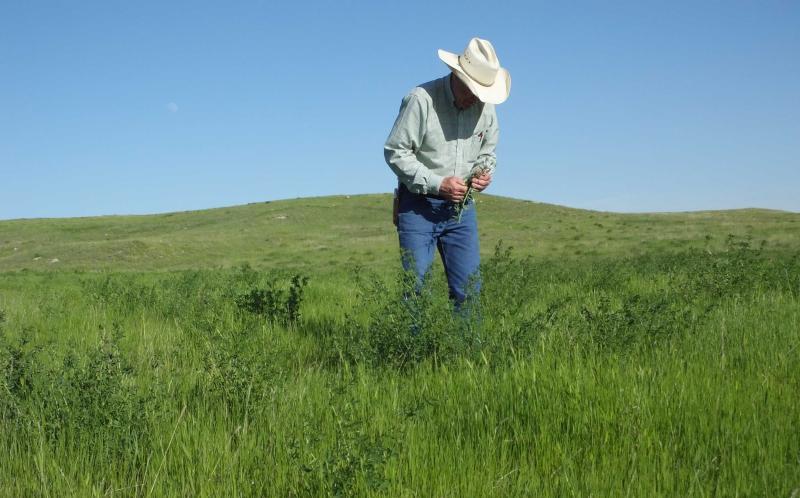
A representative sample needs to be taken from different areas across the field to reflect topography and soil differences. These factors can affect nitrate levels. Select plants from at least 10 different areas and cut the plant at ground level, or pull it out of the ground, so that the lowest growth nodes can be tested. The more representative the sample, the better the test will work to identify potential nitrate concerns. If the hay has already been cut a core sample must be taken that is representative of the entire hay crop.
With the current drought conditions across the state, the risk of high nitrates in forages is increased due to slowed photosynthesis and conversion of nitrate into proteins. Be diligent about testing forages prior to haying or grazing to prevent the negative impacts that nitrates can cause, specifically in ruminant animals. If crops such as wheat fail to make grain, and producers plan to utilize it for a hay crop, test it for nitrates prior to harvest to determine the safety level. The higher levels of nitrogen fertilizer that are applied, the higher the risk for nitrate toxicity. Always err on the side of caution and have feeds tested. For more information on nitrate toxicity check out Drought-Stressed Forage: Nitrate Considerations and Frequently Asked Questions - Forage Nitrate Toxicity in Ruminant Livestock.
Testing Locations and Certified Testers
Please contact your nearest SDSU Extension Regional Center for free testing. For specific questions on the test, contact Jaelyn Whaley, Parker Witt, or Kim Ricardo.
SDSU Extension Regional Centers
- Aberdeen: Laura Edwards and Tammy Roso
- Lemmon: Robin Salverson and Jaelyn Whaley
- Mitchell: Taylor Grussing
- Pierre: Kim Ricardo and Aletha Benson
- Rapid City: Erin DeHaan, Clarence Winter and Marcy Bowman
- Sioux Falls: Heather Gessner and Connie Strunk
- Watertown: Parker Witt
- Winner: Sean Kelly
SDSU Extension County Offices
- Bennett: Mary Kay Sell
- Butte/Lawrence: Cindy Riley
- Clay: Rali Sykes
- Fall River: Chrissy Porter
- Haakon: Paige Hamill