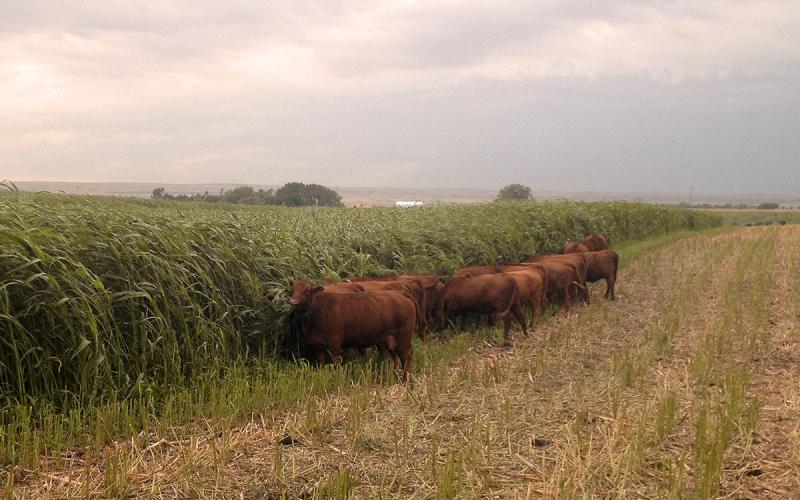
When drought hits, water failing to fall from the sky is not the only place water is missing. Dugouts, ponds and creeks are already low and dry up quickly as hot days persist. When forage remains in the pastures, the need to haul water may exist to keep cattle grazing.
Water Hauling Systems
Setting up a water hauling system includes more than just finding a trailer to haul with and setting up a trough in the middle of the pasture. Additionally, one must also consider volume and access needed to supply the animals with enough water 24 hours a day.
Supplies Needed
- Water tank – 8 foot or 10 foot minimum or multiple tanks to pump water into.
- Trailer and portable water tank.
- Transfer pump and hoses.
- Storage tanks – hold extra capacity.
- T-post and fence panels to protect tank and keep in place.
Calculate Volume and Access
Water volume intake is best calculated based on dry matter intake. Current findings from Dr. Alfredo DiCostanzo with University of Nebraska-Lincoln Extension found that for each pound of dry matter a feedlot animal consumes when it is warmer than 75 degrees Fahrenheit, 0.66 to 1 gallon of water might be consumed. Thus, animals consuming 24 pounds of dry matter would need 16 to 24 gallons of water per day. Aside from total gallons an animal consumes throughout the day, don’t forget to account for the multiple trips to the tank, adding time and space needed to make it possible for all animals to consume their daily water needs.
Taking these values from the feedlot to a pasture setting where hauling water may be needed to utilize forage, calculate linear access at the water tank similar to bunk space. Bunk space recommendations are 12 to 18 inches for yearlings and mature animals, respectively. Using an 8-foot diameter tank would allow 16 animals to drink at one time based on the 300-inch linear circumference. Not accounting for calf access, it is important to have a lower tank strictly for calves to consume water or build up the ground level around the tank so calves can access the water easily alongside cows.
Example
Use the following to calculate how much supply and tank space is needed for 100 cow-calf pairs in the summer.
100 cow-calf pairs estimated at 1500 pounds (combined weight of pair)
- Water Intake: DMI (lb) × 1 gallon / lb.
- Example: 1500 × 0.025% DM intake = 37.5 pounds DM × 1 gallon per pound = 37.5 gal/day*
- *Actual intake will also depend on temperature, humidity, stage of production, forage type and activity, in addition to other environmental influences.
- Supply per day: 37.5 gal × 100 = 3750 gallons
- Access/ head space: 8-foot tank diameter = 300 inch linear circumference
- Example: 300 in/ 18 in per head = 16 head per turn at trough
- Delivery Example: 3750 gallons / 625 gallon volume per 8-foot tank = 1 tank filled six times per day, or 2 tanks filled 3x per day
Management Considerations
Utilizing stationary storage tanks to hold at least half your water needs will help with demand on hot days and aid animal comfort. Setting this up via gravity flow and float system to the water trough prevents crowding of animals if water deliveries get delayed, allowing some water to always be available. If stationary storage is not available, increase the number of water access points so multiple tanks can be filled and accessed by the cow herd at one time during delivery. Since herd animals normally come up to drink as a group, having enough access for a majority of the group is key to ensure the calves and less dominate cows are able to still get water even if they are not the first ones to the tank.
Keep track of water hauling expenses such as supplies, time, fuel and gallons used. Through your local USDA Farm Service Agency, there may be emergency funds available to help cover some of these expenses with adequate documentation.
Also, if forage is diminishing, the economics of hauling water and feed versus moving the cattle to another grazing resource or dry lot where water is more easily available should be considered. Another option is to change the class of livestock you are hauling water too. Younger and smaller animals like yearlings and stockers will consume less forage and less water per day than a mature cow, extending grazing days and fewer daily water deliveries. Don’t forget to test any water sources for livestock suitability before turning cattle out on new water sources during a dry year. SDSU Extension can test water for you at locations around the state by bringing in a small sample to the office. For more information, visit the SDSU Extension drought page.