Overview
Western South Dakota often experiences warmer winter temperatures compared to other areas of the state as demonstrated in 2025-26. Table 1 summarizes the mean monthly maximum, minimum, and overall average air temperatures recorded at various locations in November and December 2025, compared with the 30-year normals (1991–2020). Across all sites, temperatures were up to several degrees warmer. Precipitation, including snowfall, was also below normal during that timeframe. While these milder conditions may be welcome compared with typical snow and frigid temperatures, they can have important implications for perennial plants.
| Location | Nov. 2025 | Nov. Normal (1990-2020) | Dec. 2025 | Dec. Normal (1990-2020) | ||||||||
|---|---|---|---|---|---|---|---|---|---|---|---|---|
| Temperature (°F) | ||||||||||||
| Max Temp | Min Temp | Avg Temp | Max Temp | Min Temp | Avg Temp | Max Temp | Min Temp | Avg Temp | Max Temp | Min Temp | Avg Temp | |
| Rapid City | 53.7 | 22.1 | 37.4 | 47.3 | 21.9 | 34.6 | 48.4 | 16.2 | 30.8 | 37.2 | 13.9 | 25.6 |
| Spearfish | 52.3 | 25.3 | 38.7 | 45.9 | 25.6 | 35.7 | 46.5 | 19.6 | 33.8 | 37.2 | 17.5 | 27.3 |
| Pine Ridge | 54.8 | 23.3 | 39.8 | 48.5 | 20.5 | 34.5 | 49.2 | 21.1 | 34.8 | 37.9 | 12.7 | 25.3 |
| Lemmon | 45.3 | 23.1 | 33.3 | 43.5 | 21.9 | 32.7 | 33.3 | 10.8 | 22.9 | 31.9 | 12.3 | 22.1 |
| Philip | 50.0 | 25.4 | 37.4 | 48.1 | 21.6 | 34.9 | 43.7 | 16.9 | 29.3 | 36.6 | 12.2 | 24.2 |
*Temperature data referenced from NOAA NCEI and the SDSU Mesonet.
Impacts of a Warm Winter on Flowering Bulbs
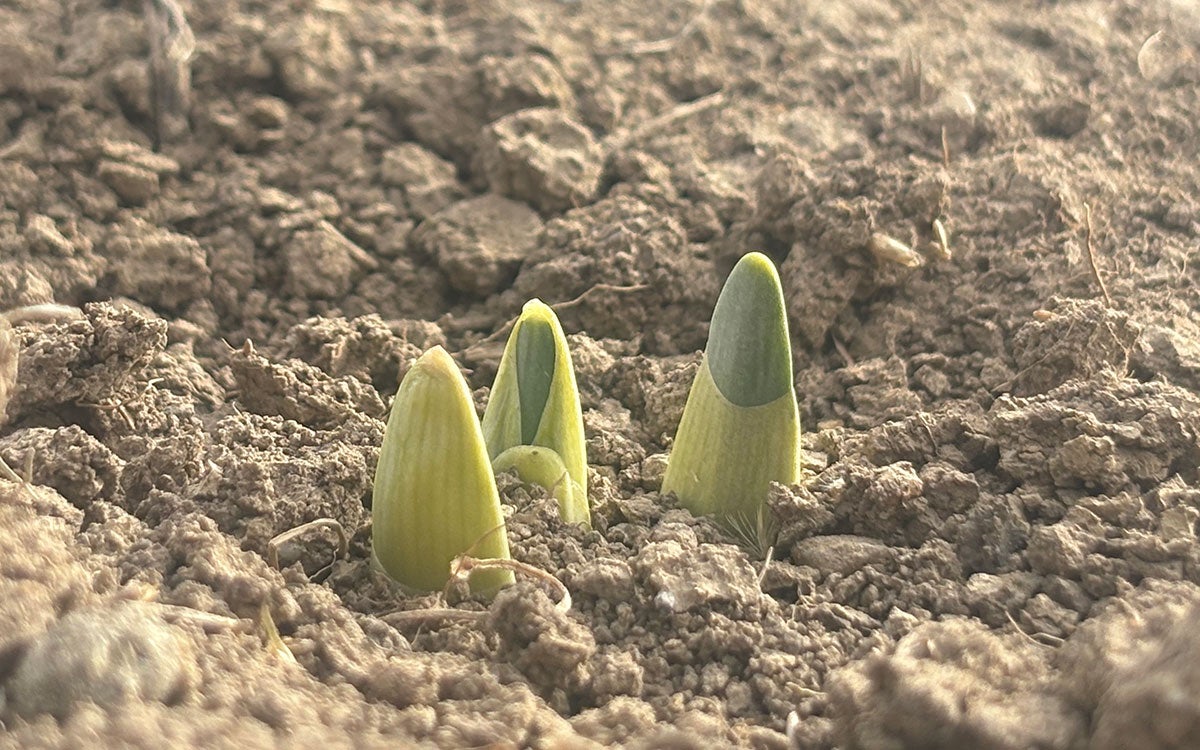
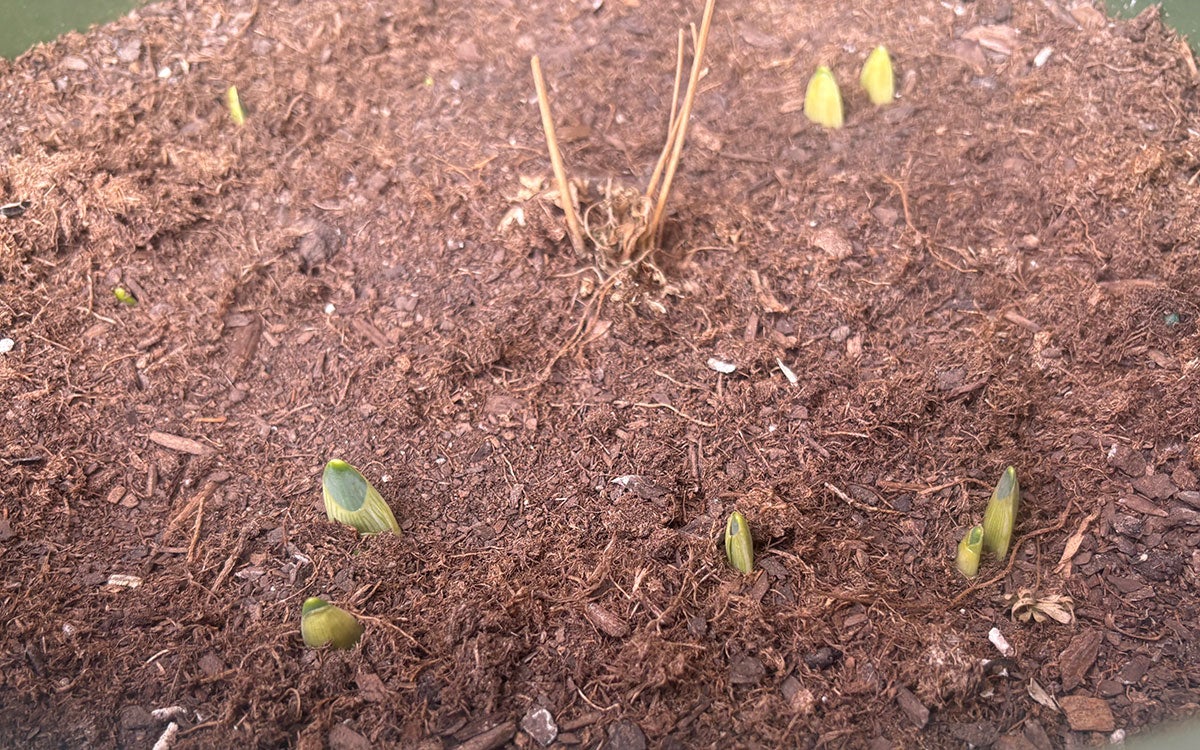
During warm winter periods, gardeners often notice premature emergence of spring-flowering bulbs (Figures 1 and 2), which normally do not appear until March or April. Although early growth may seem concerning, the risk to the plants could be limited. Bulb shoots are cold-tolerant, and if typical winter conditions (i.e. colder temperatures and snowfall) return, this growth may be temporarily delayed. Snowfall is particularly beneficial, as it both discourages premature growth and provides insulation and protection. However, if mild temperatures persist and snow remains absent, plants may be negatively affected.
Potential impacts include frost damage to tender emerging shoots. Even when the bulb survives, frost-damaged foliage can reduce photosynthesis and weaken overall plant vigor. Early growth may also deplete the bulb’s energy reserves, leading to weak or missing blooms. Premature shoot development before flowers fully form can result in small, misshapen, or incomplete flowers. In addition, dry winter air can accelerate moisture loss from foliage; without sufficient soil moisture, shoots may dry out, causing stunted growth or dieback. For flowering bulbs that depend on pollinators, early blooms may occur before pollinator activity begins, reducing opportunities for successful pollination.
Temperature Requirements for Bulb Growth and Blooming
The challenge of warm winters underscores the importance of temperature in regulating bulb growth, as the right sequence of warm and cold periods is critical for healthy shoots and properly formed flowers. While optimal growth temperatures vary by species, most bulbs grow best between 60 and 71°F. Cold temperatures are still necessary for the development of flower stalks and well-formed blooms, making the winter chilling period crucial for flower formation. Conversely, prolonged warm conditions without a cold period can result in slow shoot growth and severe flowering disorders.
Table 2 presents optimized temperatures for key developmental stages of various flowering bulb species, referenced from Khodorova and Boitel-Conti (2013). This includes temperature ranges needed for flower induction (formation of flowering structures inside the bulb), flower maturation and shoot development (growth and finishing of flowers and stems), and aboveground growth (emergence and growth of leaves and flower stems). This provides a comparative reference for species-specific temperature needs throughout bulb development.
| Genera | Family | Flower Induction | Shoot Development and Flower Maturation | Above-ground Growth |
|---|---|---|---|---|
| Temperature (°F) | ||||
| Allium spp. | Alliaceae | 49 - 55 | 41 - 46 (16 – 24 wks.) | 46 – 52 (2 wks.) then 63 |
| Hyacinthus spp. | Liliaceae | 63 - 77 | 39 - 48 (10 – 18 wks.) | 50 - 55 (2 – 3 days) then 73 |
| Iris spp. | Iridaceae | 48 - 59 | 48 - 55 (26 to 28 wks.) | > 43 |
| Narcissus spp. | Liliaceae | 63 - 68 | 45 – 52 (6 to 10 wks.) | 48 - 59 |
| Tulipa spp. | Liliaceae | 63 - 77 | 39 – 48 (12 to 18 wks.) | 57 - 61 |
*Table information adapted from Khodorova and Boitel-Conti (2013).
Temperature Management Tips for Flowering Bulbs
- In South Dakota, general recommendations are to plant bulbs from September through October, while also monitoring long-term temperature forecasts. Once nighttime air temperatures consistently remain in the 40 to 50 degrees Fahrenheit range, conditions are suitable for planting. Ideally, bulbs should be in the ground for four to six weeks before the soil freezes.
- After planting, apply two to three inches of mulch (e.g., leaves, clean straw, grass clippings, wood mulch, etc.) to help retain soil moisture and moderate soil temperatures. Because South Dakota often experiences high winds, additional mulch may need to be applied throughout the winter.
- Areas on the south and west sides of homes or other structures tend to be warmer due to reflected sunlight. While bulbs planted in these locations often bloom earlier in spring, they also face a greater risk of premature growth. Therefore, site selection should be carefully considered when planting bulbs.
- Winter watering for bulbs should be minimal and only applied if the soil is unusually dry and warm, as early-emerging shoots are not meant to be encouraged, and excess moisture may lead to risk of rot.
- Frost-damaged foliage should generally be left until it is mostly brown and dry, because even pre-emerged leaves contribute to carbohydrate storage; removing green or partially damaged foliage could weaken the bulb and reduce its ability to subsequently bloom.
Unusually warm winters can trigger early shoot emergence in spring-flowering bulbs, disrupting their normal growth cycle and increasing vulnerability to frost and other stresses. These conditions can reduce bloom quality and deplete a bulb’s energy reserves, making careful management essential.
References and Resources
- Jauron, R., Haynes, C., and Steil, A. (2023). Selecting and Planting Spring-Blooming Bulbs. Iowa State University.
- Khodorova, N. V. and Boitel‑Conti, M. (2013). The role of temperature in the growth and flowering of geophytes. Plants, 2(4), 699–711.
- Lang, K. and Schnabel, C. (2021). Prepare for Early Spring Blooms by Planting Hardy Bulbs in the Fall. South Dakota State University.
- Lang, K. and Schnabel, C. (2022). Bulbs to Plant in the Fall. South Dakota State University.
- Lang, K. (2021). Tulips Bring Early-Season Color to the Garden Each Year. South Dakota State University
- National Oceanic and Atmospheric Administration - National Centers for Environmental Information. (n.d.). National Centers for Environmental Information.
- South Dakota Mesonet. (n.d.). South Dakota Mesonet. South Dakota State University.