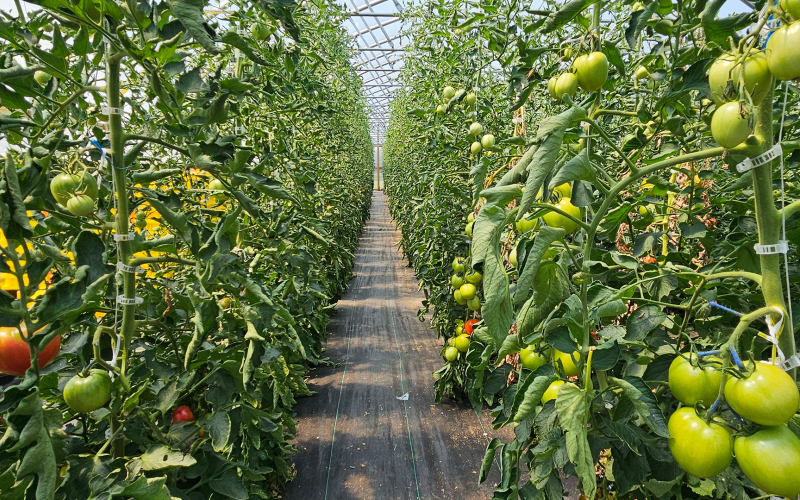
Join the conversation with four South Dakotans as they share in-depth experiences for building high tunnels to extend the fruit, vegetable and flower growing season in the Northern Great Plains. They give detailed information on planning, building and maintaining high tunnels from start to finish. Whether you are new to building high tunnels or looking to make changes to an existing structure, you will find helpful tips and tricks within each segment of this series.
This video series features the high tunnel project team: Kristine Lang, Assistant Professor and SDSU Extension Consumer Horticulture Specialist; Tanner Aiken, SDSU Project Manager/Horticulturist; Shannon Mutschelknaus, Wayward Springs LLC; Dirk Oudman, Blue Sky Vegetable Co.; and Darin Waldner, Waldner Farms.
How to Build High Tunnels Video Series
Buying a High Tunnel https://youtu.be/P0ygvmCgyOU
Producers introduce different high tunnel styles, venting, size, kit and purchasing options.
Preparing a High Tunnel Site https://youtu.be/r0aXBmEuIzA
When preparing for a high tunnel build, you will need to consider location, dirt work, utilities, orientation, spacing and how you will install your posts.
Framing a High Tunnel https://youtu.be/PJdiJBTpnSg
In this video, the producers talk about different high tunnel pieces, assembling the bows, raising the bows and common pitfalls when it comes to framing high tunnels.
Building High Tunnel End Walls https://youtu.be/sFs4cpNafGc
When you are ready to build your end walls, you will need to consider what materials to use and what style doors will be the best fit for your operation.
Preparing to Pull High Tunnel Plastic https://youtu.be/MD1HlqZDrl0
In this video, the producers discuss high tunnel plastic options, ordering plastic, the lifespan of plastic, blower installation and plastic maintenance.
Pulling High Tunnel Plastic https://youtu.be/iW2WZf8xuaI
In this video, learn how to pull and secure high tunnel plastic.
Assembling Motorized High Tunnel Sides https://youtu.be/4jfBSlA3a08
If you are interested in mortoizing your high tunnel, learn about time expectation, the roll lock, side ropes, inflating the sides, maintence and the control box.
High Tunnel Farmer Advice https://youtu.be/W1au8U_2phc
In this video, get farmer advice on high tunnels and how high tunnels help feed South Dakotans.
Funding Statement: This project is funded, in part, by a U.S. Department of Agriculture (USDA) Specialty Crop Block Grant, Sub-Recipient Agreement 2021HR133SDSU3, administered by the South Dakota Department of Agriculture and Natural Resources; and the National Institute of Food and Agriculture, USDA, under agreement number 2022-38640-37486 through the North Central Region SARE program under project number ENC22-216. USDA is an equal opportunity employer and service provider.
Disclaimer: The contents of this publication and the material provided herein come from many sources and are for informational purposes only. It is not intended to be a substitute for personalized professional advice.