BROOKINGS, S.D. – South Dakota State University has published new recommendations on soil tarping that can help producers manage weeds.
SDSU graduate Hannah Voye, as part of a multi-state research team, recently published new research demonstrating that soil tarping – laying tarps on the soil prior to planting vegetable crops – can be valuable for vegetable growers to manage weeds without harming soil health.
“Our study showed reduced weed pressure, and not a lot of crazy impacts on soil health, which is a positive thing for growers to know,” Voye said. “I think we found a lot of really interesting takeaways for growers interested in using soil tarping.”
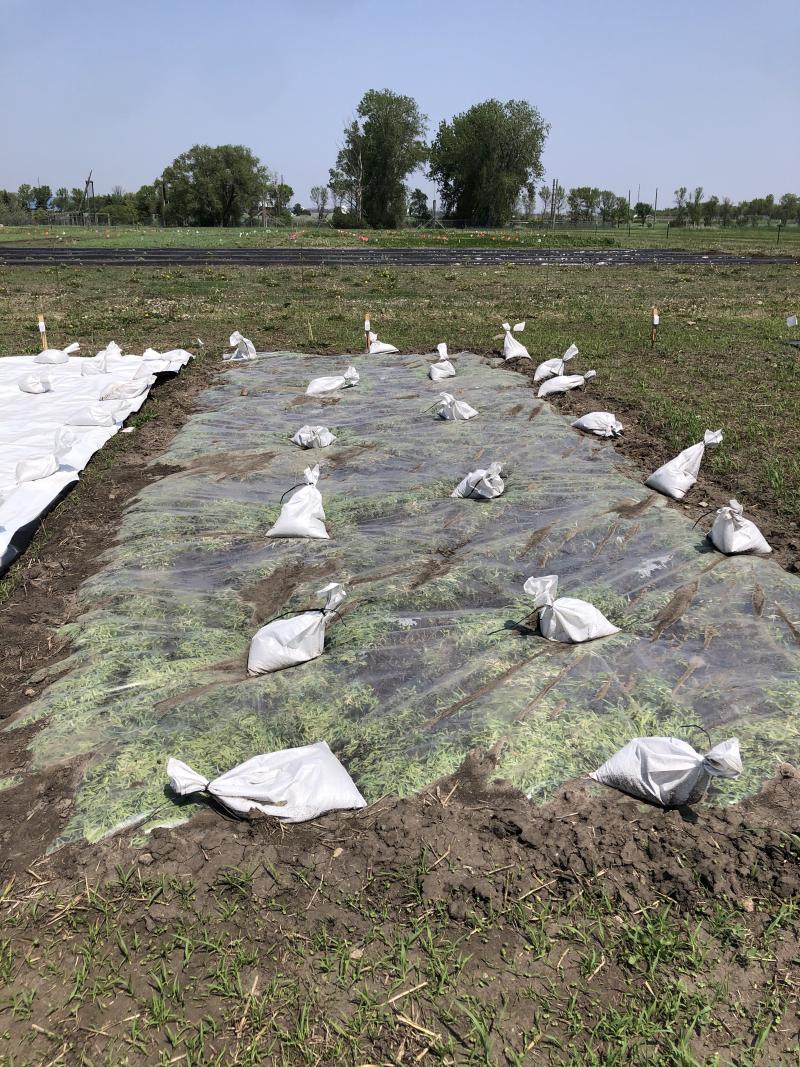
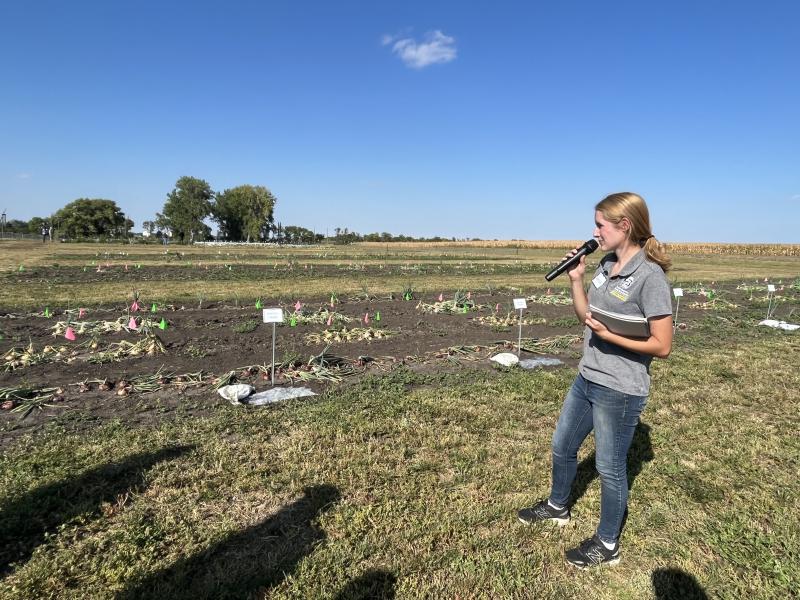
Voye wanted to test no-till options for weed management, with a focus on how those options affect soil health. She used onions as her test crop at the specialty crop field on SDSU’s campus in Brookings and looked at two different types of tarps to manage weed growth. One method uses an opaque tarp to prevent light from hitting the soil and germinating weed seeds so producers can plant in a clean soil bed.
Another method uses clear tarps, which harness heat and solar energy and warm the soil enough to jumpstart weed growth. Voye said there are a finite number of weed seeds in soil, and by exhausting that seed bank early in the season, there are fewer competing with crops later in the season.
Voye and one of her research advisers, Kristine Lang, assistant professor and SDSU Extension Consumer Horticulture Specialist, said South Dakota’s cool springs mean she recommends using black or clear tarps for at least 6 weeks to be effective.
“Many growers were worried about hurting soil microbes on their farms, and this research showed that impacts on soil microbes were very minimal when tarping for 2 to 6 weeks,” Lang said. “If farmers start tarping for months at a time that story may change, but I think this shows that there is a balance that can be found between managing weeds and holding onto soil health.”
The research has been published in two papers: “Improving reduced tillage vegetable systems for the Northern Great Plains: How does early season soil tarping (solarization and occultation) impact soil health?” and “Improving Reduced Tillage in Northern Great Plains’ Onion Production through Early Season Soil Tarping”.
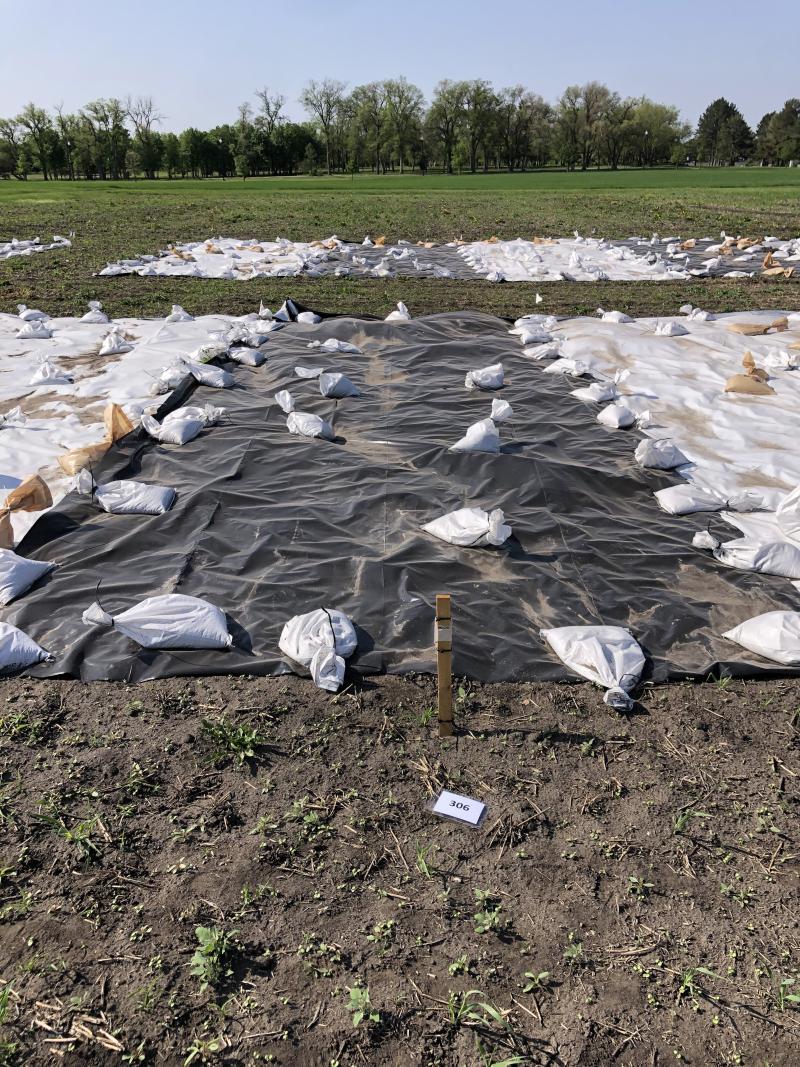
“Hannah did an excellent job of digging deep into her research project and engaging with farmers as trial site collaborators and audience members when she gave presentations and tours,” Lang said. “Her project included things as varied as figuring out how many sandbags would actually keep plastic tarps from blowing away to handling small amounts of soil to detect microbes in a lab setting.”
Voye credits her co-advisers, Lang and Rhoda Burrows, retired professor and SDSU Extension Horticulture Specialist, with guiding her research and supporting her work through publication. She is excited for her findings to be available to producers and hopes that research on the topic will continue.
“It was a very specific project, and I think tarps are something you can use in a lot of different ways for weed suppression,” Voye said. “I think one of the big things I really grew passionate about working at SDSU as a grad student was wanting to help farmers with our research and having it be directly applicable to them.”
A native of Wisconsin, Voye graduated from SDSU in May with a master’s degree in plant science. She received her bachelor’s degree from the University of Wisconsin-River Falls in horticulture. She now works at Ecdysis Foundation in Estelline, traveling to farms across the U.S. for research.
Voye said doing research and working directly with producers is one of her greatest passions, which she discovered during her graduate program. Lang and Burrows helped her find that passion by encouraging her to present her research at events and inviting her to participate in SDSU Extension outreach programs. Lang praised Voye’s dedication to her research, noting her flexibility and ability to balance field work plus lab work.
“Everyone who joins my team is folded into SDSU Extension activities,” Lang said. “Graduate students are given many opportunities to present their work from informal tours and conversations to speaking at national scientific conferences. I've found that farmers enjoy hearing from the students who are passionate about their research, and I hope it helps my students stand out when they enter the workforce.”
For more information on horticulture research, visit the SDSU Extension Horticulture Research page or contact Kristine Lang, assistant professor and SDSU Extension Consumer Horticulture Specialist.