Stay updated and informed with Tree Pest Alert, brought to you by SDSU Extension and the South Dakota Department of Agriculture and Natural Resources. Each week John Ball, Professor, SDSU Extension Forestry Specialist and South Dakota Department of Agriculture and Natural Resources Forest Health Specialist, shares the latest in forestry development across the state. From seasonal issues and timely recommendations to disease diagnosis and expert advice, the Tree Pest Alert is a trusted resource for selecting, planting and caring for trees and shrubs all year round.
Tree Pest Alert
Stay updated and informed with Tree Pest Alert, brought to you by SDSU Extension and the South Dakota Department of Agriculture and Natural Resources. Each week John Ball, Professor, SDSU Extension Forestry Specialist and South Dakota Department of Agriculture and Natural Resources Forest Health Specialist, shares the latest in forestry development across the state. From seasonal issues and timely recommendations to disease diagnosis and expert advice, the Tree Pest Alert is a trusted resource for selecting, planting and caring for trees and shrubs all year round.
Download
Related Content

Is It Too Late to Spray Weeds?
There are a lot of uncertainties with spraying perennial weeds in mid-fall. Under the right weather conditions, some applications may still be worthwhile. However, expensive herbicides applied to large swaths of land may be too risky this late in the season.

Spider-Proofing Your Home This Fall
During fall, spiders often try to find safe places to escape the cooler weather. Unsurprisingly, a warm cozy home is often high on their list. Thankfully, there are some simple steps you can take to help prevent spiders, and other arthropods, from invading your home.
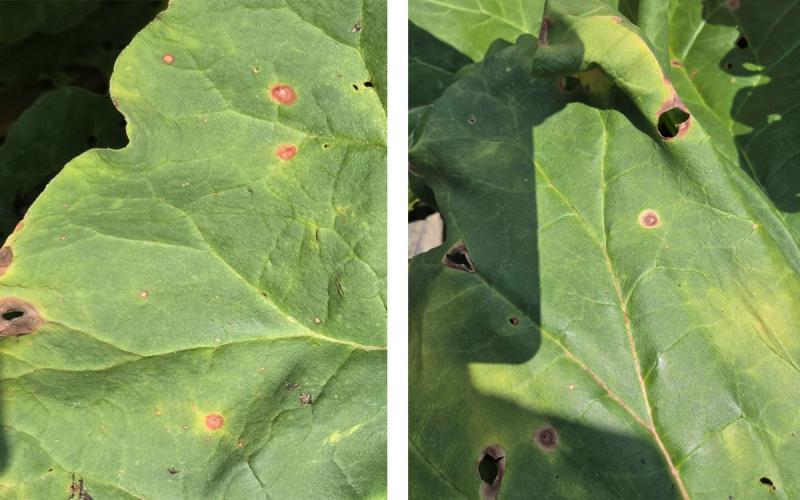
Leaf Spot Diseases of Rhubarb in South Dakota
In South Dakota, rhubarb is generally hardy, but it can develop several diseases that, when left unmanaged, cause severe damage and decline of plants. Leaf spots caused by the fungi Ascochyta rhei and Ramularia rhei are the most-common diseases we observe.