Written collaboratively by Adam Varenhorst, Philip Rozeboom, Patrick Wagner, and Brad McManus.
This week we received several reports of large grasshopper populations originating from southeast South Dakota. The populations were well above threshold and actively defoliating crops. In the past, we have observed populations essentially remove the first 100-200 feet of crops depending on the time of infestation and the species that are present. It’s important to remember to start or continue scouting for grasshopper activity. In many areas, the grasshoppers are already moving to crops due to the dry down of alternative food sources caused by drought conditions.
Scouting and Management
The USDA recommended threshold for grasshoppers is 15-20 nymphs or 8-14 adults per square yard. Managing grasshoppers during the nymphal stage is typically more successful when compared to managing adult populations.
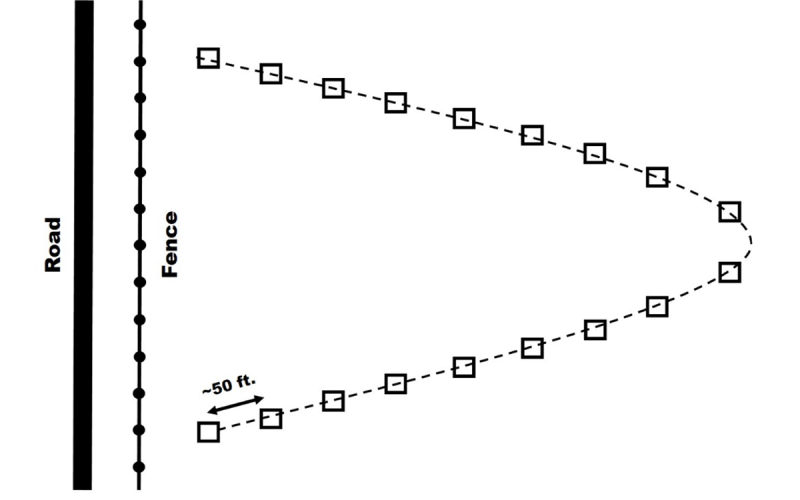
To scout for grasshoppers, we recommend traveling in a horseshoe pattern and stopping approximately every 50 feet to determine the number of grasshoppers in a square yard (Figure 1). To do this, visualize an approximate square yard around your feet and simply count the number of grasshoppers present in that area. Repeat this process until you are back to the edge of the field.
If above threshold populations are detected a foliar insecticide should be applied. Please refer to the latest South Dakota Pest Management Guides for a list of insecticides labeled for grasshopper management.