Written collaboratively by Adam Varenhorst, Philip Rozeboom, Patrick Wagner, and Brad McManus.
Recent Observations
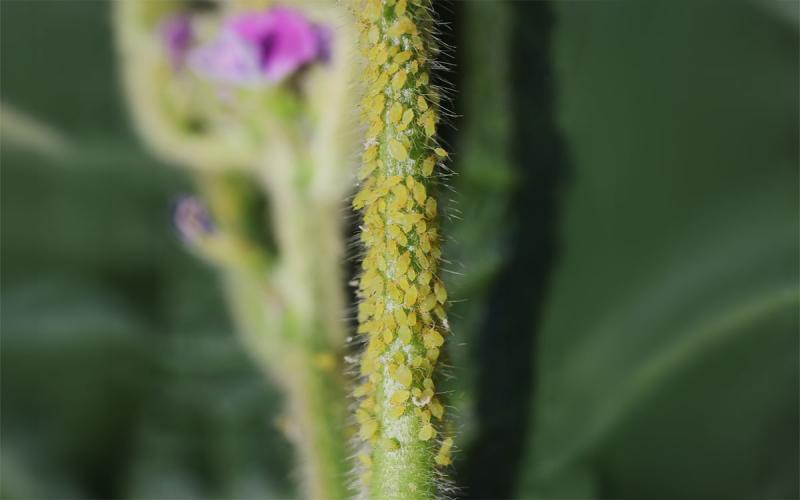
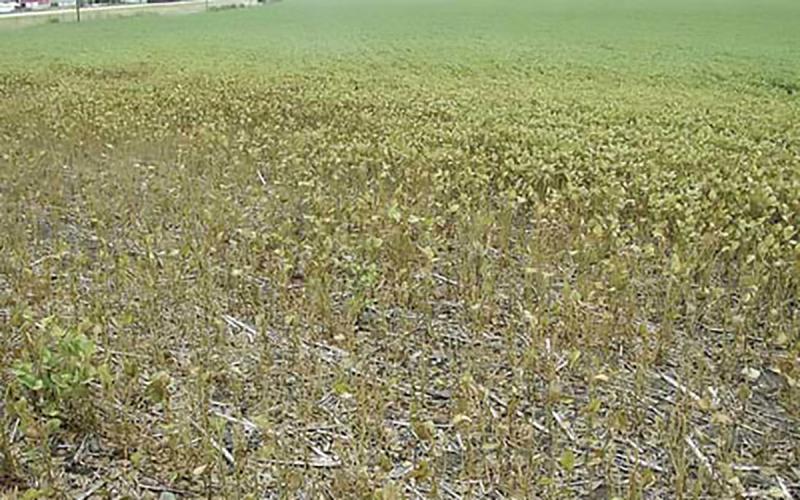
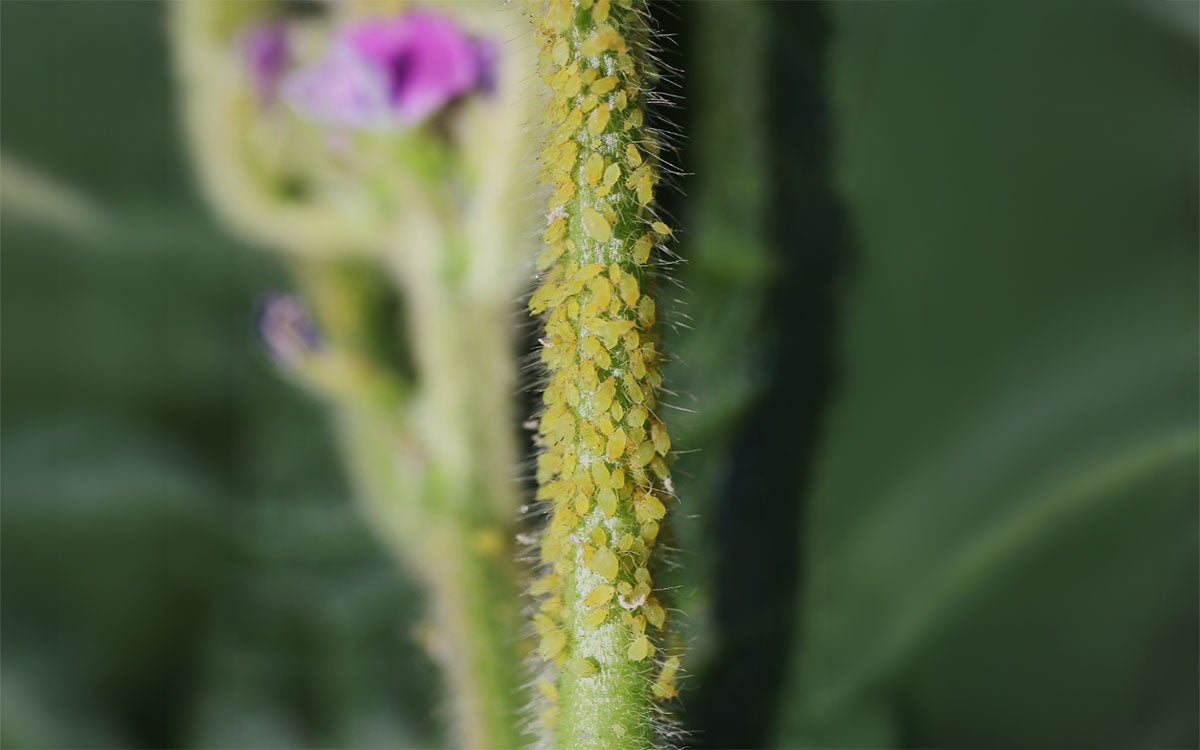
While scouting soybean this week, we observed that soybean aphid populations have increased to approximately 20-30 aphids per plant. When these populations were first observed two weeks ago, there were only 2-5 aphids per plant (Figure 1). As a reminder, under field conditions the soybean aphid populations can double every 6-7 days. Based on the observed populations as of July 29, 2026, and the economic threshold for soybean aphids based on speed scouting (40 or more aphids per plant on 11 plants) has been reached (Figure 2). Review our recent article for more information on speed scouting and the speed scouting fact sheet. Once thresholds are reached, the field should be reevaluated in 3-4 days to confirm the populations didn’t decrease, and if they persist or increase, they should be treated.
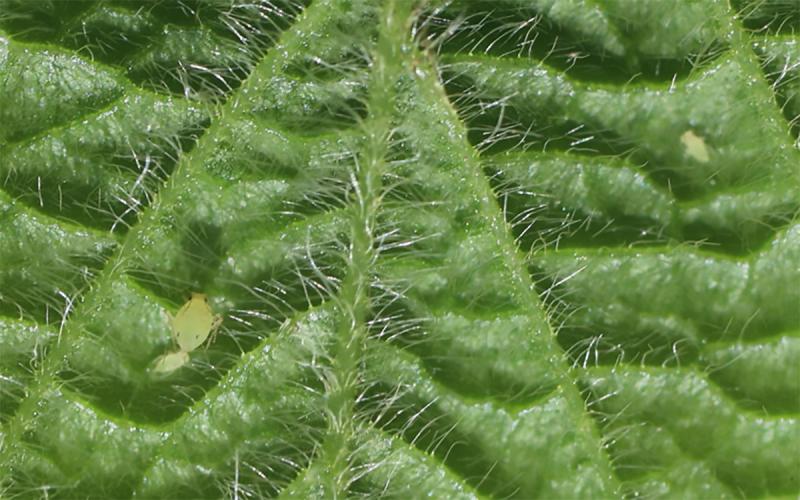
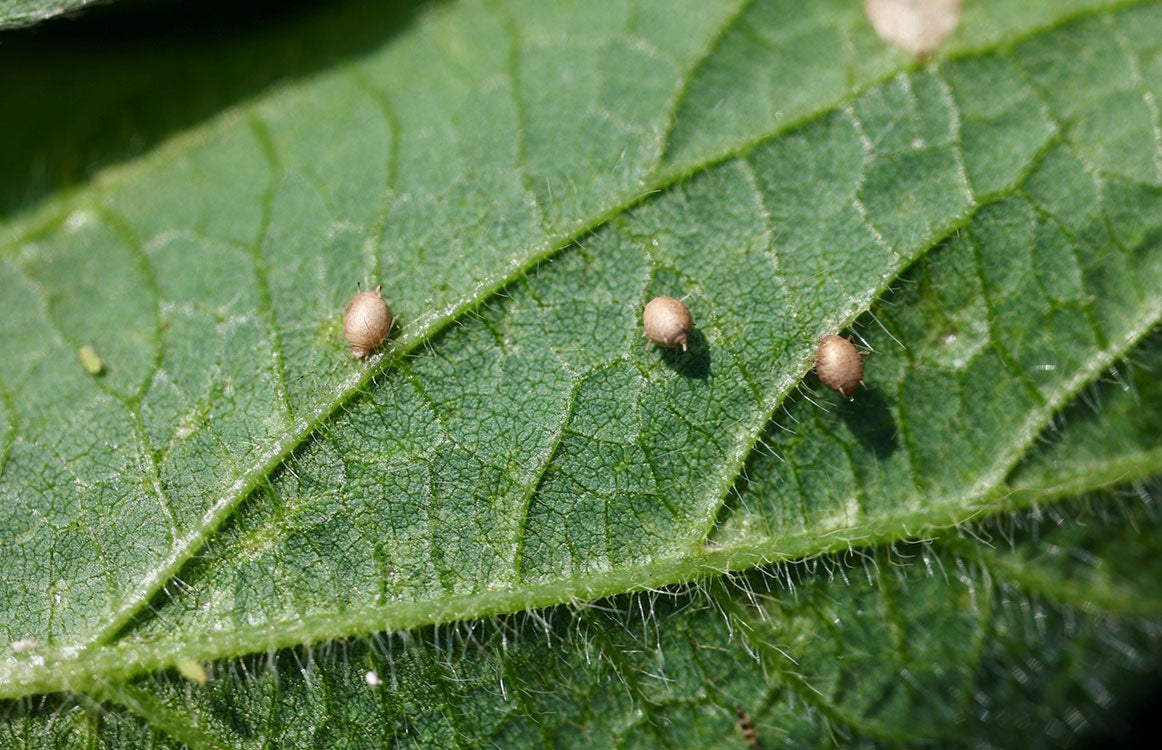
While scouting the soybean field, we did notice the presence of aphid mummies (Figure 3). These mummies indicate that parasitoid wasp activity is occurring in the field. However, our observations suggest that the soybean aphid populations are still rapidly increasing and very few predators, aside from the parasitoids, are present in the field.
Management Recommendations
For managing soybean aphid populations, we do not recommend using pyrethroid class insecticides in South Dakota. Previous research has identified pyrethroid resistant soybean aphids across most of Eastern South Dakota, and reports from recent years confirm that the active ingredients in this insecticide class are not effective. For a list of labeled insecticides, please refer to the current edition of the South Dakota Pest Management Guide: Soybean.