Written collaboratively by Adam Varenhorst, Philip Rozeboom, Patrick Wagner, and Brad McManus.
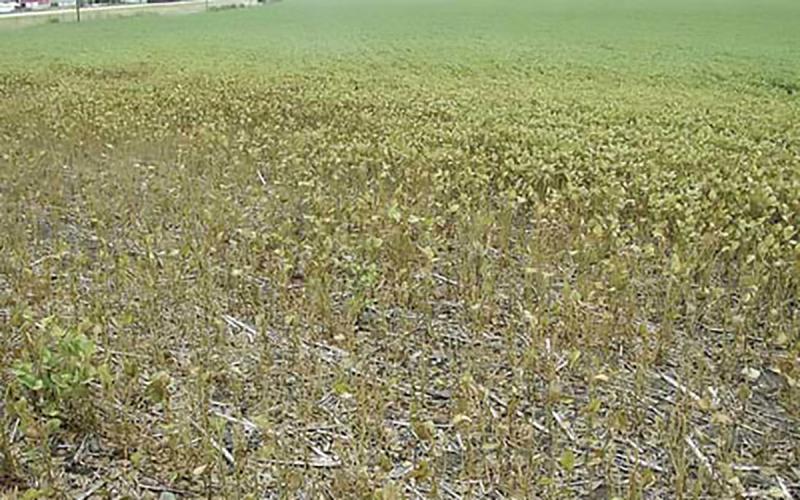
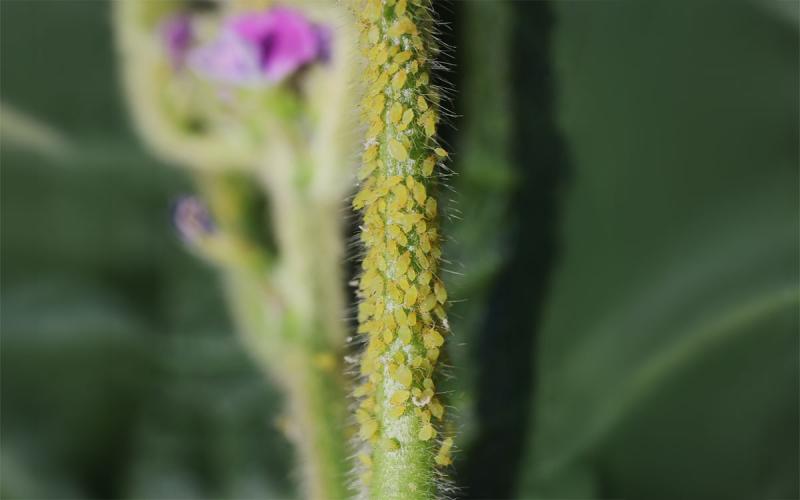
Soybean aphid populations continue to grow in South Dakota. This week, counts near Volga, South Dakota ranged from approximately 280-700 aphids per plant. The Economic Injury Level for soybean aphids is 674 aphids per plant. Observations of these populations indicate that they are healthy and will continue to increase. Scouting for soybean aphids should be occurring throughout South Dakota to ensure that infestations do not cause yield loss. Based on the current soybean stage, scouting should continue for approximately two more weeks or until the R6 growth stage is reached. Review our previous article for more information on speed scouting and the speed scouting fact sheet.
We do not recommend using pyrethroid class insecticides to manage soybean aphids in South Dakota. Previous research has identified pyrethroid resistant soybean aphids across most of Eastern South Dakota. Reports from recent years confirm that these active ingredients do not effectively reduce the soybean aphid populations. For a list of labeled insecticides, please refer to the current edition of the South Dakota Pest Management Guide: Soybean.