Written collaboratively by Adam Varenhorst, Philip Rozeboom, Patrick Wagner, and Brad McManus.
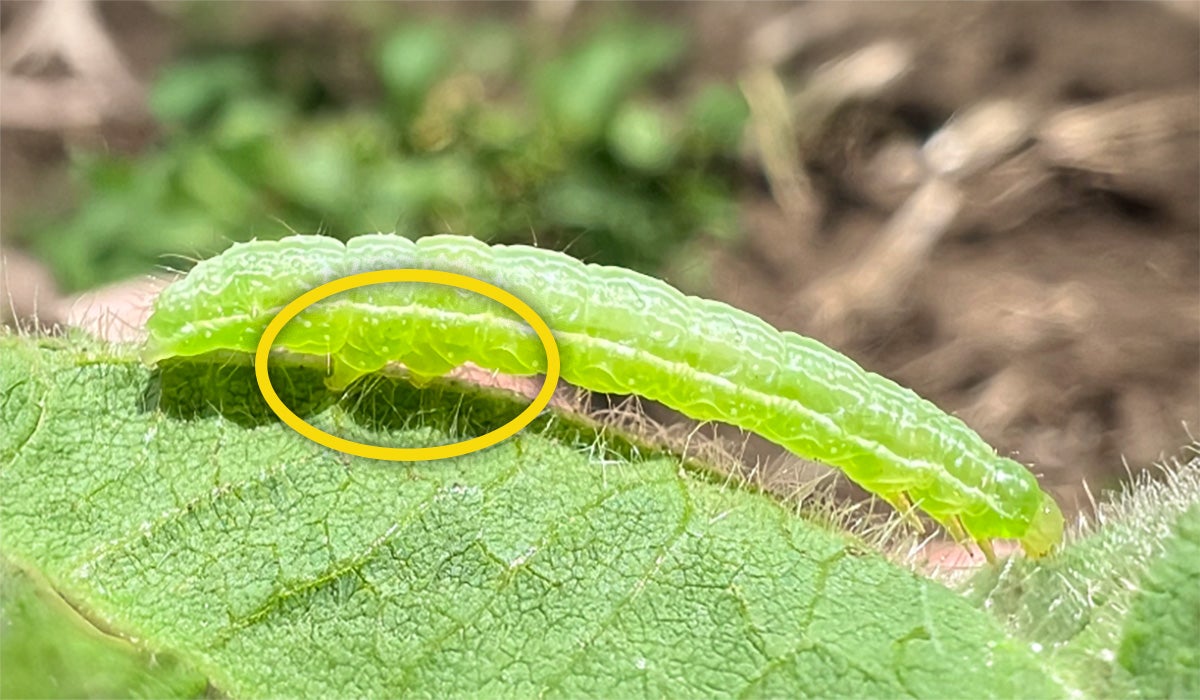
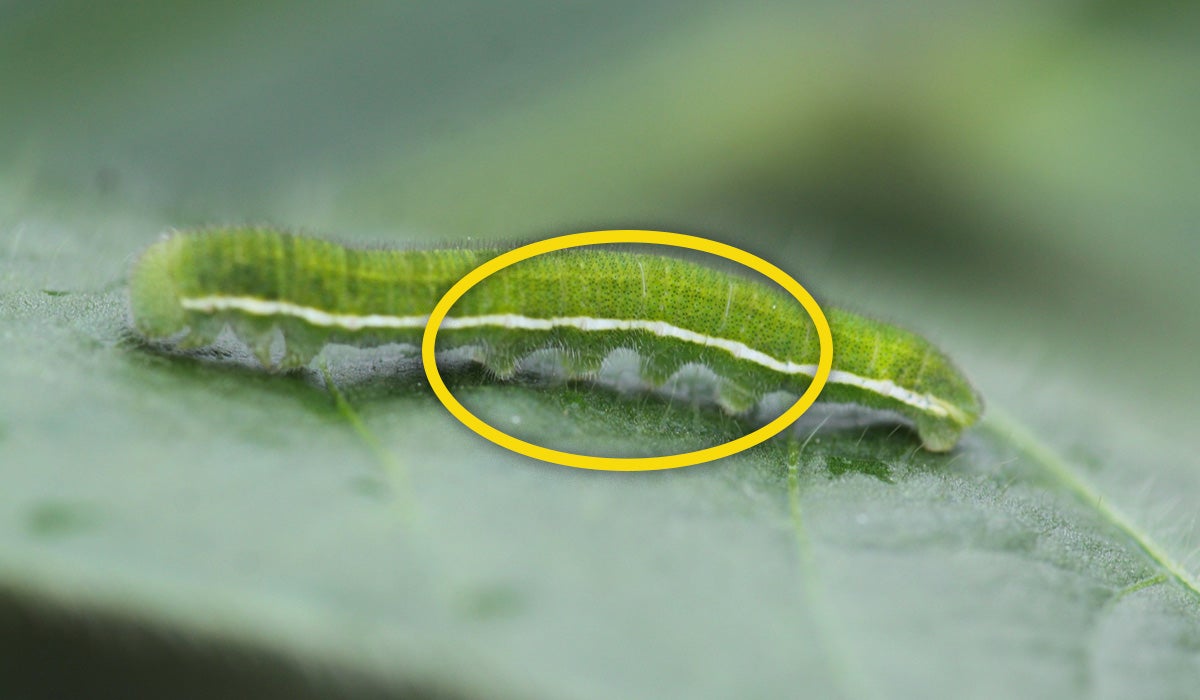
There are several species of caterpillars that have recently been observed in a single soybean field. The species include the green cloverworm caterpillar (Figure 1), the cabbage looper caterpillar (Figure 2), alfalfa caterpillar (Figure 3) thistle caterpillar (Figure 4), and oblique banded leaf roller caterpillars (Figure 5).
Caterpillar Identification
Green Cloverworm
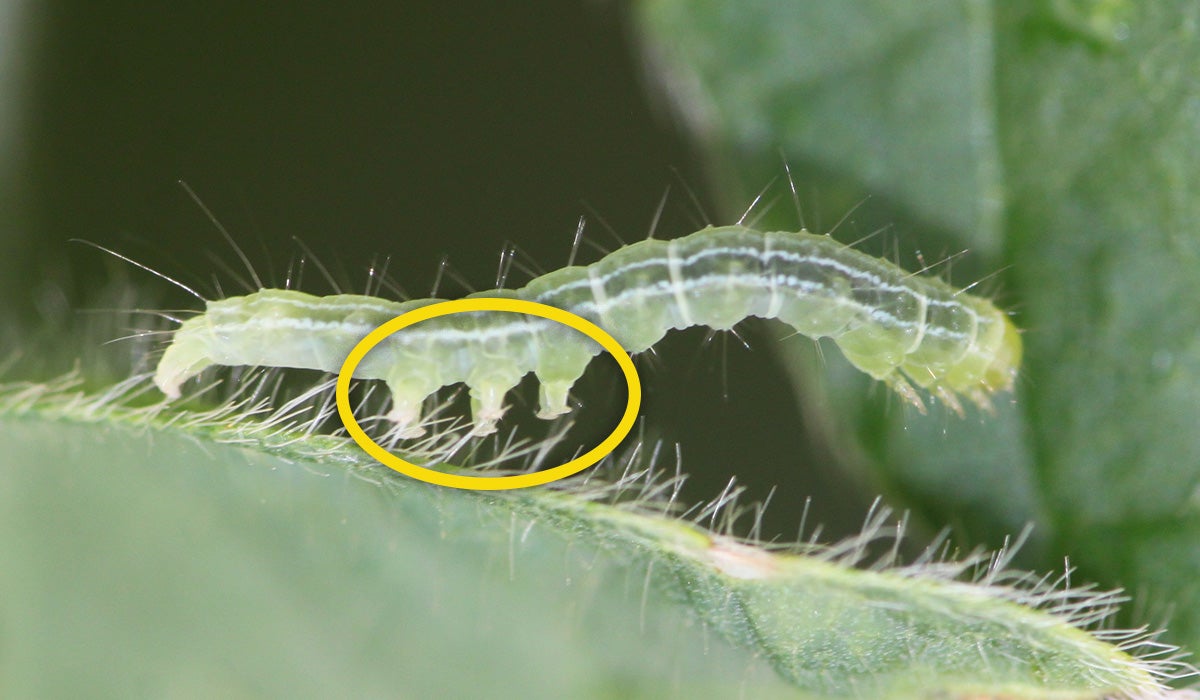
Green cloverworm caterpillars are green, and they have a white stripe on each side of their bodies along with three pairs of abdominal prolegs, as noted by the yellow circle in Figure 1.
Cabbage Looper
Cabbage looper caterpillars are green with a white stripe on each side of the body and two pairs of abdominal prolegs. They look very similar to soybean looper caterpillars, but the cabbage looper will have green thoracic legs (close to the head) whereas the soybean looper has black thoracic legs.
Alfalfa
The alfalfa caterpillars are green, have a velvety appearance with a white stripe on each side of the body. They also have four abdominal prolegs as noted by the yellow circle in Figure 3.
Thistle
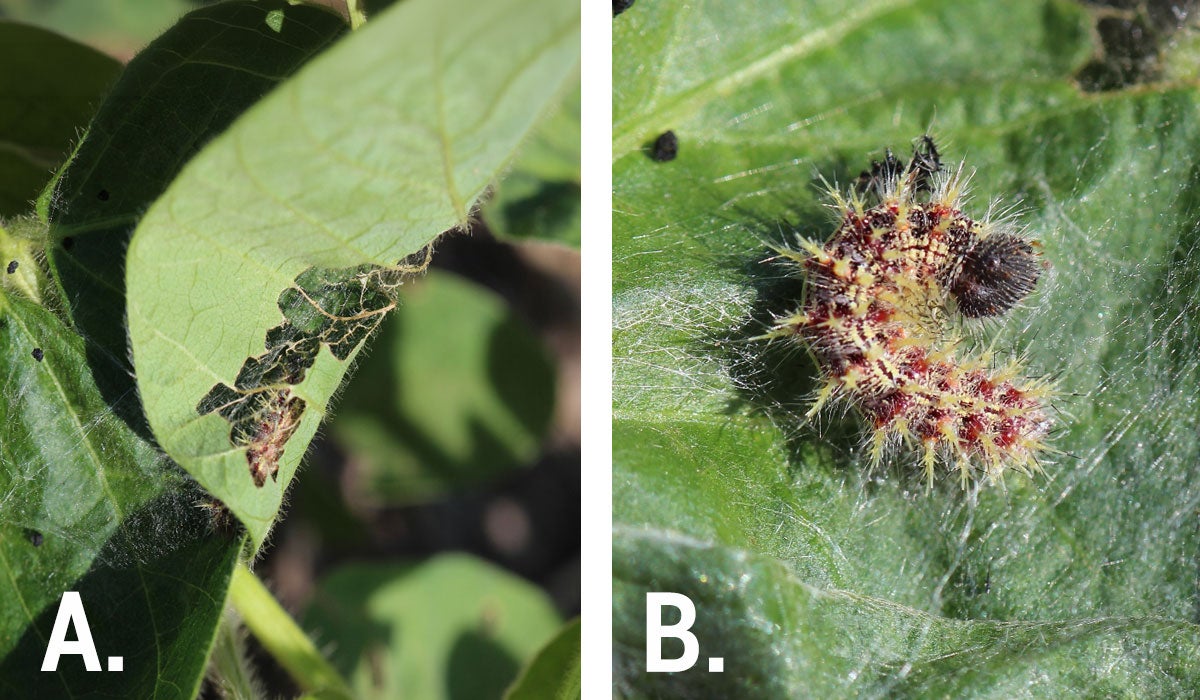
Thistle caterpillars can vary in color but can be identified by their activity of rolling the leaves and using silken webbing to hold them together to form a feeding chamber (Figure 4-A). These chambers provide shelter for the caterpillars. The thistle caterpillars can vary in coloration but are typically a reddish-brown or black color with a lighter colored line running the length of their bodies on each side (Figure 4-B). The caterpillars have characteristic spines present on their bodies.
Oblique Banded Leafroller
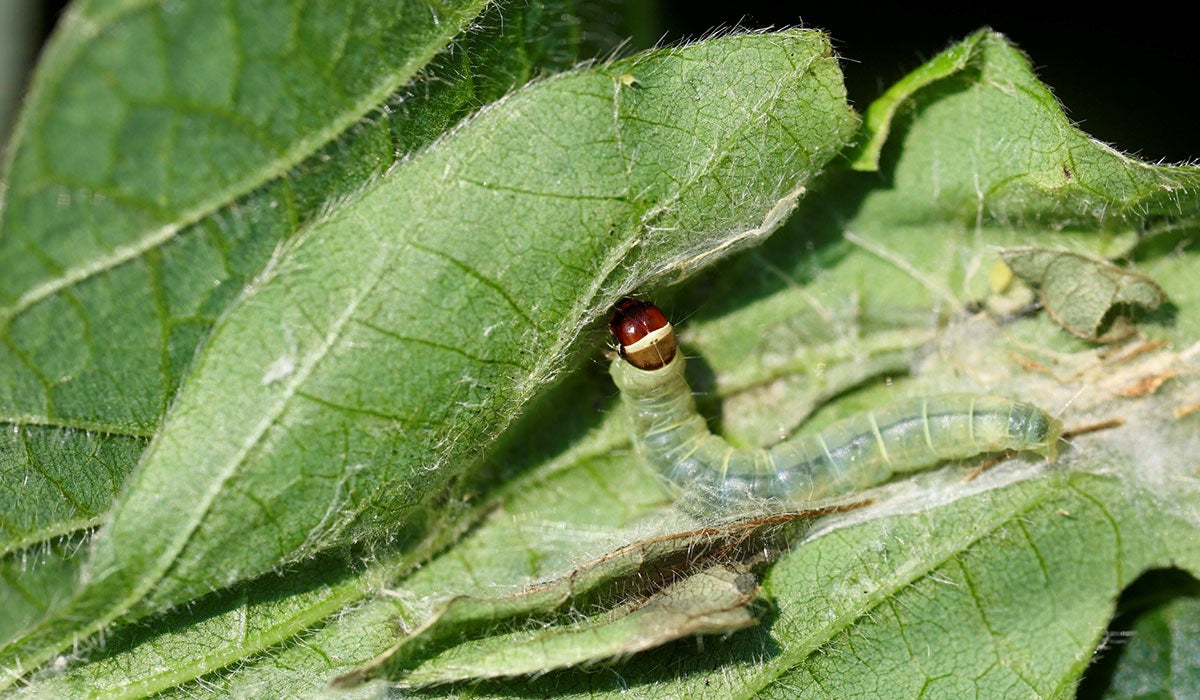
The oblique banded leafroller caterpillars are relatively small and have a light to dark green colored body. They have a dark brown to almost black head capsule with a dark brown to black segment directly behind the head, dark brown to black true legs and four pairs of abdominal prolegs (Figure 5). Like the thistle caterpillars, the older oblique banded leafrollers use a silken webbing to roll and hold the leaves to form a feeding chamber.
Management Considerations
There is currently not enough defoliation present in soybean to warrant an insecticide application to reduce the caterpillar populations. Because there are numerous caterpillar species present, we recommend using a defoliation threshold and not thresholds for the individual species of defoliators.
For soybean, the threshold for defoliation is an average of 30% defoliation prior to flowering and an average of 20% defoliation after flowering has begun. Fields should be scouted routinely to ensure that defoliation doesn’t exceed the threshold. If the defoliation threshold is eventually reached, please refer to the current South Dakota Pest Management Guide: Soybeans for a list of insecticides labeled for soybean. Always refer to labels for rates. Also, make sure that all the target pests are listed on the label.