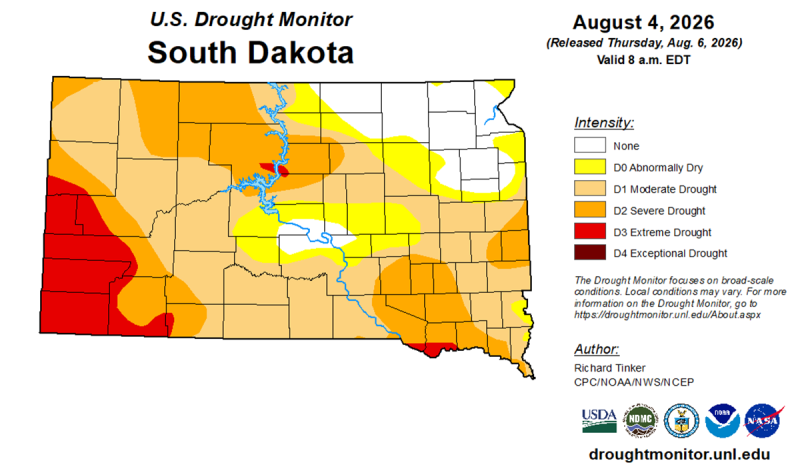
Drought conditions persist throughout much of South Dakota with conditions varying from no drought (Northeast South Dakota) to extreme drought (D3) (Figure 1).
Dry conditions stress crops and can increase their susceptibility to pest infestations. One of the common pests that typically shows up during drought conditions is the twospotted spider mite (Tetranychus urticae). Infestations of this pest were recently confirmed in Eastern South Dakota soybean and corn.
Twospotted spider mites generally reach their highest population levels in late July or early August when dry and hot weather promote their population growth. When left unmanaged, twospotted spider mites are capable of reducing soybean yields by 40-60%.
Scouting and Identification
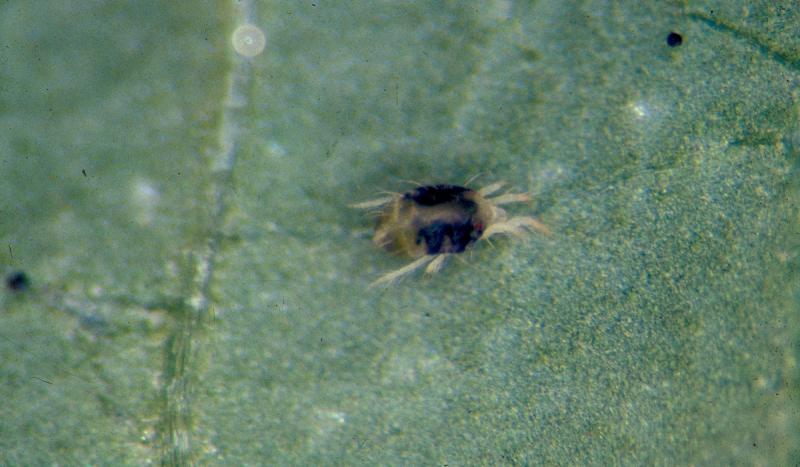
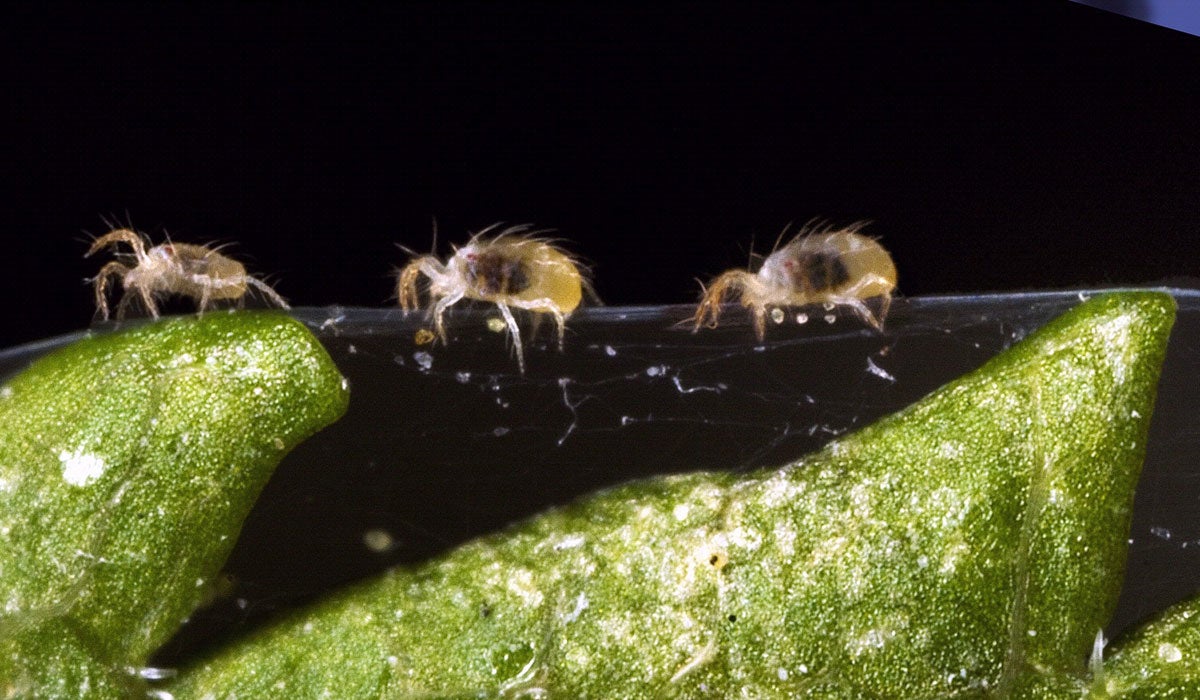
A hand magnifying lens is recommended to scout for twospotted spider mites as they are very small (< 1/60 inches long) and may be confused for specks of dirt (Figure 2). Young twospotted spider mite nymphs have 6 legs while later instar nymphs and adults have 8 legs. Another method for determining the presence of twospotted spider mites is to collect leaves and shake them onto a white piece of paper and then examine the paper for specks that are moving. Twospotted spider mites are typically a cream or green color when feeding on corn or soybean. They can also be an orange to red color when conditions are unfavorable for their growth.
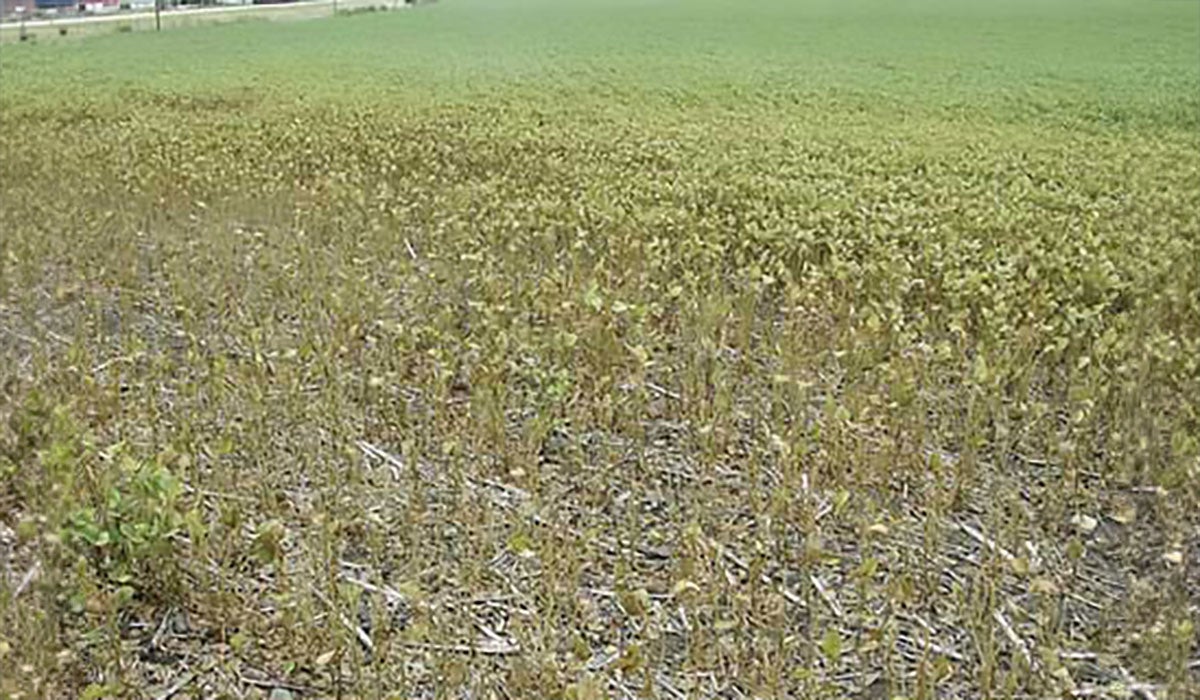
Scouting should also be focused on healthy areas of the field that are downwind from heavily infested areas. Although twospotted spider mites don’t have wings, they can disperse on the wind to move throughout a field. Twospotted spider mites reside on the underside of leaves and will create a thin webbing on the leaves that they then form colonies on (Figure 3). Early signs of twospotted spider mite infestations are small yellow or white spots (stipples) on the lower leaves of the plants. Prolonged feeding will cause the infested leaves to turn completely yellow, then brown, and eventually they will die and fall from the plant. The webbing is visible on the edges and underside of leaves and is an indication of prolonged colony feeding. Infested areas within a field will often appear as yellow circular areas that expand outward (Figure 4).
Management
There are not established economic thresholds for twospotted spider mites but scouting for initial infestations is very important to avoid yield loss. Organophosphates are the recommended insecticidal chemistry for twospotted spider mite management. Products containing the active ingredients dimethoate or chlorpyrifos are typically effective at reducing twospotted spider mite populations. However, these products target the nymphs and adults, but it is likely that there will be egg survival so treated fields should be scouted 7-10 days after application. The use of pyrethroid and neonicotinoid insecticides can result in an increase of twospotted spider mites as many of the active ingredients remove mite predators. One pyrethroid active ingredient that can be used is bifenthrin. For a complete list of insecticides labeled for twospotted spider mite management, refer to the most-recent South Dakota Pest Management Guides.
During dry conditions, management should occur when plants have substantial stippling or leaf-yellowing and the twospotted spider mites are observed on the plants. When temperatures drop below 85°F and humidity levels are greater than 90% relative humidity for an extended period of time, twospotted spider mite populations will not continue to increase as quickly and may decrease due to a naturally occurring fungal pathogen that thrives under these conditions.