Although we are predicting low overwintering survival of bean leaf beetles this year in South Dakota, scouting for this pest should still be conducted as every year we still observe populations in soybean. This is likely due to their ability to find adequate cover that increases their chances of surviving cold winters. In South Dakota, bean leaf beetles go through two generations each year. The overwintering generation, which is initially observed in the spring, is made up of adults that survived the winter and feed on emerging soybean seedlings. Before soybeans emerge, they feed on alfalfa. The bean leaf beetle adults that are active right now are part of the overwintering generation. The first generation will be observed during mid- to late July.
Bean Leaf Beetles
Pest Identification
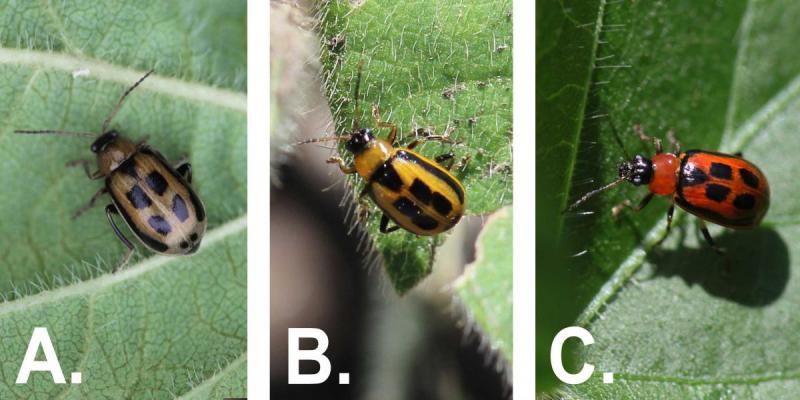
Adult bean leaf beetles can vary in color from brown (Figure 1-A), yellow (Figure 1-B), and orange to red (Figure 1-C). Bean leaf beetles have a black triangle located behind their thorax (segment behind black head capsule) and four black spots which are present on their hardened forewings (elytra).
Scouting
Bean leaf beetles avoid disturbances, which makes them one of the more difficult insects to scout for in soybeans. Early growth stage soybean are easier to scout as there is less plant tissue present to hide the beetles, and defoliation is also easier to observe. During the early season, the best scouting method for bean leaf beetles is visual searches of beetles on the soybean or the presence of small holes in the leaves. Once soybean are larger, a sweep net can be used to scout for the beetles.
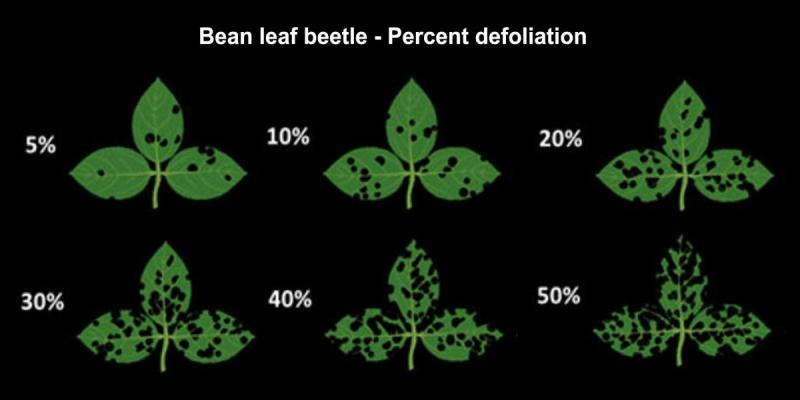
To scout for defoliation, examine 10 plants from five locations spread throughout the field (50 plants per field). For each of the plants, estimate the percentage of leaf area that is removed from all the leaves (i.e., defoliation). Record this for each of the examined plants and calculate the field average. The threshold for vegetative stage soybean is 30%. At or above this level of defoliation a 3-7% yield loss may occur. Figure 2 has a visual guide for defoliation caused by bean leaf beetles and the associated percentages.
Pest Management
If extensive defoliation is occurring on the first leaves, or on early-stage soybean, foliar insecticide use is warranted to reduce the bean leaf beetles. Refer to the most recent South Dakota Pest Management Guide: Soybean for a list of labeled products.
Bean Pod Mottle Virus
If you are finding bean leaf beetles in the field, you will also need to scout for Bean pod mottle virus which is primarily vectored, in the United States, by the bean leaf beetle. When bean leaf beetles feed on BPMV-infected soybean plants they also ingest the virus and become a carrier (viruliferous). The virus can be obtained with a single bite of an infected plant. Virus transmission occurs rapidly with the next feeding. As the beetle moves and feeds throughout the field, it spreads the virus to healthy plants. The beetle eventually loses their infectivity unless they feed and acquire the virus from infected plants again.
Disease Identification
Bean pod mottle virus symptoms are commonly confused with herbicide injury and can resemble symptoms of other viruses. Symptoms associated with BPMV include mild to severe chlorotic mottling or mosaic and rugosity (distortion or wrinkling) on foliage (Figure 3), stunting, and delayed maturity. Symptom severity may lessen during hot weather or with maturity; however, the plant remains infected with the virus.
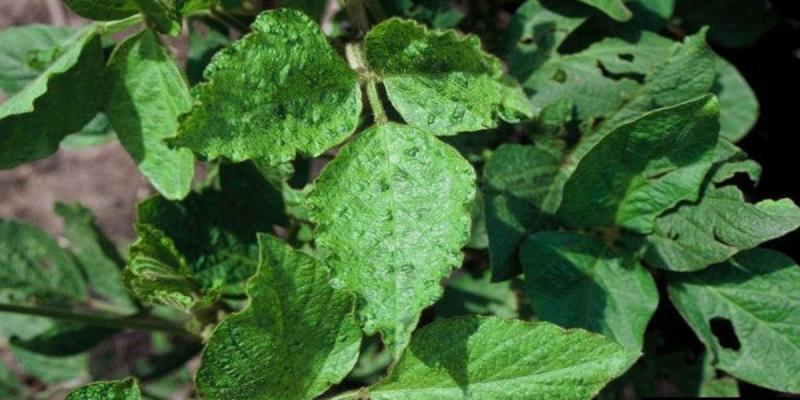
One effect of delayed maturity is green stem disorder. This is where the stem remains green after the soybean pods have matured. Infection by BPMV decreases pod formation and reduces seed size, weight, and number. Seed coat mottling (the discoloration of the seed due to a black or brown pigmentation bleeding from the hilum) is another symptom caused by this virus. Grain with discolored seeds may be docked at the time of sale. BPMV is also associated with increases in seed infection by Phomopsis spp.
Disease Management
Once the plants have become infected there are no in-season BPMV management recommendations. Therefore, proactive management practices such as planting tolerant varieties, using insecticide seed treatments to manage the overwintering population if in an area where winter bean leaf beetle mortality is low are recommended. In-season insecticide spraying for bean leaf beetles will not control the virus.