Written collaboratively by Christina Bakker and Laura Ruesch, Research Associate Animal Disease Research & Diagnostic Lab.
Understanding STEC E. coli

What is a STEC?
Shiga-toxigenic Escherichia coli (STEC) are Gram-negative bacteria, similar to generic E. coli, but they produce a kind of dangerous toxin called Shiga toxin. Shiga toxin can cause serious illness, bloody diarrhea, blood-clotting problems, kidney failure and even death.
E. coli O157: is the most well-known STEC to cause human disease, but there are others often referred to as the “Big 6” (O111, O26, O121, O103, O145, and O45) that are emerging as a cause of human illness.
Where do STEC come from?
STEC, like most other E. coli, come from the digestive tract of warm-blooded animals, primarily ruminates.
What is the difference between E. coli and STEC?
Most E. coli are harmless and part of a healthy gut. They help digest our food and even manufacture vitamins. STEC contain genes that encode for a variety of tools the bacteria use to make us sick.
How do you know an E. coli is a STEC?
USDA FSIS says a STEC bacteria must contain 3 genes:
- Stx, gene that encodes for dangerous shiga toxin.
- Eae, gene that encodes for a protein called intimin. Intimin damages the lining of your gut allowing STEC to bind closer to your bloodstream.
- Top 7 serogroup, genes that encode for molecules on the surface of the bacteria that help it evade your immune system.
If an E. coli bacteria doesn’t contain all 3 of these genes, it is not a STEC.
Why is STEC an adulterant?
USDA FSIS defines adulterated product as any meat or meat food product that contains a substance which may render it injurious to health. Because STEC can cause life-threatening illness, raw non-intact beef products that contain Top 7 STEC serogroups (the Big 6 plus O157:H7) are considered adulterated. It is important to note that STEC is not an adulterant on raw, intact beef products, such as steaks or roasts intended for intact consumer use, because cooking will destroy any STEC on the outer surface of meat products.
Why is STEC a concern for meat processors?
STEC have a higher level of resistance to acids compared to other E. coli. This allows them to survive transit through your stomach to your intestines, where it can cause disease. However, this acid-resistance can also cause complications for meat processors, as many facilities use acid-based interventions for treating their carcasses as part of their HACCP plans.
How can processors reduce risk of STEC?
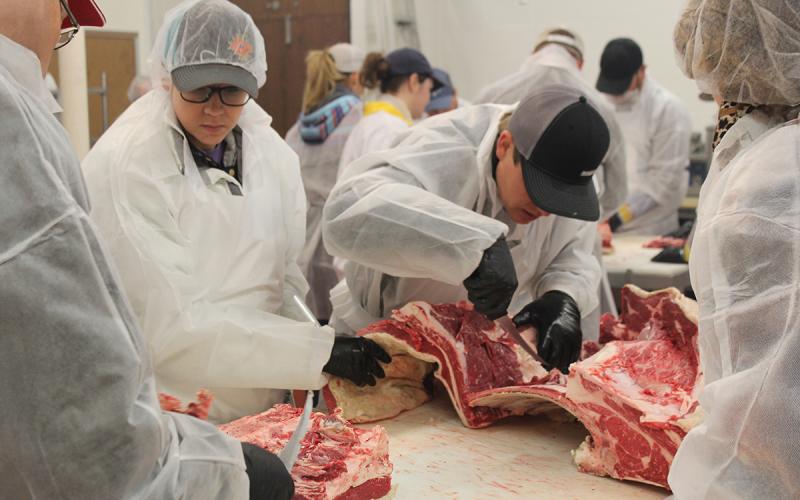
Sanitary harvest procedures
- Use the clean hand/dirty hand method. When skinning a carcass, allow one hand to come in contact with the hide (dirty hand) and one hand to hold your knife (clean hand) and do not switch these hands. The hide of an animal is commonly contaminated with fecal material, which can harbor E. coli, so designating a “dirty hand” will allow you to effectively skin the carcass, while reducing the potential for contamination.
- Wear attire that can be rinsed often with hot water. This is especially important when individuals are doing multiple jobs on the harvest floor, such as skinning and gutting. Take the time to rinse off your apron and wash your hands and arms when moving from skinning to another job, such as gutting, splitting, or final inspection.
- Utilize knife sanitizers often to keep your knives clean. Don’t forget to dip the handles if they become contaminated too.
- When opening the hide, insert your knife with the blade away from the carcass so you avoid pushing hair, fecal matter, or other contaminants into the carcass.
Zero-tolerance carcass exams
- Prior to placing carcasses in the cooler, conduct a thorough inspection of the carcass for any fecal matter, ingesta, or milk that may be left after the harvest process.
- It is important to trim contaminated tissues from the carcass as opposed to rinsing it off to reduce the potential spread of E. coli that would be the result of water dripping down the carcass.
Application of a CCP intervention product that’s been validated for performance on STECs
- There are several options for interventions to reduce E. coli contamination including, but not limited to, acid or hot water washes. A more-robust guideline can be found in the following resources:
- Small Plant Intervention Treatments to Reduce Bacteria on Beef Carcasses at Slaughter, University of Madison-Wisconsin.
- Antimicrobial Spray Treatments for Red Meat Carcasses Processed in Very Small Meat Establishments, University of Madison-Wisconsin.
Minimizing growth by ensuring appropriate storage temperatures
- STEC E. coli cannot grow below 45°F. This does not mean that refrigeration below that temperature or freezing kills E. coli, so other interventions must still be used and meat products should be cooked according to your HACCP plan or safe minimum temperature indicated by the USDA.
While the risk of STEC should be taken seriously, the incidence of positive STEC tests can be mitigated by proper animal, carcass, and product handling, as well as robust sanitation policies and practices.
References
- 9 CFR 301.2. (2025). Title 9: Animals and Animal Products. 9 CFR 301.2.
- Center for Food Safety and Applied Nutrition (2012). Bad Bug Book. Handbook of Foodborne Pathogenic Microorganisms and Natural Toxins, Food and Drug Administration, U.S. Department of Health and Human Services.
- Walker, L., Shenggian, S., Thippareddi, H. (2025). The minimum growth temperatures of Shiga Toxin - producing Escherichia coli. Foodborne Pathogens and Disease. DOI: 10.1089/fpd.2024.0108
- USDA. 2025. Safe Minimum Internal Temperature Chart.