What Are the Current Drought Conditions?
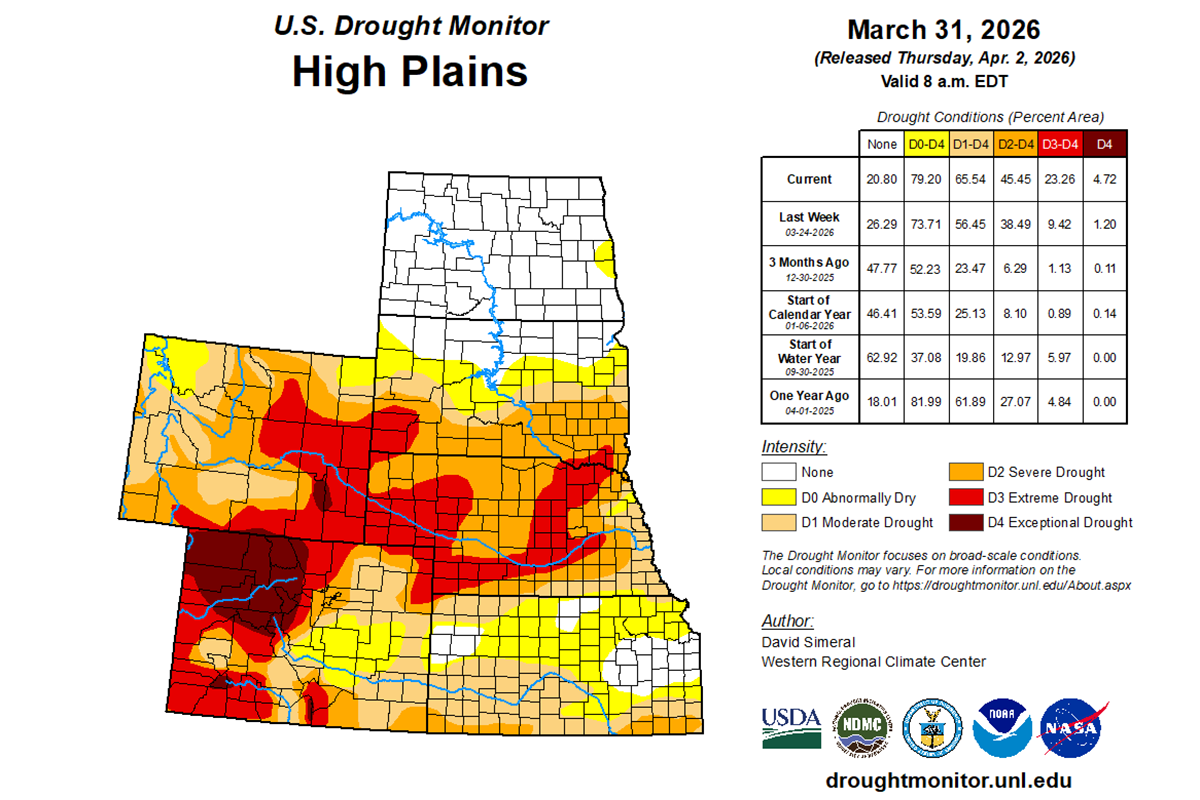
As spring 2026 begins, South Dakota and most of the High Plains region is starting out well behind the mark in the moisture category. As of April 2, 2026, 45% of the High Plains are experiencing severe, extreme, or exceptional drought conditions (Figure 1). In South Dakota alone, three quarters of the state is at least abnormally dry, with over 50% experiencing drought conditions.
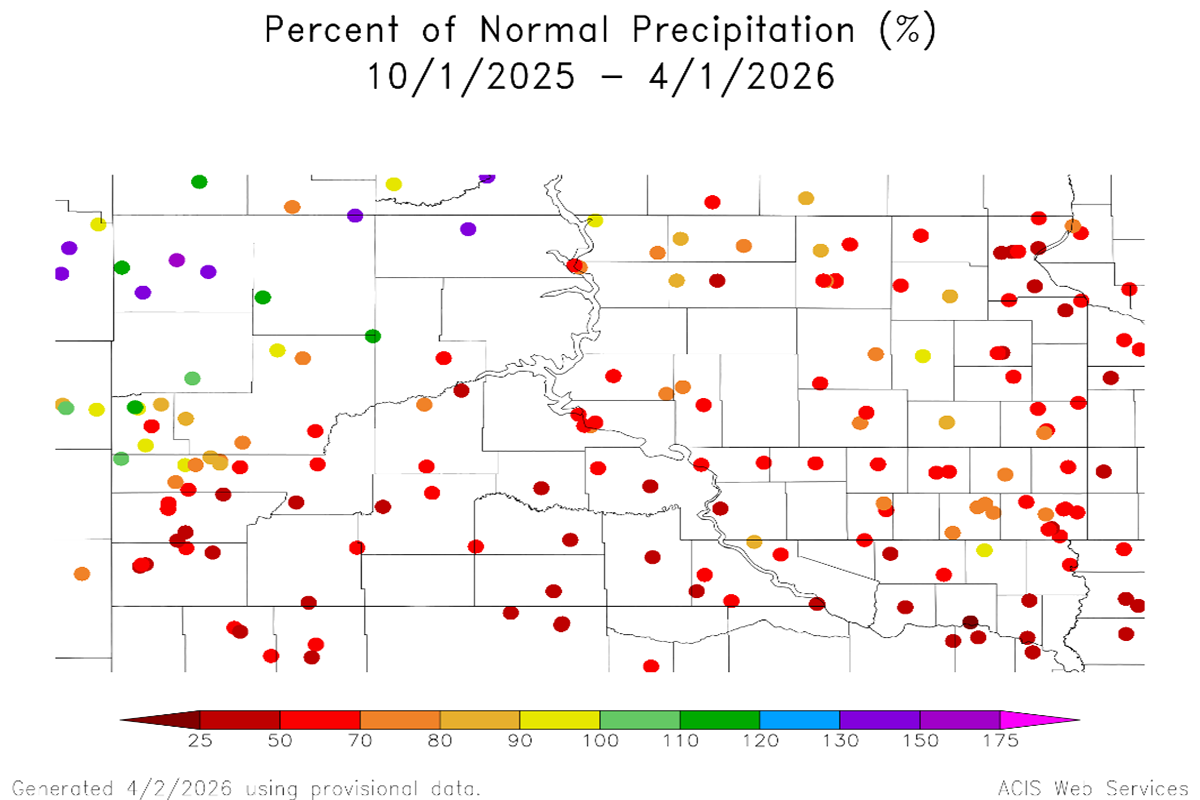
Early indications of drier conditions began last fall with a noticeable lack of fall moisture. These conditions persisted throughout the winter months as most of South Dakota experienced a very mild dormant season. Since the start of the water year on October 1, 2026, most of the state has received less than 50% of normal precipitation (Figure 2).
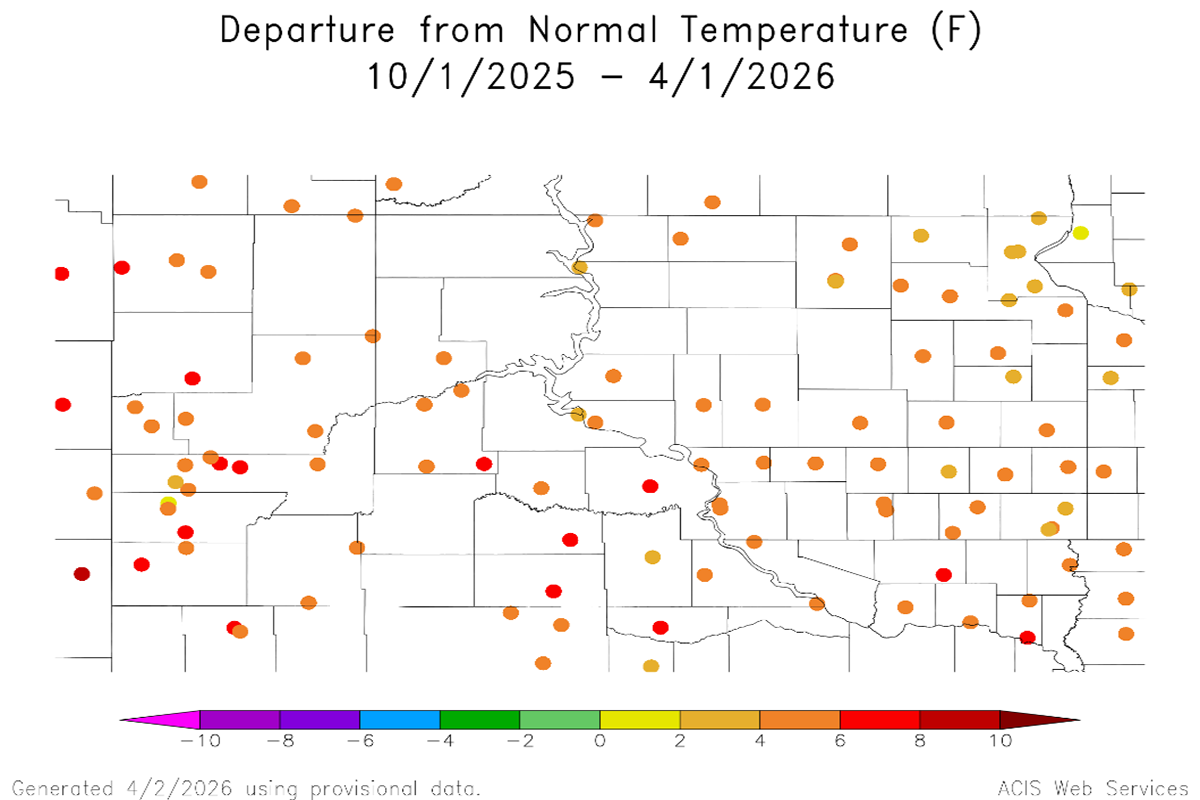
Additionally, much of the state has seen warmer than normal temperatures since October 1, 2026 (Figure 3). Less than normal precipitation combined with greater than normal temperatures often equals decreased soil moisture.
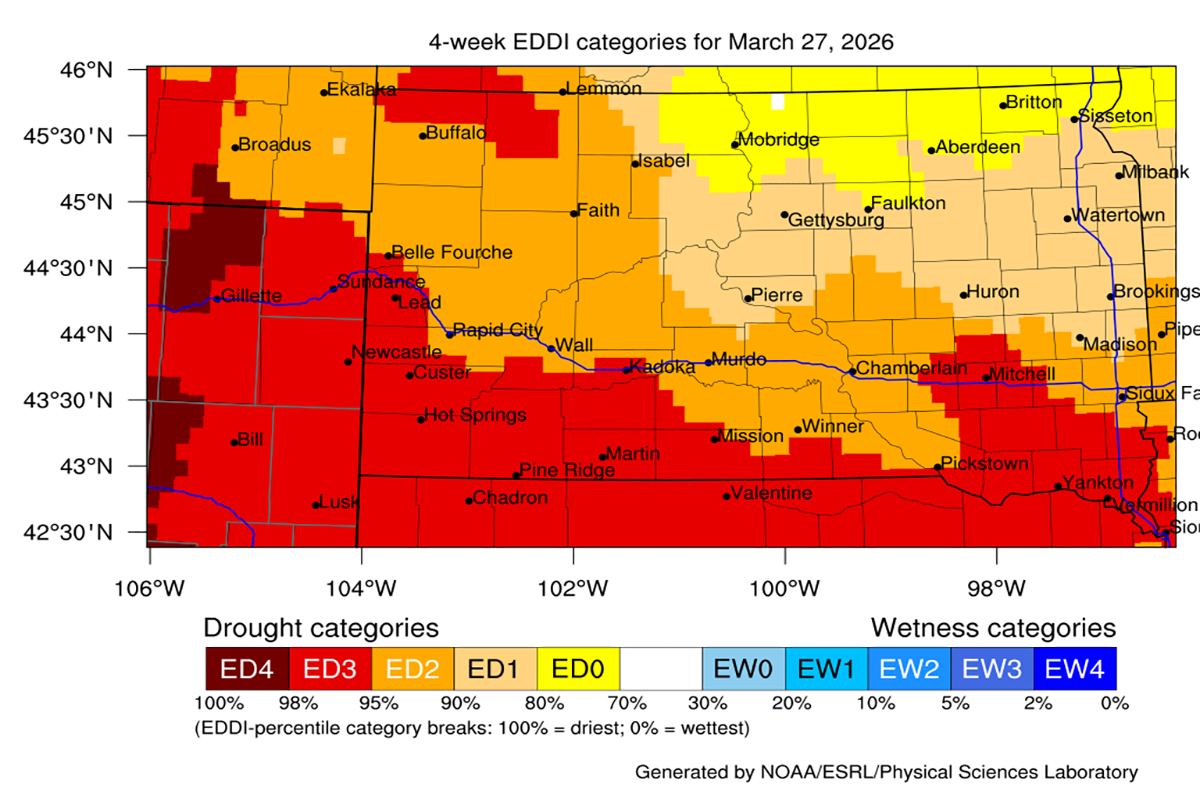
The 4-week Evaporative Demand Drought Index (abbreviated as EDDI) ending March 27, 2026 is notable, because it shows that thawed soils, warmer temperatures, and lack of precipitation is drying out the soil (Figure 4). Evaporative demand essentially refers to the “thirst of the land” based on both local temperatures and precipitation amounts. This map is used to indicate the potential for drought conditions to emerge or worsen.
Understanding When Your Pastures Are Ready to be Grazed
As the grazing season is inching closer, dry soil conditions have become very apparent. Lack of dormant precipitation (Figure 2) and dry spring soil (Figure 4) are strong indicators that forage growth will be delayed for the 2026 grazing season. This means it will take more time to be ‘ready to graze.’ It is important that we avoid turning livestock out in the same pasture at the same time year after year, but especially in years like this.
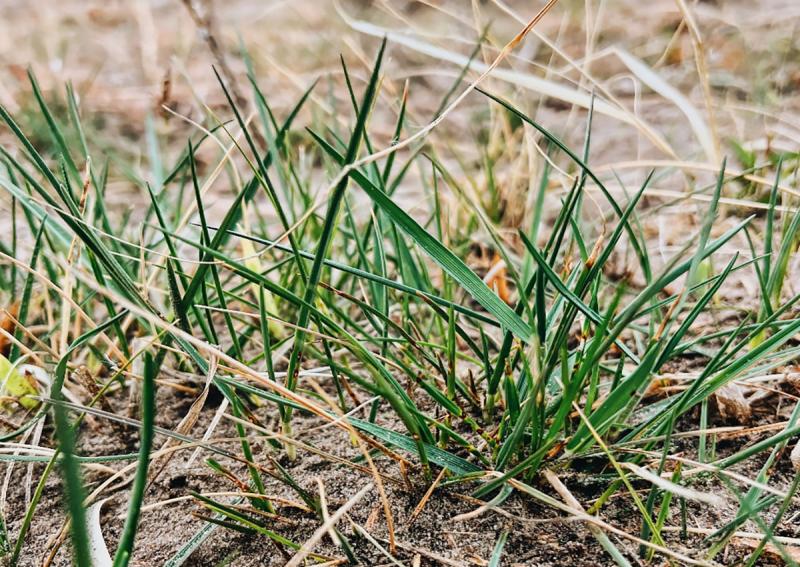
Before grazing a pasture, it is important to ensure that there has been full plant recovery since the last grazing or defoliation event. This means that there should be enough plant material present to allow for grazing to occur, with material left behind to facilitate recovery. If all the green material is removed, the plant is left with little options to photosynthesize and regenerate itself. If grazed too short, the plant is often forced to pull from root stores to regenerate itself. Reducing root biomass can reduce soil health and water holding capacity and also decreases that plant’s future resiliency.
A good rule of thumb is to look at a plant’s leaf stage to determine grazing readiness. Leaf stage refers to the number of fully formed leaves that are present on an individual grass plant. Introduced cool season grasses (smooth bromegrass, crested wheatgrass, etc.) can be grazed at the 3-leaf stage. These grasses will reach maturity quickly, so it is recommended to use pastures with a high amount of these species earlier. Native cool season grasses (western wheatgrass, needlegrass, etc.) can be grazed at the 3.5-leaf stage. And native warm season grasses (grama, bluestem, etc.) can be grazed at the 4-leaf stage.
If you graze a plant before it is ready, you risk harming your forage resource and reducing production. When your pastures are ‘ready’ to graze are unique to what your management goals are, as well as what species are present. Given the current conditions, it’s a good idea to consider delaying turnout and regularly assess precipitation and soil moisture as the spring season gets closer.
What Are the Current Climate Outlooks Indicating?
In the Northern Great Plains, spring precipitation (April, May, and June) is extremely influential on the amount of forage produced during the growing season (Smart et al., 2021). However, temperature and precipitation during the dormant season determines where we start the race for the spring green up. When dormant season precipitation is scarce, combined with warmer temperatures, moisture is quickly depleted from thawed soils. Although there’s nice weather for spring calving, it doesn’t bode well for this coming grazing season.
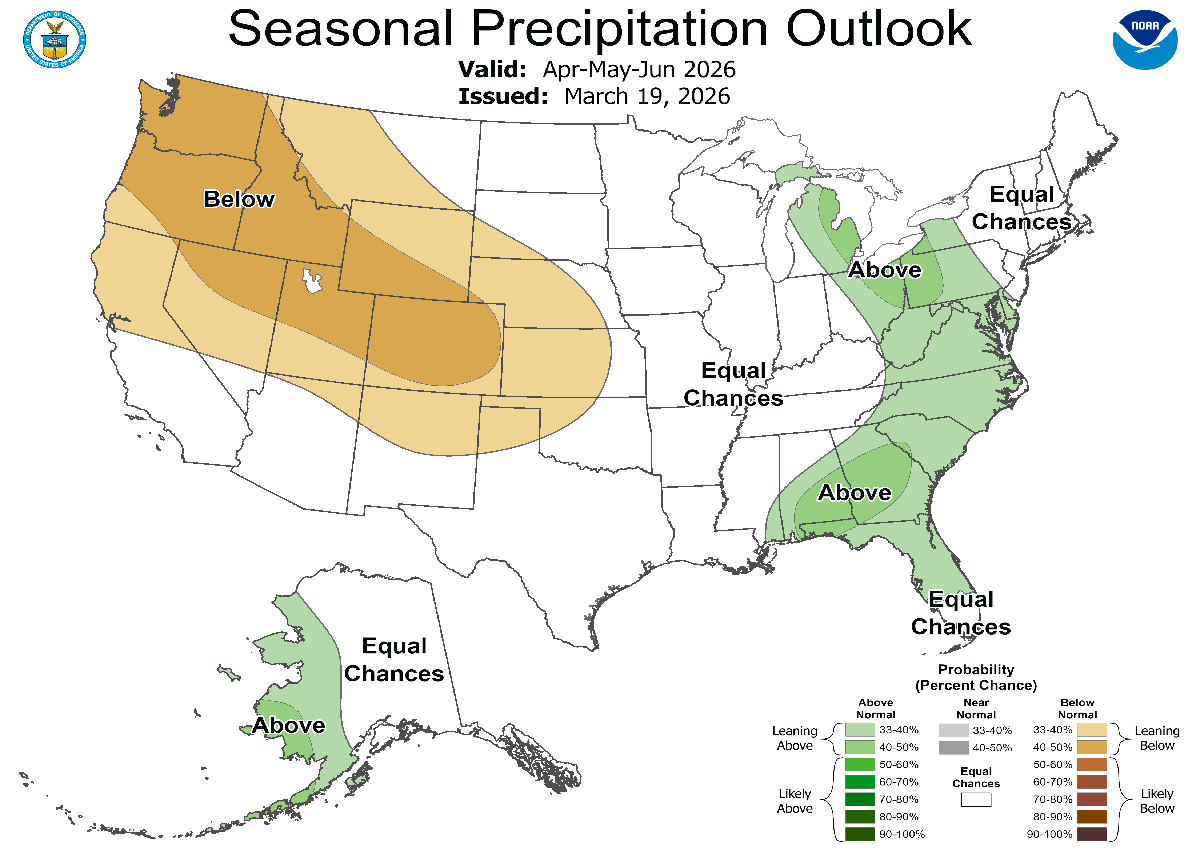
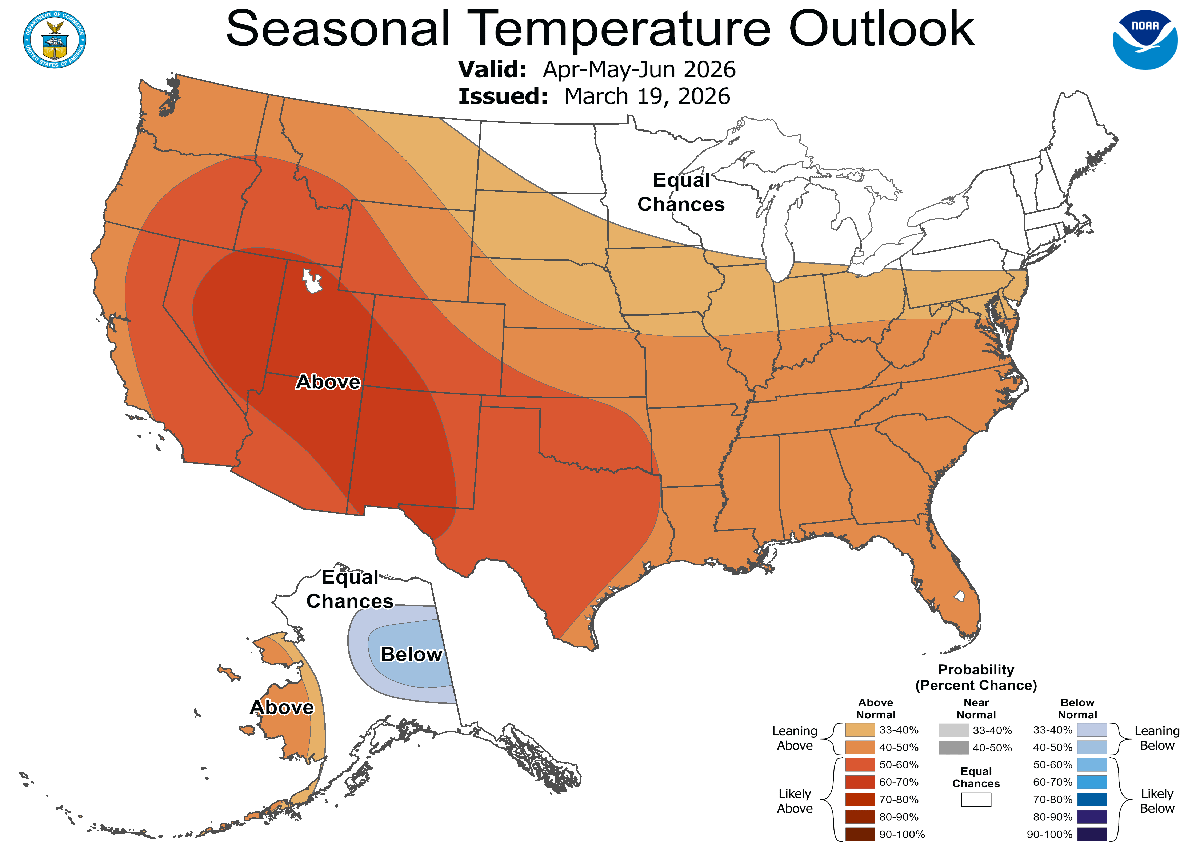
Looking ahead to spring, the outlooks currently show equal or below average seasonal precipitation chances (Figure 5) and above average seasonal temperature (Figure 6). Currently, the chances of receiving above average precipitation for the next three months are slim.
Are You Prepared for Spring?
Take time to reflect on your business and your resources. Routinely answering the following questions about your operation can help you consider your ability to be resilient as well as make plans ahead of time. Continue to regularly monitor precipitation and soil moisture throughout the spring months as the grazing season approaches. With inadequate soil moisture, the spring greenup could be delayed and forage growth could be limited. If so, are you prepared?
April 1 is a suggested trigger date to investigate the following questions.
Moisture/Climate
- How much precipitation was received:
- During last year’s growing season?
- Since October 1, 2025?
- Since January 1, 2026?
- What are current weather outlooks predicting in the coming days, weeks, and months?
- What are the current drought monitor conditions in your location?
- How much soil moisture exists now?
Forage
- What is the current condition of your pastures? How much standing forage, soil cover, etc.?
- Have your pastures recovered since the last defoliation event (grazing, wildfire, hail, etc.)?
- What are your current feed resources?
- What are the feed markets indicating? Can you take advantage of feed prices and lay in an extra feed supply now?
- Are there alternative feed resources you could take advantage of (grazing cover crops, grazing corn residue, etc.)?
- Are there alternative grazing strategies you could try (rotational, targeted species, etc.)?
Livestock
- Are you prepared to feed livestock longer if grazing is delayed or reduced?
- What are your culling/de-stocking strategies?
- Which animals will be the first to go?
- What are the cattle markets indicating?
- Can you take advantage of market prices by de-stocking now?
Considerations for the Grazing Season Ahead

At its core, drought planning is simply about adapting to the circumstances and proactively managing your forage supply and demand. These are things that should be done routinely in a ranching business, regardless if drought conditions occur or not. Forage production can vary significantly from year to year, depending on growing conditions. Thus, livestock inventory should vary from year to year as well. Consider ways to incorporate herd flexibility into your operation to account for these variances – and prevent you from de-stocking your foundational females.
Given current conditions and weather outlooks, delayed turnout, reduced grazing, and reduced stocking rates are a very real possibility. Due to the lack of dormant-season precipitation, it is more important than ever to get adequate spring precipitation. Everyone should take time to assess their resources and regularly monitor soil moisture, precipitation, and weather outlooks in preparation for the 2026 grazing season. Do you have the information and resources you need to make decisions?
“Make decisions early, while you still have options and logic on your side, rather than waiting and hoping and being forced into difficult decisions later” – Kaylee Wheeler, SDSU Extension
Helpful Resources
- See the National Drought Mitigation Center (Ranch Planning) and Managing Drought Risk on the Ranch for a decision-making guide and example drought plans.
- Monitoring Spring Precipitation and Range Conditions
- Reading the Range: Range readiness, grazing timing and drought considerations
- For more information on climate and weather outlooks, contact SDSU State Climatologist, Laura Edwards, or visit the SD Mesonet website.
- For more information on pasture monitoring and drought planning, contact SDSU Extension Range and Natural Resources staff.