Written collaboratively by Adam Varenhorst, Philip Rozeboom, Patrick Wagner, Bradley McManus, and Aaron Hargens.
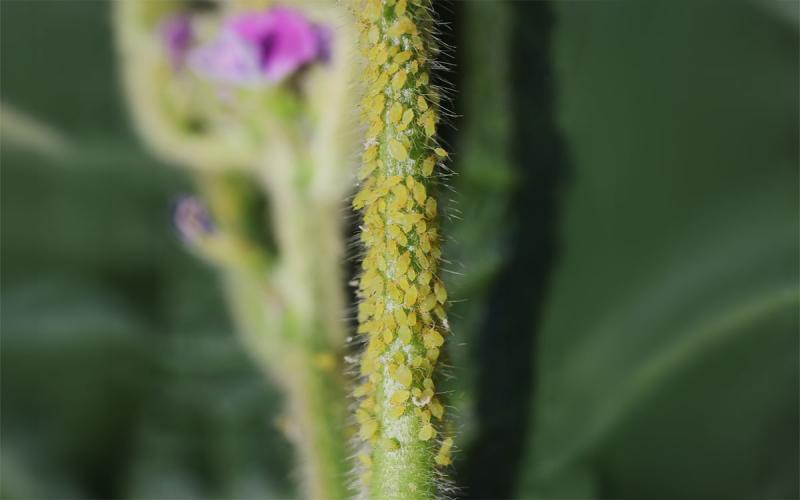
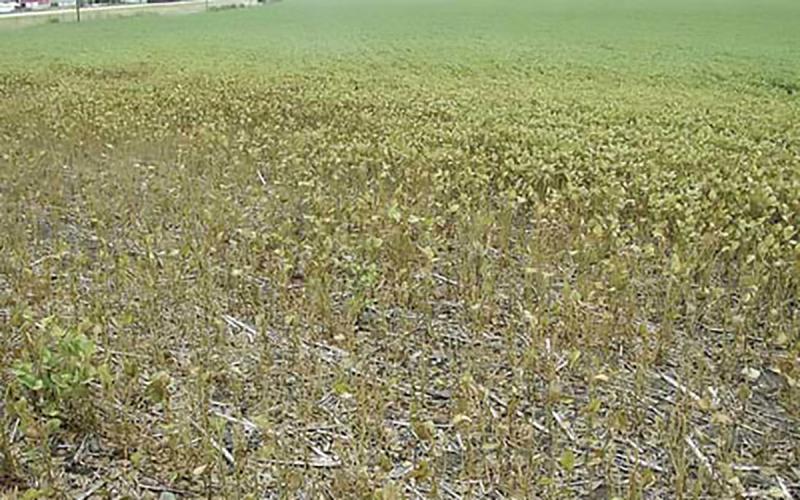
Soybean gall midge larvae are active in soybean in southeastern South Dakota (Figure 1, Figure 2). The first symptoms of an infestation during this part of the season vary based on the size of the population within the plant. Large populations often cause wilting or dying soybean, while soybean with smaller infestations may remain relatively asymptomatic. Infestations will begin along field edges. Unfortunately, there are no rescue treatments available to reduce soybean gall midge larvae populations once they are in the soybean.
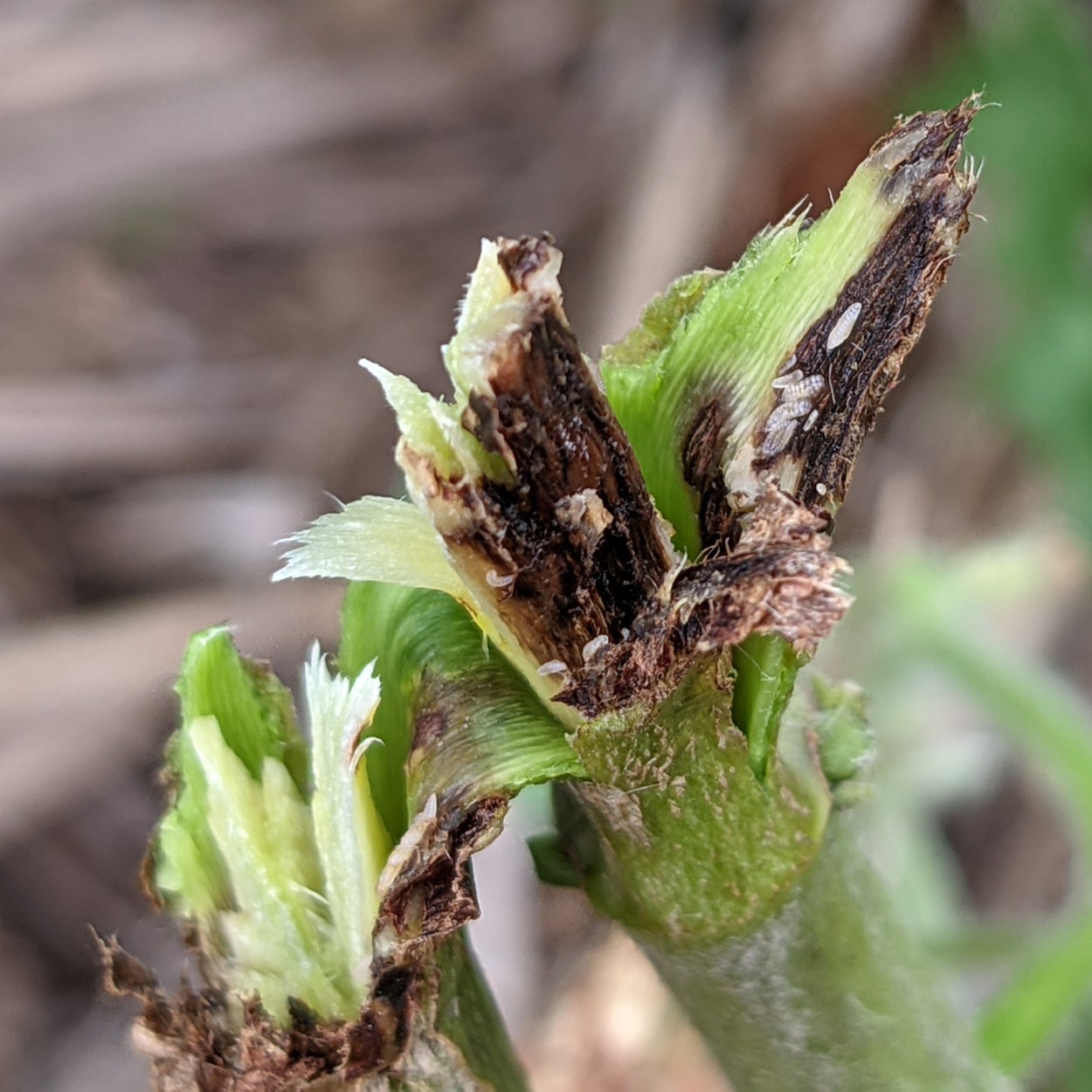
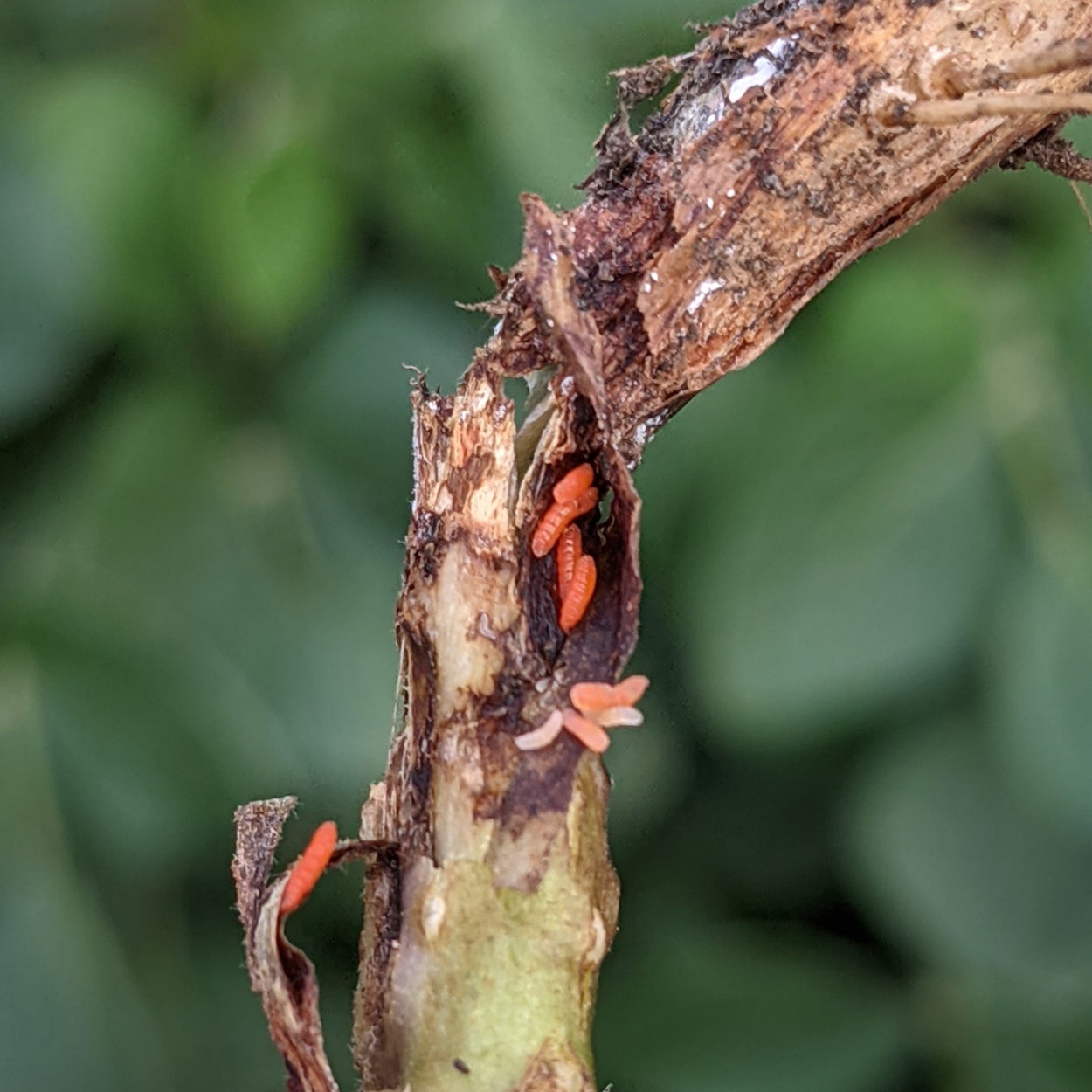
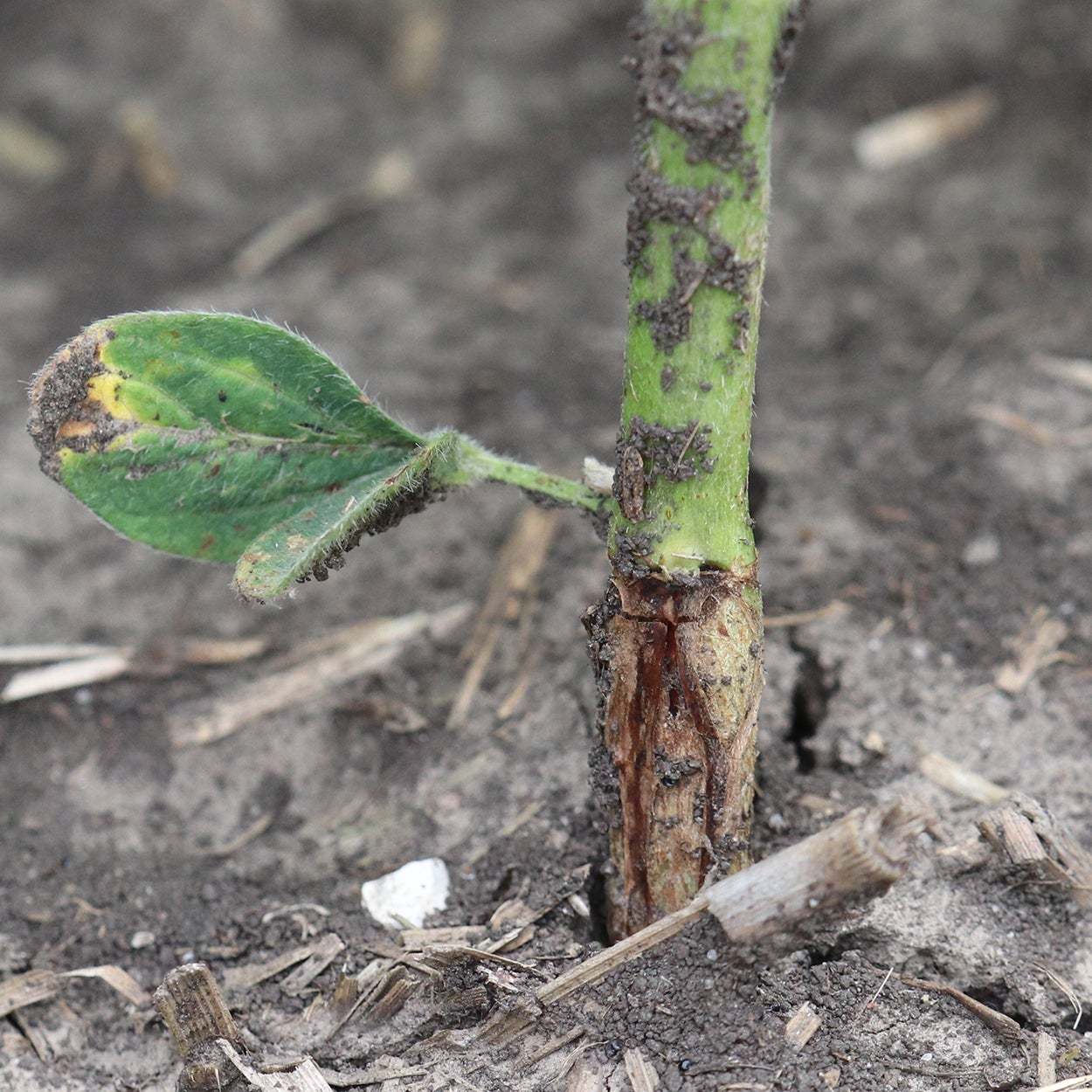
Soybean gall midge infestations typically begin with discoloration of the epidermis near the base of the stem (Figure 3). Although the infestations probably won’t result in the death of the infested plants, plants around field edges generally will wilt and many will die as a result of the infestation. Field edges that are immediately adjacent to last year’s soybean stubble tend to be infested worse than other areas of the field. The infestations will then continue into the field as additional generations occur.
Scouting for Soybean Gall Midge
If you find soybean gall midge infested fields, please email (Adam.Varenhorst@sdstate.edu) or Tweet (@SDSUExt_Insects) a picture of the infested plant and include the county where the infestation was observed.