Take Home Message
- Full or partial replacement of corn distillers grains with heat-treated soybeans increased average daily gains and hot carcass weights in South Dakota State University research trials.
- The increased response was likely caused by improved protein quality reaching the small intestine and by increased dietary fat in diets with heat-treated soybeans.
- Under current economic conditions, partially replacing distillers grains with heat-treated soybeans increases cattle feeding profits.
Introduction
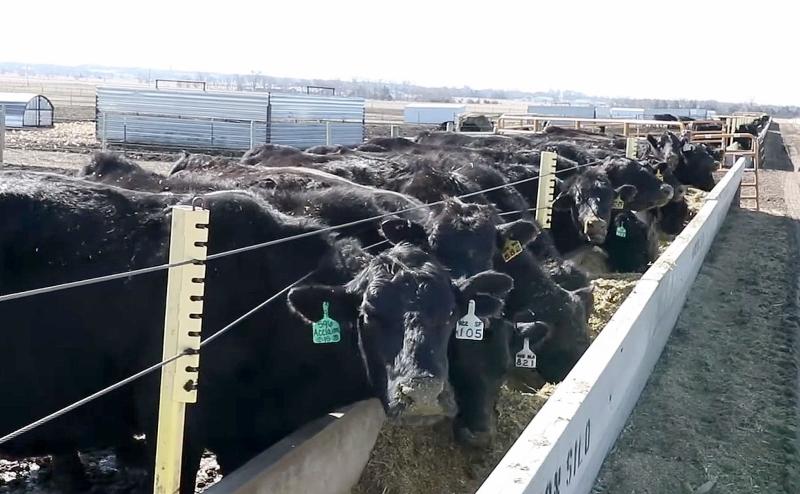
Distillers grains (DGS) have been the primary source of supplemental protein in cattle diets for more than twenty years. As ethanol production ramped up in the Corn Belt, DGS became a widely available and favorably priced alternative to other protein sources and quickly took the position as the default protein source. In fact, many cattle feeders and nutritionists have never worked in a world where feeding DGS was not the norm.
However, agriculture rarely remains static. At one time, DGS were priced at a significant discount to corn, now those feedstuffs are usually priced at nearly the same cost per unit of dry matter. The cattle being fed have also changed. Cattle today grow faster, have improved marbling, and are marketed at heavier weights compared to when DGS were first studied. Assuming that the best answer from yesterday is still true today risks missing opportunities. For those reasons, the SDSU Feedlot Research group has been re-examining whether soy protein fits into modern cattle feeding diets.
What Is Unique About Heat-Treated Soybeans?
Heat-treated soybeans offer interesting attributes that could enhance cattle growth. Applying heat to a feed can alter structures, resulting in reduced degradation in the rumen and potentially greater absorption of intact proteins in the small intestine. Soy-based protein contains more lysine compared to corn, so increasing the supply of this essential amino acid could increase cattle growth. In addition, including soybeans in cattle diets increases energy density because of the oil in soybeans. Increased energy concentration from fat results in greater feed efficiency.
Heat-treated soybeans can be differentiated based on how much oil remains in the feed. Roasting uses heat to affect protein structure, but all the oil is retained. Extrusion uses a screw mechanism inside a barrel to create heat and pressure, resulting in ruptured plant cells and altered protein structures. This product can be pressed to extract a portion of the oil (expeller processed) or can be fed as a full-fat product.
Full Replacement of DGS with Full-Fat Extruded Soybeans
We conducted a study in the fall of 2024 to determine the effects of full-fat extruded soybeans as the sole source of supplemental protein compared to modified DGS with or without added corn oil in diets fed to yearling Angus steers. In that study feeding full-fat extruded soybeans increased ADG, improved feed efficiency by 5% and increased carcass weight by 30 pounds. We observed pronounced gain responses after cattle were implanted or when lubabegron (Experior, Elanco Animal Health) was fed. More detailed data on this experiment can be found on page 58 of the 2025 Animal Science Research and Extension Report.
Despite the impressive growth response observed, completely replacing DGS with extruded soybeans was not profitable, at least not with feed prices at this time. Using a cost for full-fat extruded soybeans of $480 per ton and $76 per ton for modified distillers, total feed costs increased by approximately $140 per head with the added gain worth about $110 per steer.
Partial Replacement of DGS
We then wondered what would happen if we only partially substituted extruded soybeans for DGS. We had observed positive responses to a blend of expeller processed soybeans and dried distillers in prior research Evaluation of extruded and expelled soybean meal, so it was plausible that we might be able to capture added growth at a reduced cost by blending DGS and full-fat extruded soybeans.
And that is exactly what happened when we applied this strategy in backgrounded crossbred steers. For this study we replaced 1.5 pounds of dry matter from modified DGS with1.5 pounds of full-fat extruded soybeans. Much like the earlier experiment, we increased ADG (7.9%) when full-fat extruded soybeans were included. Feed efficiency was not different, but final live weight increased by 43 pounds and carcass weight by 27 pounds compared to feeding modified distillers.
In this case, substituting part of the distillers grains made money. Adding extruded soybeans increased diet costs (about $20/ton DM) and total feed expense by about $45 per head. That extra cost was less than the increase in value. In this experiment, increased carcass weight led to a greater number of Yield Grade 4’s, so the 27 pounds of increased carcass weight increased revenue and net profit per head by $72 and $27, respectively. Selling cattle on a flat dressed bid of $360 per cwt. would have increased revenue and returns by $97 and $52 per steer.
We have more questions to address, including evaluating responses during different growth phases, comparing different processing methods and extent of heat treating, and determining metabolic responses to these feedstuffs. However, based on our results so far, we believe that partial replacement of DGS with heat-treated soybeans is a viable option to increase output and profitability of finishing cattle.
Acknowledgments
This research was made possible by support from the SD Soybean Research & Promotion Council.


