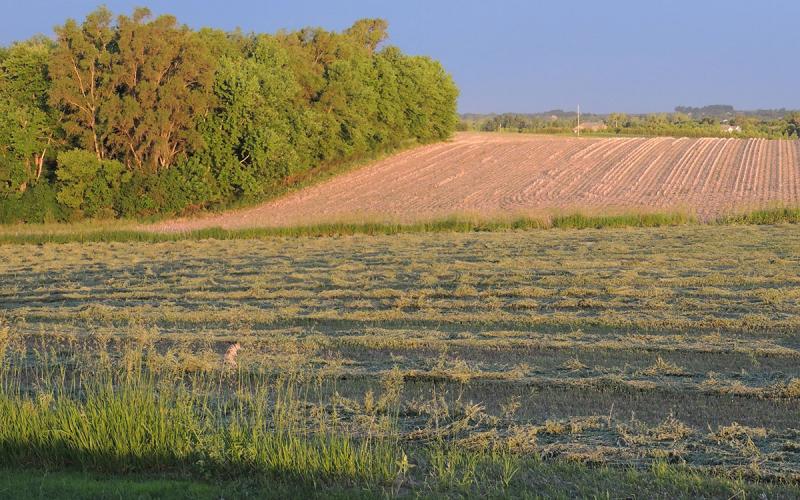
Most operations feed hay based on convenience rather than cow requirements. Feeding the same hay to all cattle throughout the winter may be simple and efficient, but it often leads to overspending, or underfeeding. From a nutritional standpoint, this strategy is rarely effective.
Why Hay Quality Matters More Than Quantity
Feeding more low-quality hay is not the same as feeding better hay. While grass, grass–alfalfa mixes, and straight alfalfa hay differ in nutrient profile, forage quality and energy density ultimately drive intake and animal performance. Mature, weathered, or poorly stored hay and forage may fill the rumen, but often fail to provide enough useable energy. Even when a hay test appears “adequate” on paper, intake and animal performance may still be limited, especially for cattle with elevated nutrient demands. Cattle with elevated nutrient requirements require energy density, not just additional pounds of forage.
Understanding Forage Tests: CP and TDN Basics
One of the most effective ways to stretch winter feed is to prioritize forage quality based on livestock nutritional needs. Doing so requires knowing the nutritive value of stored forages. Crude protein (CP) determines whether supplementation is needed and general ranges for grass hay include as follows:
- Low-quality hay: < 8% CP
- Moderate-quality hay: ~9-11% CP
- High-quality hay: > 12% CP
Feeding hay that merely gets cattle through the winter often comes at the expense of body condition, reproduction, and overall herd performance. When CP is inadequate, rumen microbes cannot efficiently digest fiber, reducing the amount of useable energy cattle can extract from the forage. Once protein needs are met, energy determines whether body condition and performance are maintained. Total digestible nutrients (TDN) is the most common energy measure, and general ranges for grass hay TDN include:
- Low-quality hay: < 52% TDN
- Moderate-quality hay: ~54-58% TDN
- High-quality hay: > 60% TDN
Energy declines rapidly as forage matures. As a result, late-cut grass hay may have adequate CP but insufficient energy for higher-demand cattle. In these situations, cows may appear full yet still lose body condition.
Matching Hay Quality to Cow Nutrient Requirements
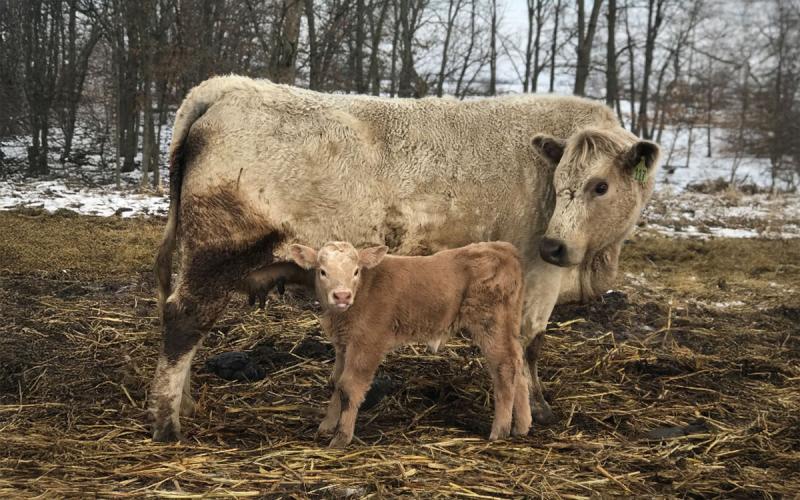
Often, the challenge isn’t a lack of good quality hay, it’s knowing when cows need it. Nutrient requirements of a mature beef cow change throughout the year, and winter-feeding decisions should reflect those changes. Early to mid-gestation mature beef cows have the lowest protein and energy needs of any stage of cow production and can utilize lower-quality grass hay. Late gestation (final ~60 days) brings rapid fetal growth, increasing energy and protein needs. This is when hay quality matters more. Early to peak lactation (~60 to 90 days post calving) is the period of highest annual nutrient demand and should be matched with the best quality forage available. Yearling replacement heifers and first-calf heifers also require higher energy and protein levels than mature cows. Not meeting these nutrient requirements during the various stages of production leads to lost performance. It is also important to recognize that cold weather further increases nutrient needs. During extreme winter conditions, cows expend more energy maintaining body temperature, which raises their overall energy requirement and can worsen body‑condition loss if forage quality is insufficient.
Cost Implications of Mismatching Hay Quality to Nutrient Needs
With hay and supplement costs accounting for roughly 60 to 80% of total operating costs in for beef producers, mismatching winter forage quality to cow needs can be an expensive mistake. It is generally more cost effective to supplement alongside poor-quality hay than misfeed high-quality hay. For instance, the nutrient requirements of a mature, dry cow in early gestation can be met with grass hay testing around 10% CP, while premium alfalfa hay should be reserved for late-gestation or early-lactation cows with higher nutrient demands. Matching hay quality to livestock needs stretches winter feed and reduces unnecessary supplementation costs.
Conclusion
To reduce winter supplementation costs, test your hay and identify which cattle require higher-quality feed. Adjusting supplementation before calving is particularly important to support cow body condition, maintain milk production, and help calves get the best possible start. Finally, monitoring cow body condition throughout winter provides a simple way to track whether your feeding program is successfully working.
Helpful Resources
- View the article, Forage Sampling Procedures, for some expert tips on forage sampling.
- View Chapter 14 of Beef: Best Management Practices for Cow-Calf Production for more information on nutrient requirements of beef cattle.
- Contact SDSU Extension Forage staff for more information on winter forage feeding and management.
- Contact SDSU Extension Beef staff for more information on beef cattle production and management.