Written collaboratively by Cody Molnar, Keigo Imai, and Madison Zercher.
Peppers of all kinds are highly productive and generally hardy here in South Dakota. Peppers are enjoyed and loved by homeowners, hobby growers, and commercial producers alike! However, a new disease has been found to be occurring in South Dakota and other regions around the Midwest, Great Plains and Great Lakes. While the plant appears healthy, vigorous and produces peppers that appear normal, many peppers will have a black mold growing inside the pepper, rendering it unappetizing and inedible. What’s going on here?
About Pepper Internal Rot
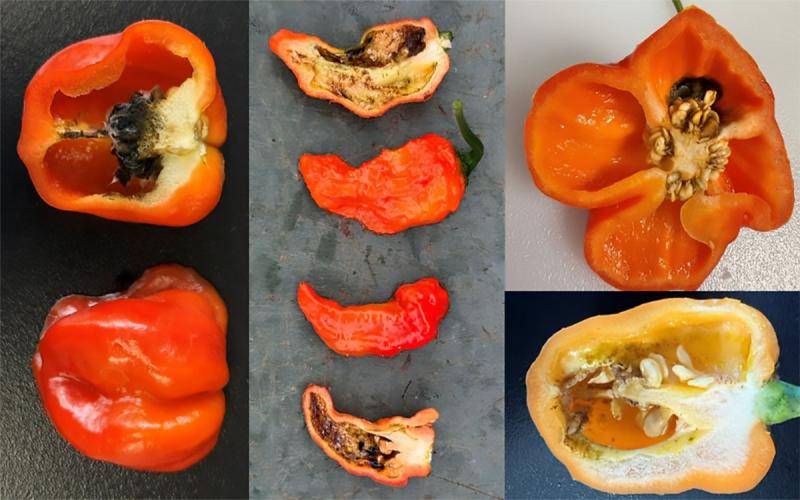
The disease, termed ‘pepper internal rot’ or ‘Alternaria internal rot’, appears to affect all members of the pepper family (Several species in the genus Capsicum). Externally, the infected pepper appears mostly normal, though the tip of the pepper may be more ‘pointed’ and narrow than usual (Figure 1). Differences in shape can be difficult to determine on some species and cultivars as they are naturally highly irregular in shape and already very narrow. Outbreaks of this disease can be severe, with over 50% peppers being affected in some varieties (Imai et al, unpublished). While it may appear as a typical fungal rot that occurs on produce left unattended for too long, this disease is much more complicated.
- Pepper internal rot is primarily caused by Alternaria alternata, a common, widespread fungi that, while sometimes pathogenic, is generally of low concern. Occasionally, Fusarium and several other fungi are also associated with this disease but this relationship is not well understood.
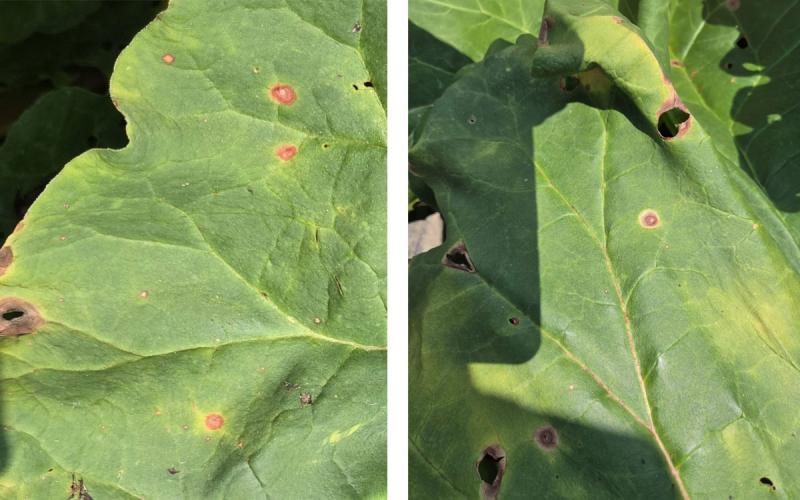
- Peppers actually become infected when fungal spores enter newly opened flowers much earlier in the season. It is possible this is aided by heavy dew or high humidity. Nearby alternate hosts, such as cucumbers or squash with cucurbit leaf spot, may help fuel disease outbreaks as well.
- Symptoms start appearing internally as the pepper nears maturity. Unripe peppers will typically not develop severe rot.
- Strangely, infection rates are relatively constant across years despite differing weather conditions. This is not typical of most fungal diseases. It is not yet known why.
- Currently, it is not advised to eat peppers that have symptoms. Similarly, infected peppers should not be composted to avoid increasing disease pressure.
- Not all peppers are equally susceptible. In general, Capsicum frutescens (such as tabasco peppers) varieties are the most resistant, while Capsicum chinense (habanero and ghost peppers) are some of the most susceptible. Different cultivars within these species may be more or less susceptible as well (Imai et al, in preparation). See Table 1 for all varieties that have been evaluated here at SDSU.
- The disease can be managed both chemically and non-chemically. A rotation of systemic fungicides that target Alternaria (Fontellis, Bravo, Switch and Cabrio) appears very effective at reducing disease rates to less than 15% in susceptible varieties (Imai et al, in preparation). Follow the label when using any pesticide and only use pesticides registered for use in SD. Work is ongoing to develop other management plans.
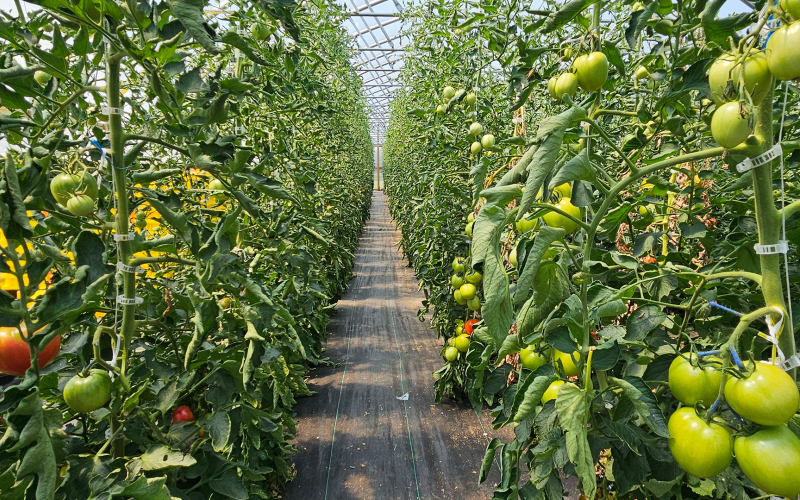
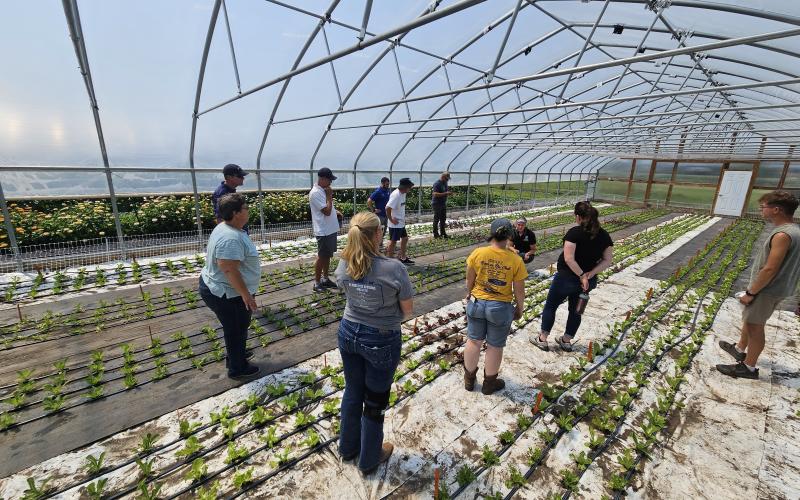
- Growing in enclosed or protected areas, such as greenhouses, high tunnels and caterpillar tunnels, also reduces disease incidence. Complete enclosures such as greenhouses may be able to completely eliminate disease, while open enclosures like high tunnels only somewhat reduce disease as spores are still able to be introduced.
| Variety | Pepper Species | Percent Infected |
|---|---|---|
| Bell | C. annuum | 9.48% |
| Hungarian Yellow | C. annuum | 2.49% |
| Jalapeno | C. annuum | 4.14% |
| Aji | C. baccatum | 11.13% |
| Bishop's Crown | C. baccatum | 20.04% |
| Bhut Jolokia | C. chinense | 67.22% |
| Habanero | C. chinense | 61.49% |
| Malagueta | C. frutescens | 5.35% |
| Tabasco | C. frutescens | 1.25% |
Disease Research and Reporting
Research on this emerging disease is continuing here at SDSU to better understand how the disease spreads and to best manage it. Be on the lookout for our online reporting platform coming this summer to report incidents of this disease and many others. For any questions about this disease, please contact Cody Molnar or the SDSU Plant Diagnostic Clinic.
Sources
- Internal Rot of Capsicum fact sheet, Integrated Crop Protection.
- Some data used in this article was contributed by Sean Toporek, former SDSU assistant professor of specialty crops.