Written collaboratively by Patrick Wagner, Adam Varenhorst, Amanda Bachmann, Philip Rozeboom, and Bradley McManus.
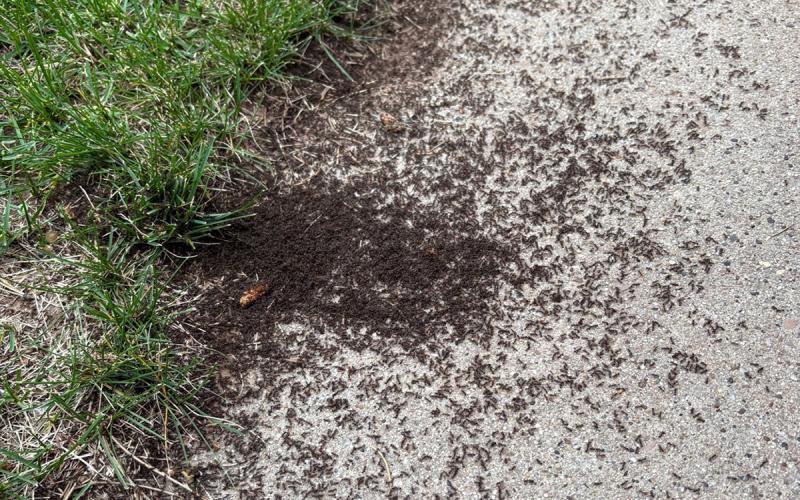
Although spring has only just begun, ant colonies have already become active (Figure 1). Ants were abundant in 2025, and these high populations appear to have carried over into 2026. A wet growing season last year combined with mild winter conditions and multiple 70+ degree days in March has boosted their activity across the state. We have already received numerous questions this year from both curious and concerned residents in South Dakota.
General Behavior
Aside from a couple of exceptions, most ant species in South Dakota are considered to be beneficial. Ants are largely omnivorous insects that scavenge for many types of food, including, but not limited to, plants, animals, fungi, nectar, and honeydew (produced by aphids). Their activity can contribute to many different ecosystem services such as pollination, predation, and soil fertilization. Ants also have some downsides like inadvertently planting weed seeds by storing them underground or worsening aphid infestations by protecting and moving aphids around to maximize honeydew production. However, the pros outweigh the cons for most species (ground ants, sugar ants, etc.) as long as their colonies don’t show up indoors and become a nuisance.
Species of Concern
Carpenter Ants
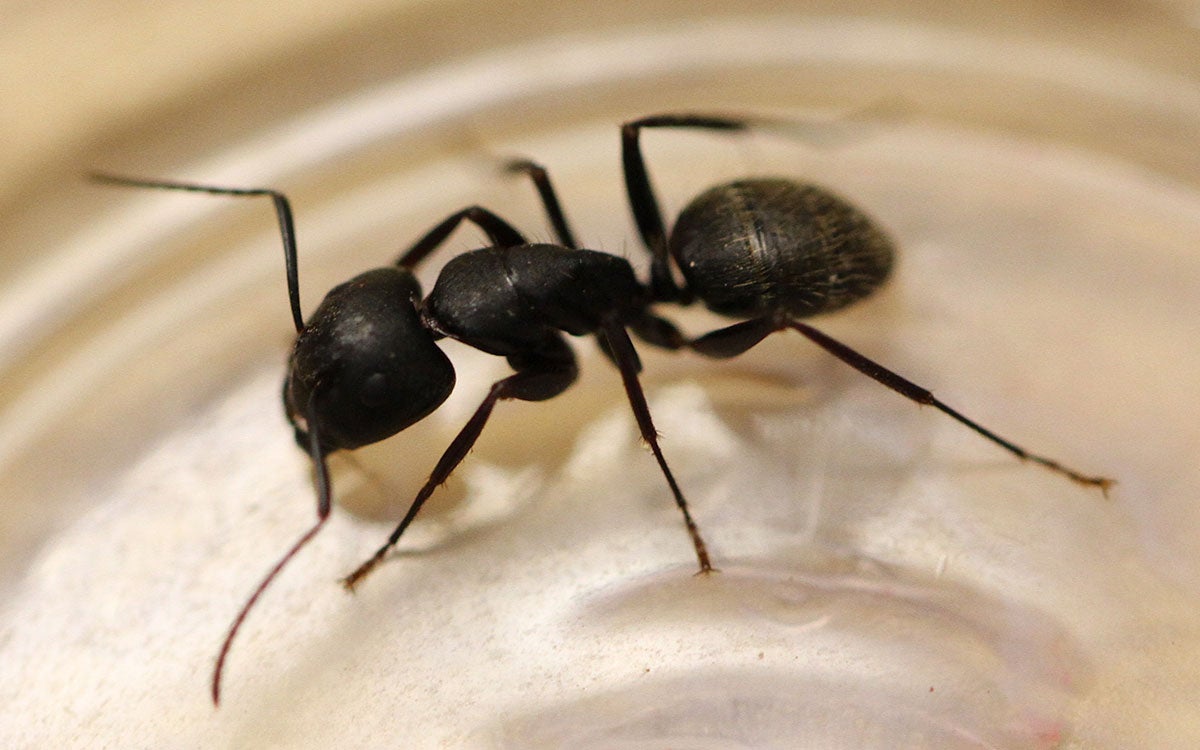
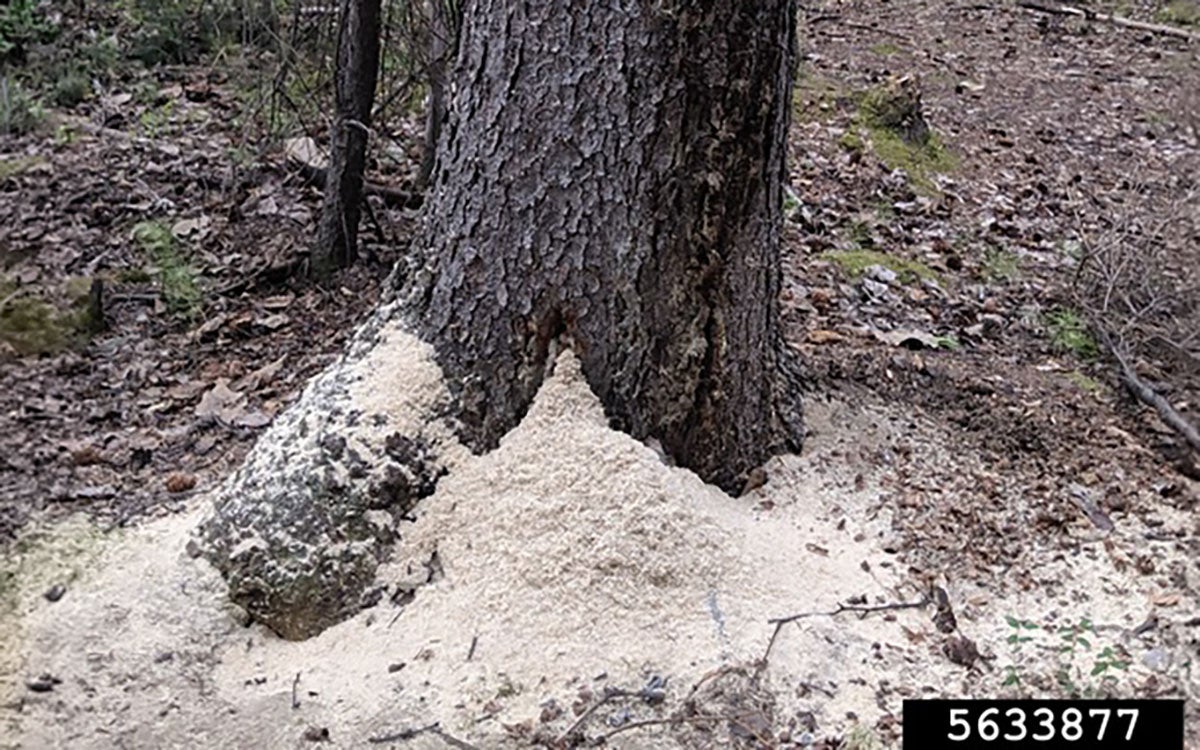
One of the biggest concerns regarding ants is the carpenter ant (Figure 2). Although typically benign when found in nature, carpenter ants can sometimes be a structural pest, causing damage to homes and other buildings. Unlike termites, carpenter ants do not eat wood. Instead, they burrow through and displace wood as they build their colonies. One of the main signs of carpenter ant activity is seeing piles of excavated wood dust or pulp near trees or wooden structures (Figure 3). Carpenter ants prefer to nest in wood that is non-living and has been softened by moisture. Common places include tree stumps and rotting logs, but also damp wood in and around buildings. It is important to identify and treat carpenter ants early to prevent potential damage.
Western Thatching Ants
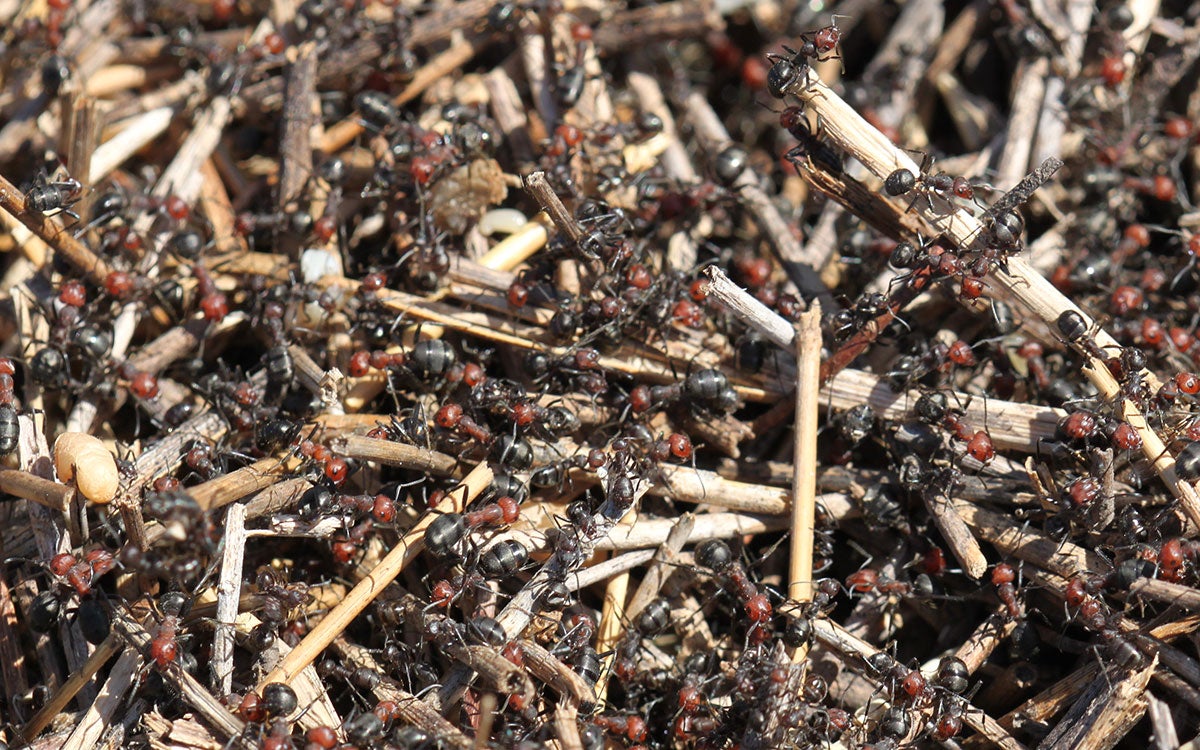
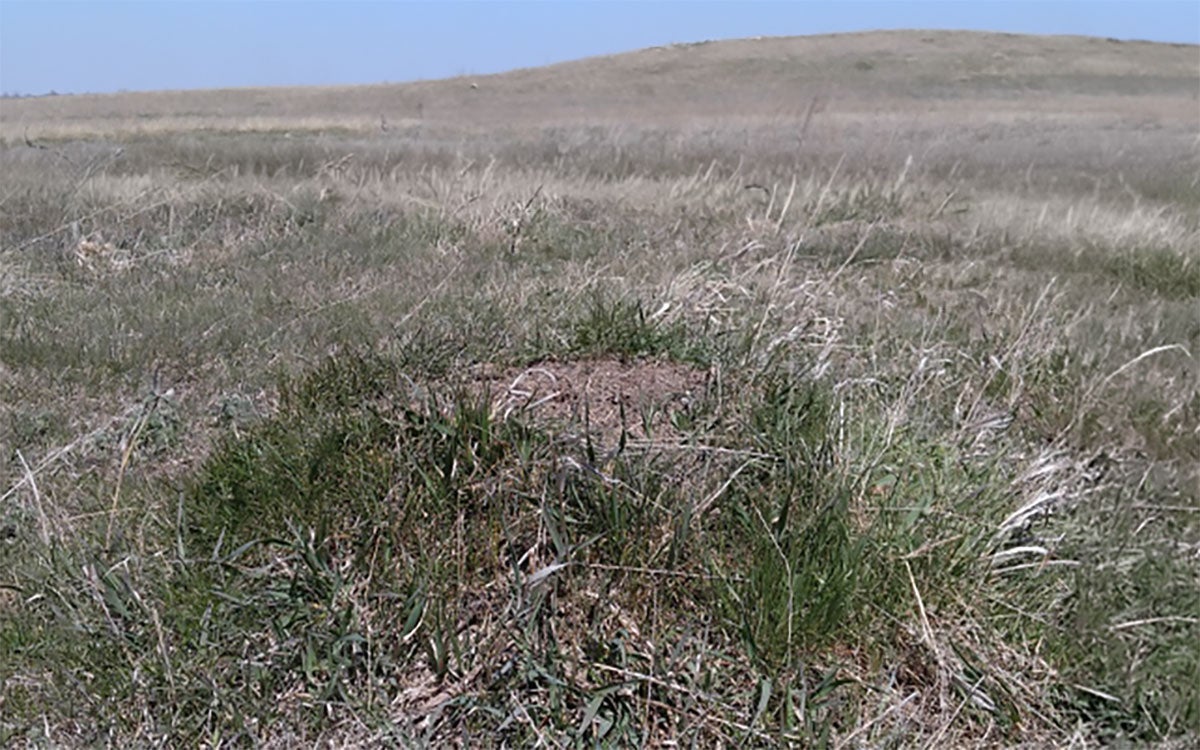
Another occasionally troublesome ant found in South Dakota is the western thatching ant (Figure 4). These ants form large mounds and are often found in pastures or lightly forested areas (Figure 5). The size of the mounds observed can vary dramatically from approximately 1 to 18 inches in height and 1 to 11 feet in diameter. The mounds have a characteristic bare patch on the top, which allows energy from the sun to heat the belowground colony. The top layers of the colony consist of thatch, which is used to protect the mound from extreme weather. The mounds are built on top of below-ground chambers where much of the ant activity occurs. Thatching ant mounds can disrupt grazing practices and complicate mowing in hay pastures. They also cause small-scale patchiness of available forages due to reduced plant growth surrounding the mounds. Note that disturbing or breaking apart a large ant mound may actually increase the number of mounds in an area, as the ants will disperse and form new colonies. In addition, we’ve observed that pastures abundant with western thatching ants tend to have fewer true white grub infestations compared to those that do not have ant colonies present.
Management
As mentioned previously, ant colonies provide several beneficial ecosystem services and are best left alone. However, if ants are found indoors or in undesirable locations, management may be necessary. This is especially true for carpenter ant infestations to avoid potentially serious structural damage to buildings. If ants are observed indoors, it is important to follow them first to determine their entry point and possible food sources. Some ants are more attracted to fats and proteins, while others prefer sugary foods. Observing the ants before controlling them will help with targeting treatments.
One option to manage ants is to use insecticide perimeter sprays. Perimeter sprays contain active ingredients with long residual times (e.g., bifenthrin) and form a barrier that kills ants on contact. This is very useful for protecting structures by preventing ants from making their way indoors. Another option is setting out poison ant baits or bait stations to eliminate the source of an infestation. Ant baits are available in liquid, powder, and granular formulations to attract a variety of different species. Ants not only consume the bait, but also take it back to their nest and feed it to the rest of the colony. Bait should be placed as close as possible to where ants are entering a structure, and out of the way of children and pets.
There are a variety of alternative “home remedies” such as mixing equal parts of powdered sugar and baking soda to use as poison bait, or sprinkling diatomaceous earth near nests to kill ants on contact. Note that these powders will not persist after rain events or irrigation, so retreatment may be necessary.
When using any registered insecticide product for perimeter sprays or spot treatments, wear appropriate personal protective equipment (PPE) and be sure to read and follow label directions.
Questions?
For questions or concerns regarding ants, please contact your nearest SDSU Extension entomologist for more information.
- Brookings: Adam Varenhorst, Associate Professor & SDSU Extension Field Crop Entomologist
- Pierre: Amanda Bachmann, SDSU Extension Urban Entomology Field Specialist
- Rapid City: Patrick Wagner, SDSU Extension Entomology Field Specialist