Written collaboratively by Eric Jones, Graig Reicks, Philip Rozeboom, Jill Alms, and David Vos.
Pasture, rangelands and rights-of-way are starting to turn yellow, purple, or even a mix of both due to rapid growth of noxious weeds. Now is the time to implement management tactics to ensure the weeds do not continue to outcompete desirable vegetation and invade adjacent land. In addition to monitoring for weed presence, careful, hands-on scouting is required to determine the growth stage of the weed species present to ensure the correct management tactic is selected.
Biennial Thistle
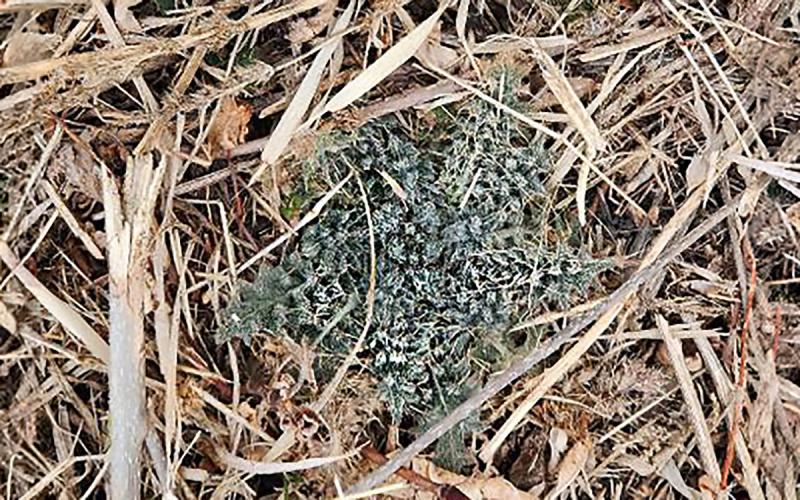
First-year biennial thistles, including species such as bull thistle and musk thistle, in the rosette stage can be sprayed with an herbicide (Figure 1).
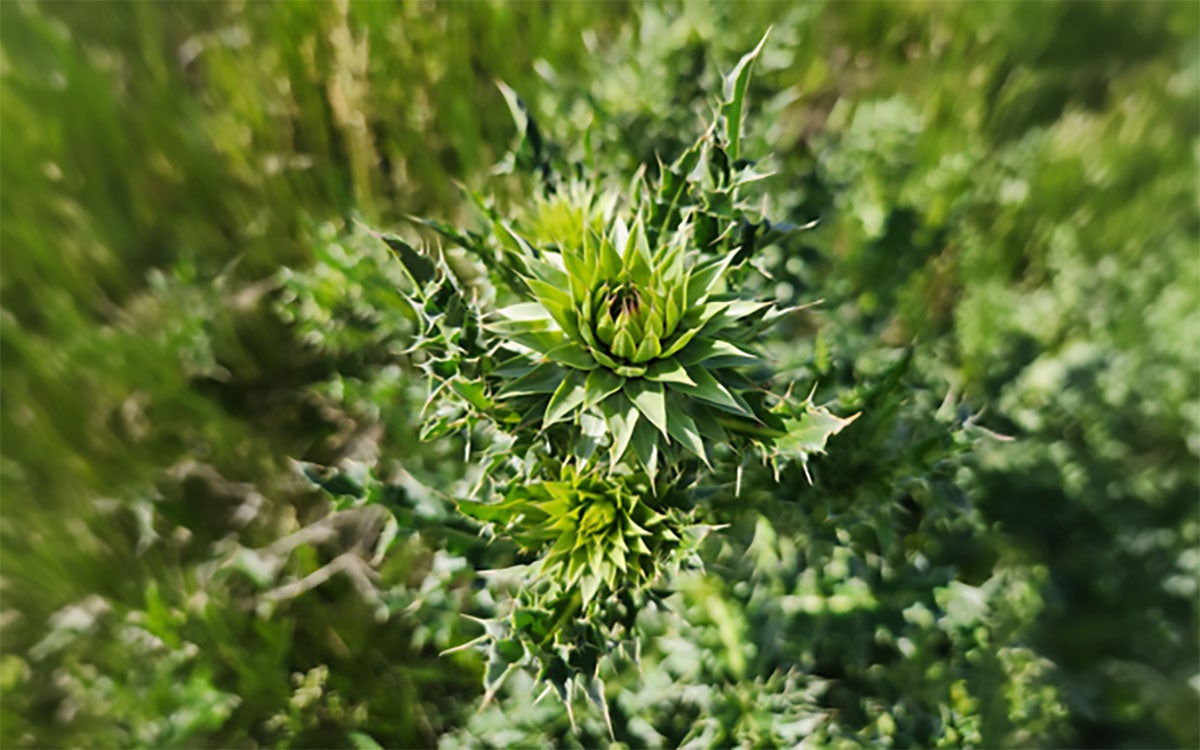
If plants are in the second year, stem elongation may have occurred by now (Figure 2).
Herbicides may not be effective at this growth stage, but plants should still be clipped or mowed to cease seed production, as flowers will likely be present (Figure 3).

Canada Thistle
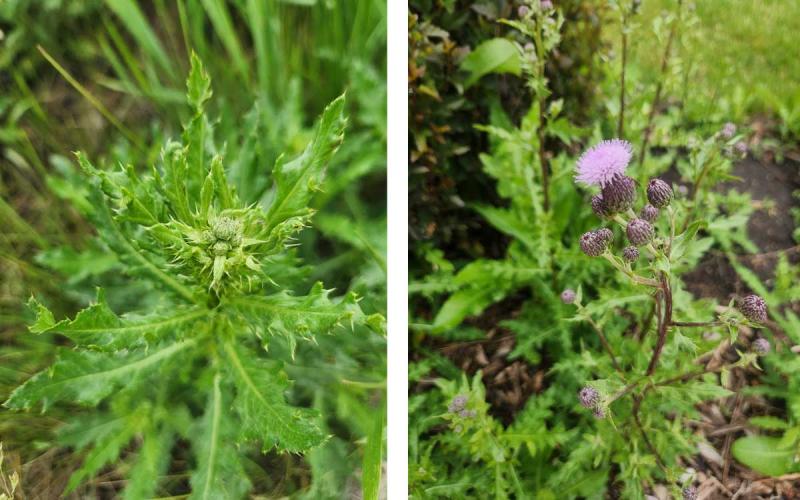
Canada thistle plants should be pre-budding when an herbicide is applied; if flowers begin to open and turn pink, herbicides may not be effective (Figure 4).
Plants with flowers should be clipped or mowed to prevent seed production.
Caution should be taken when plants have produced seeds, as clipping or mowing can agitate the seed head and disperse seed across the landscape.
Leafy Spurge
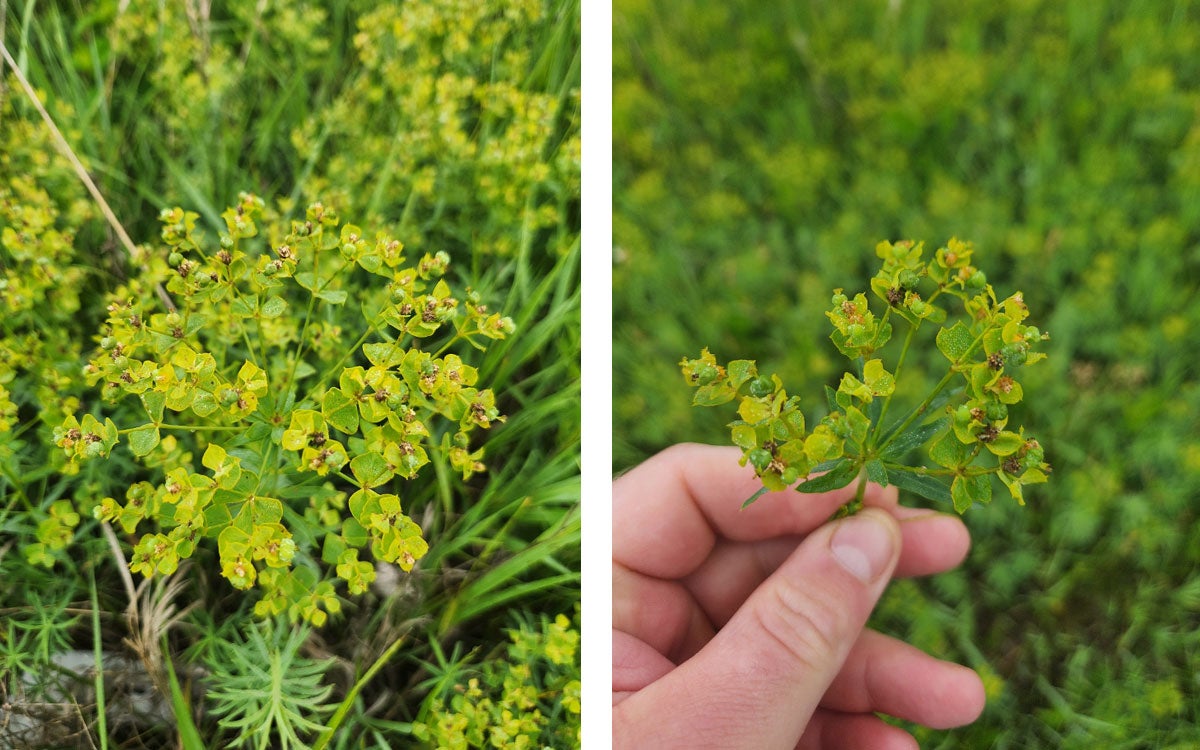
Leafy spurge in the yellow bract stage is the appropriate timing for herbicide application (Figure 5). If plants begin to form a seedhead, applying herbicides may not be effective (Figure 6). Mature plants should be clipped or mowed to ensure no seeds are produced. Clipping or mowing is also a good tactic to ensure newer growth for a fall herbicide application.

Absinth Wormwood
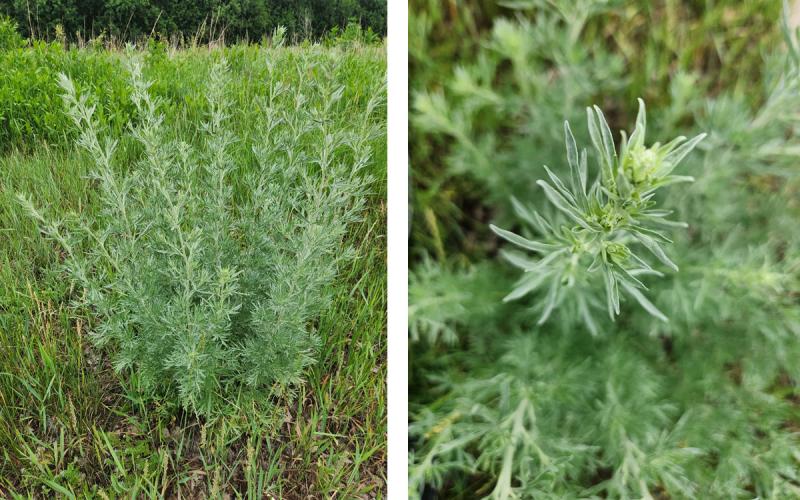
The window for spraying herbicides for absinth wormwood management has likely passed.
If plants have a grey to white hue, then the plants are too mature for an herbicide application (Figure 7).
Mature plants should be clipped or mowed to ensure no seeds are produced. Clipping or mowing is also a good tactic to ensure newer growth for a fall herbicide application.
Management Considerations
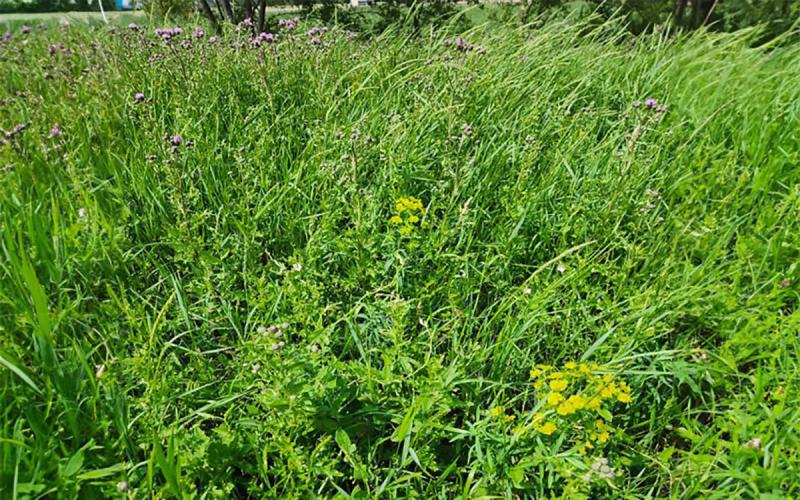
There is a good likelihood that multiple weed species inhabit a single area and therefore weed management plans need to be tailored to manage all species present (Figure 8). Refer to the most-recent SDSU Extension Noxious Weed Control Guide and Pasture and Rangeland Weed Control Guide for specific herbicides for each species.
While herbicides are commonly utilized to manage noxious weeds, nonchemical tactics can and should be implemented as well. Clipping, mowing, hand weeding, rotational grazing, biological control insects (i.e., leafy spurge beetles), prescribed burning, and planting competitive desirable vegetation are all viable options to manage noxious weeds. Management plans are more effective when multiple tactics are utilized.
Regardless of what tactic is implemented to manage these weeds, record where efforts were made to determine if follow-up tactics are needed in the fall.