There are several species of flies that can irritate and reduce the production value of livestock. The most problematic fly pests include face flies, stable flies, and horn flies. Alone or in combination, these flies can reduce milk production, calf weaning weights, transmit diseases [e.g., pink eye or infections bovine rhinotracheitis (IBR)], cause the development of sores, and affect grazing distribution. Fly population densities vary from year to year; however, they tend to be more of problem during hot, dry weather consistent with drought conditions. These conditions promote decreased development time that can effectively increase populations affecting livestock. To manage these pests, it’s important to be able to accurately identify them and understand their life cycles.
This article will focus on cattle, but many of the management strategies can also be applied to other livestock.
Stable Fly
Identification
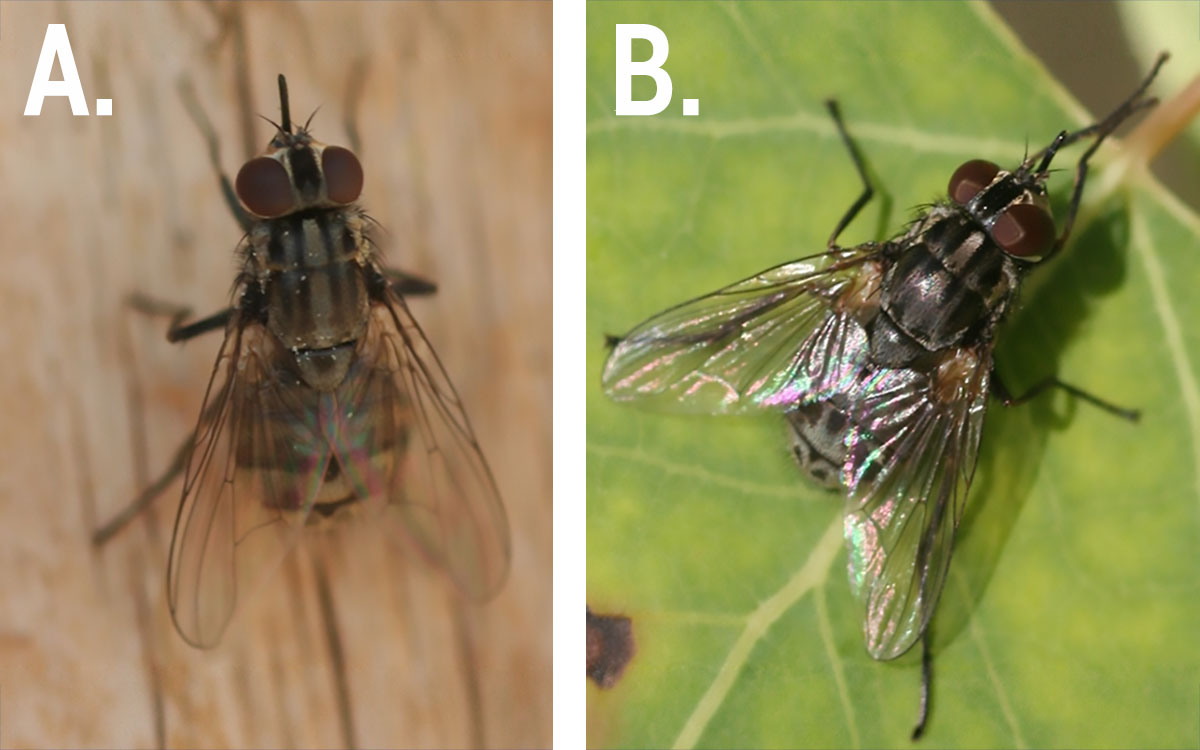
Stable flies have mouthparts (proboscis) that protrude forward and are easily observed when the fly is at rest (Figure 1-A). Adults are slightly smaller than house flies but can be distinguished by their gray color and irregular black spots on the abdomen (Figure 1-B). When feeding on legs, stable flies almost always orient themselves so that their heads are facing upwards.
Impact
These flies require blood meals as adults, and their persistent feeding on the legs of cattle (Figure 2) often causes them to stomp their legs, bunch, or stand in water. As these behaviors disrupt grazing or feeding, they can lead to reductions in weight gain. Although stable flies can be found attacking pastured cattle, they are generally more of an issue for feedlots or dairies. This is due to the maggots develop in high moisture decaying organic matter, such as wet hay or manure. Areas with the highest maggot concentrations tend to be around feed bunks, stacks of hay, or manure piles.
Management
Signs that stable flies are attacking livestock include frequent tail flicking, muscle twitching, leg stamping, standing in water, bunching in the corners of pastures or pens, or lying with legs tucked under the body. Populations of stable flies are generally managed using low pressure or mist sprays. In addition, mixtures of parasitoid wasps that attack the stable fly pupae can be purchased and applied to manure piles, feed bunks, or other areas with abundant decaying organic matter.
Face Flies
Identification
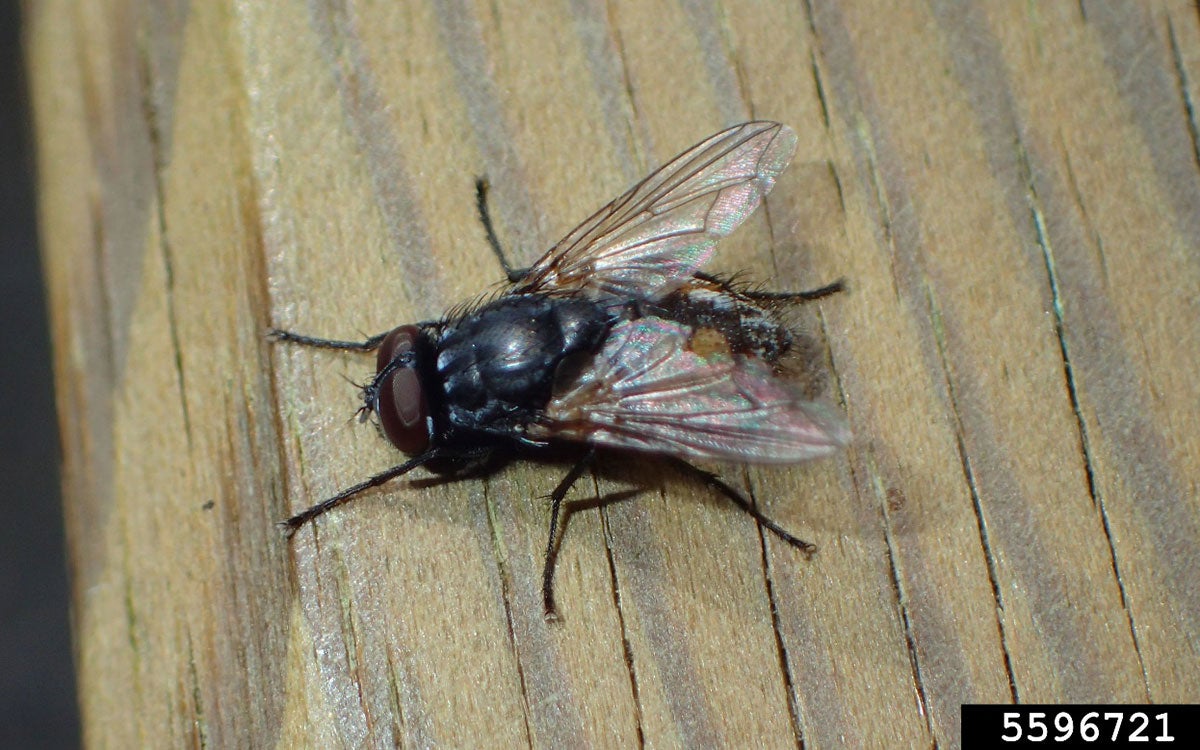
Face flies resemble house flies but are considerably smaller in size. Female face fly adults have a dull gray thorax with four black stripes and a gray-black abdomen with yellow patches on the first abdominal segment (Figure 3). The male flies have a darker thorax with visible lines, and a bright golden abdomen.
Impact
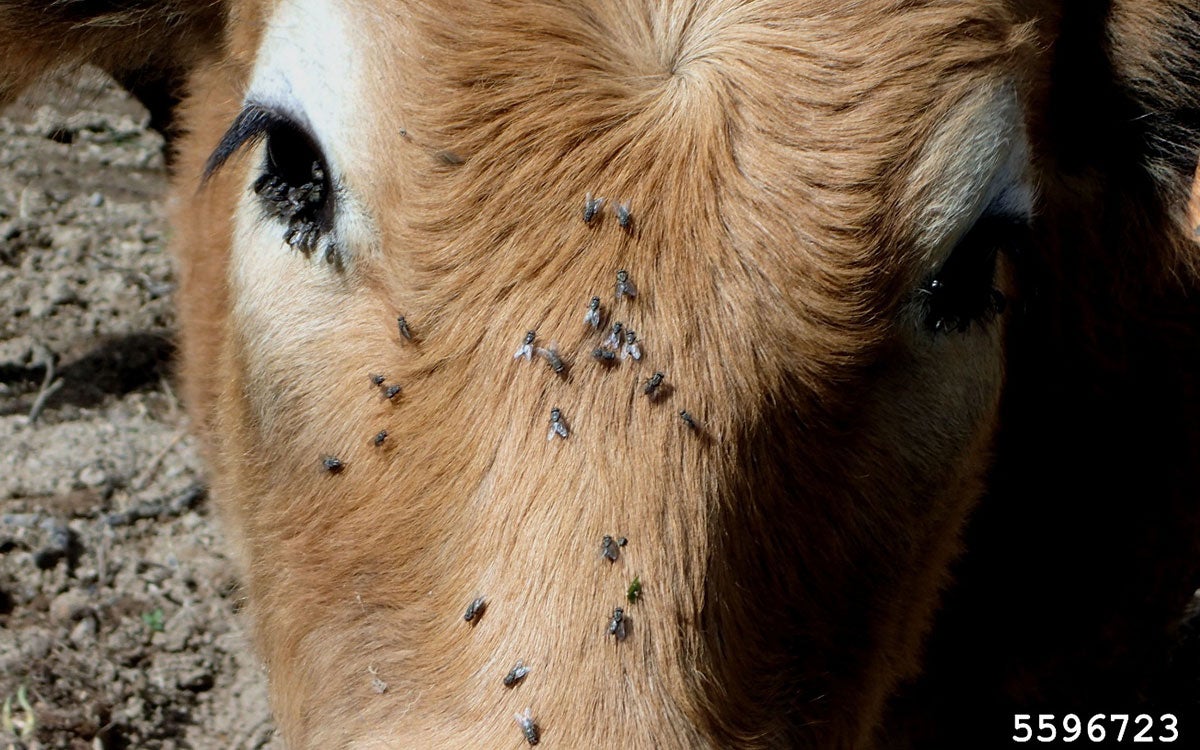
As the name implies, face flies are typically observed on the head of cattle, especially around the eyes (Figure 4). Although face flies can’t pierce the skin with their mouthparts, they can scrape and break through the tissue around the eyes. This results in cattle that have increased tear production. Face fly activity can result in injury to the skin and a reduction in fertility, weight gain, and milk production. In addition, these flies can also transmit several disease pathogens in cattle. Documented diseases include Brucellosis, eyeworms, infectious bovine rhinotracheitis, mastitis, and pinkeye (infections bovine keratoconjunctivitis). Female face flies will feed on fluids produced by the cattle (tears, mucus, saliva, amniotic fluid, vaginal discharges, milk, or blood).
Management
Face flies lay their eggs into fresh manure as the maggots feed on bacteria and fungi. The face flies can be managed with several strategies including insecticidal ear tags, dust bags, oiler or rubs, pour-on products, and topical sprays. Alternative strategies including adult fly trapping, releasing commercially available parasitoid wasps or predatory beetles, and feeding insect growth regulator (IGR) supplements through mineral. Pinkeye vaccines can be used but should be administered before cattle are sent to pasture and monitored regularly for pinkeye.
Horn Flies
Identification
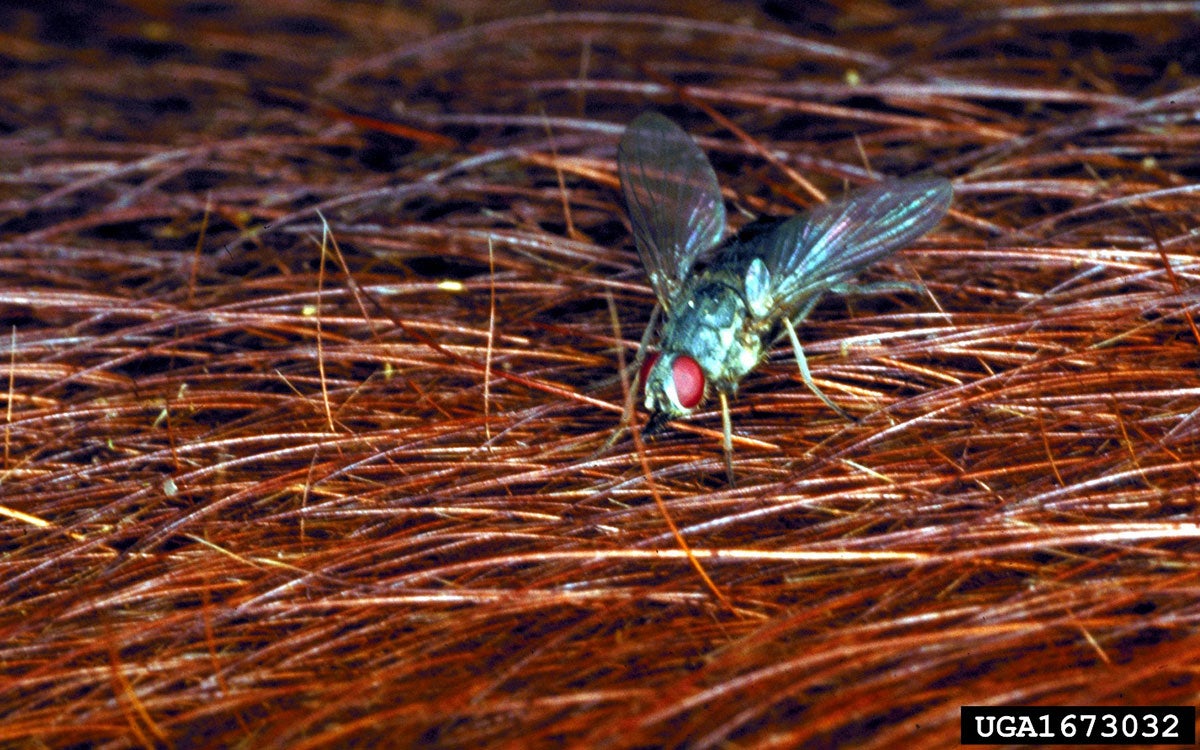
Adult horn flies are approximately half the size of the common house fly. They are gray in color and have two light colored stripes present on the thorax (Figure 5). Both male and female horn flies have piercing-sucking mouthparts that are used to consume blood. Unlike the stable fly, their mouthparts are not held outwards and are generally not easily observed. Horn flies generally hold their wings angled farther from their bodies than stable and face flies. When feeding, horn flies typically are oriented so that their heads are facing downwards.
Impact
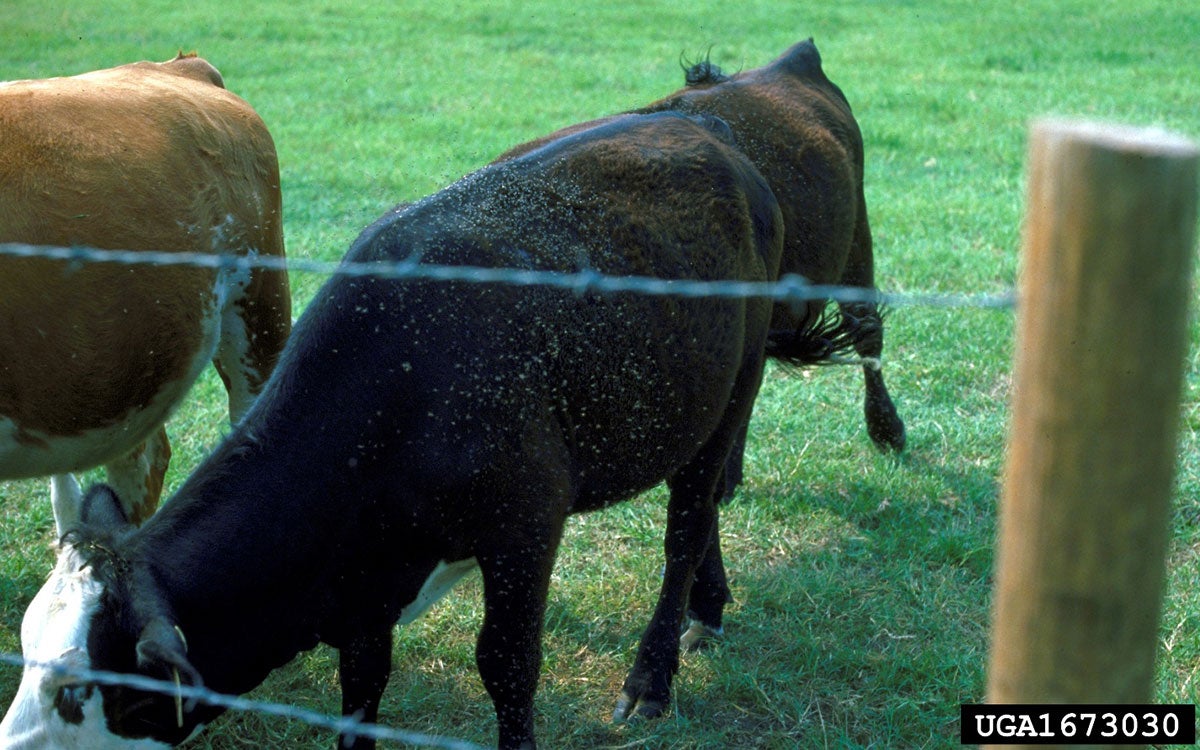
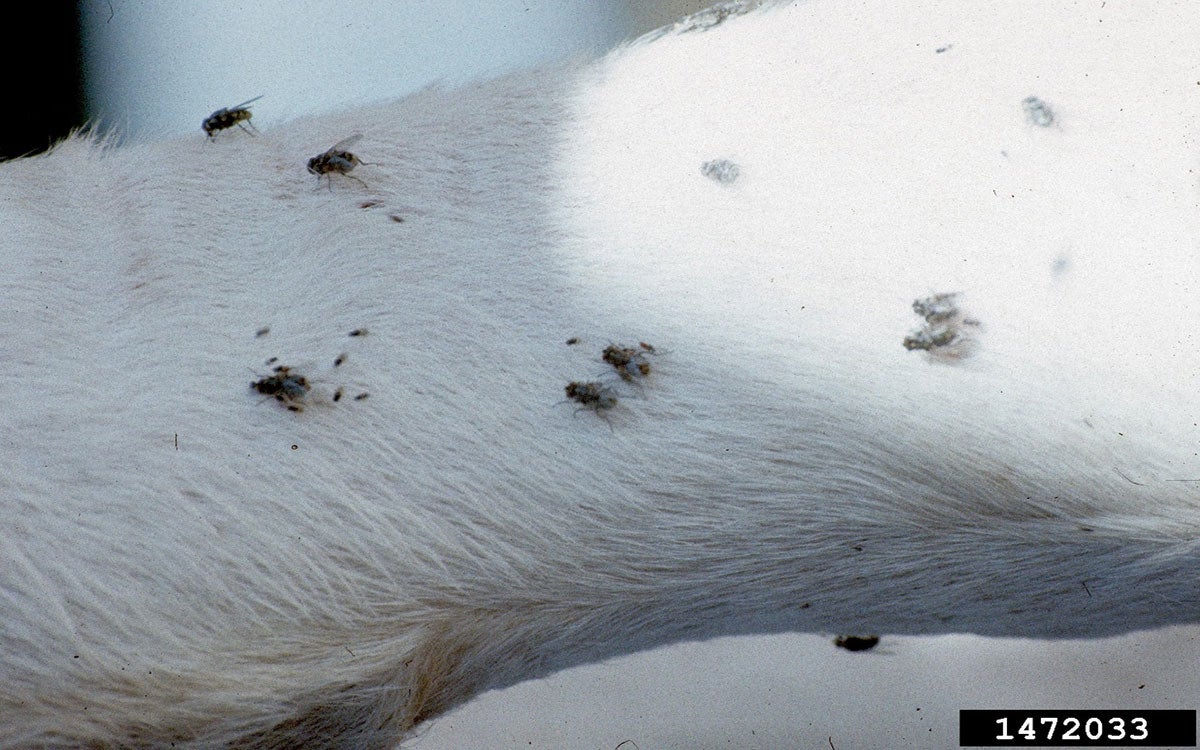
When present, very large populations of horn flies (thousands per animal) are observed on cattle. These flies tend to congregate on the backs and sides of cattle (Figure 6). Research has determined that horn flies can travel as far as three miles in search of hosts. Due to the painful bite of the horn fly, affected cattle feed or graze less and attempt to remove the flies. This activity results in decreased weight gain and milk production. Severe infestations of horn flies result in damaged hides. Horn flies also vector bacteria that causes mastitis, and filarial nematode that causes stephanofilariasis on the underside of the cattle.
Management
Horn flies lay eggs into fresh manure. They can be managed with insecticidal ear tags, dust bags, pour-ons, and sprays. In addition, they can be managed using parasitoid wasps. Also, abundant dung beetle activity causes competition for nesting resources and can decrease fly maggot survival.