Written collaboratively by Adam Varenhorst, Philip Rozeboom, Patrick Wagner, and Brad McManus.
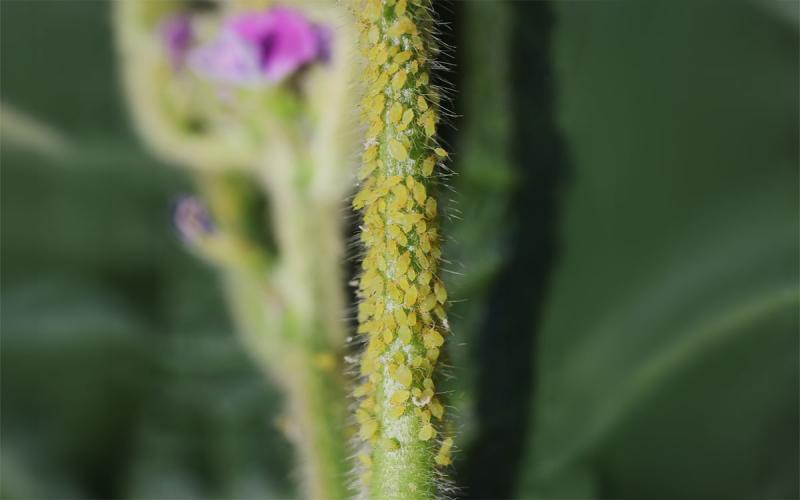
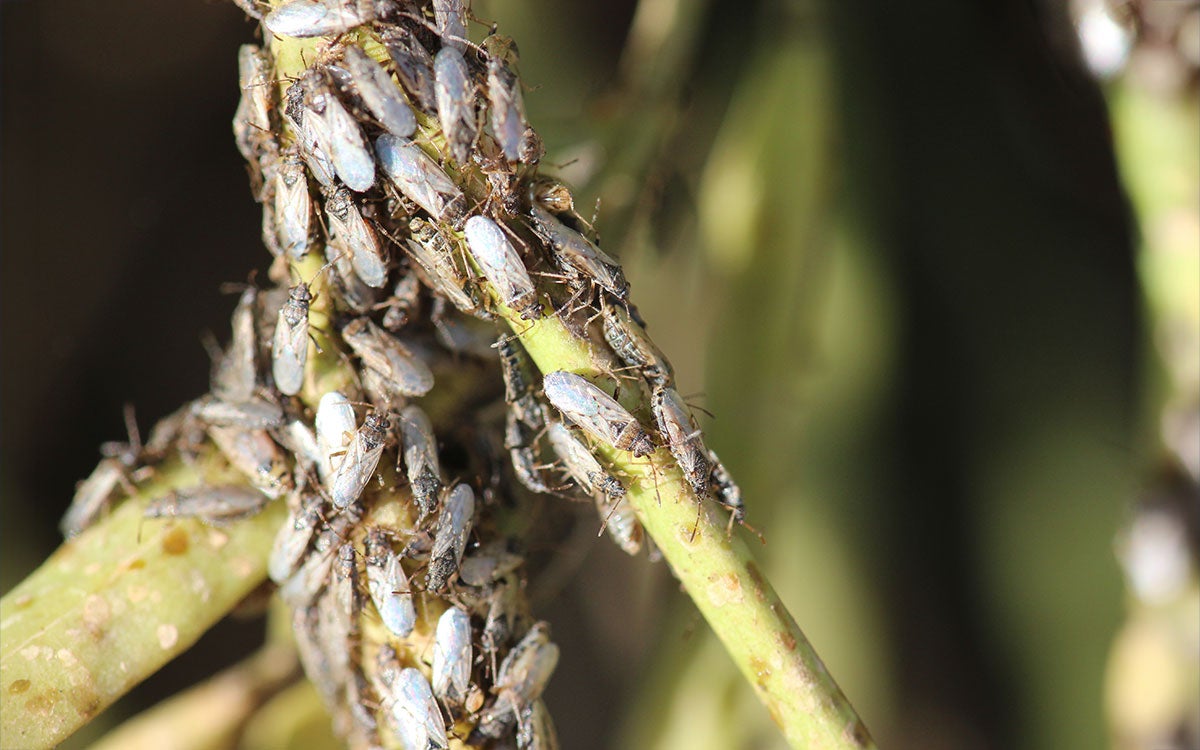
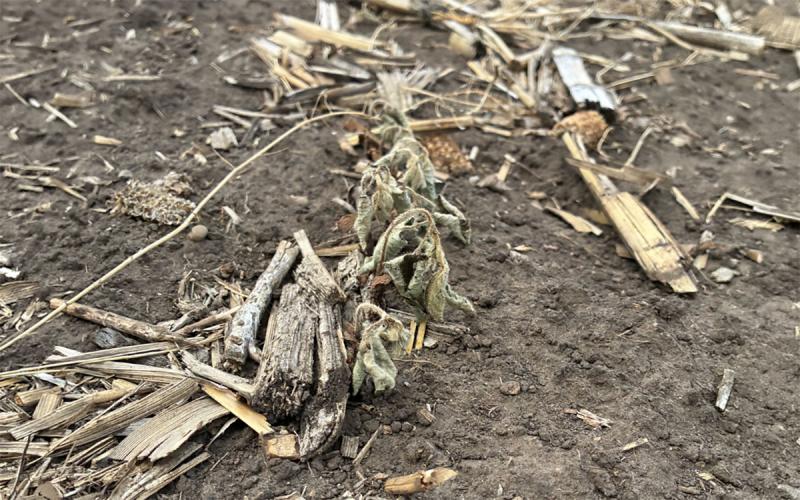
At the end of last week, we received several reports of false chinch bugs (Figure 1) attacking seedling to early vegetative stage soybean in South Dakota (Figure 2). False chinch bugs are more commonly pests of canola, as well as brassica crops in gardens. However, there are a limited number of reports from other states of false chinch bugs attacking soybean. Infestations typically are noted during seedling stages as soybean is not a preferred host. Their presence in soybean is most common in no-till fields where there had been a cover crop or a late burn down herbicide application. Another factor noted by an extension specialist in Mississippi where infestations in soybean are more commonly observed, is that dry conditions often result in increased observations of false chinch bugs in soybean.
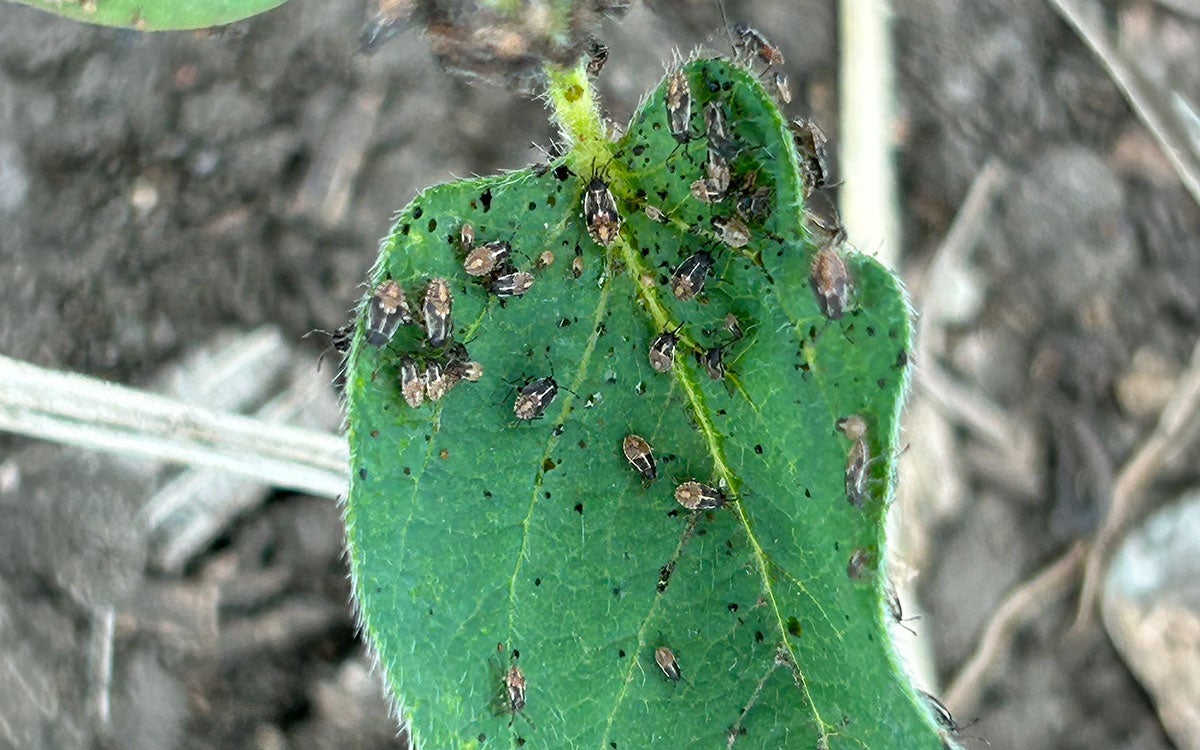
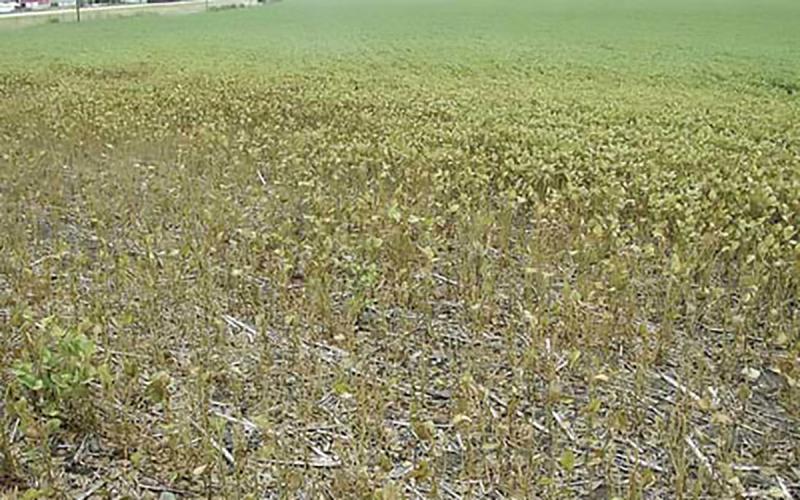
In South Dakota, the observed populations consisted of many nymphs (immature stages) and a few adults. In both cases, very large populations were present on seedling soybeans as well as the ground around them. When false chinch bugs are present, we often notice that the ground may appear to be moving due to the activity of the massive populations. False chinch bugs feed using piercing-sucking mouthparts and can cause rapid wilting and plant death (Figure 3).
Other extension specialists note that management of this pest is very difficult. There are a limited number of products labeled for management of false chinch bug in soybean and no thresholds are available. If seedling death is occurring and large populations are present on soybeans, management should be considered. When selecting an insecticide, ensure that soybean and false chinch bugs on soybean are present on the label. The highest labeled rate should be used.
False chinch bugs will primarily affect field edges, unless alternative hosts are present throughout the field. In some cases, isolated populations may be detected in “hot spots”. If soybeans are wilted or dead, replanting will be necessary.
Identification
False chinch bugs are relatively small at 1/8th to 1/6th of an inch long. They are slender insects that are grayish brown in color with clear wings that are folded over their bodies. The nymphs have underdeveloped wings with visible abdomen that is brown with a light patch in the center. The nymphs also have a distinct white line in the middle of the back behind the head. Typically, false chinch bugs are commonly observed in large aggregations. The false chinch bugs are able to feed on a wide variety of plants including those in the mustard family.
Reference
Catchot, A. 2017. With dry weather watch for false chinch bug outbreaks. Mississippi State University Extension.