The future of any cow herd begins with its replacement heifers. In today's economy, producers can expect to invest approximately $2,800 to retain and develop replacement females. Because of this significant investment, it is critical that heifers become pregnant and successfully raise a calf year after year. Even with historically strong cattle prices, culling a first-calf heifer due to reproductive failure rarely allows producers to recover the costs associated with her development. Therefore, implementing a heifer development program that balances cost efficiency with reproductive performance is essential for improving cow longevity, reducing replacement rates, and maximizing profitability.
Nutrition Considerations
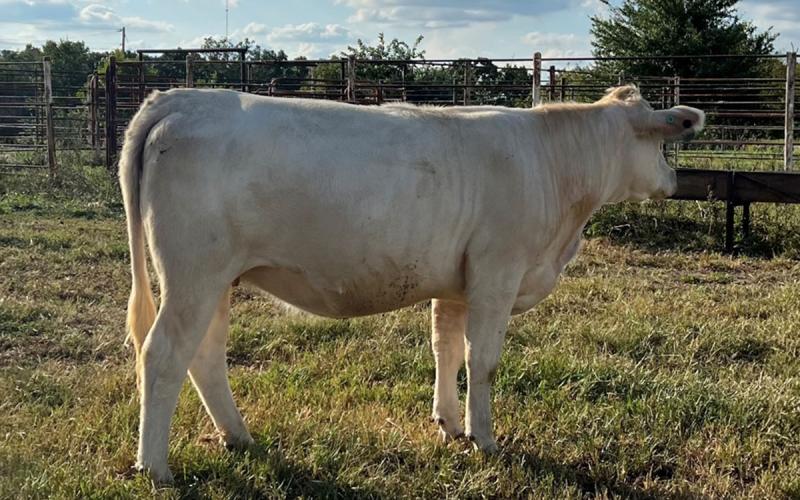
Feed costs represent the largest expense in cow-calf production, making nutrition one of the most important management decisions in any heifer development program. Many producers assume that large, fleshy heifers will become the most productive cows. However, this perception is often based on the belief that bigger cows wean heavier calves. While heavier calves can increase revenue, heifer development strategies must ultimately align with the production environment in which those females will spend their productive lives. When discussing heifer development, producers often refer to a "target weight," which is expressed as a percentage of a heifer's expected mature body weight. Historically, recommendations have emphasized developing heifers to approximately 65% of mature body weight at breeding and 80% of mature body weight by calving. While these benchmarks have been widely adopted, it is possible to overdevelop replacement heifers. Overconditioned heifers often exhibit excessive fat deposition along the topline, around the tailhead, brisket, and, in some cases, within the udder. Excessive body condition can negatively affect fertility, subsequent reproductive performance, and milk production. Furthermore, overfeeding heifers during development may contribute to structural and metabolic issues later in life.
A common challenge occurs when heifers are developed on a high plane of nutrition and then expected to maintain performance on pasture with minimal supplementation following calving. This dramatic reduction in nutrient intake can result in significant body condition loss, reduced reproductive performance, and failure to rebreed as two-year-olds. Rather than developing replacement females under ideal nutritional conditions, producers should consider developing heifers within the environment and management system in which they will ultimately mature. Doing so helps identify females that are better adapted to the operation, reduces the likelihood of retaining high-maintenance cows, and lowers long-term replacement costs. Research has shown that developing heifers to only 50% to 55% of their expected mature body weight at breeding, while maintaining average daily gains of approximately 1.0 to 1.5 pounds per day, has little to no negative effect on pregnancy rates or overall reproductive performance. However, when utilizing lower-input development systems, it is important to increase nutritional management prior to breeding and continue providing adequate nutrition throughout gestation to ensure heifers reach approximately 80% of mature body weight by calving. This can be accomplished through access to higher-quality forages, strategic rotational grazing systems, or targeted supplementation programs.
Calving Distribution
Another valuable tool when selecting replacement heifers is evaluating where they fall within the herd's calving distribution. Calving distribution refers to the percentage of calves born during successive 21-day periods of the calving season, typically categorized as days 1–21, 22–42, 43–63, and greater than 63 days. Research has consistently demonstrated that heifers born early in the calving season, particularly during the first 21 days, tend to remain in the herd longer and produce more calves over their lifetime. Because older heifers generally reach puberty sooner and are more likely to conceive earlier in the breeding season, they often calve earlier as mature cows. Earlier calving results in older, heavier calves at weaning and increased revenue potential. By four months of age, calves commonly gain two or more pounds per day. As a result, calves born during the first 21 days of the calving season may weigh 42 to 63 pounds more at weaning than calves born later in the season. In today's market, that weight advantage can translate into an additional $300 or more in revenue per calf.
One of the most effective ways to improve calving distribution is through the use of estrus synchronization protocols. Estrus synchronization allows producers to shorten the breeding and calving seasons while increasing the percentage of calves born early in the calving period. These protocols can be used in both natural service and artificial insemination programs. Although synchronization protocols require concentrated periods of labor, such as CIDR insertion and administration of hormonal products, the economic benefits often outweigh the additional management requirements. A more compact calving season typically results in a more uniform calf crop, heavier weaning weights, and increased profitability. Additionally, protocols such as the 14-day CIDR-PG program can help induce cyclicity in prepubertal heifers, increasing the number of breeding opportunities available during the defined breeding season and improving the likelihood of early conception.
The Bottom Line
The long-term sustainability and profitability of the cow-calf industry depend on retaining females that fit both the production goals and environmental constraints of an operation. Carefully considering environmental conditions when purchasing or developing replacement heifers can reduce feed and replacement costs while improving overall herd performance. When selecting a heifer development program, producers should evaluate forage resources, nutrient availability, breeding and calving objectives, and associated economic inputs. Developing females that are capable of thriving within a specific production system is one of the most important investments a producer can make in the future success of the cow herd.