Reproductive efficiency is one of the biggest drivers of profitability in a cow-calf operation. Every cow that fails to become pregnant or calves late reduces the number and value of calves available to sell. Coupled with good management, a defined breeding and calving season increases the number of cows that conceive early, produces a more uniform calf crop, and allows producers to manage labor, nutrition, and herd health more efficiently.
According to the USDA National Animal Health Monitoring System (NAHMS) Beef 2017 study, approximately 59% of U.S. cow-calf operations did not have a defined breeding season. Establishing a defined breeding season remains an important opportunity to improve reproductive efficiency and overall herd management.
What Is Calving Distribution?
Calving distribution describes when calves are born within the calving season. The first 21 days are particularly important. Ideally, at least 60% of mature cows should calve during the first 21 days.
According to the Standard Production Analysis Guidelines, the first 21-day calving period begins when either the third mature cow (3 years of age or older) calves or 285 days after the beginning of the breeding season. A concentrated calving season indicates that more cows became pregnant early in the breeding season and is an important measure of reproductive efficiency.
Why Is Calving Distribution Important?
Cows can fall out of a defined calving season because of illness, injury, inadequate nutrition, low body condition, extreme weather, age, or other factors that cause them to rebreed late. When a defined breeding season is not maintained, cows that conceive late can continue to calve later each year, gradually spreading out the calving season.
A concentrated calving season produces calves that are more uniform in age and size, making them easier to manage and market while potentially increasing returns. Earlier-born calves also have greater opportunity to achieve heavier weaning weights because they are older at weaning; each additional day of age at weaning has been estimated to account for approximately 2.4 pounds of weaning weight.
Birth date also affects replacement female and steer performance. Heifers born during the first 21 days have been shown to have greater body weights, higher cycling and pregnancy rates, and a greater likelihood of calving early during their first calving season. Steers born early have demonstrated greater weaning weights, more desirable marbling scores, and improved feedlot and carcass performance.
Management Benefits
A defined calving season allows producers to concentrate labor and resources when they are needed most. More intensive observation during calving can identify problems earlier and reduce calf losses. Vaccinations, processing, record keeping, and other herd health activities can also be scheduled more efficiently when cows and calves are at similar stages of production.
A concentrated calving season improves nutritional management by allowing producers to group cows according to stage of gestation and better match nutrient supply with nutritional requirements.
For an economic discussion of calving distribution, see Bunch the Cow Herd.
How Can We Tighten the Calving Season?
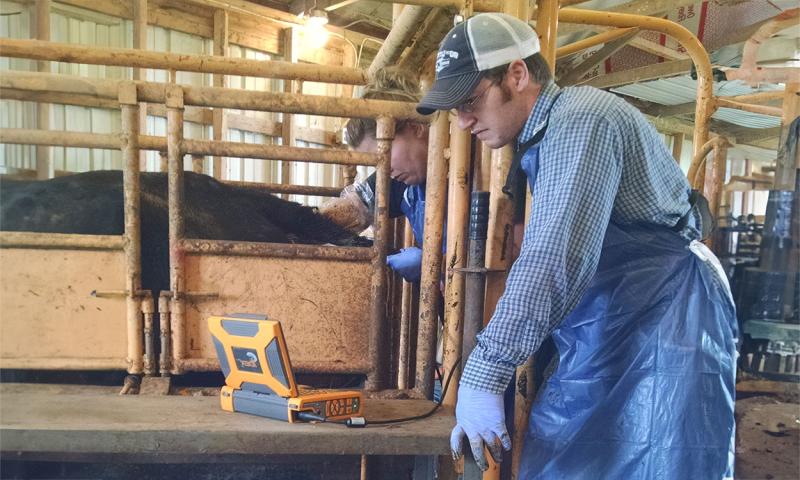
Use pregnancy diagnosis to identify late-calving cows.
Ultrasound can identify pregnant cows and estimate when they conceived. Producers can use this information to identify late-calving cows that do not fit the desired calving window and market them as bred females. One producer’s late-calving cow may be exactly what another producer needs, creating an opportunity to shorten the calving season while capturing value from a productive bred female.
Use estrous synchronization.
Synchronization with artificial insemination (AI) or natural service can increase the proportion of cows conceiving early and progressively shift calving toward the beginning of the calving season. In herds with calving seasons longer than 120 days, two synchronization periods 20 to 30 days apart can help move late-calving cows earlier. Simple protocols can also be used with natural service; work with your Extension specialist or reproductive specialist to select an appropriate protocol. Maintain an appropriate bull-to-female ratio, generally 1 bull over two years of age for every 15 to 25 females.
Shorten the breeding season.
A breeding season of 60 to 90 days is a reasonable target for many operations. Producers who leave bulls with cows longer than this should consider removing them earlier to begin shortening the following calving season. The goal is to consistently select cows that become pregnant early and remove females that repeatedly fail to conceive within the desired window.
Well-managed operations can progressively shorten the breeding season to 45 days or less, further concentrating calving and increasing selection pressure for reproductive efficiency. A 45-day breeding season can increase the number of calves born early, improve calf-crop uniformity, concentrate labor and herd health activities, improve nutritional management, identify open or late-breeding cows earlier, and provide greater opportunity to select replacement heifers from cows that consistently breed early.
Plan for breeding conditions.
Mud and wet conditions can make breeding-season management difficult. Consider portable facilities or alternative working areas on higher ground. If conditions consistently create challenges, evaluate whether shifting the calving season would provide a more favorable breeding environment. Consider the effects on nutrition, weather exposure, labor, marketing, and overall herd management before making a change.
Consider using AI or a reproductive technician.
If time or labor limits implementation of a synchronization program, an AI technician or reproductive specialist can reduce producer workload while providing opportunities for reproductive and genetic improvement. When developing a synchronization program, work backward from the desired calving season. Timing of breeding determines the timing of calving, so establishing the desired calving window should be the first step in developing a breeding plan.
Summary
A well-defined calving season is an important component of a profitable and productive cow-calf operation. A concentrated calving season improves calf-crop uniformity, provides labor and nutritional advantages, and increases the opportunity to capture the benefits of early-born calves and replacement females.
Using pregnancy diagnosis, estrous synchronization, AI or natural service, appropriate bull management, and strategic culling can progressively tighten calving distribution.
The goal is simple: get more cows pregnant earlier, produce a more uniform calf crop, and build a more productive and profitable cow herd.