Written collaboratively by Anna Lagerhausen, Madalyn Shires, Connie Tande, and Connie Strunk.
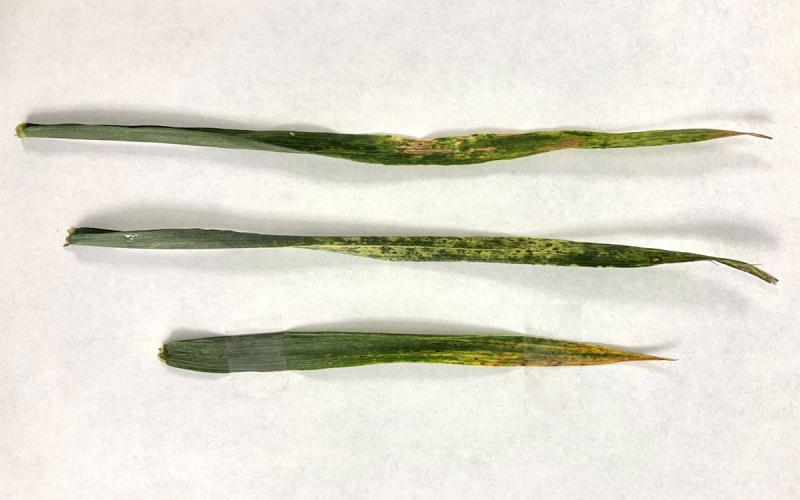
Wheat streak mosaic virus (WSMV) is on the move across South Dakota wheat production fields. The occurrence and intensity of disease pressure this year is comparable to the 2025 season. Due to the mild winter and overwintering of WSMV in winter wheat, viral activity has had a jump start this year. Symptoms were first identified on winter wheat at the end of April. Since then, disease pressure has increased in both winter and spring wheat. Disease intensity can worsen with reduced soil moisture. As a result, there have been reports of reduced tiller production and in severe cases, plant death. Viral symptomology, including chlorotic streaking and mottling on wheat leaves, has been identified primarily in east river productions (Figure 1).
Disease Transmission
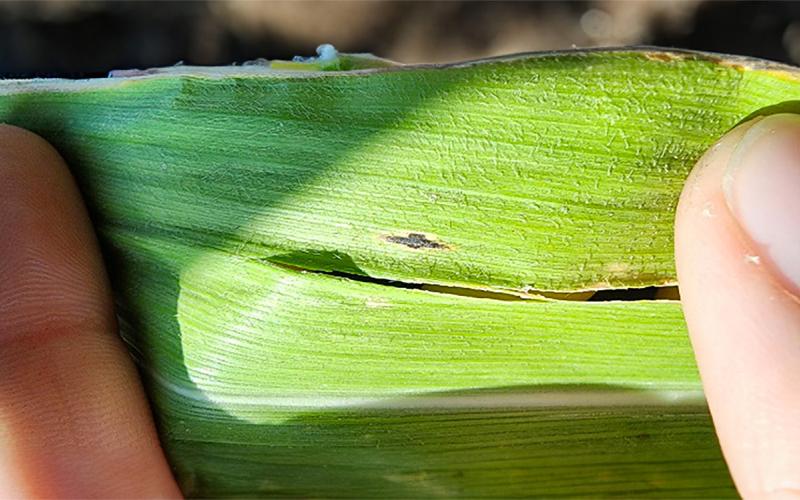
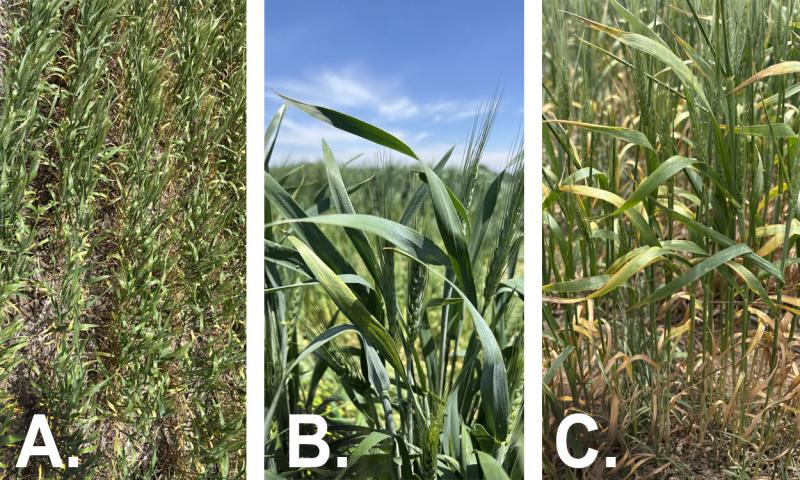
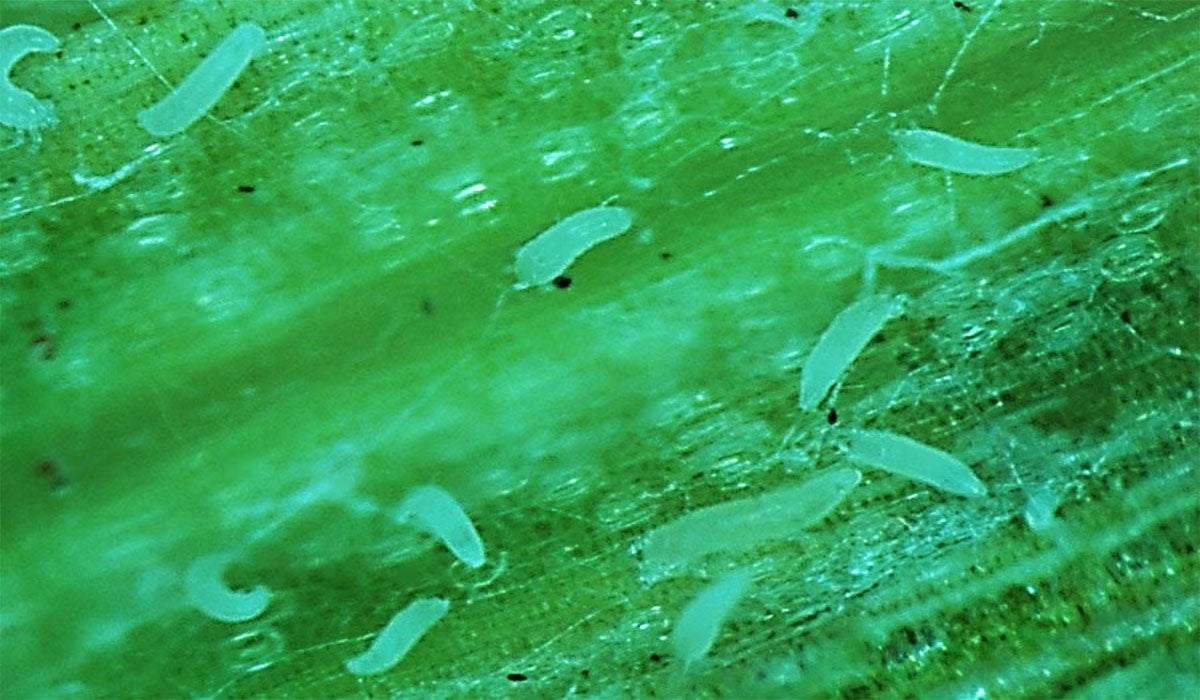
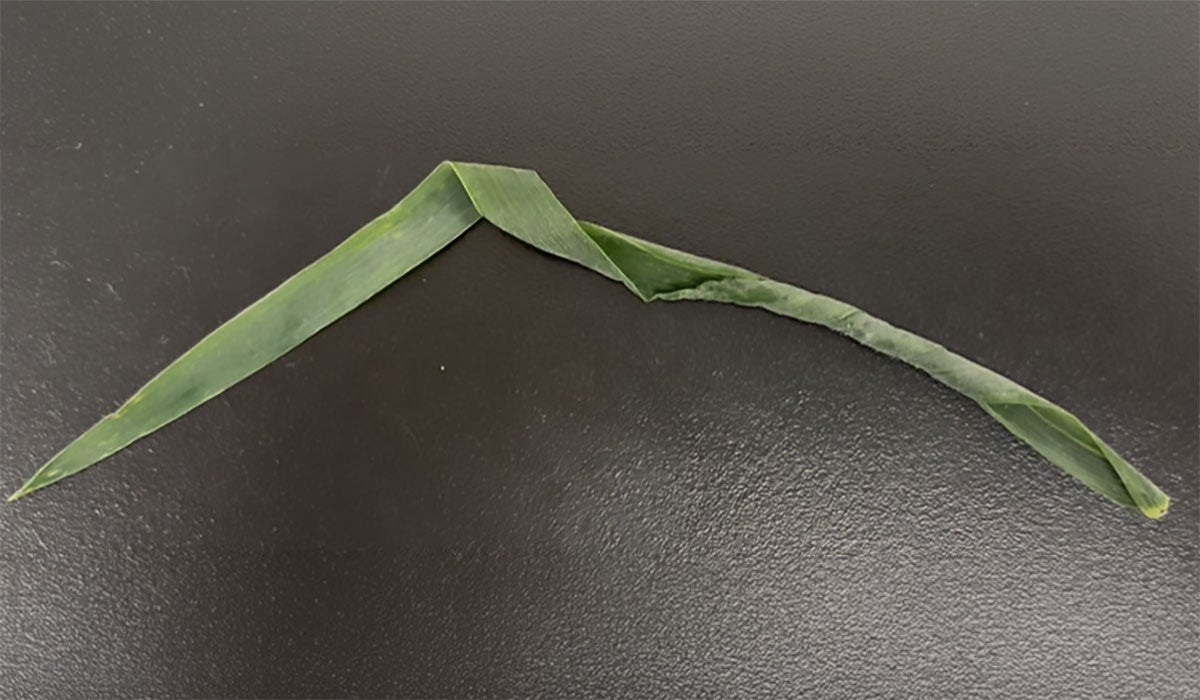
WSMV is not infectious on its own. To establish in a field, WSMV requires a vector, the wheat curl mite, which is primarily spreads by wind (Figure 2). Though we are unable to see this microscopic mite with the naked eye, their presence can be inferred by leaf symptoms. Curling or twisting in leaves (Figure 3) are a sign of mite activity and potential WSMV transmission. Mite reproduction is greatest at temperatures between 75-80 °F. Severity and occurrence of WSMV fluctuates between regions and specific fields. Patches of WSMV are often identified randomly through fields due to how wheat curl mites scatter with wind activity. In severe cases, an entire fields can be become completely infected.
WSMV can infect other grassy hosts besides wheat.Field edges and ditches should be monitored for mite and viral symptomsas it can be present in additional hosts such as smooth brome grass, foxtail grasses, oats, sorghum, and corn, in addition to other less common grasses. Field edges are often the first location where WSMV is found. Therefore, it is important to manage grasses and weeds around wheat fields, especially at planting times during the fall and spring. Mowing and herbicides can be utilized to reduce unwanted foliage. Volunteer wheat is often a concern should be eradicated, especially during the green bridge period.
Management Strategies
It is of utmost importance that the green bridge be properly managed. The green bridge is the period where alternate hosts are present between spring wheat harvest and winter wheat plantings in the fall and allow viral transmission from wheat to alternate hosts and back into new plantings of wheat. This allows the virus to spread rapidly and infect plantings much more quickly than usual. This also includes the period where there is foliage between winter wheat establishments and spring wheat plantings in the spring. During these critical times, it is essential to stop the spread of mites, and in turn the virus, from one wheat population to another. Winter wheat planting dates should be delayed to mid to late September when wheat curl mite populations are less abundant. The Winter Wheat Breeding program of SDSU recommends planting no earlier than September 15th to September 20th. Furthermore, grassy weeds and volunteer wheat can be controlled through burn-down herbicide applications. After the herbicide is applied, a two-week waiting window is recommended before planting the next wheat crop. Other states have opted for a one month window between control and planting in severe WSMV years.
Additional management strategies are limited to the use of resistant varieties and crop rotation. Genetic resistance is one of the best ways to reduce WSMV, specifically in winter wheat. Unfortunately, there is little to no genetic resistance in spring wheat at this time. Wheat can also be rotated out with broad leaf crops as they cannot contract WSMV. Even if broad leaf crops are planted, grassy hosts must be managed if wheat is planned in a future rotation. Wheat curl mites can overwinter in plant tissues, allowing them to survive short periods without plant hosts. Management of viruses is a community effort! Be conscientious of WSMV spread between neighboring fields and do your part in preventing viral transmission. This includes analyzing environmental and weather patterns. Understanding how mites move, and the direction of wind currents can help you determine how WSMV may spread. Take note when a neighboring wheat field is harvested or when established grasses are mowed. Mites will try to flee from host plants during this period, often travelling to field borders. In the past, miticides have been considered; however, it has been found that they are not effective at reducing mite populations or WSMV.
Other Viruses of Concern
There are a few additional viruses to keep an eye out for this year. Barley Yellow Dwarf Virus, which is characterized by leaf tip reddening and purpling, in oats and wheat. Two additional viruses can be co-transmitted with WSMV, in what's understood at the Wheat Streak Mosaic Virus Complex. This includes High Plains Wheat Mosaic Virus and Triticum Wheat Mosaic Virus. Both have very similar symptomology to WSMV with chlorotic mottling and streaking.
Disease Identification
Correctly identifying this disease or any other fungal, bacterial, or viral disease is extremely important, as it aids in management decisions. Please send plant disease questions to SDSU Extension Plant Pathology Specialist Madalyn Shires or SDSU Extension Plant Pathology Field Specialist Connie Strunk.
Samples can also be sent to the SDSU Plant Diagnostic Clinic. The clinic’s mailing address is 1148 Medary Ave, 2207-D, 1451 Stadium Road, Brookings, SD 57007-1090 and the physical address for sample drop off is Berg Ag Hall Room 203 (business hours) or 001 (after hours and weekends). For more information, visit the SDSU Plant Diagnostic Clinic website. For 2026-2027, the PDC has a limited amount of free wheat disease testing for producers to help with disease identification and management. Wheat samples submitted may be eligible for this free testing!