Written collaboratively by Prairey Walkling, Tess Amen, Northern Hills Master Gardener; and Nick Volesky.
Humans have been sharing seeds and stories that go along with them for over 10,000 years. Hosting a seed swap in your community can be a fun way to help plan and build excitement for the upcoming growing season. Here are some tips on how to plan a seed swap.
What is a Seed Swap?
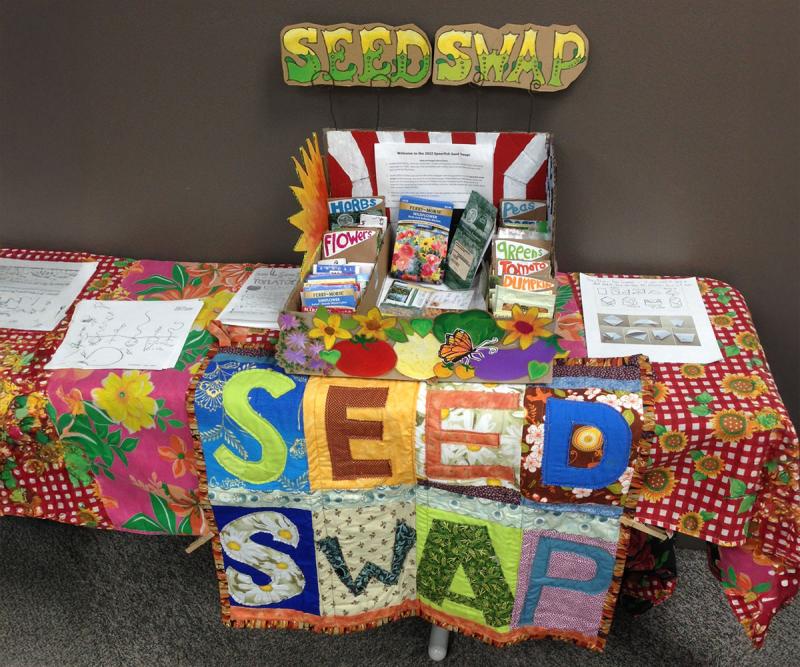
A seed swap is a gathering of people who have come together to share seeds, including vegetables, herbs, and flowers. Typically, seeds are spread on tables, and people choose what they want. Manitowoc Seed Collective says to “Think of a seed swap as a potluck—but with seeds!”
Choosing a Day
National Seed Swap Day is celebrated annually on the last Saturday in January. This day was established in 2006 in Washington D.C. and has since spread nationally. Seed swaps do not need to be held on that exact day but often work best during the planning months of January, February and March. Make it an annual event to encourage participation year after year.
Choosing a Host Site
Public libraries can be a great place to host a seed swap. Some libraries, such as the Yankton Community Library, have seed libraries. Hosting a seed swap can be a way to kick off or promote a seed library. Spearfish has hosted an annual seed swap for over 13 years at the Grace Balloch Memorial Library. Spearfish’s Annual Seed Swap features kids’ activities and garden talks along with the swap. Seed swaps can be stand-alone events or part of other happenings— farmers markets, festivals, flower shows, or other educational events. Collaborating with organizers of another event may make it easier to start a new seed swap. If hosting a speaker or demonstration, choose a venue that has enough space and audiovisual equipment if needed.
Enlisting Helpers
Reach out to groups for collaboration, volunteers, donations, or other support. Interested groups may include: Master Gardeners (SDSU Extension can help put you in touch with Master Gardeners – via email), garden clubs, community gardens, greenhouses/nurseries, churches, libraries, food co-ops, and more. Consider asking for speakers to give brief presentations on topics such as winter sowing and seed saving.
Setting Parameters for the Seeds
An important consideration for the organizers is what kind of seeds will be shared at the seed swap. The Federal Seed Act regulates seeds shipped across state lines and requires specific labeling requirements, although this rarely applies to local seed swaps. It is unlawful to transport any seeds containing federal noxious weeds. In South Dakota, seed swapping is generally legal for personal use and small-scale sharing, as long as no seeds are sold. More information about South Dakota State laws can be found on the South Dakota Seed Standards webpage on the South Dakota Legislative Research Council website.
Some swaps may specify open-pollinated (OP) seeds - plants pollinated naturally by wind, water, bees, insects, or birds, rather than through human intervention. Open-pollinated seeds produce seeds that grow “true to type” and are genetically stable. Examples of open-pollinated seeds include heirlooms like Brandywine tomatoes and Cherokee Trail of Tears beans. Some swaps may specify local seeds or organic seeds. Will commercial seed be allowed or only garden-saved?
As an example, seed swap events hosted by Seed Savers Exchange have set guidelines for the types of seeds allowed.
Allowed
- Open-pollinated seeds.
- Locally saved seeds.
- Excess-bought seeds.
- Excess seeds donated by a seed company.
Prohibited
- Seeds or plants that are considered illegal, either federally in the United States of America or the state of the event.
- Genetically engineered plants, F1 hybrids, poisonous, noxious, or controlled seeds, and plants.
- Patented varieties. Although it is legal for gardeners to grow and save patented varieties, it is illegal to distribute them. Refer to the USDA website for a list of patented varieties.
- Unknown seed from volunteer plants.
Important: Require participants to label seeds with the variety and the year of collection to help ensure safety and success. Include signage at your seed swap stating that seed vitality (viability/germination) is not guaranteed. Participants may be encouraged to conduct a simple germination test with a few seeds on a damp paper towel.
Ensure Seed Supply
Consider collecting an initial supply of seeds before the event. Seed companies and nurseries may be willing to donate seeds. To avoid running out of seed: monitor the seed offerings, limit the number of packs each person may fill, or allow people who bring seed to fill more packets than those who don’t (this also will encourage folks to bring seed).
How to Promote a Seed Swap
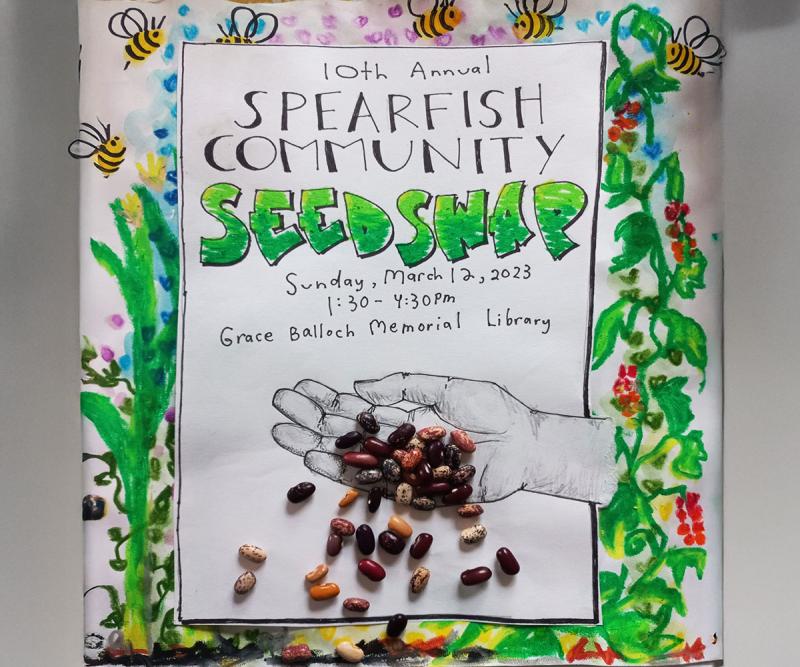
Spread the word through local media and social media. On promotional materials, include information about seeds that are allowed and how those seeds should be labeled and packaged.
How to Set Up a Seed Swap
Supplies that may be needed include tables, chairs, signage posting the swap guidelines/instructions, seed envelopes or bags, jars and spoons, paper plates for sorting, and writing utensils.
A seed swap can be made easier for participants to navigate by organizing tables in a clear, intuitive way. Choose a simple structure that fits the size of your event and the variety of seeds you expect. Common approaches include:
- By broad category: Vegetables, fruits, trees, shrubs, flowers, herbs.
- By fruit/vegetable type or family: Brassicas, nightshades, legumes, cucurbits, etc.
- By growing conditions or purpose: Pollinator plants, shade‑tolerant species, drought‑tolerant varieties, container‑friendly crops.
- By plant lifespan: Annuals versus perennials.
- Alphabetically: A–Z tables for quick sorting and easy browsing.
- Mixed approach: Broad category tables with small sub‑groupings as needed
Often participants who bring seeds are not required to stay with their seeds, but some may choose to stay with seeds to share information about them.
Consider offering a “free table” with seed catalogs and other horticultural information.
Complementary Activities
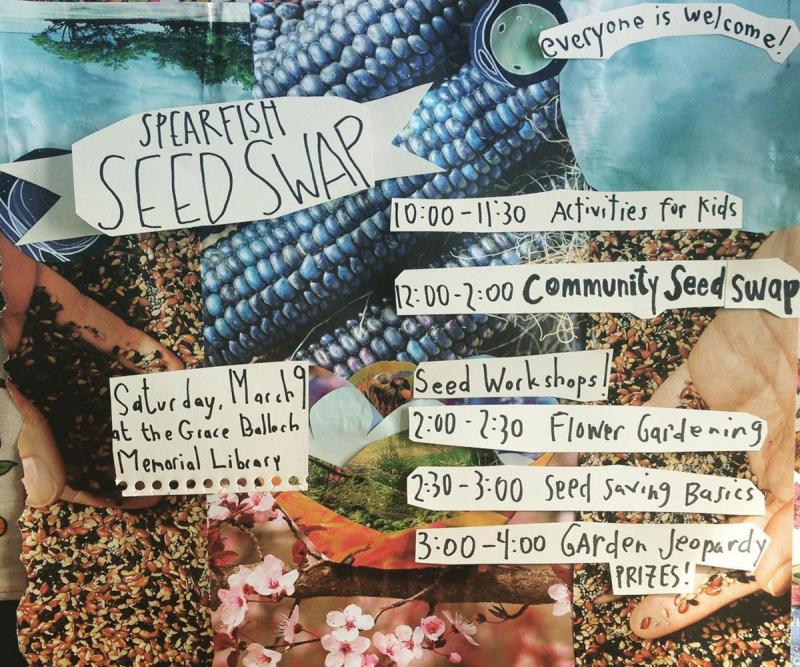
In addition to exchanging seeds, seed swaps provide a great opportunity to build community, share knowledge, and showcase local expertise. Consider incorporating one or more complementary activities to enrich the event experience and engage participants of all ages.
Kids Activities
Offering hands-on activities for children makes the event more inclusive for families and sparks early interest in gardening.
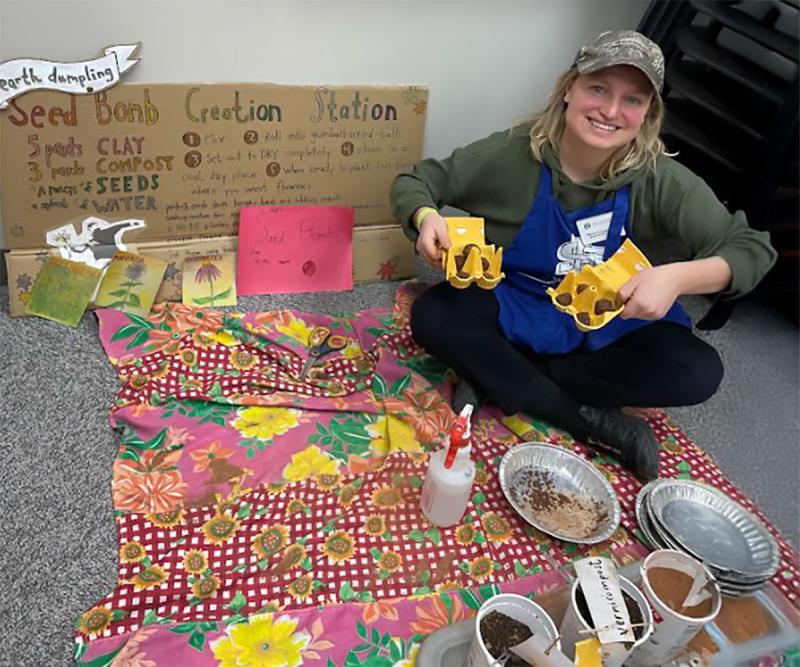
- Seed “bomb” or seed dumpling making stations: Provide clay, compost, water, and seeds so kids can form their own take‑home seed bombs for pollinator-friendly planting.
- Garden-themed story time: Invite a librarian, educator, or volunteer to read picture books about plants, pollinators, food, or nature.
- Seed art tables: Supply glue, paper, and a variety of seed types so kids can create mosaics, patterns, or nature‑inspired designs.
- Seed sifting sensory tables: Set out trays with mixed seeds, sifters, and seed cleaners to help kids explore seeds of different shapes, colors, and textures.
- Sprout-in-a-cup or Ziplock bag activity: Kids plant quick-germinating seeds (radish, peas, or microgreens) in small cups or Ziplock bags. They can take these home and observe growing.
Informational Presentations & Demonstrations
Short, informal talks or demonstrations can make the seed swap a learning hub for both new and experienced gardeners.
- Native seed collection & ethics: Tips for identifying, collecting, cleaning, and storing native seeds—and how to avoid overharvesting.
- Winter sowing demonstrations: Show how to start seeds outdoors in recycled containers such as milk jugs and clamshells.
- Early spring garden care: Topics may include pruning fruit trees and shrubs, soil prep, mulching, tool care, starting cool‑season crops, or transitioning seedlings outdoors.
- Seed saving basics: Demonstrate how to properly save seeds from common vegetables and flowers, including isolation distances, fermentation (for tomatoes), and drying methods.
- Composting & soil health: Share the basics of building healthy soil through home composting, vermicomposting, and mulching.
- Local resources and partner spotlights: Invite representatives from community gardens, conservation districts, Master Gardener programs (local Master Gardeners may be willing to host a “Ask a Master Gardener” booth at the event to help with questions), food forests, local seed libraries, or sustainability groups.
Conclusion
Seed swaps are a fun, simple way to build community and share seeds to support a more diverse and resilient local food supply.
References
- Saving and sharing at a spring seed swap, University of Minnesota Extension.
- How to Organize a Seed Swap, Seed Savers Exchange.
- Yankton Seed Library, City of Yankton.
- Planning a Seed Swap, Northern Gardener.