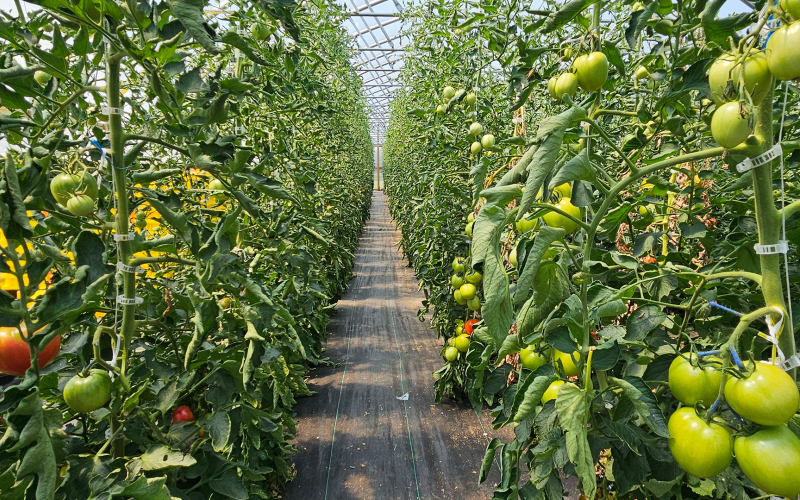
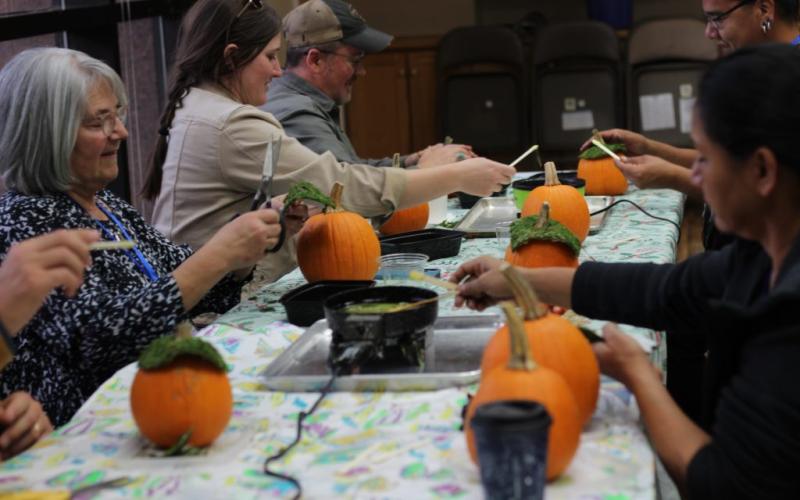
Written collaboratively by Nick Volesky, Kristine Lang, and Gabby Thooft.

Introduction
Climate factors such as drought and high temperatures continue to pose serious challenges for South Dakota’s specialty crop production, including cut flowers. According to the U.S. Drought Monitor, most of the state, aside from a pocket in the northeast and central, was experiencing conditions ranging from abnormally dry to extremely dry at the end of July 2026 (Figure 1).
Ongoing warm temperatures add stress for crops and people (Edwards 2026). During times like this, water resources may need to be directed toward other priorities, such as livestock care or irrigation of vegetable crops. With these climatic pressures, farms need to take a hard look at both their business strategies and production decisions.
Impacts on Agritourism
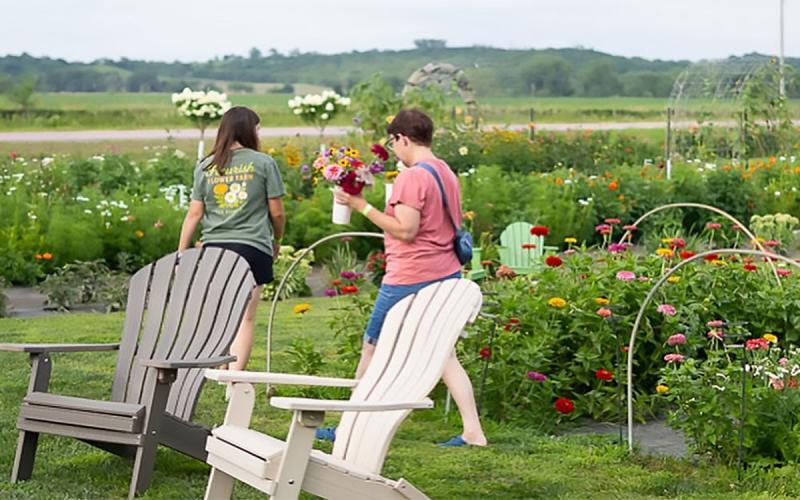
Many South Dakota cut flower farms rely on agritourism as part of their operation and business model. Customers are invited to the farm for “u-picks”, where they cut and harvest their own flowers, or for on-site classes and workshops. Some farms also use their space as a venue for events (Figure 2).
When there is extreme heat, safety considerations need to be prioritized. Farms may find themselves in a position where they must close their site to customers or cancel events due to safety concerns. Reduced hours of operation and fewer visitors can lead to decreased income, and producers may need to calculate losses and identify ways to pivot their business to recover costs. Farms that employ workers or host visitors also need to consider legal and liability issues related to heat‑related injuries or illnesses.
Planning, preparedness, and preventative measures are essential during extreme heat.
- Monitor forecasts and heat advisories to guide operational decisions.
- Provide ample drinking water for farm workers and guests.
- Encourage sun protection by recommending loose‑fitting, light‑colored clothing, wide‑brimmed hats, sunglasses, and regular application of sunscreen on exposed skin.
- Offer shaded or air‑conditioned spaces on the farm site and encourage frequent breaks.
- Adjust operating hours for workers and customers to early mornings or late evenings when temperatures are lower and sun intensity is reduced.
- Review medical resources on heat‑related illnesses and ensure familiarity with signs, symptoms, and appropriate responses (Nieman 2024; Holcomb et al. 2020).
Impact on Production

During periods of high temperatures, harvest timing and postharvest handling are especially important for cut flowers. To maximize quality and vase life, flowers should be harvested early in the morning. Plants have higher water content in the morning, and their tissues are at their coolest, which helps reduce field heat in the harvested material. Morning harvest also allows the rest of the day to be used for packing and distribution, making it more efficient than harvesting in the afternoon when temperatures and plant stress are higher (Dole et al 2017; Dole and Schnelle 2017).
After harvest, cut flowers should be moved to refrigerated storage as quickly as possible to remove field heat and slow deterioration (Figure 3). For most flowers, maintaining storage temperatures between 32–35° F, ideally near 33° F (University of Massachusetts Amherst 2016), helps reduce respiration, water loss, and wilting, which extends vase life. Even small increases in temperature can greatly shorten flower longevity; for example, flowers stored at 41°F may decline up to four times faster than those kept at 32°F (Dole and Schnelle 2017). Exceptions to this rule include zinnias, which should be stored near 40-45 ° F (Dole et al 2017).
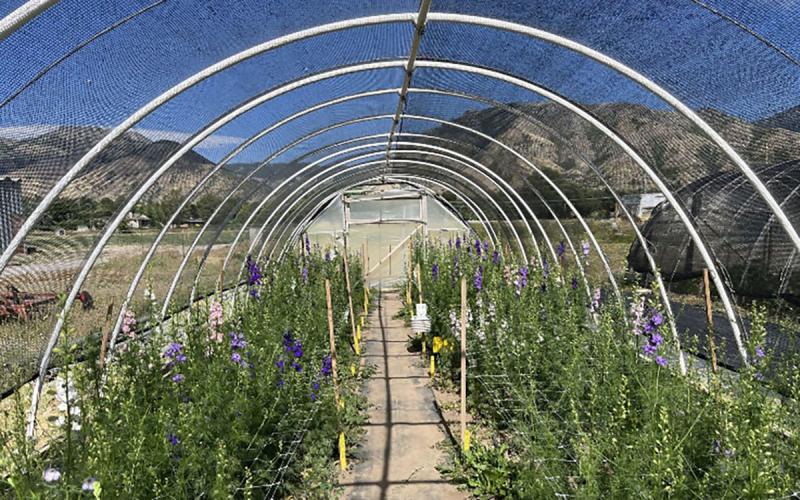
Shade cloth is a technique of protected cultivation (either over high tunnel or low tunnel structures) that might benefit some cut flower species during high temperatures (Figure 4). Shade cloth reduces solar radiation intensity and surface temperatures, while also stimulating internode elongation in some species that can allow for increased stem length and more stems per plant. (Volesky 2025; Rauter et al. 2021).
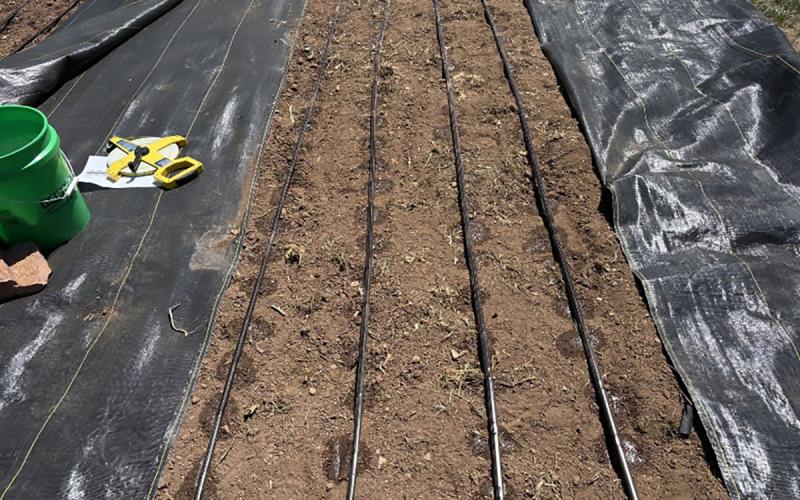
In severe drought, water conservation on farms becomes critical. Irrigation needs for the wide variety of cut flower crops are still being researched, and exact recommendations are sparse.. Water requirements can vary significantly by location, soil type, and crop, and understanding irrigation strategies can help balance water conservation while still meeting a plant’s minimum needs. Drip irrigation is the most efficient method for delivering water, and it also keeps moisture off foliage and blooms (Figure 5). Most specialty crop farms currently use drip irrigation, which delivers water slowly and directly to the plant’s root zone. See Stock and Barker 2026 for detailed recommendations on using drip irrigation for cut flowers. In situations where overhead irrigation is the only option, be mindful of application timing. Avoid mid-day irrigation events when much of the water can be lost to evaporation or blown off-target by wind.
Research at Utah State University evaluated restricted irrigation (>1.5”/week) on several warm‑season annual crops: mini carnations (Dianthus caryophyllus), strawflower (Xerochrysum bracteatum), statice (Limonium sinuatum), centaurea (Centaurea americana), gomphrena (Gomphrena globosa), and cosmos (Cosmos bipinnatus). These crops were grown across three production systems (high tunnels, bare soil fields, and wool‑mulched fields) and found that some marketable yield can still be achieved under restricted irrigation. Annual species already adapted to warmer temperatures may be an ideal choice for cut flower production when water availability is limited. Examples include:
- Amaranthus (Amaranthus spp.)
- Celosia (Celosia spp.)
- Centaurea (Centaurea spp.)
- Cosmos (Cosmos bipinnatus)
- Dianthus (Dianthus caryophyllus)
- Eryngium (Eryngium planum)
- Gomphrena (Gomphrena globosa)
- Statice (Limonium sinuatum)
- Sunflower (Helianthus annuus)
- Zinnia (Zinnia elegans)
South Dakota cut flower farms that adapt their business, refine harvest and postharvest strategies, and implement thoughtful water‑saving approaches will be better positioned to maintain both productivity and profitability during climate challenges.
References
- Dole, J. and Schnelle, M. 2017. The Care and Handling of Cut Flowers. Oklahoma State University.
- Dole, J., Stamps, R., Carlson, A., Ahmad, I., Greer, L., and Laushman, J. 2017. Postharvest Handling of Cut Flowers and Greens.
- Edwards, L. 2026. Climate and Drought Update: July 2026. South Dakota State University.
- Holcomb, K., Schattman, R., and Giacometti, M. 2025. Farmer Safety in Extreme Heat. USDA Climate Hubs.
- N.a. 2016. Harvesting and Handling Cut Flowers. University of Massachusetts Amherst.
- National Drought Mitigation Center. 2026. South Dakota drought map. U.S. Drought Monitor.
- Nieman, H. 2024. Working in the heat: How to identify and avoid heat illness. Sanford Health.
- Rauter, S., Stock, M., Black, B., and Drost, D. 2021. Low Tunnels for Field Cut Flower Production. Utah State University.
- Stock, M. and Barker, B. 2026. Part 1: Drip Tape Irrigation for Cut Flowers. Utah State University.
- Utah State University Extension. 2021. Small Farms Lab introduction [Video]. YouTube.
- Volesky, N. 2025. Optimizing Delphinium and Larkspur Through Timing and Protective Cultivation Methods for Cut Flower Production. Utah State University.