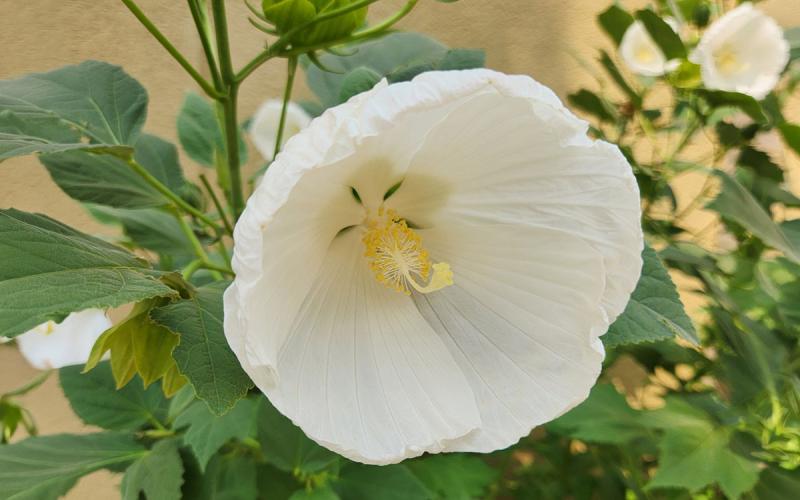
Hardy hibiscus Hibiscus moscheutos is a showstopping perennial that can bring huge, colorful flowers to a South Dakota garden. Unlike the tropical hibiscus, which is commonly sold for patios and containers, hardy hibiscus can survive South Dakota winters when the right variety is chosen and it is given an appropriate growing location.
What Is Hardy Hibiscus?
Hardy hibiscus (often called rose mallow or perennial hibiscus) is a herbaceous perennial in the mallow (Malvaceae) family. North America has several native wild hibiscus species that produce huge, dinner-plate flowers. They dieback to the ground in fall and produce new growth in spring. “Hardy hibiscus” generally refers to cultivars of Hibiscus moscheutos that are bred to tolerate colder temperatures than most other hibiscus species. Some cultivars of hardy hibiscus are root hardy to Zone 4 with some winter protection.
Hardy hibiscus should not be confused with Tropical Hibiscus Hibiscus rosa-sinensis or the shrub Rose of Sharon Hibiscus syriacus, which are both from Asia.
Growing Conditions

Plants can be started by seed indoors or divided from a mature plant in spring after the threat of frost has passed. It is best to plant hardy hibiscus before the heat of the summer arrives.
Reptile Gardens (Rapid City) has had great success with hardy hibiscus for nearly twenty years. Eighteen years ago, staff planted their first hardy hibiscus, Marshmallow Moon, and these plants have thrived ever since. The biggest factor in hardy hibiscus success is site location, so carefully select a spot for planting them.
- Choose a south facing exposure that receives at least six hours of direct sun each day. This is critical not only for bloom production but for warmer ground temperatures during winter. Hardy hibiscus performs best with plenty of sunlight.
- Choose a site with moist conditions. At Reptile Gardens, virtually all hardy hibiscus are planted near downspouts or drainage areas, and this is very beneficial in winter months as any snowmelt keeps them hydrated during dormancy. In their native habitat, hardy hibiscus has a history of growing in wet areas. It is especially important to provide adequate irrigation as new plants are becoming established. If the plant is losing its lowest leaves or aborting buds, you may need to increase the watering. Once established, hardy hibiscus is considered moderately drought tolerant.
- Amend the soil before planting. Create an organic growing medium by adding mulch, peat/coconut coir and top soil if needed. This will ensure good oxygen and drainage flow.
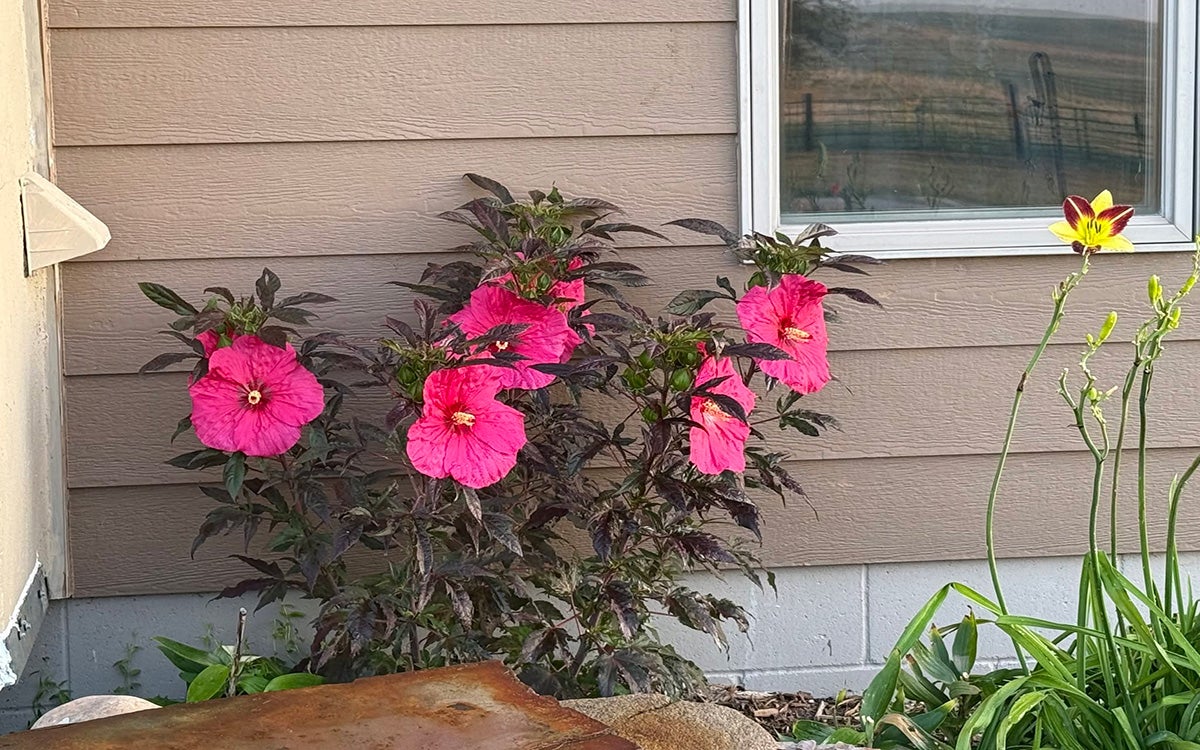
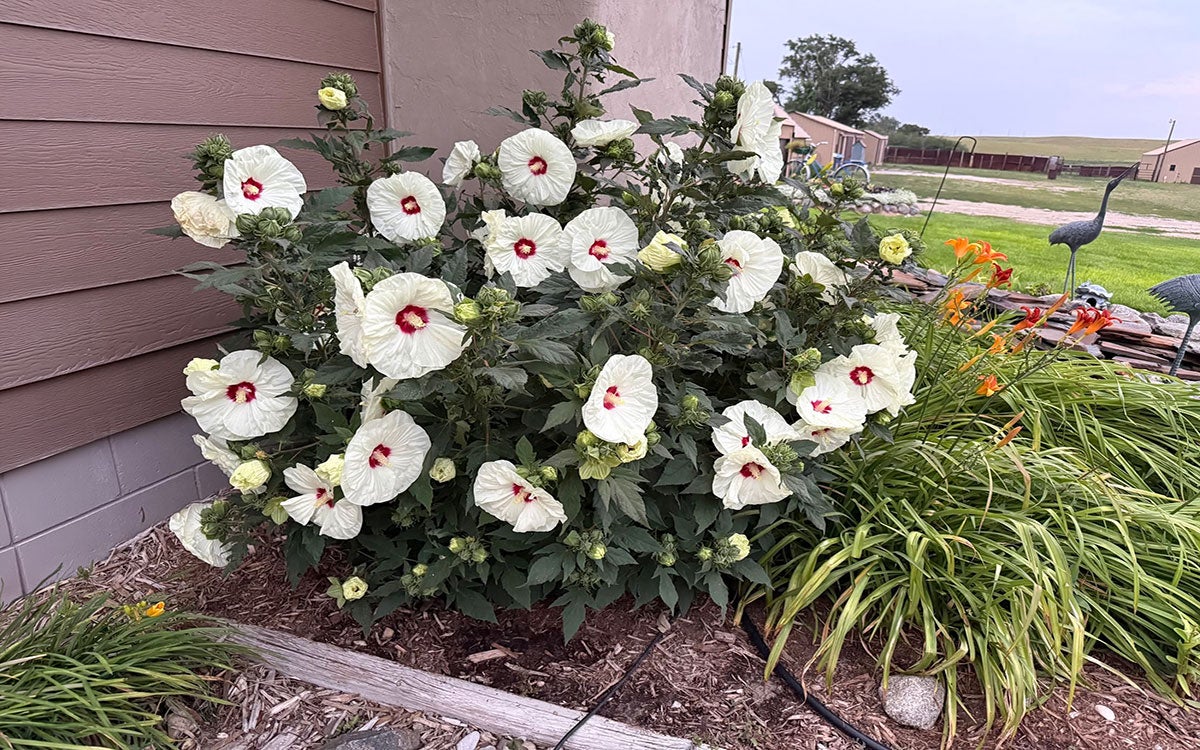
- Choose a protected site. Strong winter winds and rapid temperature fluctuations can stress hardy hibiscus. Ensure added protection by planting adjacent to buildings, fences or other landscape features may provide a more favorable microclimate (Figure 1 and Figure 2).
- Provide appropriate spacing. Mature hibiscus can grow up to 4 –6 feet tall and up to 3 –6 feet wide so give it room.
Plant Characteristics and Care
One thing that may surprise South Dakota gardeners is how late hardy hibiscus emerges. This species is notorious for not showing signs of new growth until early June. Be sure to mark its location so you can watch for it patiently. Once warm temperatures arrive, the plant can grow rapidly. It is known for its fast growth rate, capable of adding an inch of new growth a day.
With late emergence, it is useful to combine hardy hibiscus with earlier-season perennials such as spring-blooming bulbs. Other plants can provide color while the hibiscus is dormant, and then it can take center stage later in the summer.
Hardy hibiscus saves its spectacular flowering display for mid-July-August and into early fall. Hibiscus flowers are beautiful but short-lived, usually in bloom for only one day. Once finished blooming, the flower will close and drop off. However, while individual blooms only last 1-2 days, they will continuously produce new flowers and will remain in bloom for weeks.
Summer Care
Harby hibiscus is a heavy feeder. As soon as new growth appears, begin fertilizing. Continue this throughout the growing season with an iron rich fertilizer every other week until blooming stops, generally in early September. If that fertilization routine is too burdensome, home gardeners may get by with a slow-release product applied three times a year (e.g. early spring, after the first blooming, and mid-summer).
Deadheading hardy hibiscus promotes more blooms. Deadhead flowers by pinching them off once they start to fade and wilt. Deadheading is not necessary for continued blooms.
Caging may be necessary for varieties that grow over 5 feet tall. Large tomato cages can provide additional support that is needed.
Fall and Winter Care
After frost turns the foliage brown, cut stems back to approximately 4 to 6 inches above the crown, using loppers. Some species advise not cutting back in the fall. There are many factors that influence whether perennials successfully overwinter in South Dakota including soil temperatures, wind exposure, moisture, and snow cover. A layer of snow can provide valuable insulation, but gardeners cannot always count on consistent snow cover. It should be heavily mulched the first winter and beyond. In exposed locations, a protective mulch layer can help moderate soil temperatures. Reptile Gardens suggests applying a thick “blanket” in the fall, using generous layers of mowed leaves and mulch. Then water well to insulate the plant during its dormancy.
Recommended Hardy Hibiscus Species for South Dakota
Look for northern hardy Hibiscus moscheutos species listed for USDA Hardiness Zone 4. All recommended cultivars featured in this article are Zone 4.
Red Cultivars
If you are looking for a red hardy hibiscus, consider the following two cultivars.
Cristi™ ‘Cocker’ Hibiscus
Hibiscus moscheutos 'Cocker'
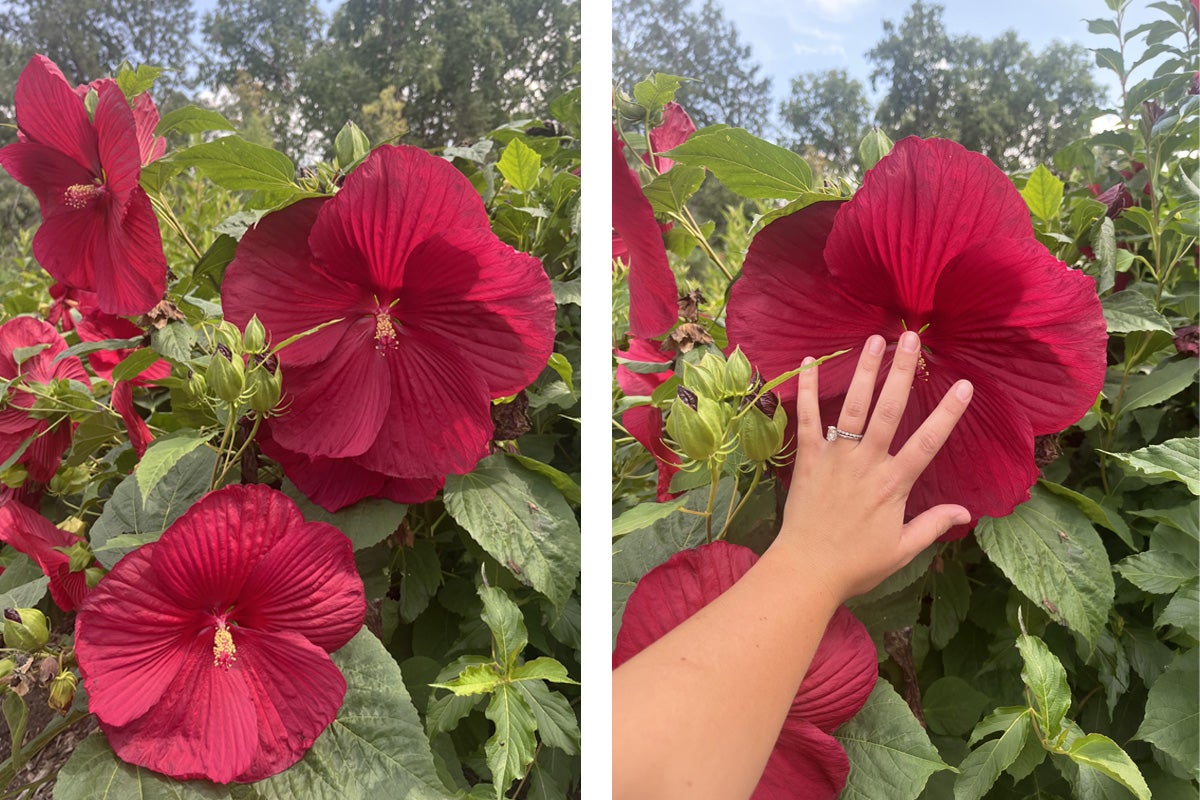
‘Cocker’ was bred by Hugh and Ruth Cocker of Rochester, Minnesota. This variety is famous for its massive, ruby-red flowers that can reach 6 to 8 inches in width. Flowers begin to bloom in August. It has a nice, round, bushy habit and grows about 4 to 6 feet tall. In June 2025, McCrory Gardens planted 48 of them, some in full sun and some in part sun. The full sun location resulted in larger plants. August - September is a great time to visit McCrory Gardens and see how the deep crimson blooms contrast beautifully against the dark summer foliage.
'Midnight Marvel' Hardy Hibiscus
Hibiscus 'Midnight Marvel'
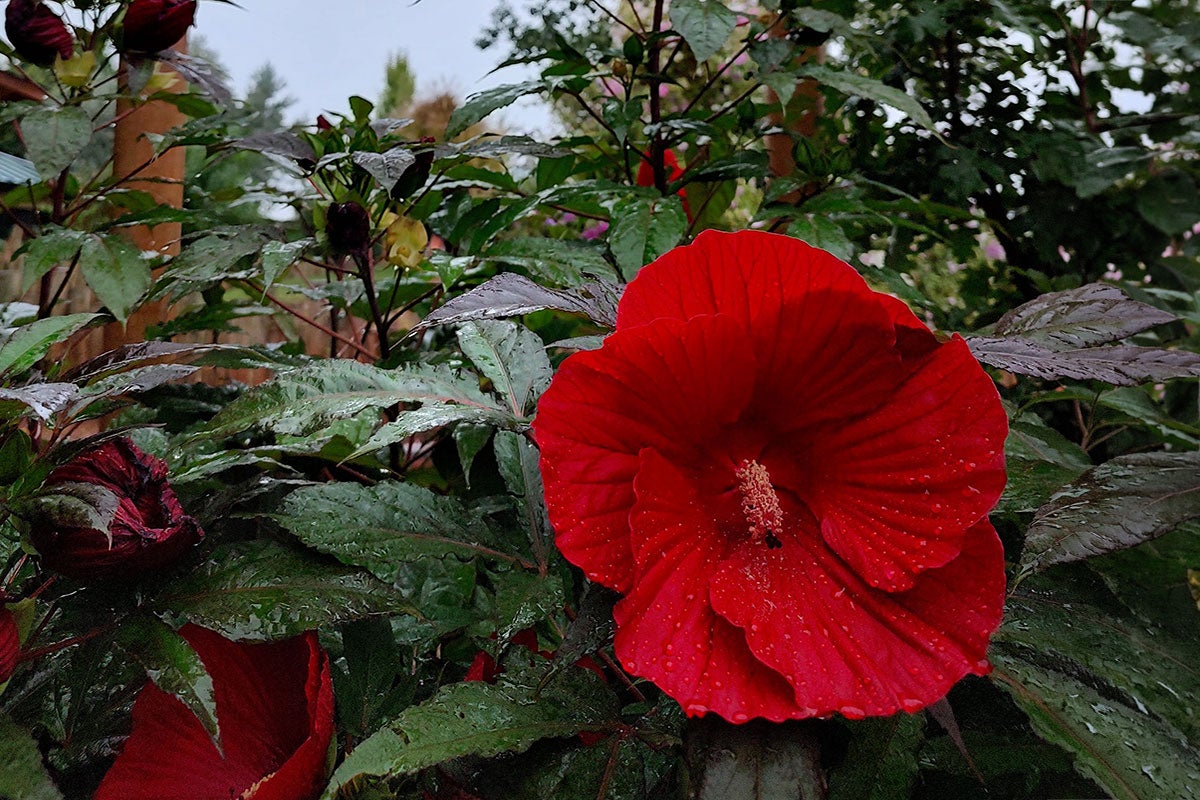
'Midnight Marvel' is known for its deep wine-purple foliage and enormous 8-9 inch scarlet flowers. It requires full sun to achieve the darkest foliage color. The foliage transitions to a brilliant orange in the fall. It grows about 4 feet tall and 4.5 feet wide.
White Cultivars
White hardy hibiscus is another stunning choice.
Summerific® 'Coconut Cream' Rose Mallow
Hibiscus hybrid
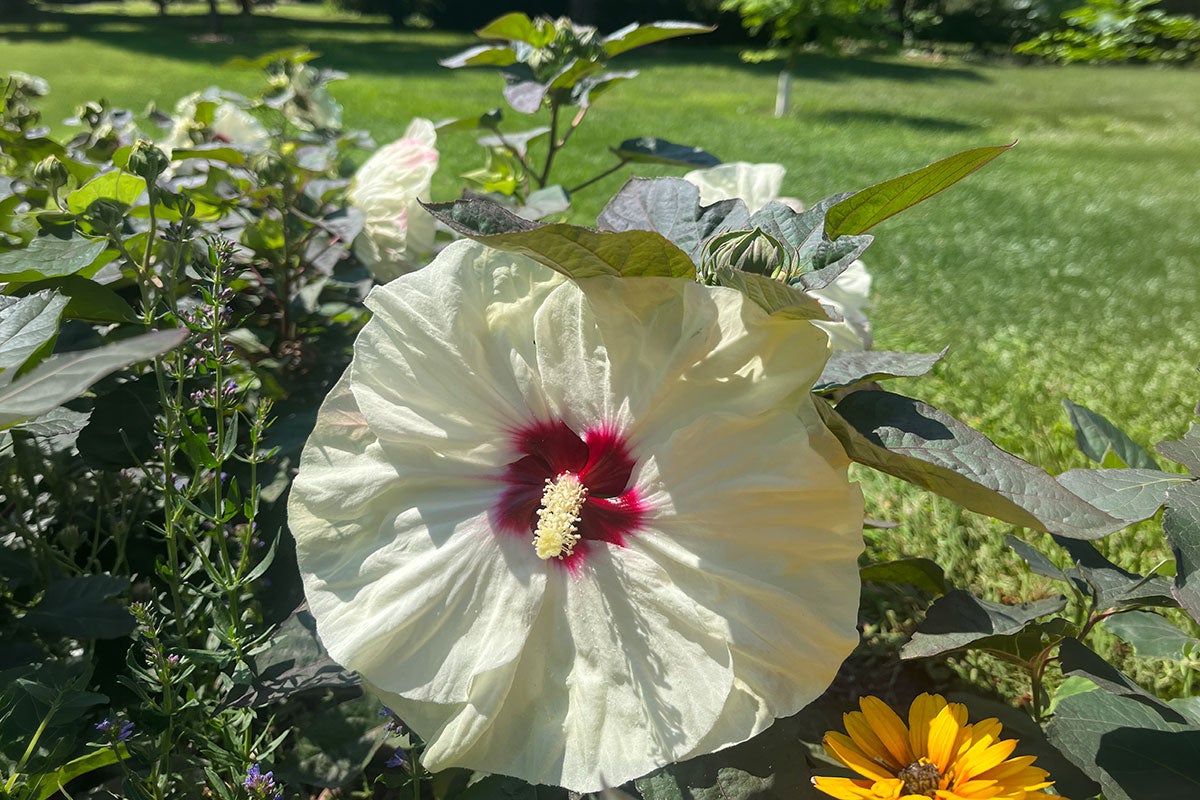
'Coconut Cream’ was planted in 2026 at McCrory Gardens as part of the Perennial Trials. It features creamy yellow blooms with a pink center, dark green foliage, an upright habit, and earlier flowering. It can tolerate part sun to sun (4-6 hours of sun). Do not trim this one back in the fall.
Hibiscus ‘Mocha Moon’
Hibiscus moscheutos
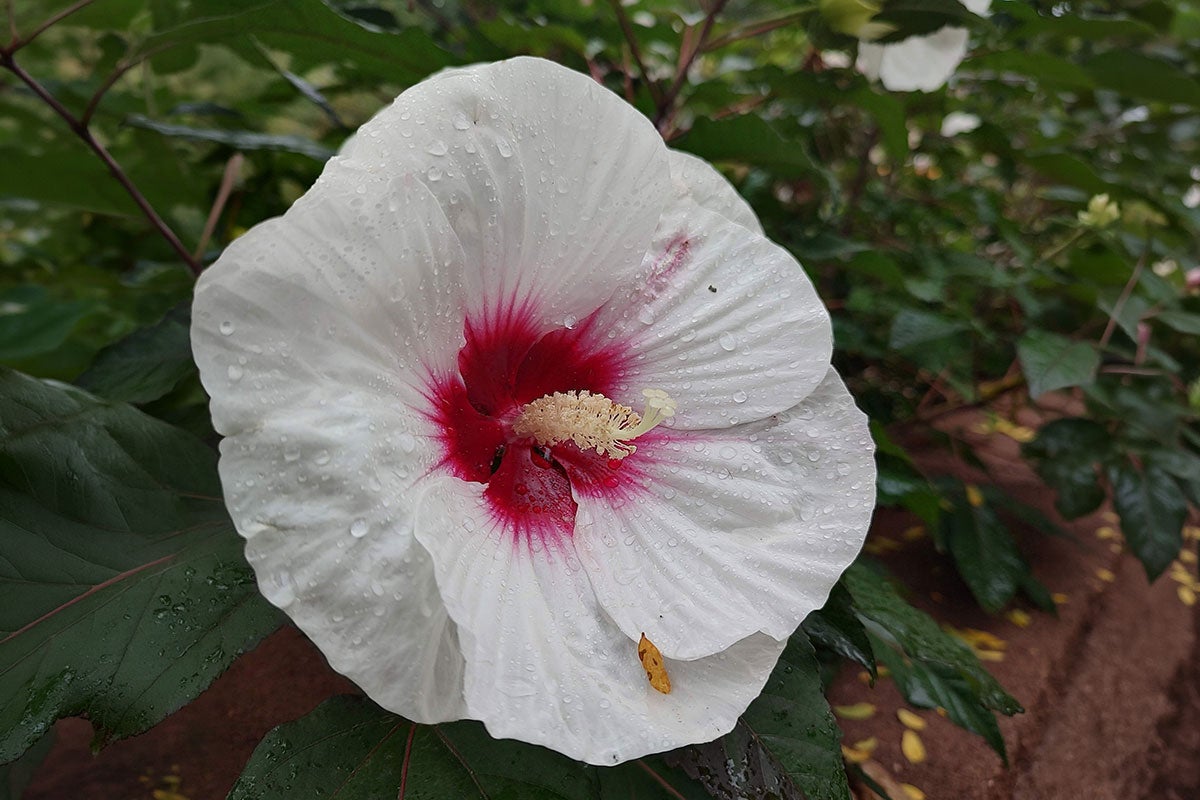
This perennial rose mallow features 7-8 inch white flowers with deep scarlet-red eyes. Deep bronze-green leaves offer contrast to the pale blossoms. It grows to about 3-4 feet tall and spreads 5-6 feet wide.
Pink Cultivars
Lastly, pink is another color choice available to Zone 4 gardeners.
Hibiscus ‘Watermelon Ruffles’
Hibiscus hybrid
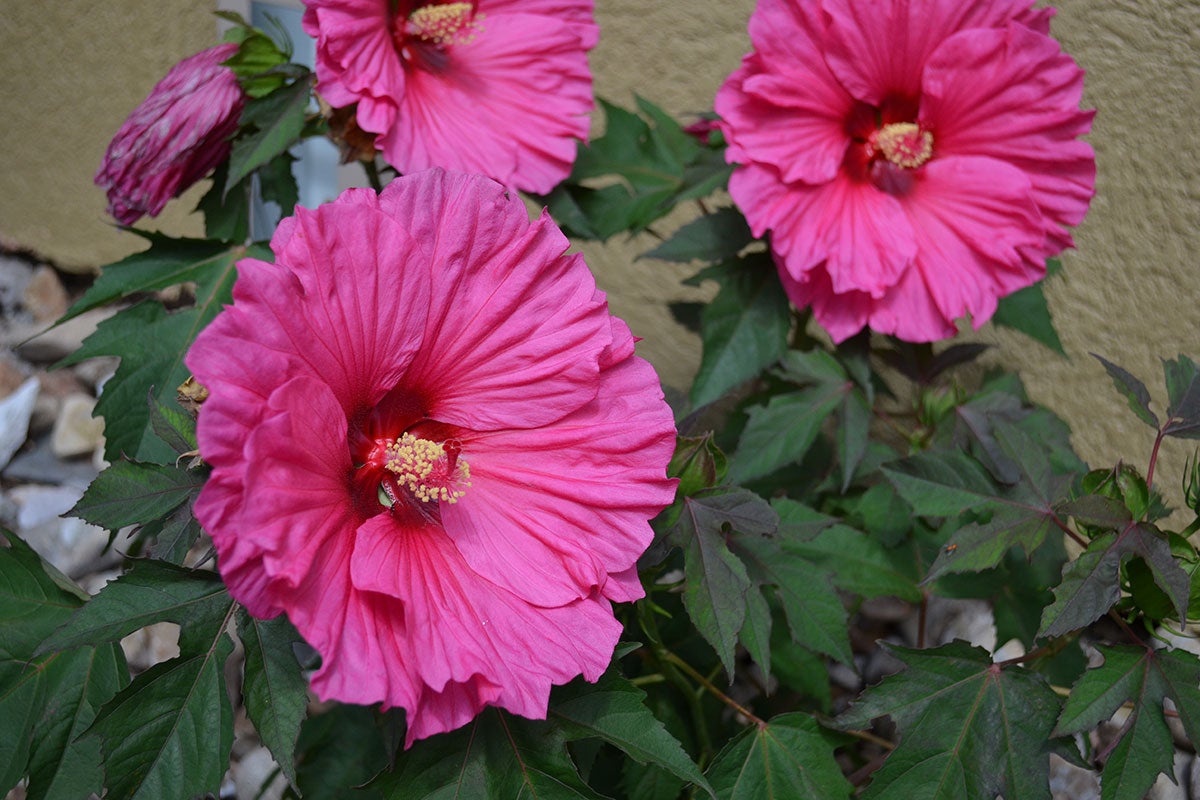
Watermelon Ruffles is known for its 7-inch flowers with heavily ruffled petals. It grows upright and bushy to about 4.5-5 feet tall and wide.
Summerific® Spinderella Hardy Hibiscus
Hibiscus × 'Spinderella'
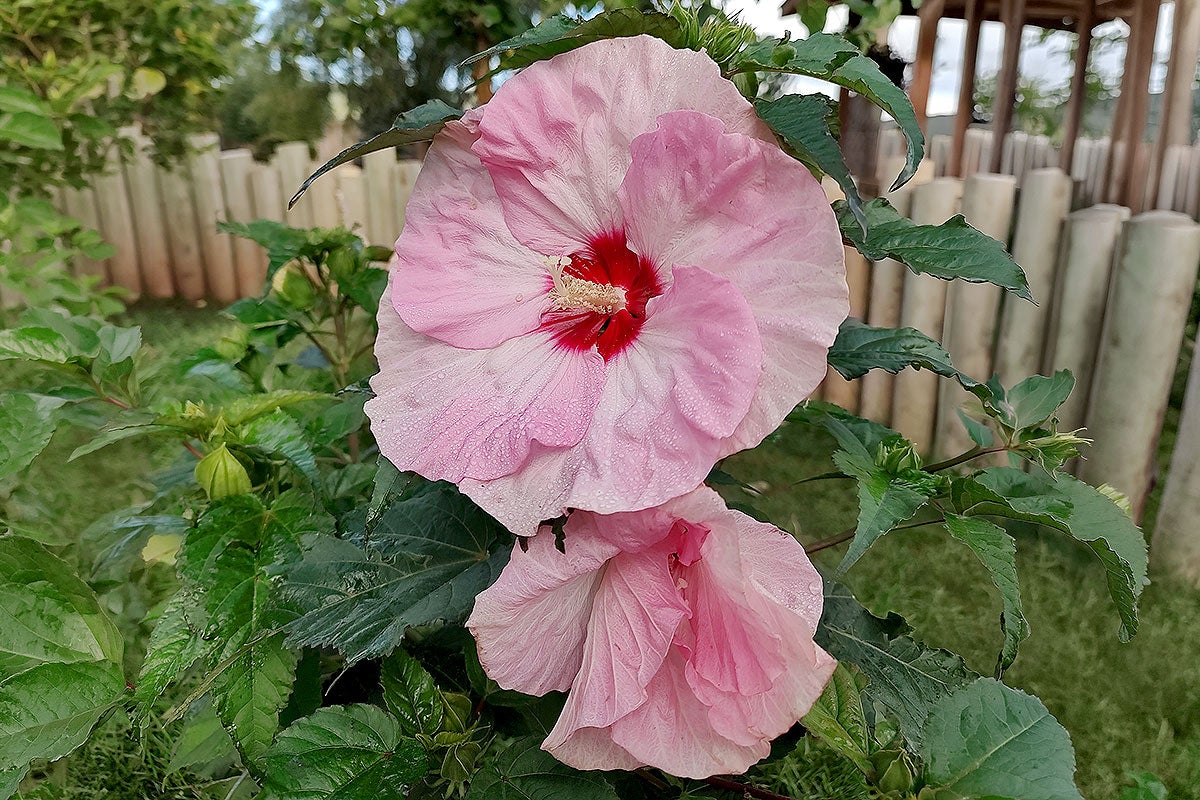
'Spinderella' is known for its pinwheel-patterned flowers. 8-inch white blooms have pink-accented edges and a deep red center eye. It grows 4-5 feet tall and wide.
Problems
This plant is relatively easy to grow, but it can have some problems. Hardy hibiscus is not considered deer resistant. Some reports say deer will leave the foliage alone, but they will eat the flowers. Look out for Japanese beetles feeding on the flowers, but this is usually only temporary damage. Other common problems include yellow leaves, flower buds dropping, and insect pests.
References
Special thanks to Chris Schlenker (Director of Horticulture and Grounds at McCrory Gardens), David Yahne (Head Horticulture Curator at Reptile Gardens), and to Carolyn Semin for sharing photos and information for this article.
- Haynes, C. (2023). Hibiscus for Iowa Gardens. Iowa State University.
- K-State Research and Extension, Johnson County. (2026). Hardy Hibiscus Add A Splash of Summer Color. Kansas State University.
- Griggs, M. (n.d.). Make Some Room for Hardy Hibiscus. Pueblo County Colorado State University.
- Walters Gardens. (2021). Year of the Hardy Hibiscus. National Garden Bureau.
- Long, G.E. (2026). Hardy Hibiscus (Hibiscus moscheutos): How to Grow and Care for Hardy Hibiscus.Clemson University.