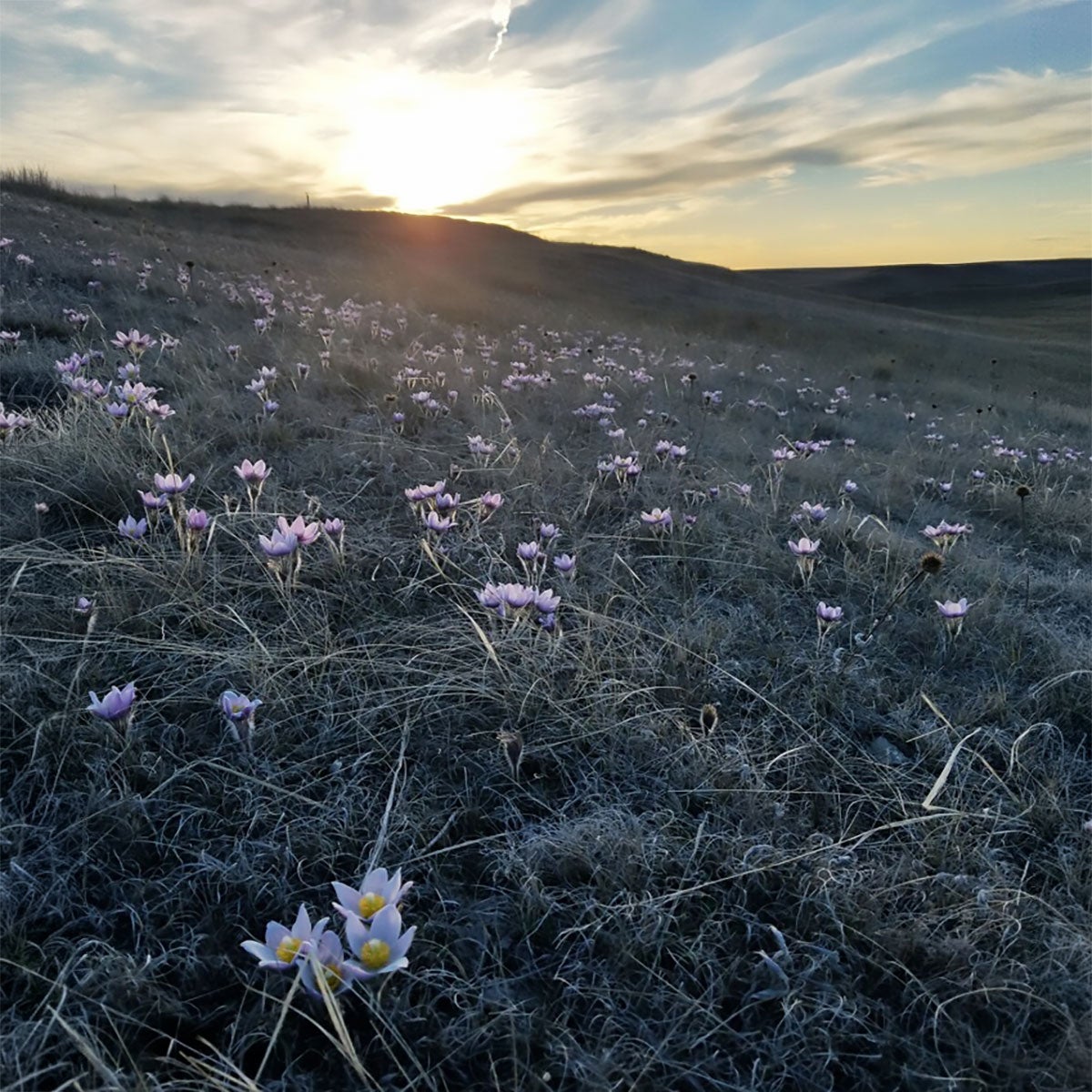
Eastern pasqueflower (Pulsatilla patens), your South Dakota state flower, could be the queen of all our native wildflowers. Eastern pasqueflower seems to follow the saying “10 minutes early is on time” arriving as one of our first wildflowers to bloom in the spring. Pasqueflower often blooms while there is still snow on the ground and can give us hope that winter is coming to an end.
The official botanical name of South Dakota's state flower is Pulsatilla patens, or eastern pasqueflower. However, the name Pulsatilla hirsutissima, which is an older version of the name, is officially recorded as the state flower and has been since the early 1900's. This discrepancy can sometimes cause some confusion! USDA Plant Database is the standard for botanical names, and it recognizes Pulsatilla patens as the updated name.
Fun Fact: Eastern pasqueflower is also the provincial flower of Manitoba.
Plant Profile
Eastern pasqueflower forms a small mound of soft, fuzzy leaves with blooms that can reach up to 18 inches tall. The flowers have five to seven petal-like sepals, usually white and sometimes with a blue-violet to lavender tint that surround a mass of yellow stamens. Blooming can occur as early as March and last through May. These early blooms provide important resources for pollinators before many other plants are blooming.
Eastern pasqueflowers grow well in full sun to part shade with moderate to dry soil.
Flower

Habitat
In Your Garden
This species will bring early spring blooms and distinctive leaf texture to your garden.
Choose a sunny location with moderate to dry soils for planting. It is a compact wildflower that will not spread and is a cheery addition where smaller plants can be appreciated.
When sourcing pasqueflower for purchase, be mindful that Pulsatilla vulgaris, also known as pasque flower, is a species native to Europe and is sold in many nurseries. Pulsatilla vulgaris has a deeper purple color while the native Eastern pasqueflower is a very light shade of purple and the plant itself is much smaller.
About the Native Plant Initiative
Native plants are the foundation that supports insects, pollinators (including bees), birds and wildlife.
Learn More