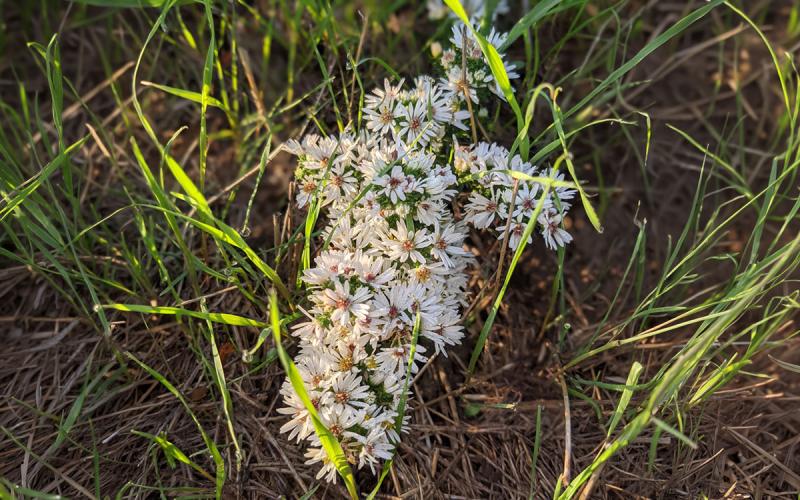
One of the many great features of native plants is that they don’t need a lot of fall maintenance! There are many benefits to leaving flowers and grass stems standing throughout the winter. The seed heads on native flowers and grasses provide winter interest in the garden while also providing food and shelter for birds (Figure 1).

Plants that have hollow stems also provide nesting sites for native bees for up to three years, and butterflies can attach to dry stems and overwinter. However, if you see any plants that look diseased or have powdery mildew, cut back and discard that material.
Fall Care
- Use fallen leaves to mulch throughout the planting area and especially around the base of the native plants, as many moth and butterfly species overwinter in leaves. If it hasn’t rained recently, water the plants thoroughly a couple more times before it gets cold. However, don’t water the plants right before an expected hard freeze as the moisture in the ground could damage plants if frozen.
- Additional wood mulch can be added around plants or trees if desired but leave space around the trunk and stems. If possible, wait to add wood mulch until temperatures drop below 32 degrees at night and the ground starts to freeze. Prior to that, the warmth of the sun on the soil helps with root development.
- Perennials and grasses can be divided and moved in September and October.
- Fall is also a great time to plant new native perennials. The root systems can develop during the fall before the ground completely freezes, so the plants can get a better start the following spring. The cooler temperatures also reduce stress on the plants as they are starting to grow. Be sure to water thoroughly after planting. It’s best to plant at least six weeks before a hard freeze.

- If you're having trouble with rabbits or deer, fence off the planting area, or place chicken wire or another type of fencing around individual plants. One easy and inexpensive way to protect individual plants is to use plastic/wire garbage cans from a dollar store, place them over the individual plants, and weigh it down with a rock or other heavy object, or use metal stakes to anchor it into the soil (Figure 2).
In the Spring
In spring, once temperatures have reached 50 degrees or above for a week, you can cut back stems to 6-12 inches and remove any excessive leaf mulch that would prevent seedlings from growing. Many native plants like warm temperatures, so don’t be surprised if you don’t see much growth until mid to late June for many species, especially those that bloom late in the season like asters and goldenrod. Prairie smoke will be one of the first plants to green up and bloom in late April to mid-May.
Native plants grow much slower than vegetables or annual ornamental plants. In the first year of growth, most of their energy is put into root production. They will most likely begin flowering during the second or third year of growth. Over time, they will reseed or spread via the roots or rhizomes and fill in the open spaces.
If your plants look like they’ve disappeared or the tops have been eaten by critters, be patient and wait to see if they grow back next summer. Oftentimes, the roots will still be alive, allowing the plants to grow back after mild damage.
About the Native Plant Initiative
Native plants are the foundation that supports insects, pollinators (including bees), birds and wildlife.
Learn More