Written by Beth Frederickson, SDSU Extension Horticulture Assistant, under the direction and review of Prairey Walkling, and Robin Buterbaugh.
About Basil
The scent of summer can be evoked by the scent of freshly picked basil. Basil Ocimum basilicum, often called the “king of herbs,” is easy to grow and prolific. There is an extraordinary variety of basil that can be grown, with 150-200 varieties and cultivars. The many varieties can generally be divided into four groups – sweet green, dwarf green, purple-leaf, and scented leaf.
Sweet Green
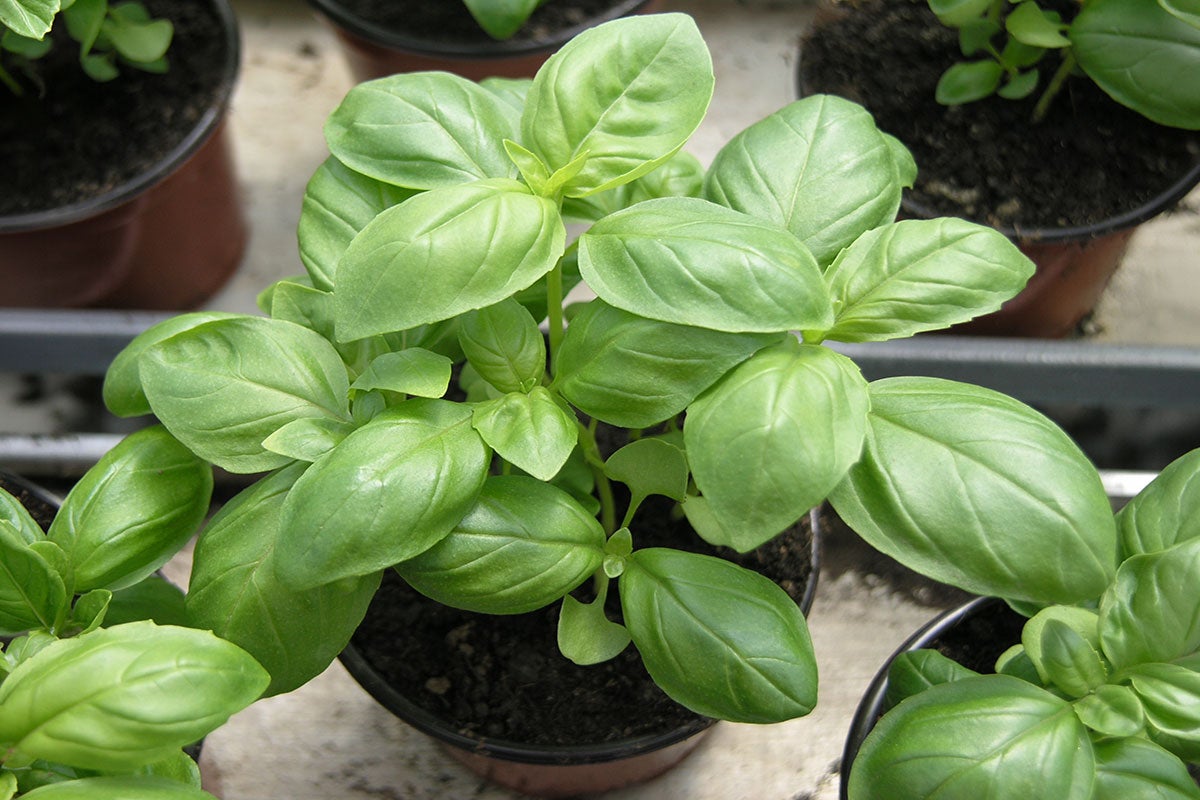
Sweet green, such as ‘Genovese’ is the most popular type of basil grown in America (Figure 1). It’s a common ingredient in Italian and Mediterranean cooking, and its large leaves work well for making pesto. As its name suggests, it tastes sweet with a subtle peppery flavor.
Dwarf Basil
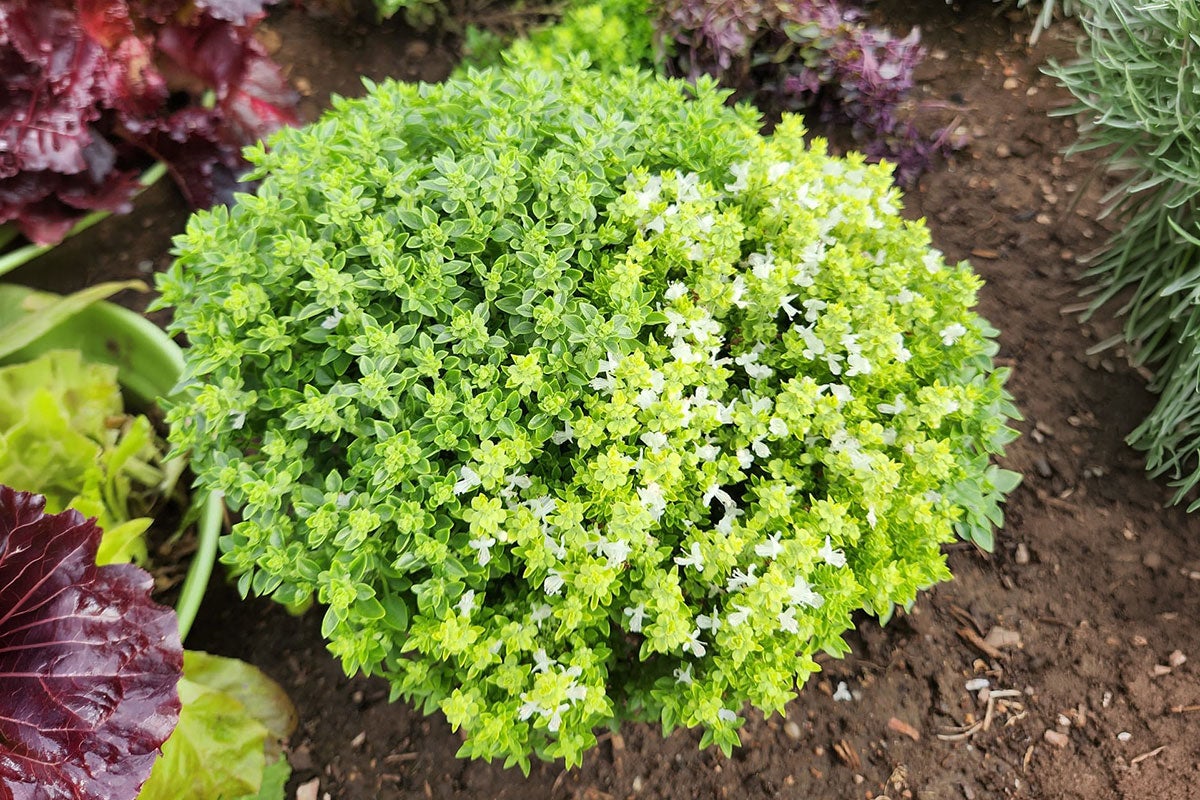
Dwarf basil, such as ‘Spicy Globe’ forms neat domes (Figure 2). The leaves are tiny but flavorful with hints of anise and clove. These types of basil can be mass planted in edible landscaping.
Purple-Leaved Basil
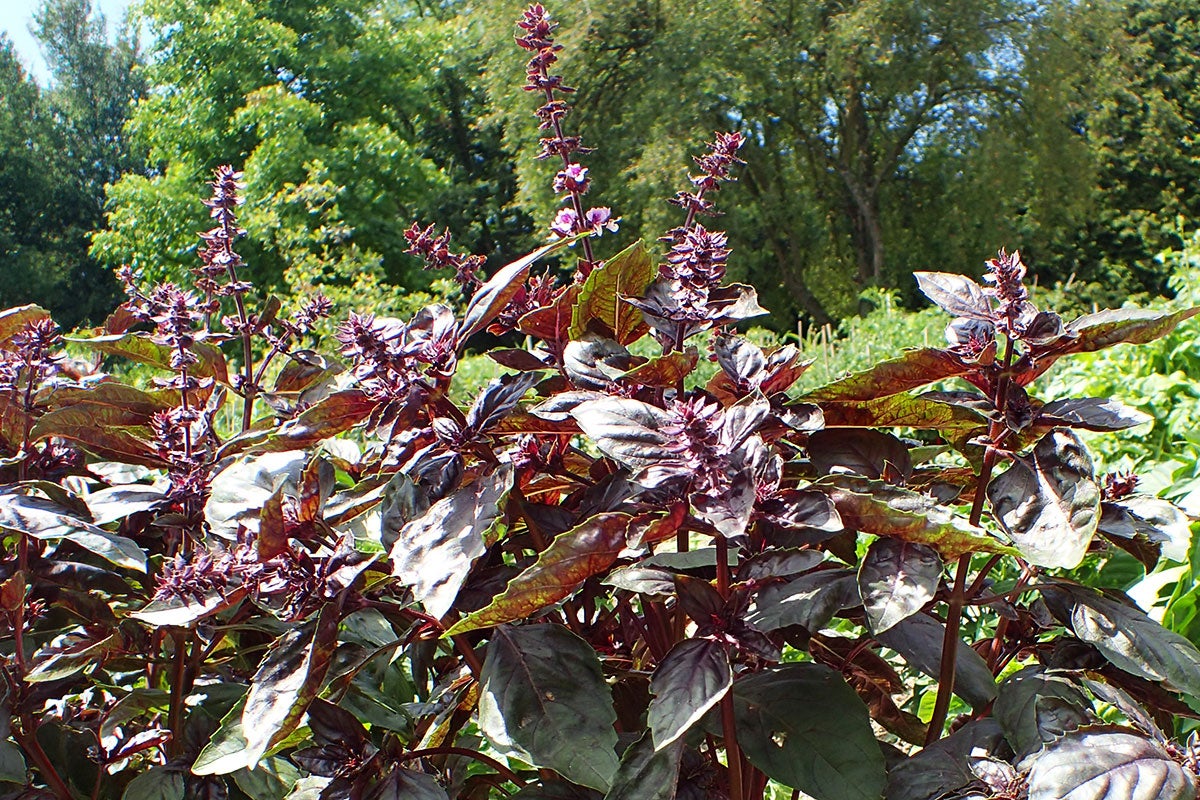
Purple-leaved basil such as ‘Dark Opal’ (Figure 3) can have ruffled or very decorative foliage and pink or purple flowers. These are edible but can also be used in containers, floral arrangements, and garnishes. The taste is often more spicy than sweet green basil.
Scented-Leaved Basil
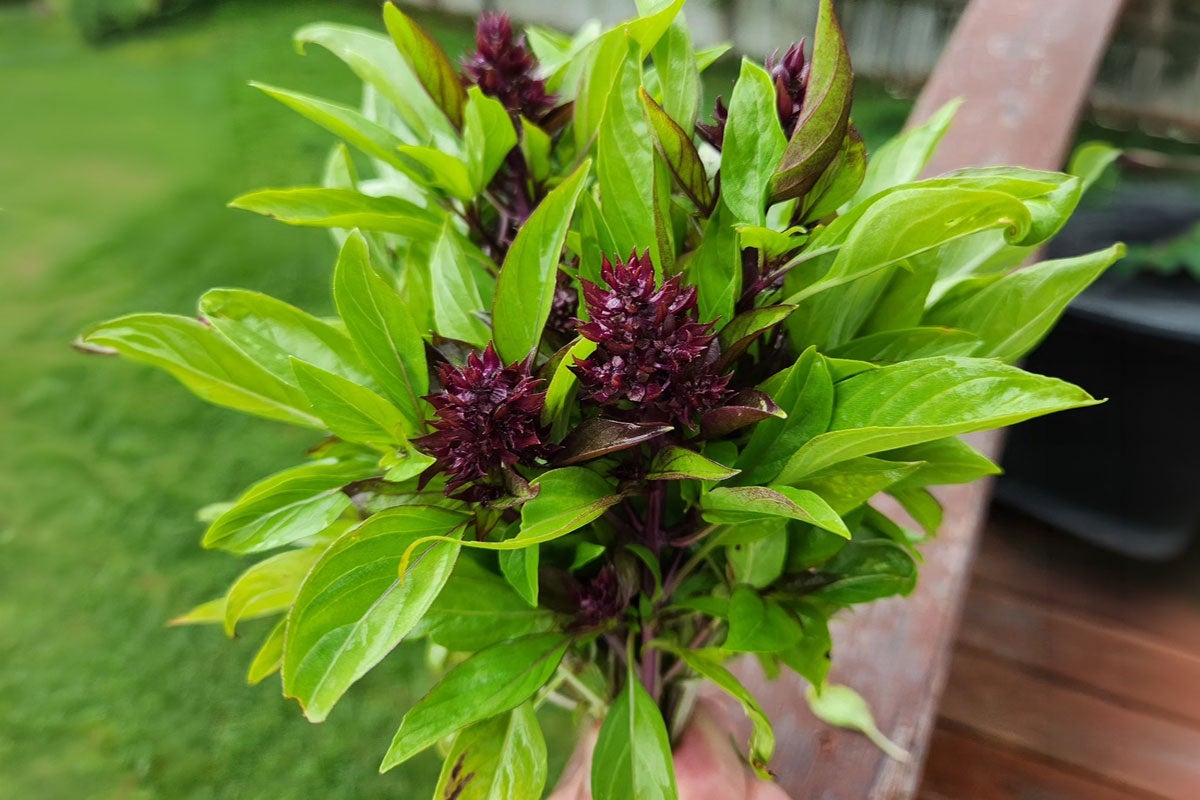
Scented-leaved basils add a second scent to the original anise. Examples include lemon and lime basil, Thai basil (Figure 4), cinnamon basil, or ‘Cardinal’ basil.
Planting

Basil is a tender perennial grown as an annual in South Dakota. It can be grown from seed, propagated by cuttings, or purchased as a plant. To propagate, take a 4–6-inch stem cutting from a healthy, non-flowering plant and root it in water or soil.
Planting seeds: Start basil indoors from seed 4 or 5 weeks before the last frost date (March – April). It prefers about 75°F for germination. A full spectrum grow light is recommended to prevent leggy seedlings.
When to transplant outdoors: Plant basil seedlings outdoors after all danger of frost is past. Basil does not tolerate cold temperatures and the leaves can show dark coloration if the nights are too cool. Basil can suffer from transplant shock. To prevent this, harden off the seedlings by gradually introducing them to the outdoor conditions for a week or two before planting in the ground and transplant in the early morning/late afternoon to protect the seedlings from harsh sun. Alternatively, basil seeds can be direct sown in the ground outdoors after night temperatures are consistently above 50°F. Basil seeds sprout best when soil temperatures are at 70°F or warmer.
Where to plant: Plant in full sun (6-8 hours of sunlight) with well-drained soils. It can grow in the ground, raised beds, or containers. It can also be grown indoors in a sunny window but the flavor may not be as intense. Consider planting basil near your tomatoes if you have had problems with thrips, as the scent of basil can mask the tomato plants from the thrips (Walliser, 2020).
Plant Care
Watering: Basil generally needs 1 – 1.5 inches of water per week but in general basil in raised beds and containers will need more water than basil in the ground. Avoid wet leaves to prevent fungal diseases like downy mildew or leaf spot. Established basil is relatively drought tolerant.
Fertilizer: Fertilize sparingly, using a 5-10-5 commercial fertilizer once or twice during the growing season at the rate of 3 ounces per every 10 feet of row.
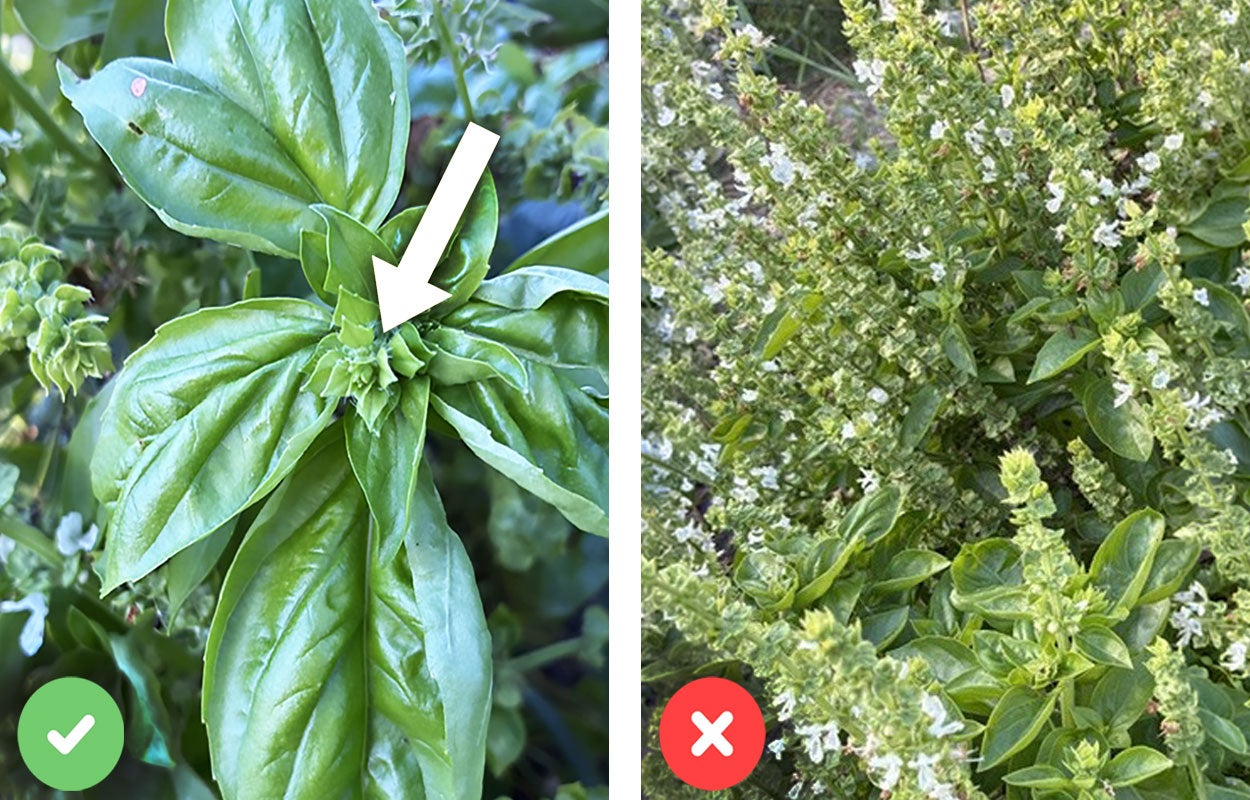
Pinch back the flowers: Basil can benefit from pinching in mid-spring to promote branching (Figure 6). While they may not grow much in cool spring weather, plants grow rapidly during the warm weather of summer. Keep pinching back flowers to discourage the plant from going to seed.
Harvest and Storage
For best flavor, basil should be harvested when flower buds have started to form but before they begin to open (Figure 6). Plants can be harvested from summer to fall. Do not remove more than three-quarters of the leaves at any one time. The more you pick, the more it grows. Once they start producing flowers, aka seeds, the flavor of the leaves becomes stronger and harsher (less sweet). When you begin to see the flower bud (Figure 6), either pinch the buds off or harvest. Harvesting is as simple as finding the center of a stem and cutting or pinching it off (Figure 7).
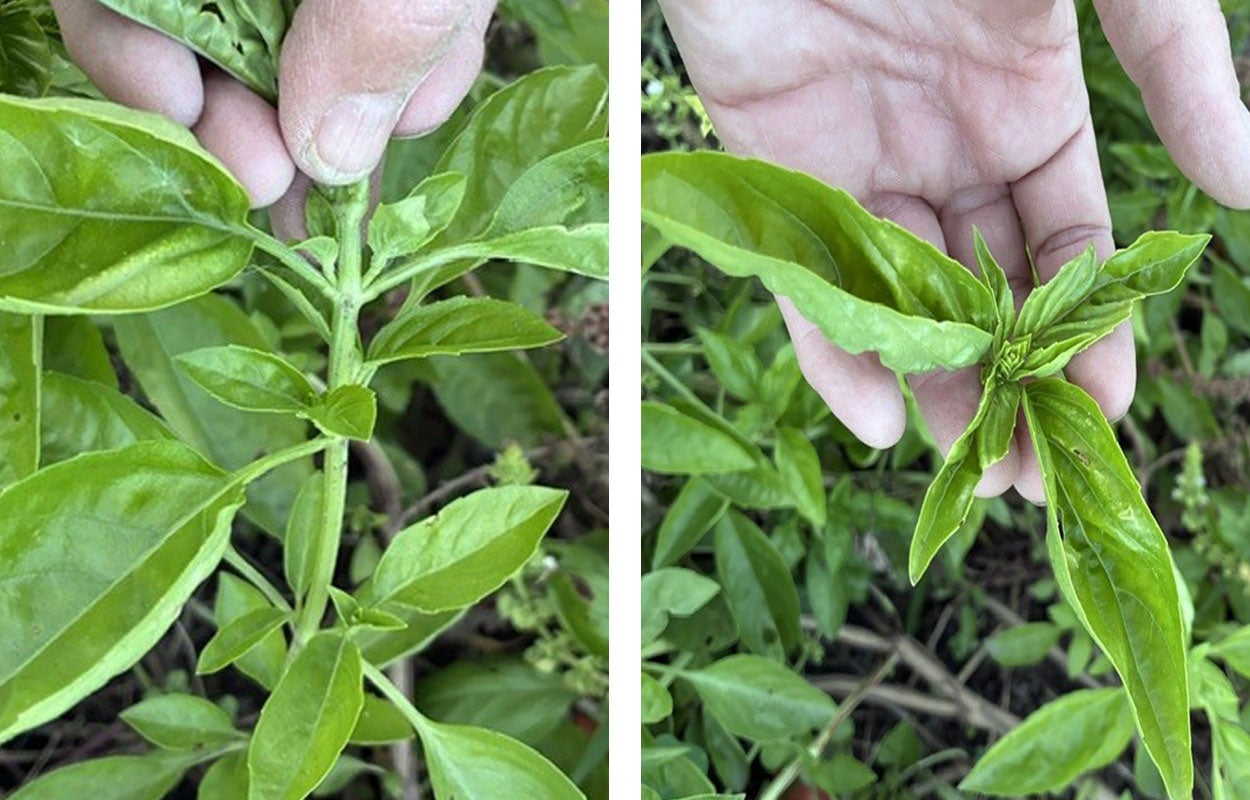
After harvesting, wash and pat leaves dry. Use immediately or store in perforated plastic bags in the refrigerator. You can also treat it like a flower and place it in a vase/jar with water. It can keep fresh with regular water changes for 1-2 weeks. If it begins to mold or get spotty, throw it away.
Preparation
Since basil tends to discolor quickly, many chefs refrain from adding basil to dishes until immediately before serving. It can be used as a garnish on top of pasta, pizza and salads.
Making fresh pesto is another great way to prepare basil. See this basil pesto recipe from NDSU Extension. To save money, walnuts can replace pine nuts or skip the nuts.
Preservation
Freezing and drying are both good options for preserving basil.
Freezing Options
- Place clean individual leaves on a tray and freeze. After the leaves are frozen, place in a container.
- Using a silicone ice cube tray place fresh leaves in the tray and cover with water or a neutral flavored oil. Oil does not necessarily freeze solidly. If possible, wrap individual pieces in wax paper or plastic. You can store the ice cubes in a bag and add to soup for a pop of summer flavor.
- Butter and chopped basil will store in the freezer quite well
- Make and freeze pesto. If your intention is to freeze the pesto, do not add cheese as cheese does not freeze well.
Drying Options
- Dry in a dehydrator on a low temp. 95-105° for 1-3 hours. Read your dehydrator instructions for further information.
- Dry in your oven at the lowest possible temperature, for 3-4 hours.
Once basil leaves are fully dried, transfer to airtight jars or tightly sealed plastic bags. Keep out air and light to avoid fading and loss of flavor.
Potential Problems
Pests and Diseases: Basil does not have a lot of problems. Slugs can eat holes in leaves, especially if it’s overly wet or crowded. Thrips may cause leaf discoloration. Fusarium wilt can occur. Basil downy mildew is a serious disease in some states, but it is not formally reported or confirmed in South Dakota.
Cold Injury: Cold injury is a problem that you may see in the spring or fall. The leaves will turn brown/black. In Figure 8, the plant was hardened off, but planted too early when nighttime temperatures were in the 40’s.

Temperatures below 50°F can stunt basil's growth and damage its leaves. Prevent this by waiting to plant basil until nighttime temperatures are consistently 50 or above. Or cover basil at night with a milk jug or bucket for protection. In the fall, basil will be one of the first crops to die as the temperatures get colder (unless it is protected or brought inside).
Conclusion
Basil is fun to grow because there is always a new variety to try with its own unique flavor note. You are only limited by your imagination, so jump in and grow your own mass planting of a very loved herb.
References
- Basil. Chicago Botanic Garden.
- Lambert, A. Erickson, M. and Kleine, H. (2022). Preserving Herbs. SDSU Extension.
- Growing Basil in the Home Garden. (2025). Iowa State University Extension and Outreach.
- Schuh, M., and Kooyman, S.M. (2026). Growing basil in home gardens. University of Minnesota Extension.
- Walliser, J. (2020). Plant Partners Science-Based Companion Planting Strategies for the Vegetable Garden.