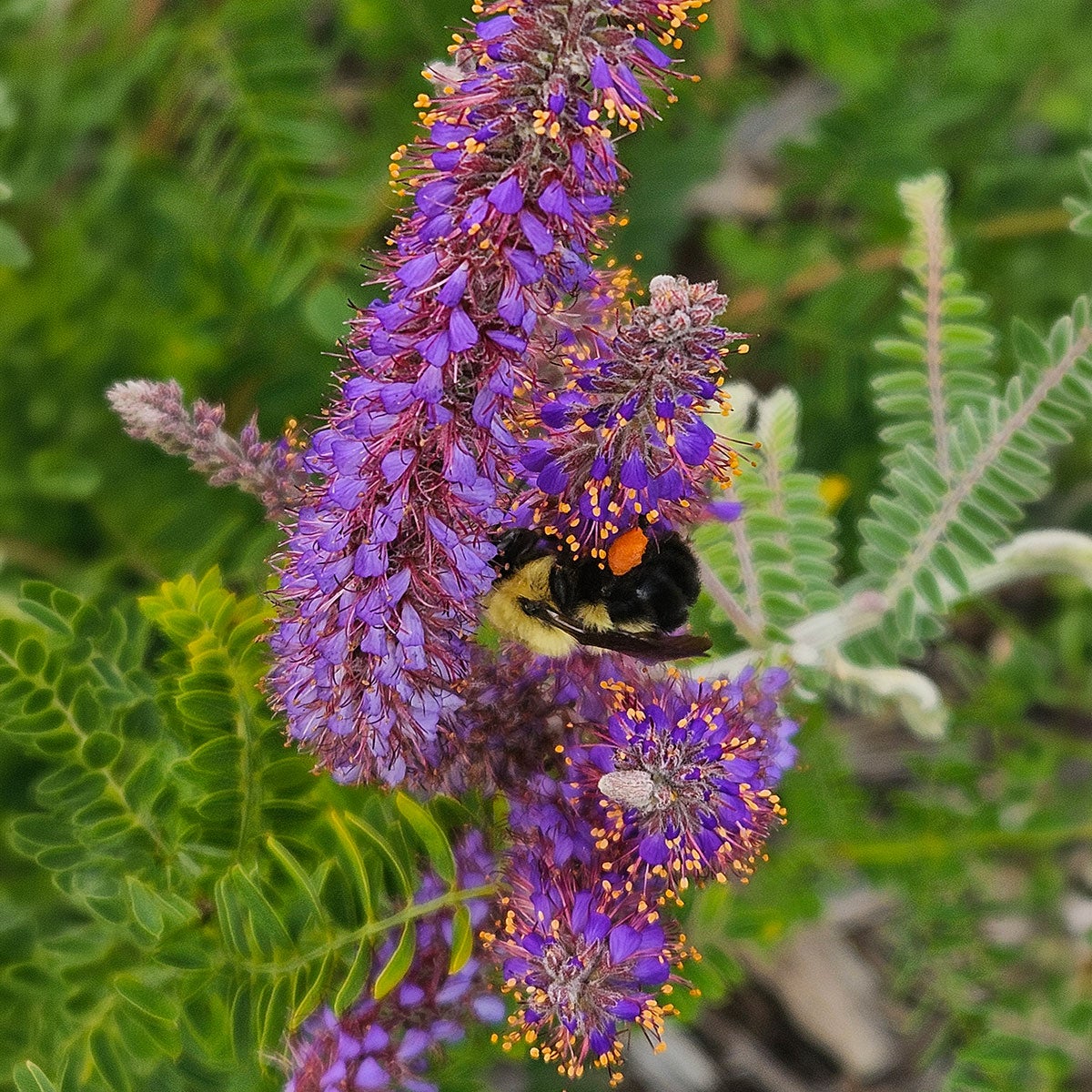
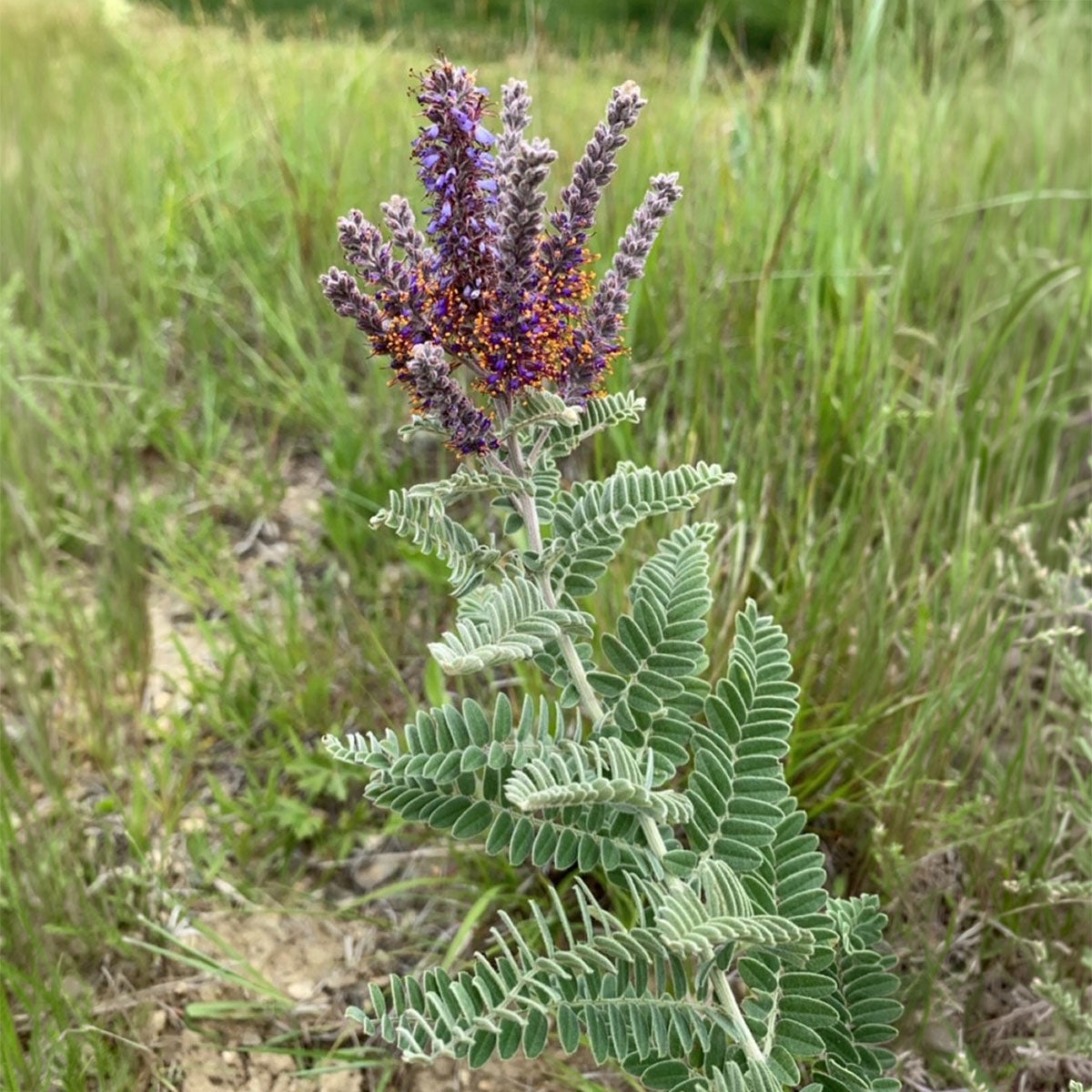
Leadplant (Amorpha canescens) deserves a close look, especially when it blooms. This little shrub showcases spikes of bright purple flowers with striking yellow-orange stamens and silvery-gray leaves. It is a stunner. The common name could refer to the lead-gray appearance of the leaves, or an old, debunked myth about the plant indicating lead underground.
Fun Fact: After the flowers are pollinated, small, hairy pods develop each containing a single seed.
Plant Profile
Leadplant is a small shrub that grows 1 to 3 feet tall. Leadplant blooms from June through August, providing resources for all our native pollinators, especially solitary bees.
Its deep root system helps it withstand drought and survive prairie fires. Even if fire kills its aboveground stems, the underground portions can survive and resprout. As a legume, leadplant also hosts nitrogen-fixing bacteria in its roots which ‘fix’ nitrogen (convert atmospheric nitrogen into a form the plant can use).
Leadplant grows well in full sun to part shade with moderate to dry soil.
Flowers
Foliage
In Your Garden
Leadplant adds stunning summer flowers and silvery foliage to gardens. Be patient, though, as leadplant takes several years to mature and 3 to 5 years to flower if grown from seed. Make sure to protect young plants from rabbits and deer while establishing.
About the Native Plant Initiative
Native plants are the foundation that supports insects, pollinators (including bees), birds and wildlife.
Learn More