Written collaboratively by Adam Varenhorst, Philip Rozeboom, Patrick Wagner, and Brad McManus.
We have recently received a report of a maggot attacking soybean seedlings. During most years, we would immediately expect this to be a case of seedcorn maggots, but it was fungus gnat larvae. Typically, fungus gnats are not an issue in crop fields, and when they are it’s due to very wet spring conditoins. For most of South Dakota, moisture has been limited. Other factors that can increase fungus gnat activity are the presence of decaying cover crops or weeds. Or in the case of the report, compacted soil preventing the seedlings from emerging properly. It’s important to note that the presence of fungus gnats in crop fields can also be an indicator of plant diseases, and samples of the infested plants should be submitted to the SDSU Plant Diagnostic Clinic for review.
Identification
Larvae
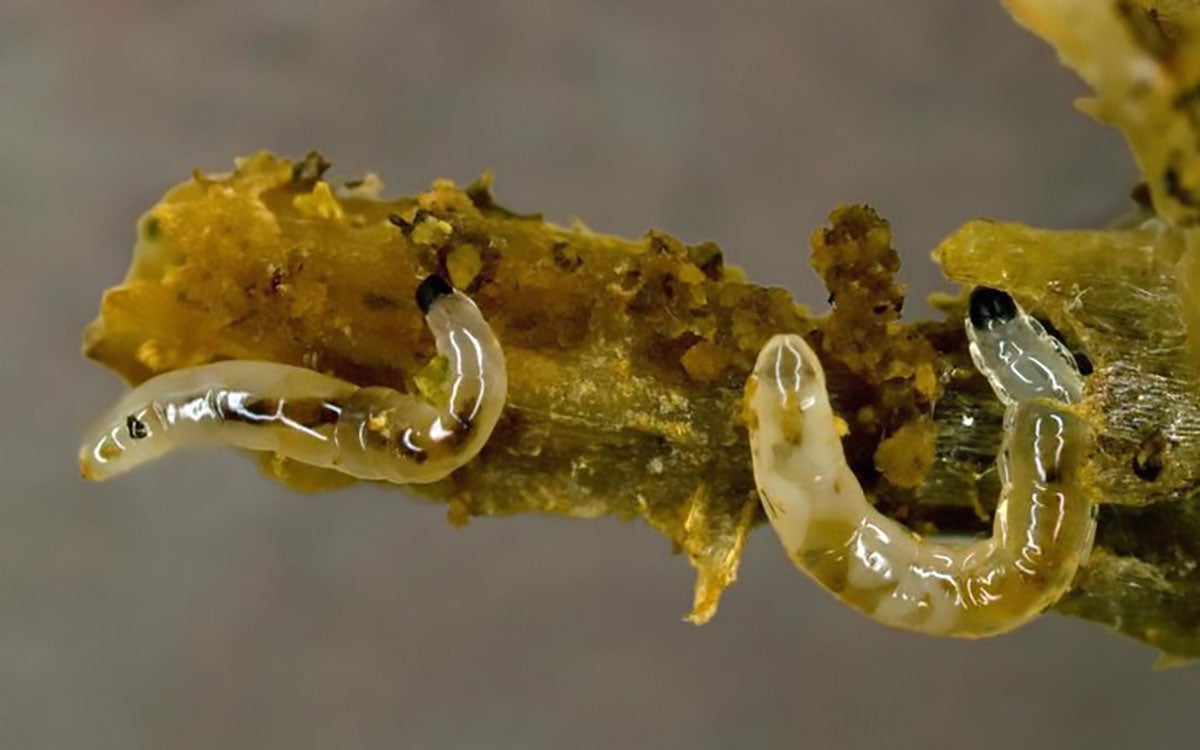
Fungus gnat larvae are slender, elongated maggots that are white in color with smooth skin and, as a result, often appear “shiny”. The larvae have a black head and, when fully grown, reach approximately ¼ of an inch in length (Figure 1). Fungus gnat larvae are typically observed in groups and not individually.
Adults
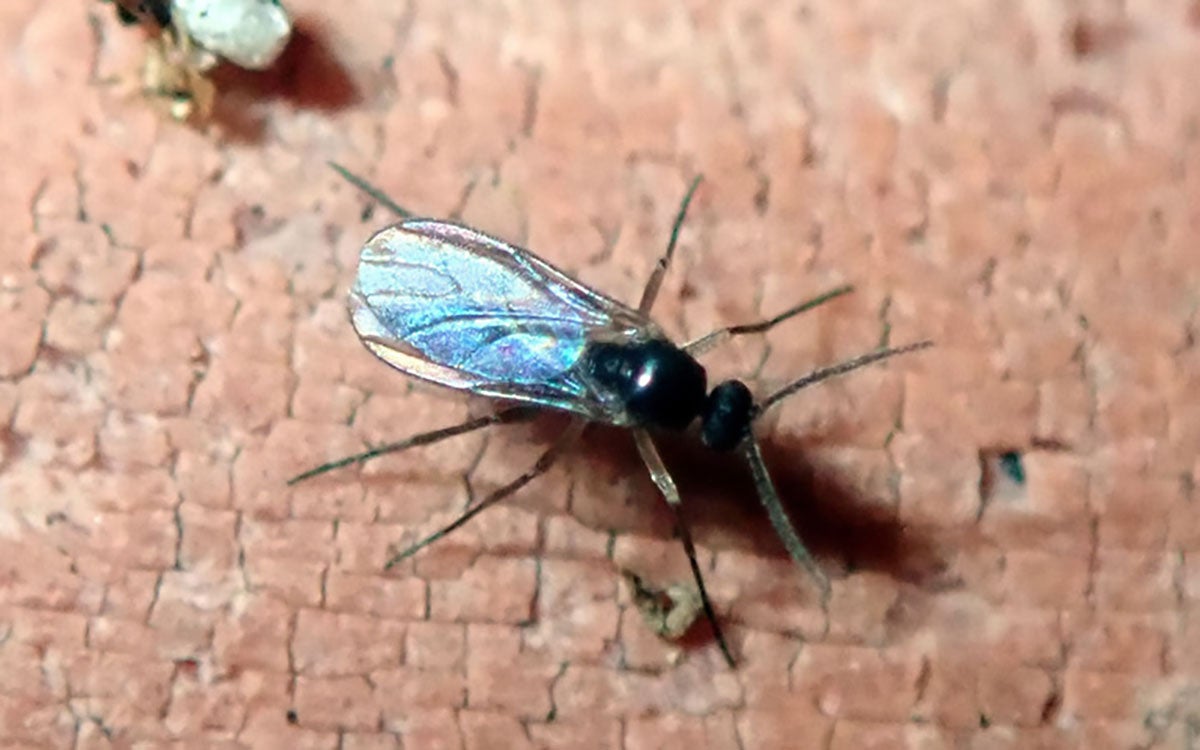
Adult fungus gnats are very small flies at approximately 1/8 of an inch in length. The wings are gray in color and not fully clear. The head and torso of some species of fungus gnats are black in color (Figure 2).
Scouting
There are no scouting guidelines for fungus gnats in corn or soybean. If poor stands are observed, evaluation of the cause should occur.
Management
There are no insecticides labeled for the management of fungus gnats in crop fields.