Farmers and gardeners often use the terms frost and freeze interchangeably when talking about temperature drops, but the two are not the same. Understanding these differences, along with the ways frost and freeze affect spring planting, can help us protect our farms and gardens.
Freeze
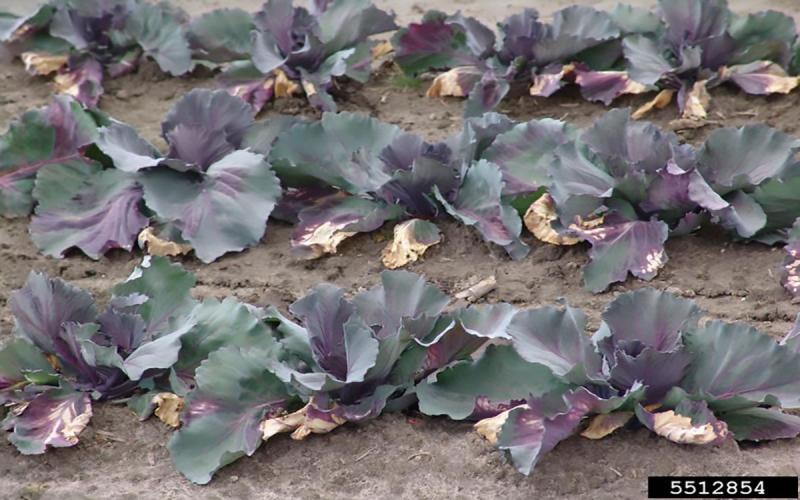
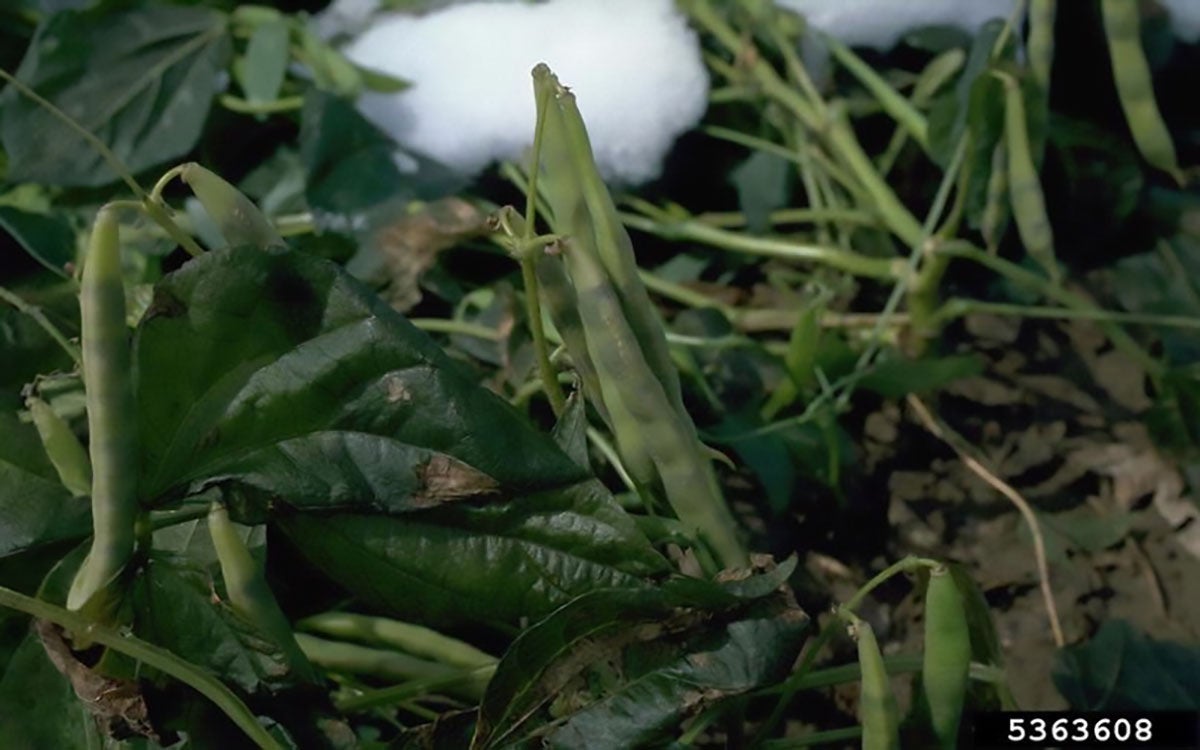
A freeze occurs when air temperatures drop to 32 degrees Fahrenheit or below. At this point, water inside plant cells can solidify, expand, and rupture the cells, which leads to tissue damage. A “hard freeze” or “killing freeze” is typically further defined as air temperatures of 28 degrees Fahrenheit or lower and can kill most non‑dormant plants.
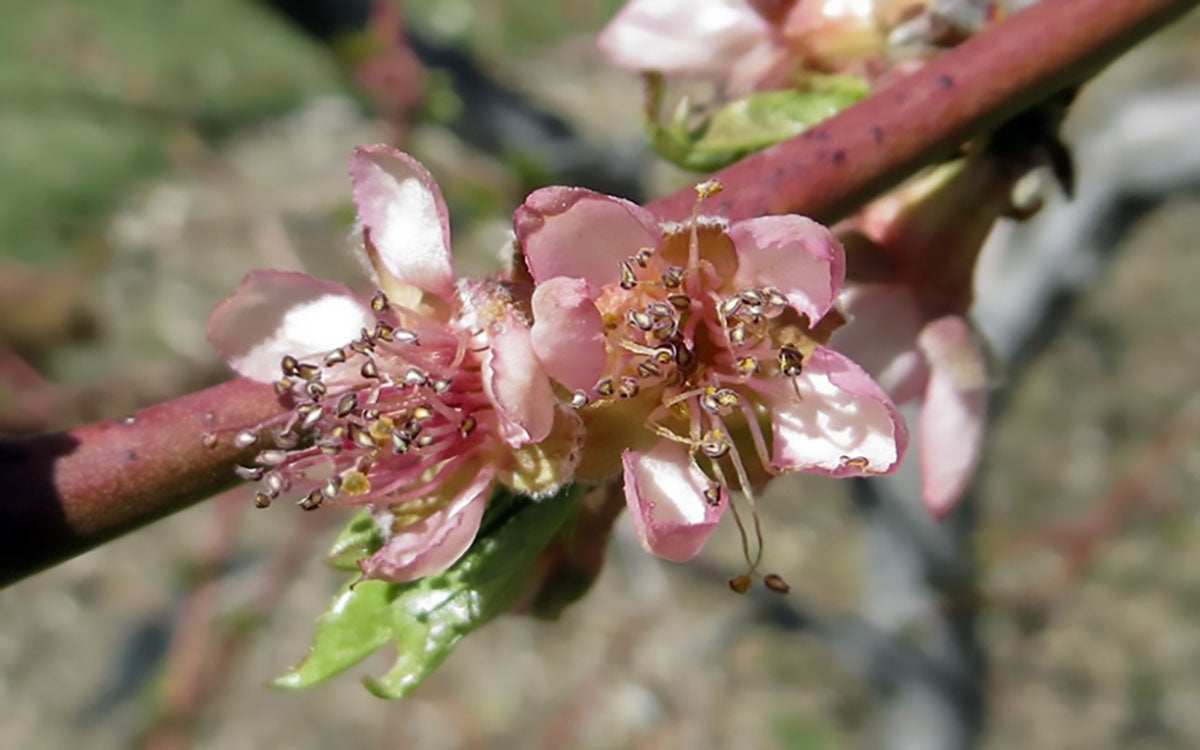
Plants affected by freezing temperatures can show varying symptoms. This includes water‑soaked or translucent tissues in leaves, stems, or fruit (Figure 1); wilting or limp growth after thawing; and blackened or browned (necrotic) areas caused by cell rupture and tissue breakdown (Figure 2). Death or survival of annual flowers and vegetable crops depends on species hardiness, variety, plant age, the specific plant parts damaged, and duration of freezing temperature exposure. For example, some fruit tree species that are in bloom and experience freezing air temperatures can suffer damage to their delicate floral tissues, killing blossoms outright, preventing pollination, and eliminating that season’s fruit crop (Figure 3).
Frost
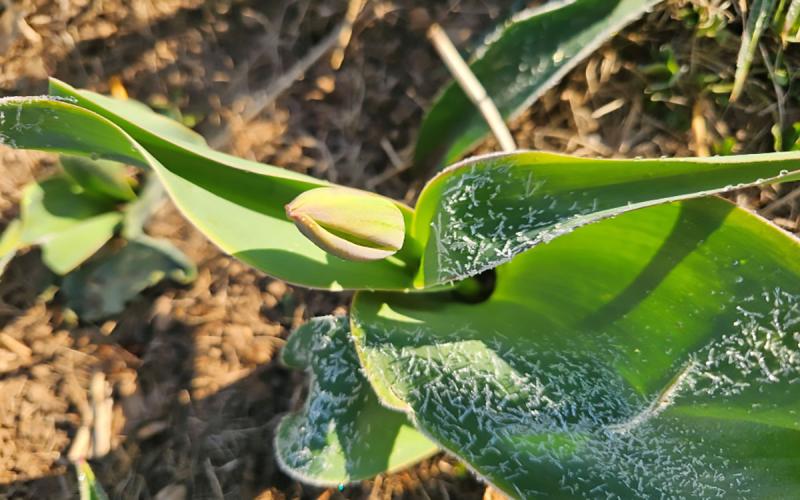
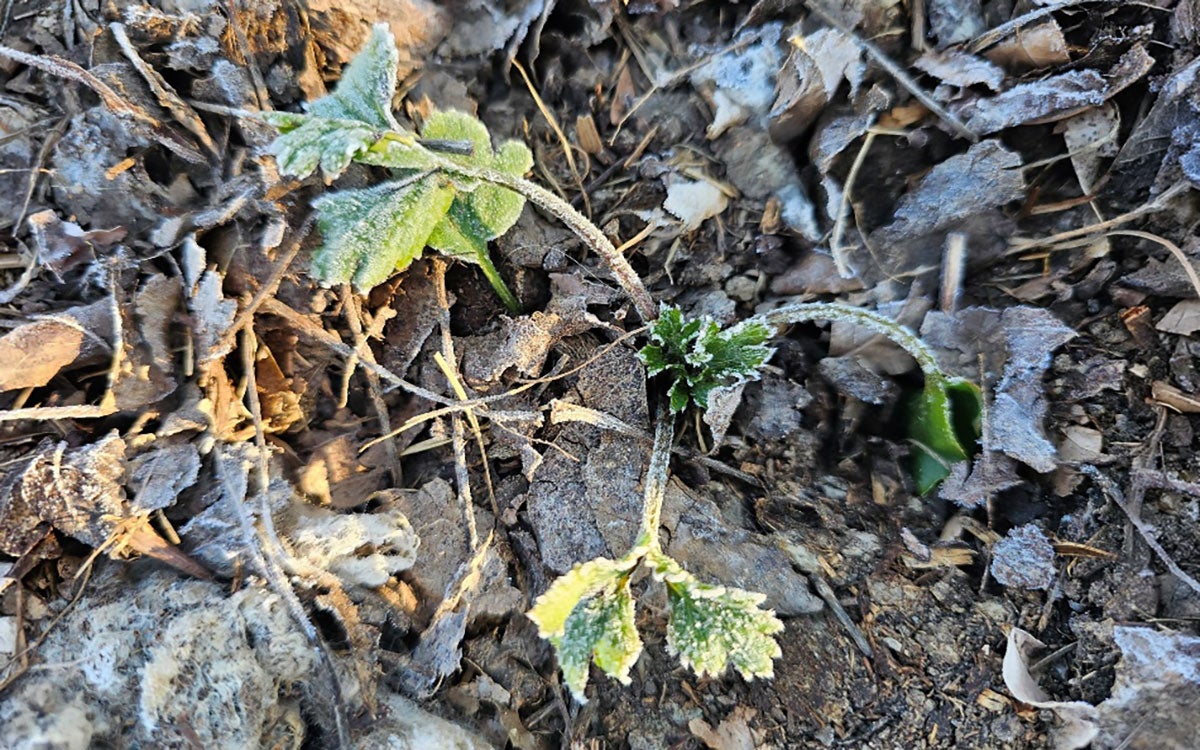
Frost forms when air temperatures fall close to freezing (loosely defined within 33 to 36 degrees Fahrenheit) while the surface temperature of plants, soil, turfgrass, vehicles, or other objects drops to 32 degrees Fahrenheit or below. When this happens, moisture in the air condenses into liquid dew or directly forms ice crystals. Surfaces cool more quickly than the surrounding air, which is why frost can develop even when the recorded air temperature may not reach 32 degrees Fahrenheit.
The dew point is an important factor in frost risk; it is the temperature at which air becomes fully saturated with moisture. When the dew point is above 32 degrees Fahrenheit, frost formation is less likely because moisture condenses as liquid rather than freezing. When the dew point is below 32 degrees Fahrenheit, frost is more likely, especially in dry air, which cools faster than humid air. In open fields with bare soil, radiative frost can occur at the height of the plant canopy during clear, still nights as heat is lost from the soil surface, increasing the chance of cold injury.
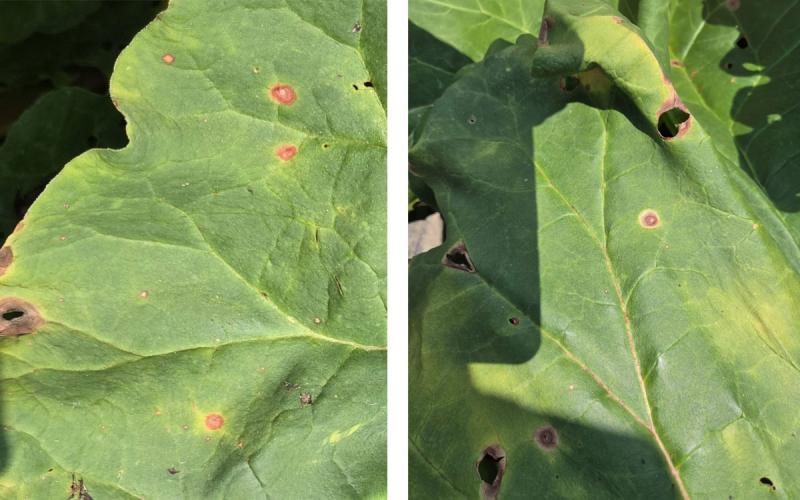
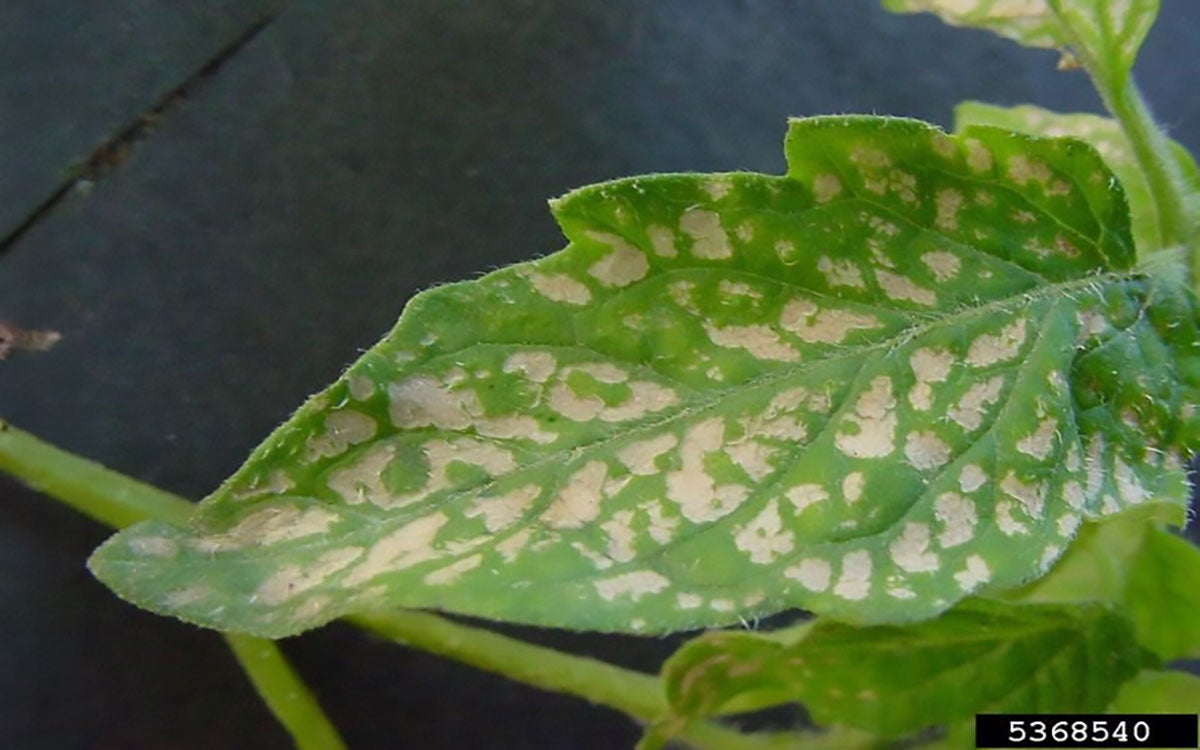
Similar to freeze, frost damage is dependent on species hardiness, variety, plant age, the specific plant parts damaged, and duration of surface freezing temperature exposure. Frost injury tends to be more superficial, localized, and less severe than that of freeze, with symptoms like light bronzing or bleaching on foliage, marginal burns, and small scattered necrotic spots (Figure 6). A few minutes of exposure may cause little harm, while several hours can lead to significant injury. Beginning in May, specialty crop growers and hobby gardeners should monitor daily and weekly forecasts, paying attention to dew points and expected early‑morning lows to guide decisions about planting tender crops or providing frost protection when needed.
Plant Hardiness
The USDA Plant Hardiness Zone Map divides the United States into zones ranging from Zone 1 (arctic) to Zone 13 (tropical). The map reflects the average annual extreme minimum temperatures recorded from 1991 through 2020. While it is a useful guide for determining which perennial and native plants can survive winter conditions, it is not always the best tool for specialty crop farmers or hobby gardeners selecting annual flowers and vegetables. When planting annuals, consider the number of frost‑ and freeze‑free days available during the growing season, summer high temperatures, soil temperatures, precipitation patterns, and other local micro-climate variables.
A more localized resource is the South Dakota State University Mesonet, which provides maps showing the probabilities (10–90%) of last spring and first fall occurrences of 24°F, 28°F, 32°F, and 36°F. These historical probability models help growers better anticipate their planting windows and frost risks.
For more detailed guidance on season‑extension strategies that can help farmers and gardeners protect crops from low temperatures, refer to Extending the Garden Season (Beddes et al., 2022).
References
- Beddes, T., Caron, M., Hansen, S., and Gunnell, J. 2022. Extending the Garden Season. Utah State University.
- Friend, D. 2024. What’s the difference between a frost and a freeze?. University of Illinois Urbana-Champaign.
- Longstroth, M. 2015. What is the difference between a frost and a freeze?. Michigan State University.
- Slattery, L. 2016. Frost vs Freeze. Iowa State University.