Written collaboratively by Xu Li and Peggy Schlechter.
Introduction

Agritourism, the amalgamation of agriculture and tourism, is rapidly growing among many U.S. farmers and ranchers. According to the U.S. Department of Agriculture’s 2022 Census of Agriculture (2024), 1.5% of the 1.9 million farms in the United States were engaged in agritourism. These operations generated a total of $1.26 billion in 2022, representing a 33% increase over the 2017 total of $949.3 million. Popular agritourism activities include U-pick operations, tours, workshops, hunting, fishing, camping, nature and wildlife observation, and seasonal festivals (Pratt, Magbalot-Fernandez, and Ohe, 2022; Tew & Barbieri, 2012). These activities allow visitors to learn about agriculture, the production of food, farm life and rural culture, and get access to fresh air, open space, and locally produced farm products (Pegas, Ollenburg, and Tynon, 2013; Pitas & Chen, 2023; Van Sandt, Low, and Thilmany, 2018). The integration of tourism into agricultural operations thereby not only helps revitalize rural communities but also provides diversified income sources for farmers (Quella et al., 2021).
In South Dakota, agriculture is the number one industry and accounts for nearly 30% of the state economy (Noem, n.d.). Tourism generated a total economic impact of $7.9 billion in 2023 (Tourism Economics, 2023). The development of the agritourism industry is consistent with South Dakota’s past and current policies to support agriculture and farmers. In 2017, the South Dakota Department of Tourism established agritourism as one of its niche areas of development (South Dakota Department of Tourism, n.d.). Since then, the state has created the Agritourism Work Group to drive agritourism development statewide. For some farmers, diversification into agritourism may bring more income to support their family and maintain their agricultural business. However, agritourism represents an entirely new business model for many farmers and ranchers. It may not work well in every situation. Understanding the challenges faced by agritourism operators is therefore important as it can help farmers decide whether agritourism is right for their families but can also help agriculture and tourism agencies develop mechanisms to promote the industry (Pegas, Ollenburg, and Tynon, 2013; Pratt, Magbalot-Fernandez, and Ohe, 2022; Wang et al., 2022).
Despite the growing body of agritourism research, there have been limited studies on the challenges faced by agritourism operators (Wang et al., 2022). There exists a noticeable gap in understanding how agritourism operators navigate and mitigate these challenges. Moreover, much of the existing literature was published decades ago (e.g., Pegas, Ollenburg, and Tynon, 2013; Sharpley, 2002). The rapid pace of societal and technological change in the last decade can potentially give rise to novel challenges. This study sought to fill the gaps by examining the challenges and coping strategies of agritourism operators. It addressed the following research questions: (a) What are the challenges faced by South Dakota agritourism operators? and (b) How did the agritourism operators cope with the challenges?
Given the inconsistent definitions of agritourism, the study adopted the definition from the South Dakota Department of Tourism. That is, agritourism includes activities carried out on a farm, ranch, or agribusiness operation that allow members of the general public to view or participate for recreation, entertainment, or educational purposes (Ellsworth & Schlechter, 2022).
Agritourism has long been considered a viable economic development strategy in rural areas. Previous literature identified a myriad of benefits of agritourism. There are benefits for farms, their operators, and the surrounding communities (Jack et al., 2021; Tew & Barbieri, 2012). At the community level, agritourism has been referred to as alternative farm enterprises, which may alleviate a variety of local problems, including economic decline, out-migration, market fluctuations of agricultural commodities, and a loss of rural lifestyle and local cultural traits (Pratt, Magbalot-Fernandez, and Ohe, 2022; Sharpley & Vass, 2006). Thus, agritourism is an integral element of rural revitalization.
At the farm level, many farmers choose agritourism because of the economic benefits (Barbieri, 2013; Jack et al., 2021; Nickerson, Black, and McCool, 2001; Pegas, Ollenburg, and Tynon, 2013). Agritourism can contribute to additional income, allowing farmers and ranchers to fully utilize resources, diversify their revenue stream, and reduce their dependence on traditional agricultural markets. Agritourism can also provide employment opportunities for family members. Although economic factors remain the dominant driver, noneconomic benefits are frequently noted in previous literature, including personal interests, educating the public about agriculture, meeting a variety of people, and gaining personal satisfaction (McGehee & Kim, 2004; Moraru et al., 2016). Moreover, studies show that the economic benefits for agritourism businesses are not universal (Van Sandt, Low, and Thilmany, 2018). Some agritourism farms, especially those located far from popular tourism attractions, have struggled to earn enough revenue to recoup investment costs.
Agritourism
Many definitions of agritourism are recognized in previous literature. Researchers hold different views on where agritourism should take place, the extent of activities that comprise agritourism, and the authenticity of the tourist agricultural experience (Flanigan, Blackstock, and Hunter, 2014; Phillip, Hunter, and Blackstock, 2010). For instance, is a working farm required for agritourism? Should a bed and breakfast in a farmhouse be considered as agritourism? The lack of consistency has resulted in confusion and complicated the understanding of the phenomenon of agritourism. To address the issue, Flanigan, Blackstock, and Hunter (2014) revised the conceptual framework of Phillip, Hunter, and Blackstock (2010) and proposed a new typology for defining agritourism. The five types are:
- Non-working farm indirect interaction agritourism, such as accommodation on a former farm;
- Non-working farm indirect interaction agritourism, such as accommodation on a former farm;
- Non-working farm direct interaction agritourism, such as farm heritage attractions;
- Working farm indirect interaction agritourism, such as farmhouse bed and breakfast;
- Working farm direct staged interaction agritourism, such as farm tours; and
- Working farm direct authentic interaction agritourism, such as volunteering on a working farm.
Given the inconsistent definitions of agritourism, the study adopted the definition from the South Dakota Department of Tourism. That is, agritourism includes activities carried out on a farm, ranch, or agribusiness operation that allow members of the general public to view or participate for recreation, entertainment, or educational purposes (Ellsworth & Schlechter, 2022).
Agritourism has long been considered a viable economic development strategy in rural areas. Previous literature identified a myriad of benefits of agritourism. There are benefits for farms, their operators, and the surrounding communities (Jack et al., 2021; Tew & Barbieri, 2012). At the community level, agritourism has been referred to as alternative farm enterprises, which may alleviate a variety of local problems, including economic decline, out-migration, market fluctuations of agricultural commodities, and a loss of rural lifestyle and local cultural traits (Pratt, Magbalot-Fernandez, and Ohe, 2022; Sharpley & Vass, 2006). Thus, agritourism is an integral element of rural revitalization.
At the farm level, many farmers choose agritourism because of the economic benefits (Barbieri, 2013; Jack et al., 2021; Nickerson, Black, and McCool, 2001; Pegas, Ollenburg, and Tynon, 2013). Agritourism can contribute to additional income, allowing farmers and ranchers to fully utilize resources, diversify their revenue stream, and reduce their dependence on traditional agricultural markets. Agritourism can also provide employment opportunities for family members. Although economic factors remain the dominant driver, noneconomic benefits are frequently noted in previous literature, including personal interests, educating the public about agriculture, meeting a variety of people, and gaining personal satisfaction (McGehee & Kim, 2004; Moraru et al., 2016). Moreover, studies show that the economic benefits for agritourism businesses are not universal (Van Sandt, Low, and Thilmany, 2018). Some agritourism farms, especially those located far from popular tourism attractions, have struggled to earn enough revenue to recoup investment costs.
Challenges of Agritourism

There are many challenges that concern agritourism operators. Challenges in agritourism operation can stem from policies and regulations, liability, limited financial and technical support, and lack of time and personnel, restricting the widespread participation of farmers and ranchers (Campbell & Kubickova, 2020; Pratt, Magbalot-Fernandez, and Ohe, 2022).
After interviews with agritourism businesses in Cyprus, Sharpley (2002) identified a variety of challenges facing the development of agritourism, including lack of support from the government, lack of training, lack of local facilities/amenities, low occupancy levels, and ineffective marketing. Wang et al. (2022) analyzed challenges encountered by agritourism operators in different regions of the United States. They found that agritourism liability was the primary concern in most regions. Agritourism operators in the West region experienced more challenges with zoning, regulation, and permitting, whereas operators in the South had more issues with e-connectivity. Moreover, previous studies indicated that region and rurality affect the viability of an agritourism business. Agritourism operators in rural areas face more challenges due to distance from the consumer base, transportation infrastructure, and accessibility (Lucha et al., 2019; Van Sandt, Low, and Thilmany, 2018). The current study was based on agritourism operators in South Dakota, a largely rural state where agriculture and tourism are the two largest industries. The objectives are to understand challenges faced by agritourism operators in the state and their coping strategies.
Methods
Due to the nature of exploratory investigation, we chose semistructured interviews with agritourism operators in South Dakota to gain in-depth insights, using open-ended and follow-up questions. This study was reviewed and approved by the Institutional Review Board at South Dakota State University (IRB-2307004-EXM). A list of agritourism businesses was obtained from the U.S. Highway 14 South Dakota Rural Road Trip community meetings. These meetings were hosted by South Dakota State University Extension and were intended to share and gather information to promote tourism along U.S. Highway 14. The list contained the names and contact information of the agritourism operators, their location, and a brief description of agritourism activities. This list was augmented by some agritourism contacts recruited from local agriculturalevents.
We identified a total of 15 agritourism businesses based on a number of criteria, including location, years of agritourism operation, and agritourism activities offered, to obtain a representative sample. All of them are located near U.S. Highway 14, representing eastern, central, and western South Dakota, respectively. They had the potential to become agritourism destinations on an agritourism trail along Highway 14. We sent an invitation email stating the purpose of the study and the interview topics to each of the agritourism businesses. Follow-up emails were sent to those with positive responses to schedule the interview date and time. One or 2 days before an interview, we sent an email reminder, including a list of interview questions, to an agritourism business. In total, we completed 12 interviews with 17 agritourism operators (five interviews had two operators present).
We determined the sample size for this study based on the principle of data saturation (Guest, Bunce, and Johnson, 2006; Hennink, Kaiser, and Marconi, 2017), which is a widely accepted approach in qualitative research (Guest, Namey, and Chen, 2020). Data saturation is reached when new interviews no longer yield new themes or insights, indicating that the data collected are sufficient to understand the phenomenon under investigation (Guest, Bunce, and Johnson, 2006; Hennink, Kaiser, and Marconi, 2017). According to Guest, Bunce, and Johnson (2006), 12 interviews are sufficient for saturation while six can provide a foundational understanding of the themes. For this study, we achieved data saturation with 12 interviews.
All interviews were conducted in person in a city near the location of the agritourism business. To minimize distractions, the interviews took place in a private, quiet, enclosed meeting room. The research team developed an interview protocol to guide the interviews of agritourism operators and ensure procedural consistency among interviewers. The interviews, conducted from December 2023 to February 2024, included both open- and closed-ended questions and focused on the following topics: (a) characteristics of the agritourism operation (e.g., size, years of agritourism operation, primary farm commodities, and agritourism activities offered); (b) challenges encountered when operating an agritourism business; and (c) coping strategies operations adopted to deal with the challenges. The length of the interviews ranged between 60 to 90 minutes each. Upon completion of an interview, the participant received a $100 gift card incentive. All interviews were recorded on a digital voice recorder, accompanied by note-taking.
We transcribed the recorded interview data with Microsoft Word immediately after the interview. Individual identifiers were removed from all interviews to ensure confidentiality and replaced with unique log numbers. Following the six-phase guide (Braun & Clarke, 2006), the researchers conducted thematic analysis for each of the interviews.Thematic analysis is a method used to analyze qualitative data, often applied to texts like interview transcripts or survey responses (Brune, Knollenberg, and Vilá, 2023; Flanigan, Blackstock, and Hunter, 2014). The process begins with data familiarization and coding, goes through iterative refinement of themes and interpretations, and ends with explanatory accounts of the content and patterns in the data. In the current study, we determined themes by the data and the literature.
Three researchers were involved in the analysis process. Initially, one researcher identified the themes. To validate these themes, a random selection of complete responses from five interviews was sampled and sent to the other two researchers for individual thematic analysis. Intercoder reliability was assessed through percentage agreement among the three researchers, revealing a high level of agreement at 88%, surpassing the recommended threshold for acceptable agreement (O’Connor & Joffe, 2020). Moreover, the researchers went through several rounds of discussion about the differences and finalized the themes upon reaching consensus.
Results

The agritourism operators interviewed exhibited diversity in terms of farm size, years of operating an agritourism business, and the range of agritourism activities offered. More than half of the operators managed small farms of up to 250 acres, while three operated farms larger than 1,000 acres. Half of the interviewees had been running their agritourism businesses for over a decade, whereas two had started their operations within the past year. These operators offered a wide range of agritourism experiences, including activities such as crop mazes, hayrides, and farm stores. Further, farm stays are a major component of agritourism in South Dakota, as more than half of the interviewed operators provided various kinds of lodging facilities for visitors, such as bed and breakfast accommodations, camping sites, or a combination of both.
The farmers were also asked to report on the challenges they faced during the development of their agritourism operations. It is evident that transitioning into agritourism is not an easy shift. Farmers met a multitude of challenges. Some of these challenges arose from the unique characteristics of an individual farm. Others are commonly encountered by agritourism operators. The interview results suggested four major challenges: (a) lack of business knowledge and skills, (b) government regulations, (c) time constraints, and (d) financial concerns. The following sections discuss each of the challenges and coping strategies adopted by South Dakota agritourism operators in addressing these challenges.
Lack of business knowledge and skills
The most significant challenge faced by agritourism operators was lack of business knowledge and skills (e.g., how to create a business plan, provide excellent customer service, develop attractive products, and set appropriate prices). Unlike traditional farming, which predominantly relies on wholesale sales, agritourism depends on retail sales and requires a distinct set of skills including customer service and hospitality (Schilling et al., 2006; Tew & Barbieri, 2012). The operational differences between agriculture and tourism pose challenges for agritourism operators. As commented by Farmer 6, “Agriculture is so broad.... How varied tourism is. It is as broad as agriculture is. So you take these two entities and try to mix them... It’s hard.” Many operators struggle with how to initiate their businesses and determine their primary areas of focus. Farmer 6 stated: “What direction do we go? It’s hard, and who do you ask to try to find that direction?... We’ve thought about all these ideas, and we still have not narrowed down.” Farmer 4 wished that his family had the ability to organize farm tours that would attract enough attendees to cover the costs.
During the interviews, agritourism operators stressed the value of business knowledge and skills. When confronted with the challenges of limited knowledge and skills, farmers have relied on their own ingenuity to achieve success. Seeking external assistance was a primary coping strategy. As noted by Farmer 9:
“I’m not daunted at all about calling people up and saying, hey, I need to come and pick your brains, and I love this region in that everybody wants to help others excel and do better than them that, you know, to share the knowledge that’s such a lovely.”
Farmer 8 indicated that through online research, she registered with three agritourism enterprises in different states that shared similar business goals and followed them with social media and emails.
Farmers received assistance not just from fellow agritourism entrepreneurs but also from various organizations. They cited the local Chamber of Commerce, South Dakota Department of Tourism, Agritourism–SD (a 2-year cohort program offered through partnership of South Dakota StateUniversity Extension and the South Dakota Department of Tourism funded through a Beginning Farmer Rancher Grant), South Dakota State University Extension, and the South Dakota Specialty Producers Association as key sources of information. These groups provided assistance via a range of platforms, including in-person conferences, workshops, seminars, and virtual meetings through Zoom or telephone consultations. Farmer 6 reported her learning experiences at workshops: “It’s been a lot of talking to people, especially our classmates in the program. All the trips and speakers we’ve had have been huge [help] and just being able to help us define what we want to do.”
Moreover, the trial-and-error business approach adopted by agritourism operators enabled them to experiment with various strategies, thereby discerning the effective ones from the ineffective. Four farmers acknowledged that due to a lack of business knowledge and skills, they had to rely on a process of trial and error. They adapted their products and services as well as their marketing approaches based on customer responses. As indicated by Farmer 3,
“with trying to attract people in, the challenge is our signage [we put] right out at the highway.... a lot of people see our logo; they are not really sure what we do just based on that. So then we’ve, over the years, experimented with various wording on signs.... If you [customers] are coming in from some other location, does that really mean the same thing or different things?”
Agritourism operators employed different methods to enhance their business expertise and skills, assimilating knowledge from the strategies of other companies and the educational programs provided by various organizations, in addition to their own firsthand experiences.
Government regulations

Local government plays an important role in agritourism development. The interviewed agritourism business owners indicated the influence of local government (mainly county government, since farms are usually outside the city limits) in several key areas, including zoning and permitting, health and safety codes, tax and fee structures, and so forth. These areas are critical as they directly affect the operational capabilities and legal compliance of agritourism businesses. Eight out of 12 agritourism businesses were confronted with challenges in the regulatory environment. These hurdles stemmed from (a) complicated and lengthy licensing procedures, (b) uninformed regulators, and (c) lack of accommodation. First, agritourism farmers often encountered complex and time-consuming licensing processes. These procedures can involve multiple steps. The paperwork can be overwhelming, and the criteria for obtaining licenses may not always be clear. Farmer 4 said to us, “It’s unbelievable the amount that you have to fill out [in] the process; it’s like having to give your firstborn to figure out what they want on all this paperwork.” When a license requires approval from multiple government agencies at the local, state, and federal levels, there is usually confusion. Farmer 4 continued, “If you’re licensed by the state, your city may not. They don’t communicate, and the state may have said yes... but your city may not.”
Another issue arises from the lack of awareness or understanding of agritourism by regulatory bodies. Many government officials, particularly at the local level, may not be familiar with the unique needs and circumstances of agritourism businesses, leading to inappropriate regulations being applied or delayed approval. When Farmer 10 tried to get permission from county zoning, she and her husband learned that “this [agritourism] is a new concept for the county board, they hadn’t heard of it,” and “the board itself was reluctant [to approve it].” Farmer 2 was told that “she was the first person who had ever approached him [government official] with agritourism stuff, and he had no idea what regulations [to implement].” Moreover, rigid, one-size-fits-all rules and regulations fail to accommodate the unique needs of agritourism businesses and create unnecessary burdens for small agritourism ventures. In one instance, utility companies and city regulations imposed costly and impractical installation requirements for gas and water services. Another case involved excessive licensing demands, requiring detailed campsite layouts and individual outhouses at every camping spot.
The agritourism businesses we interviewed employed various coping strategies when faced with regulatory challenges, often trying to balance compliance with their operational needs. Most farmers recognized that obtaining licenses and permits is essential for starting or expanding their agritourism ventures, so they put forth considerable effort to meet the requirements. As Farmer 2 said, “I always tried to stay very open and pleasant with them dealing with them because I was like, why start to fight.” Similarly, Farmer 10 tried hard to prove themselves by canceling vacations, doing exactly what they (the county officials) said, and creating a vision for their agritourism business. Some farms go beyond mere compliance by actively engaging with local authorities, attending committee meetings, and maintaining strong relationships within their communities to foster goodwill and ensure smoother interactions with regulators. Farmer 4 said that it took her about 6 months to go through very many committee meetings.
However, when regulations become excessively burdensome or financially unfeasible, such as demanding unnecessary infrastructure or imposing impractical conditions, some farmers were forced to make tough decisions. In such cases, they may choose to abandon certain agritourism activities altogether, as the costs and effort required to meet the stringent requirements outweigh the potential benefits.
Time constraints
Although farmers want to share their stories and educate others about their farms and products, time constraints often make it challenging to balance agritourism activities with their primary agricultural responsibilities. During interviews, some agritourism operators reported that agritourism interfered with their primary farming or ranching operations, as it diverted attention and resources away from essential agricultural tasks. Farmer 3 said,
“I think one of the big draws is seeing the baby animals, so the last half of May is when we have baby lambs and baby goats. That’s really busy. The garden is going, and taking care of these animals, and oh, here’s another tour. And that time of year.”
Setting up agritourism activities is labor intensive. Farmer 5 said,
“The biggest challenge for me is time to get everything set up.... Farming of the pumpkins... and maintaining the maze is pretty labor intensive.... If you want the people to have a great experience, you want them to come back, you need some of those things in place to take care of the people that are coming.”
This added workload often extended to other family members. Farmer 5 continued, “We wouldn’t be able to do it without her [daughter]. She knows May season she has to work.... And yeah, I don’t know that she necessarily enjoys it.” Time constraints become even more significant when family members require additional care. One farmer shared that her mother’s chronic illness added another layer of responsibility to her already demanding schedule. Balancing the operational demands of the farm, the expectations of visitors, and the need to care for her mother became overwhelming. She therefore hired an employee to help her.
Agritourism farmers were creative in managing time constraints to balance their agricultural responsibilities and tourism activities. One approach involved exploring fundraising opportunities. As Farmer 5 suggested, “we could have groups of whoever come out and pull weeds in the pumpkin patch and then help us harvest pumpkins, and then we would give them a kickback of the pumpkin sales or something.” Another strategy is to reevaluate operational hours and clientele. By assessing whether it is necessary to be open to the public every weekend or if smaller, private group bookings during limited time slots would be more manageable, farmers can optimize their time and resources. Additionally, some farmers hire part-time employees during peak seasons to handle the influx of visitors and reduce the burden on family members. These strategies reflect the adaptability of agritourism operators in addressing the challenges posed by time constraints while keeping their businesses running efficiently.
Financial concerns
Another significant challenge faced by agritourism businesses is financial concerns. One primary issue is whether agritourism activities can generate enough revenue to cover the operational costs. Farmer 1 said, “The income, I think, is the toughest thing. Getting this thing off the ground financially. We don’t want to borrow money to do it. So we’re trying to do it all on our own.” She also told us that having sufficient income to offer the services and products that she thinks tourists would appreciate is important. However, since her family started the business with limited funds, they must prioritize. For now, her family focuses on launching the business. In the future, they want to provide lodging for guests. Farmer 11 expressed similar concerns:
“Financial cash flow, I mean. It truly is. How do you make it work as you start a business? I don’t know that cash flow ever, or financial issues, ever go away. I think it’s always about how do you strategize and, you know, make sure that you are running your operation in a way that works financially.”
Additionally, securing financial support is crucial for agritourism operators. They often sought grants or low-interest loans to help start or expand their businesses. However, navigating the application processes for these funding sources can be complex, adding another layer of difficulty to the financial challenges already faced by agritourism operators. As Farmer 1 said,
“We’ve talked to people that said a grant would possibly help. I don’t have the time or maybe the interest to write a grant. You know, I think that takes somebody with a skill set to do that... .We are willing to work with other people and organizations to do that.”
After being declined by several banks, Farmer 11 realized the importance of creatively addressing financial challenges. She learned that building relationships with local financial institutions and agricultural organizations could open up funding opportunities:
“It is about the relationships that you create, not just like the strength of your business or something. You know, when you’re at the beginning of this operation, it is about the vision that you’re selling and how do you get people on board to see it, and then, you know, how do you take that buy-in and use it effectively.”
Conclusion and Implications
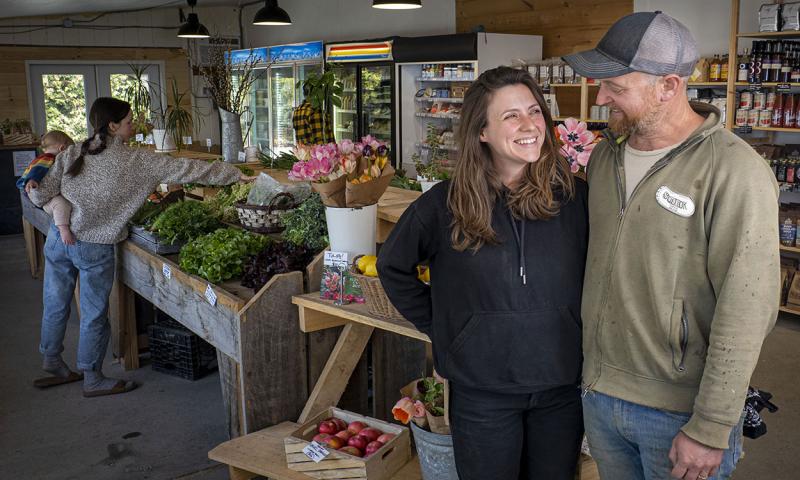
Agritourism combines agriculture and tourism, the two largest industries in South Dakota. The current study examined the challenges faced by agritourism operators in South Dakota and their adopted coping strategies. The findings revealed that South Dakota agritourism operators encounter four primary challenges: lack of business knowledge and skills, government regulations, time constraints, and financial concerns. These findings align with previous research on agritourism development (Moraru et al., 2016; Pegas, Ollenburg, and Tynon, 2013; Wang et al., 2022). The challenges have hindered or slowed the growth of South Dakota agritourism businesses to some extent. In some instances, these obstacles have caused operators to abandon ideas or opportunities for expansion. The results indicated that successful agritourism operations require farmers to cultivate skills beyond traditional farming expertise and navigate dual roles as both farmers and tourism entrepreneurs.
Extension’s unique position as a bridge between academic research and practical application makes it an ideal platform for supporting agritourism operators who face multiple challenges in developing their businesses (Arbogast et al., 2022; Norby & Retallick, 2012). Based on the interview results, we recommend three key roles that South Dakota Extension can play in supporting agritourism operators: educator, facilitator, and advocate.
First, as an educator, South Dakota Extension should focus on addressing the critical knowledge gaps identified in this study. Operators consistently reported struggling with business skills unique to agritourism, from creating business plans to providing customer service. Extension can develop targeted educational programs that help operators transition from traditional agricultural operations to customer-focused tourism enterprises. The educational programs can be delivered in person or online and may take the form of workshops, seminars, or one-on-one consultations. In addition, Extension can create a repository of online resources, including articles, videos, and webinars, that operators can access at their convenience. The resources should focus on topics essential to agritourism operators, including creating business plans, understanding market trends, improving customer relations, financial planning, and navigating grant writing and application processes.
It should be noted that agritourism is a novel concept in South Dakota, with both operators and local government officials facing knowledge gaps. As evidenced by Farmer 10’s experience that “agritourism is a new concept for the county board” and Farmer 2’s interaction with officials who “had no idea what regulations to implement,” there is a clear need for concurrent education of both stakeholder groups. Hence, Extension should involve both stakeholder groups (e.g., zoning officials, health inspectors, economic development staff, tourism development officers, agricultural development representatives, and agritourism operators) in training sessions, promote knowledge sharing, and encourage direct dialogue to foster collaboration and mutual understanding.
Second, South Dakota Extension should strengthen its role as a networking facilitator, connecting agritourism operators with each other and with relevant resources. The study revealed that operators actively seek peer connections for knowledge sharing and support. Extension can formalize these connections by organizing networking events (e.g., annual conference, field days), facilitating mentorship programs, and establishing a regional agritourism business directory and agritourism organizations. Such networks not only allow operators to learn from each other’s experiences and gain insights into best practices, but also help them address time and resource constraints through collaboration and shared learning.
Third, South Dakota Extension should serve as an advocate for agritourism operators by engaging with key stakeholders, including government entities, agricultural and tourism offices, and local economic development organizations. With eight out of 12businesses interviewed reporting significant regulatory hurdles, the need for advocacy support is evident. Extension can educate government officials about agritourism’s unique contributions to rural development and its specific operational needs, thereby promoting streamlined and appropriate regulations to support the sector’s growth. This effort may include recommending simplified permitting processes, clearer compliance guidelines, and reduced administrative burdens. A centralized office providing all the necessary licenses and information could encourage more farmers to diversify into agritourism. Additionally, Extension can assist operators in navigating complex regulatory requirements through training programs, pre-application consultations, and online resources (e.g., standardized templates and checklists), acting as a liaison between operators and government agencies to reduce barriers and facilitate compliance.
The implications of this research are particularly significant for South Dakota, given the dominance of agriculture in its economy and the relative novelty of agritourism. South Dakota Extension services have a unique opportunity to play a pivotal role in fostering this emerging industry. The three identified roles of Extension can be tailored to meet the specific needs of South Dakota’s agricultural community as they venture into agritourism. Future research should evaluate the effectiveness of Extension programs designed to fulfill these roles and identify best practices for supporting agritourism operators. Additionally, longitudinal studies could examine the long-term impact of Extension support on the success and sustainability of agritourism operations in South Dakota. While these implications are specific to South Dakota, they may offer insights for other regions with similar agricultural profiles and developing agritourism sectors. Comparative studies could assess the adaptability and effectiveness of these roles in diverse regional contexts.
References and Acknowledgements
References
- Arbogast, D., Eades, D., Goetz, S., & Pan, Y. (2022). Extension and tourism: Previous efforts, current trends, and the future. Journal of Extension, 60(2), Article 7.
- Barbieri, C. (2013). Assessing the sustainability of agritourism in the US: A comparison between agritourism and other farm entrepreneurial ventures. Journal of Sustainable Tourism, 21(2), 252–270.
- Braun, V., & Clarke, V. (2006). Using thematic analysis in psychology. Qualitative Research in Psychology, 3(2), 77–101.
- Brune, S., Knollenberg, W., & Vilá, O. (2023). Agritourism resilience during the COVID-19 crisis. Annals of Tourism Research, 99, Article 103538.
- Campbell, J. M., & Kubickova, M. (2020). Agritourism microbusinesses within a developing country economy: A resource-based view. Journal of Destination Marketing & Management, 17, Article 100460.
- Ellsworth, J., & Schlechter, P. (2023). Growing agritourism in South Dakota.
- Flanigan, S., Blackstock, K., & Hunter, C. (2014). Agritourism from the perspective of providers and visitors: a typology-based study. Tourism Management, 40, 394–405.
- Guest, G., Bunce, A., & Johnson, L. (2006). How many interviews are enough? An experiment with data saturation and variability. Field Methods, 18(1), 59–82.
- Guest, G., Namey, E., & Chen, M. (2020). A simple method to assess and report thematic saturation in qualitative research. PLoS One, 15(5), Article e0232076.
- Hennink, M. M., Kaiser, B. N., & Marconi, V. C. (2017). Code saturation versus meaning saturation: How many interviews are enough?. Qualitative Health Research, 27(4), 591–608.
- Jack, C., Adenuga, A. H., Ashfield, A., & Mullan, C. (2021). Understanding the drivers and motivations of farm diversification: Evidence from Northern Ireland using a mixed methods approach. The International Journal of Entrepreneurship and Innovation, 22(3), 161–176.
- Lucha, C., Ferreira, G., Walker, M. A., & Groover, G. E. (2019). A geographic analysis of agritourism in Virginia. (Publication AAEC-62P).
- McGehee, N. G., & Kim, K. (2004). Motivation for agritourism entrepreneurship. Journal of Travel Research, 43(2), 161–170.
- Moraru, R.-A., Ungureanu, G., Bodescu, D., & Donosă, D. (2016). Motivations and challenges for entrepreneurs in agritourism. Lucrări Ştiinţifice, 59(1), 267–272.
- Nickerson, N. P., Black, R. J., & McCool, S. F. (2001). Agritourism: Motivations behind farm/ranch business diversification. Journal of Travel Research, 40(1), 19–26.
- Noem, K. (n.d.). Advancing agriculture. South Dakota Governor.
- Norby, M. S., & Retallick, M. S. (2012). Iowa consumer trends and participation in agritourism activities. Journal of Extension, 50(2), Article 64.
- O’Connor, C., & Joffe, H. (2020). Intercoder reliability in qualitative research: debates and practical guidelines. International Journal of Qualitative Methods, 19, 1–13.
- Pegas, F. D., Ollenburg, C., & Tynon, J. F. (2013). Cattle ranchers and agritourism in Oregon, USA: Motivations, challenges and opportunities from the landowner’s perspective. Tourism Recreation Research, 38(1), 43–54.
- Phillip, S., Hunter, C., & Blackstock, K. (2010). A typology for defining agritourism. Tourism Management, 31(6), 754–758.
- Pitas, N., & Chen, Y. (2023). Go pick me out a winner: Visitor perceptions and priorities regarding operational attributes at U-pick farms in western New York. Journal of Extension, 61(1), Article 12.
- Pratt, S., Magbalot-Fernandez, A., & Ohe, Y. (2022). Motivations and constraints of developing agritourism under the challenges of climate change: The case of Samoa. International Journal of Tourism Research, 24(4), 610–622.
- Quella, L., Chase, L., Conner, D., Reynolds, T., Wang, W., & Singh-Knights, D. (2021). Visitors and values: A qualitative analysis of agritourism operator motivations across the US. Journal of Agriculture, Food Systems, and Community Development, 10(3), 287–301.
- Schilling, B. J., Marxen, L. J., Heinrich, H. H., & Brooks, F. J. A. (2006, October). The opportunity for agritourism development in New Jersey. (Report prepared for the New Jersey Department of Agriculture).
- Sharpley, R. (2002). Rural tourism and the challenge of tourism diversification: the case of Cyprus. Tourism Management, 23(3), 233–244.
- Sharpley, R., & Vass, A. (2006). Tourism, farming and diversification: An attitudinal study. Tourism Management, 27(5), 1040–1052. 5
- South Dakota Department of Tourism. (n.d.). South Dakota agritourism.
- Tew, C., & Barbieri, C. (2012). The perceived benefits of agritourism: The provider’s perspective. Tourism Management, 33(1), 215–224.
- Tourism Economics. (2023, December). 2023 Economic impact of tourism in South Dakota.
- United States Department of Agriculture. (2024, February). 2022 Census of Agriculture: United States Summary and State Data. Volume 1: Geographic Area Series, Part 51 (AC-22-A-51).
- Van Sandt, A., Low, S. A., & Thilmany, D. (2018). Exploring regional patterns of agritourism in the U.S.: What’s driving clusters of enterprises?. Agricultural and Resource Economics Review, 47(3), 592–609.
- Wang, W., Hollas, C. R., Chase, L., Conner, D., & Kolodinsky, J. (2022). Challenges for the agritourism sector in the United States: Regional comparisons of access. Journal of Agriculture, Food Systems, and Community Development, 11(4), 61–76.
Authors contribution
Both authors contributed to developing research ideas, conceptualizing the study, data collection, and data analysis. Xu Li wrote the original draft of the manuscript. Peggy Schlechter reviewed and revised the manuscript and provided intellectual input throughout the study. Both authors reviewed and approved the final manuscript.
Conflict of interest
The authors declare no conflict of interest.
Data availability
The data are not publicly available due to privacy/ethical restrictions, as they contain information that could compromise the privacy of research participants.
Funding Acknowledgements
This project was funded by the 2024 Research, Scholarships, and Creative Activity (RSCA) Challenge Grant, South Dakota State University.