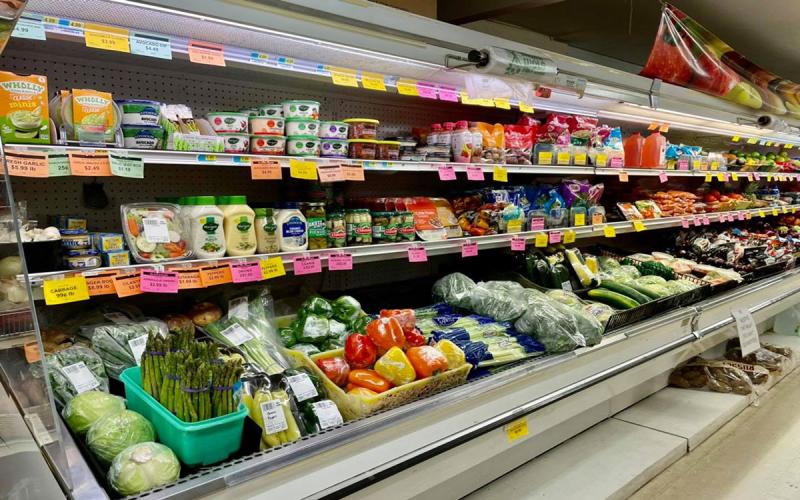
According to the South Dakota Municipal League, there are 195 municipalities in the state that have fewer than 500 people, and 97 municipalities that have between 500 and 5,000 people. These small communities often rely on a single grocery store to meet residents' basic food needs. Rural grocery stores are pillars of small communities where people can meet up on the weekend to share a donut, grab a gallon of milk, or do their weekly shopping. Throughout history, local markets have been the lifeblood of communities. Yet in recent years, that steady pulse has weakened as economic and social changes challenge their survival, leaving many communities scrambling to revive what was once their economic heart.
Rural grocery stores have been facing significant challenges for some years. While data on grocery store closures in South Dakota is limited, individual communities illustrate the challenges confronting rural grocers. For example, three small communities in eastern South Dakota - Scotland, Tripp, and Tyndall - experienced the loss of their local grocery stores in 2017 (Peetz, 2017). Despite reopening after being purchased by a local entrepreneur later that year, the stores continued to operate at a financial loss. These cases highlight the challenges many rural communities face in maintaining access to healthy food and other essential goods. Data from neighboring states suggest that the decline of rural grocery stores is a widespread regional issue. Since 2014, North Dakota has lost 47 grocery stores in rural areas with populations of fewer than 2,100 people (Hodur, 2025). In Nebraska, the number of grocery stores in towns with populations under 10,000 declined by 54 between 2000 and 2025 (Alamdari, 2025). In Kansas, 105 rural grocery stores closed between 2008 and 2018 (KSU, 2026). Several factors contribute to the decline and closure of small-town grocery stores. In addition to competition from dollar stores and succession challenges, rural grocers face a variety of operational obstacles that threaten their long-term viability. Cramer (2025) notes that small-town grocery stores face unique challenges that differ from those of larger retailers, including workforce constraints and the need to continually improve operations while serving relatively small customer bases. Because independent stores serve fewer customers and purchase products in lower volumes than large chain retailers, they often have less flexibility in pricing and profitability. Bailey (2010) adds that population decline compounds these challenges by reducing the customer base needed to sustain a grocery store over time. The average age of grocery store owners continues to increase, and unlike in previous generations, many do not have family members willing or able to take over the business. In addition, rural grocery stores that have been present in a community for decades are being pushed out by dollar stores. When a grocery store leaves a community, food deserts expand in already isolated areas, making access to affordable and nutritious food more difficult. Understanding the factors contributing to rural grocery store decline and the resulting impacts on rural populations is essential for identifying strategies that strengthen food access, support local economies, and preserve community vitality.
Prices of all things have been steadily increasing over the past decade. During that time, families have been looking at ways to save money everywhere they can. One of the things that helps families save money is the presence of discount stores or big box stores. While it wasn’t always feasible for rural populations to travel hundreds of miles round trip to shop at a big box store, they did it to save money. Many rural families drove out of town to make large purchases to supplement their weekly shopping at the hometown grocery store. The dollar store franchises realized this niche and started flooding the rural markets. Feng (2023) points out that from 2008 to 2020, dollar stores were the fastest growing retailers. In fact, “among households living in rural areas, expenditure shares at grocery stores decreased from 57.4% in 2008 to 50.3% in 2020, [and] household spending at dollar stores in rural areas increased from 2.5% in 2008 to 5.0% in 2020” (Feng, 2023). Because of their small populations, many rural South Dakota communities cannot support two food retailers, and local grocery stores often lose out to dollar stores, which generally offer lower prices that they cannot compete with. “Grocery stores run on very thin margins, typically one or two percent. Because perishable food is generally a money-loser, grocers rely on sales of packaged foods and other goods - all the items sold in the center aisles - to cover their overhead and stay afloat” (Mitchell, 2023). Those “center aisle” products are the items that dollar stores can sell for significantly lower prices, ultimately hurting the small grocery store. Together, these findings suggest that dollar store expansion may undermine the financial sustainability of independent rural grocers.
The influx of dollar stores is not all bad for rural America. Some communities that had earlier lost a grocery store and had therefore become a food desert are now being supplemented by a dollar store. Because of their business model, dollar stores can stay open “where the local grocery store had long since closed. This has the potential to actually improve food access in these remote places” (Myran, 2018). Where residents once had to drive to neighboring towns to purchase food, they can now drive just down the road to fulfill their needs. People who used to drive to big-box stores to purchase toiletries and other necessities are now staying in their rural communities and purchasing those items at a local dollar store instead. Because they are not leaving town, they may also buy their weekly groceries at the local grocery store. However, more research is needed to understand how the presence of dollar stores affects purchasing patterns and the positive long-term sustainability of rural grocery stores.
A large number of independent grocers have owned and operated a store in a rural community for most of their lives, often inheriting the business from parents or other relatives. Rural grocery stores have long served as providers of food and household goods in small communities. Despite significant changes over time, grocery stores remain essential in rural areas. Unfortunately, many of the individuals who run these stores are aging and do not have family members who are willing to take over the business. Bailey (2010) states that a “lack of available small business capital in rural communities may also prevent younger or new entrepreneurs from beginning a grocery business.” As a result, many store owners face challenges not only in identifying a successor but also in finding a qualified buyer. According to Estes (2016), younger generations are moving away or going to college, with little to no intention of returning to the rural communities where they grew up. “Sixty-three percent of [rural] store owners said they do not intend to own their store 10 years from now. But these intentions haven't resulted in plans” (Hoelting, 2026). Transition planning is a vital step in keeping community grocery stores operational and profitable for years to come. Several transition options exist, depending on what works best for the owners and the community. These options may include family succession, employee or cooperative ownership models, or the sale of the business to an outside entrepreneur. A change in ownership often creates opportunities to modernize the business and introduce fresh ideas, and Hoelting (2026) suggests that new owners should focus on the shopping experience. For example, stores may differentiate themselves through a deli, a strong meat department, or specialty bakery items. Stores can also capitalize on locally produced foods and agricultural products. In one study, Hoelting (2026) found that “almost 80 percent of grocery stores surveyed said that they use local farmers as either major or minor suppliers for fresh produce.” It is not always easy to breathe new life into a community grocery store, but with the right attitude, a change in ownership can help revitalize what is already there. Although research on transition planning for rural grocery stores is limited, Kansas State University's Rural Grocery Initiative provides valuable information and support for store owners considering succession and ownership transitions.
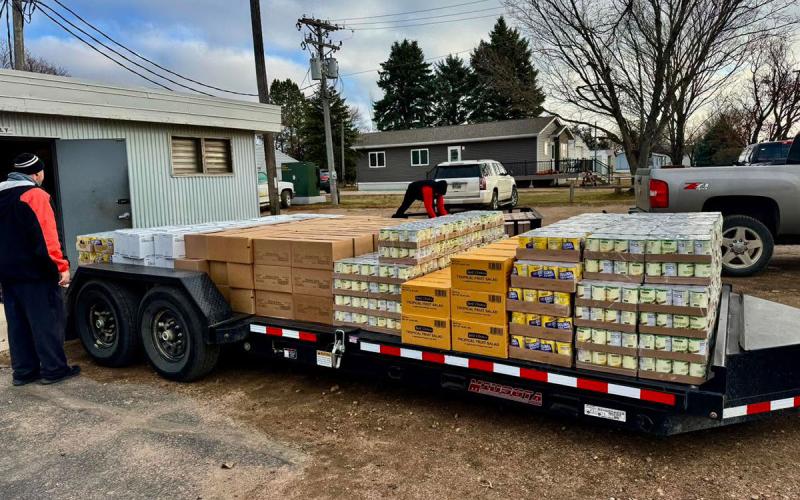
Whenever a rural grocery store is lost, regardless of the reason, a community faces challenges that extend far beyond the loss of a business. While dollar stores may provide convenient access to basic household goods, they rarely offer the variety of fresh and nutritious foods available at a grocery store. As local food retailers disappear, communities face growing challenges in maintaining reliable access to healthy food. Working families, older adults, and individuals with disabilities often cannot easily travel to neighboring towns to purchase food. Food deserts have existed for years in rural parts of the country, and South Dakota is not exempt from this. “Nearly 54 million Americans—about one in six—live in food deserts, where poor access to grocery stores and low income drive a growing crisis, according to the U.S. Department of Agriculture” (Reisinger, 2025). In the heart of the United States, where much of the nation’s food is grown or raised, populations continue to see a decline in accessible food options. Rather than sourcing food locally, many grocery stores rely on products delivered through regional distribution networks. Both Reisinger (2025) and Morton (2007) suggest that rural residents face persistent barriers to food access, although they emphasize different aspects of the problem. Reisinger highlights the vulnerability of regional food distribution systems, while Morton found that many rural grocery stores offered a more limited variety of quality foods and often charged higher prices than larger retailers. Because many rural communities depend on products delivered through regional distribution networks rather than locally sourced goods, disruptions in the supply chain can delay deliveries, increase prices, and reduce food quality by the time products reach consumers. These challenges are particularly significant for low-income households, which often have fewer resources to overcome barriers to food access. “For most rural communities facing the loss of a local grocery store, failure is not an option. Allowing a local store to close and remain closed until the community or the economy rebounds does nothing but place the community on a path for further depopulation and economic decline” (Bailey, 2010).
Although grocery store closures affect entire communities, the consequences are often most severe for low-income households. According to the National Institute on Minority Health and Health Disparities (2026), the percentage of the South Dakota population living below the poverty line has decreased over the last few years; however, about 7.5% of South Dakotans are still living at or below the poverty line. In some rural communities, more than 40% of residents live in poverty, while nine South Dakota counties have poverty rates of 25% or higher. These poverty rates are particularly important when examining access to healthy food in the state’s rural communities. Byker Shanks (2022) found that households with incomes below 185% of the federal poverty threshold face the highest risk of food insecurity. According to the USDA, food insecurity “is the limited or uncertain availability of nutritionally adequate and safe foods, or … uncertain ability to acquire acceptable foods in socially acceptable ways.” People in low-income households may not have the means to travel to a nearby town to purchase healthy food. And although most individuals know what a healthy and balanced diet should look like, one study found that it was hard for families to “feed their family meals that were filling, affordable, healthy, and accommodated the needs of everyone in the household” (Byker Shanks, 2022). People in this situation are more likely to purchase lower quality food at a convenience store or dollar store rather than try to figure out a way to purchase healthy foods outside of their town (Ver Ploeg, 2010). Access to a local grocery store can significantly improve the availability of healthy food options for rural residents. When local grocery stores remain open, individuals and families have consistent access to nutritious foods that support healthier diets and improve overall community well-being.
While food access is one of the most immediate consequences of grocery store closures, the impacts extend beyond household well-being and affect the economic vitality of entire communities. Grocery stores often function as anchor businesses in rural communities. “The local grocery store is an integral institution of rural communities and in rural life. Not only does the local grocery store provide the sustenance of life, it fills the roles of economic driver, community builder, employer and meeting place” (Bailey, 2010). As a result, the closure of a grocery store can lead to job losses, reduced tax revenues, and increased economic leakage as residents spend money in neighboring communities. The presence of a grocery store can also influence a community's ability to attract and retain residents and businesses.
Hoelting (2026) argues that community support is essential to the long-term sustainability of rural grocery stores. Many people do not realize that traveling to purchase food can be more expensive than buying locally, even if prices at the local store are slightly higher. Shopping at a local grocery store saves both travel time and fuel costs. In addition, keeping local dollars in the community helps support businesses that residents rely on every day. Communities need to “decide that having a source for healthy food is important. When communities help businesses plan for the future, they can prevent their town from becoming a food desert” (Hoelting, 2026).
Local grocery stores provide far more to a community than just access to food. They create jobs, generate tax revenue that supports local services, help attract and retain residents, and serve as informal gathering places that strengthen community connections. As a result, grocery stores contribute significantly to both the economic and social health of rural communities. In rural South Dakota, grocery stores play a critical role in maintaining food access, economic stability, and social connectedness; however, independent grocers face numerous challenges, including competition from dollar stores, population decline, and difficulties with ownership transitions. Research suggests that the loss of a grocery store can contribute to the expansion of food deserts and reduce access to healthy foods, particularly for vulnerable populations. While existing studies have documented many of the challenges facing rural grocery stores, limited research has focused specifically on South Dakota and the strategies that are most effective for sustaining grocery stores in the state’s rural communities. Additional South Dakota-specific research could help preserve rural grocery stores and strengthen the vitality of rural communities across the state.
Sources
- Alamdari, Natalia. Grocery Goliath: Small-Town Nebraska Grocery Stores Disappear as Dollar General Booms. Nebraska Public Media, 13 July 2025. Accessed 8 July 2026.
- Bailey, Jon M. Rural Grocery Stores: Importance and Challenges. Center for Rural Affairs, Oct. 2010. Accessed 8 July 2026.
- Byker Shanks, Carmen, et al. Food Insecurity in the Rural United States: An Examination of Struggles and Coping Mechanisms to Feed a Family among Households with a Low-Income. Nutrients, vol. 14, no. 24, 2022, p. 5250. MDPI. Accessed 24 July 2026.
- Cramer, Rachel. Small Town Grocery Stores Face Unique Challenges. Some Midwest States Are Trying to Help. IPM Newsroom, 11 Mar. 2025. Accessed 8 July 2026.
- Estes, Hanna K., et al. The Rural Brain Drain and Choice of Major: Evidence from One Land Grant University. NACTA Journal, vol. 60, no. 1a, 2016, pp. 32–39. Accessed 17 July 2026.
- Feng, Wenhui, Elina T. Page, and Sean B. Cash. Dollar Stores and Food Access for Rural Households in the United States, 2008–2020. American Journal of Public Health, vol. 113, no. 3, 2023, pp. 331–336.
- Health Disparities Data Portal. National Institute on Minority Health and Health Disparities, U.S. Department of Health and Human Services. Accessed 24 July 2026.
- Hoelting, Joyce. The Future of Rural Grocery Stores. University of Minnesota Extension, University of Minnesota. Accessed 24 July 2026.
- Hodur, Nancy. A Roadmap to Success for Rural Grocers: The North Dakota Rural Access Distribution (RAD) Cooperative's Journey to Sustainable Food Access for Residents in Walsh County, North Dakota. Center for Social Research, North Dakota State University, Feb. 2025.
- Measurement. Food Security in the U.S., Economic Research Service, U.S. Department of Agriculture. Accessed 24 July 2026.
- Mitchell, Stacy, et al. The Dollar Store Invasion: Communities Are in Revolt, But the Chains’ Predatory Tactics Also Demand Federal Action. Institute for Local Self-Reliance, Mar. 2023. Accessed 8 July 2026.
- Morton, Lois W., and Blanchard, Troy C. 2007. Starved for Access: Life in Rural America’s Food Deserts. Rural Realities, Volume 1, Issue 4.
- Myran, Caroline. How Dollar Stores Are Changing Downtown America. New Venture Advisors, 25 July 2018. Accessed 8 July 2026.
- National Institute on Minority Health and Health Disparities. Data Portal. HDPulse, National Institutes of Health. Accessed 29 July 2026
- Overview of Municipal Government in SD. South Dakota Municipal League, South Dakota Municipal League. Accessed 29 July 2026.
- Peetz, Caitlynn. Struggling South Dakota Small-Town Grocery Stores Could Soon Close. InForum, 6 Oct 2017. Accessed 29 July 2026.
- Reisinger, Brian. Commentary: Food Near Me – The Ironic Tragedy of Rural Food Deserts. The Daily Yonder, 15 July 2025. Accessed 3 June 2026.
- Store Closures. Rural Grocery Initiative, Center for Engagement and Community Development, Kansas State University. Accessed 8 July 2026.
- Ver Ploeg, Michele. Access to Affordable, Nutritious Food Is Limited in Food Deserts. Amber Waves, U.S. Department of Agriculture, Economic Research Service, Mar. 2010.