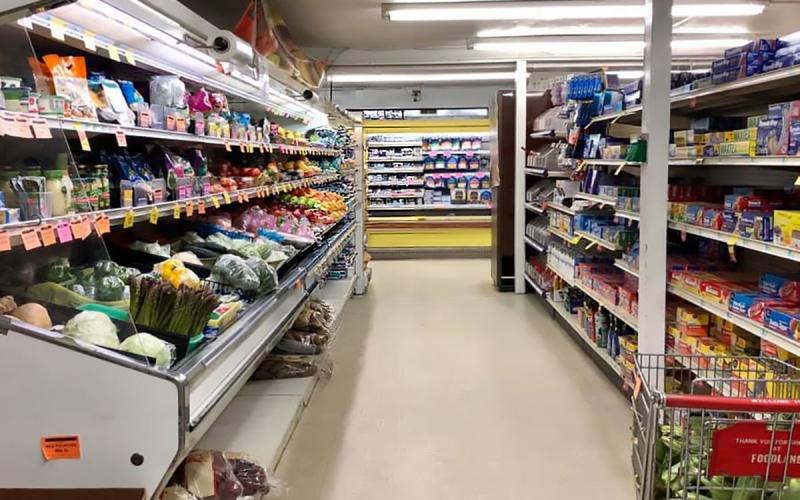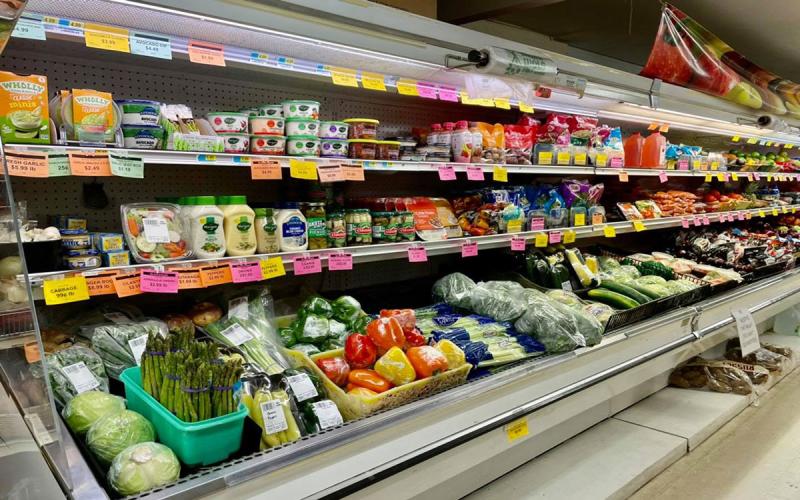
According to the South Dakota Municipal League, 195 municipalities in South Dakota have fewer than 500 people, and another 97 municipalities have populations between 500 and 5,000. Many of these communities rely on a single grocery store to meet basic food needs. Rural grocery stores are pillars of small communities where people can meet up on the weekend to share a donut, grab a gallon of milk, or do their weekly shopping. For generations, local markets have been a cornerstone of small-town life. Yet economic and social changes are making it increasingly difficult for these businesses to survive.
Rural grocery stores have been facing significant challenges for many years. While data on grocery store closures in South Dakota is limited, individual communities illustrate the pressures confronting rural grocers. In 2017, the communities of Scotland, Tripp, and Tyndall all lost their local grocery stores. Although the stores later reopened under new ownership, they continued to operate at a financial loss. Their experience reflects a broader reality across the Midwest: keeping a grocery store open is becoming increasingly difficult.
The issue extends beyond South Dakota. Since 2014, North Dakota has lost dozens of grocery stores in rural communities. Nebraska has also seen a decline in grocery stores serving smaller towns, and Kansas experienced more than 100 rural grocery store closures over a ten-year period. These trends suggest that the decline of rural grocery stores is not isolated to one state, but part of a broader regional challenge.
Several factors contribute to the decline of small-town grocery stores. Unlike large chain retailers, independent grocers serve fewer customers and purchase products in smaller volumes, limiting their ability to be competitive on price. Also, population decline in many areas reduces the number of shoppers available to support a local store.
As prices have increased over the past decade, many families have looked for ways to save money wherever they can. Discount retailers and big-box stores have become attractive options for consumers trying to stretch household budgets. For years, rural residents traveled to larger communities to make major purchases while doing some of their shopping at their hometown grocery store. Eventually, dollar store chains recognized an opportunity and expanded rapidly into rural markets.
The growth of dollar stores has changed shopping habits in many rural communities. Between 2008 and 2020, dollar stores were among the fastest-growing retailers in the country. During that same period, the share of household spending at traditional grocery stores declined while spending at dollar stores increased.
For many rural grocery stores, this trend presents a serious challenge. Grocery stores operate on very thin profit margins, often only one or two percent. While customers may think of fresh produce, meat, and dairy as the core of a grocery store, those departments often generate the lowest profits. Grocery stores rely on sales of packaged foods, household goods, and other center-aisle products to help cover operating expenses and remain viable. Those same products are frequently sold by dollar stores, often at prices independent grocers cannot match.
In many rural communities, there simply are not enough customers to support two food retailers. When shoppers choose to purchase more of their everyday household goods from a dollar store, local grocery stores lose an important source of revenue.
However, the rise of dollar stores is not entirely negative. In some communities that had previously lost their grocery store and therefore, became food deserts, dollar stores have provided access to basic food items and household necessities. Residents who once had to travel to neighboring towns for everyday products can now purchase some of those items closer to home. In some cases, people who stay in town to buy household goods rather than travel to a big box store, may also purchase more groceries locally. However, more research is needed to better understand how dollar stores affect shopping patterns and the long-term sustainability of rural grocery stores.
Another major challenge facing rural grocery stores is ownership transition. Many independent grocers have owned and operated their stores for most of their lives, often taking over a business that has been in the family for generations. Today, many of those owners are approaching retirement age and facing a difficult reality: they don’t have a clear successor.
Unlike previous generations, many younger family members are not interested in operating a grocery store. Young people often leave rural communities for education or employment opportunities and may have little intention of returning. Even when someone is interested in purchasing a store, access to capital can be a barrier. Limited availability of small business financing in rural communities may discourage new entrepreneurs from pursuing ownership opportunities.
As a result, many store owners are entering retirement without a clear succession plan. Finding a qualified buyer can be just as challenging as finding a family member willing to continue the business. Without a transition plan, communities risk losing their local grocery store when an owner decides to step away.
Taken together, competition from dollar stores, shrinking customer bases, and ownership succession challenges create significant obstacles for rural grocery stores. These are not challenges that most large retailers face to the same degree. For independent grocers in small towns, even small changes in consumer spending or population can have a major impact on long-term viability.
Despite these difficulties, rural grocery stores continue to serve a vital role in their communities. They remain places where residents purchase food, connect with neighbors, and support the local economy.
In the next article, we'll examine what happens when a rural community loses its grocery store and why the impacts extend far beyond the checkout lane.
Sources
- Overview of Municipal Government in SD. South Dakota Municipal League, South Dakota Municipal League. Accessed 29 July 2026.
- Peetz, Caitlynn. Struggling South Dakota Small-Town Grocery Stores Could Soon Close. InForum, 6 Oct 2017. Accessed 29 July 2026.
- Alamdari, Natalia. Grocery Goliath: Small-Town Nebraska Grocery Stores Disappear as Dollar General Booms. Nebraska Public Media, 13 July 2025. Accessed 8 July 2026.
- Cramer, Rachel. Small Town Grocery Stores Face Unique Challenges. Some Midwest States Are Trying to Help. IPM Newsroom, 11 Mar. 2025. Accessed 8 July 2026.
- Hodur, Nancy. A Roadmap to Success for Rural Grocers: The North Dakota Rural Access Distribution (RAD) Cooperative's Journey to Sustainable Food Access for Residents in Walsh County, North Dakota. Center for Social Research, North Dakota State University, Feb. 2025.
- Feng, Wenhui, Elina T. Page, and Sean B. Cash. Dollar Stores and Food Access for Rural Households in the United States, 2008–2020. American Journal of Public Health, vol. 113, no. 3, 2023, pp. 331–336.
- Mitchell, Stacy, et al. The Dollar Store Invasion: Communities Are in Revolt, But the Chains’ Predatory Tactics Also Demand Federal Action. Institute for Local Self-Reliance, Mar. 2023. Accessed 8 July 2026.
- Myran, Caroline. How Dollar Stores Are Changing Downtown America. New Venture Advisors, 25 July 2018. Accessed 8 July 2026.
- Hoelting, Joyce. The Future of Rural Grocery Stores. University of Minnesota Extension, University of Minnesota. Accessed 24 July 2026.