Diseases & Disorders
All Diseases & Disorders Content
COVID-19 and Livestock: Is there a connection?
When reports of the COVID-19 pandemic first hit the US, very few people had likely heard of coronaviruses—with some notable exceptions: cattle producers and their veterinarians.
Best Management Practices for Soybean Production
This is your unbiased, research-based guide to soybean production to help increase yield, reduce input costs and protect your investment.
Best Management Practices for Soybean Production
This is your unbiased, research-based guide to soybean production to help increase yield, reduce input costs and protect your investment.
Best Management Practices for Soybean Production
This is your unbiased, research-based guide to soybean production to help increase yield, reduce input costs and protect your investment.
Best Management Practices for Soybean Production
This is your unbiased, research-based guide to soybean production to help increase yield, reduce input costs and protect your investment.
July 2019 Climate Outlook: Challenges Continue
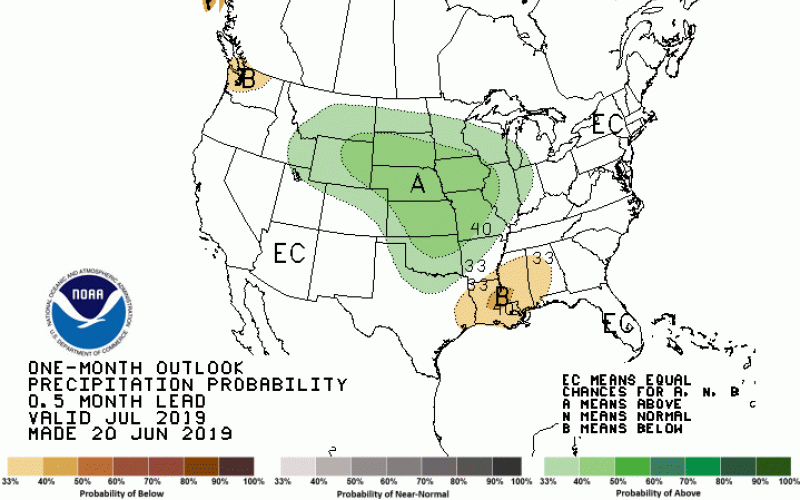
This year’s seasonal pattern of wetter than average conditions is projected to continue through July and the rest of the summer season. The latest climate outlook, released June 20, 2019, shows an increased chance of wetter than average conditions in the next one to three months for the state of South Dakota.
Wet Conditions Likely Into Fall Season
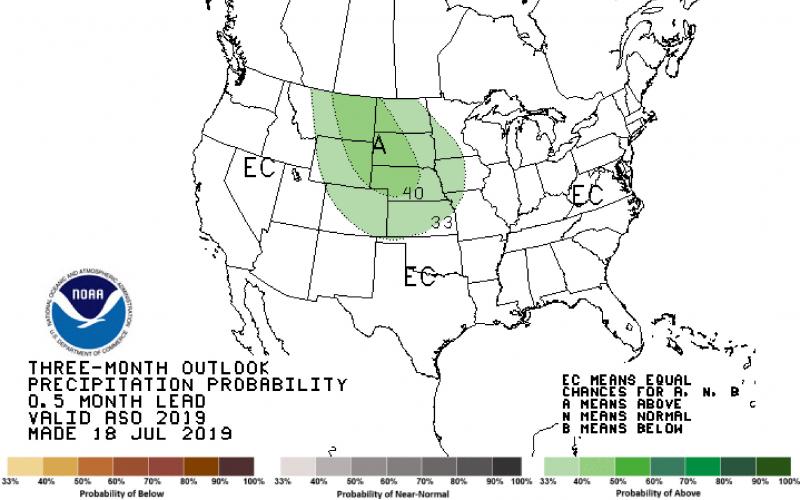
Many locations in South Dakota have already received as much precipitation this year as they do in an entire average year. The latest climate outlook from NOAA’s Climate Prediction Center shows increased chances of wetter than average conditions to continue into the fall season.
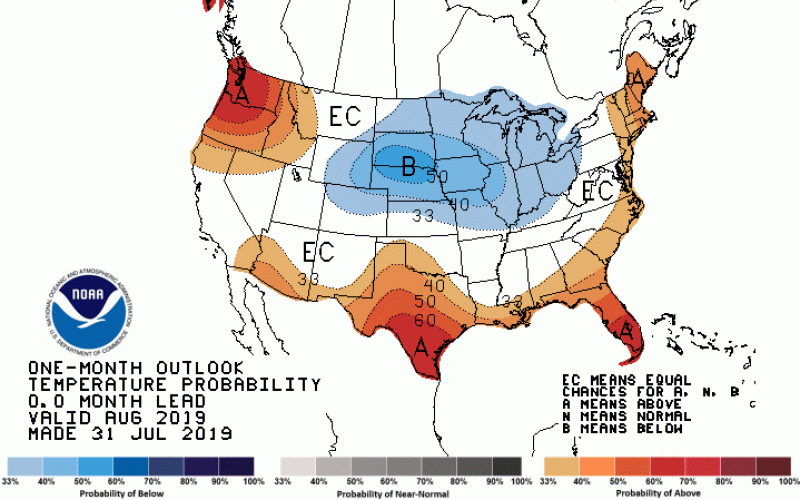
August 2019 Climate Outlook: Cool and Wet
According to the latest climate outlook update, odds are favoring that August 2019 will be cooler than average. The update was released by NOAA’s Climate Prediction Center on July 31, 2019.
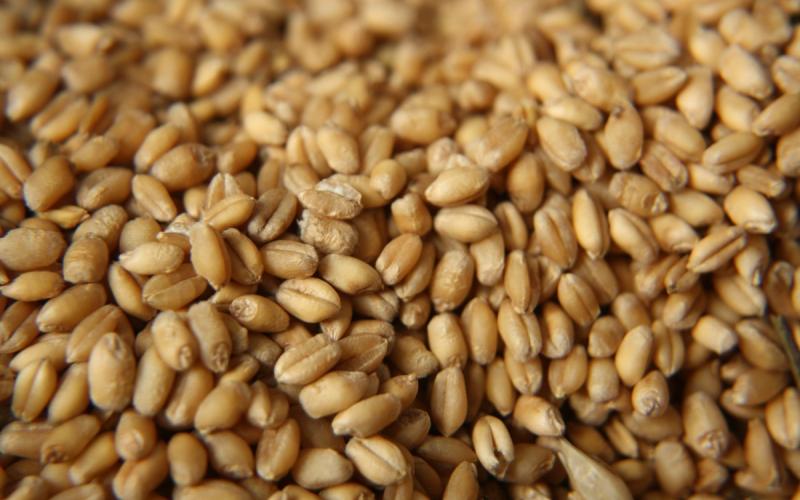
Fungicide Seed Treatments for Winter Wheat
As producers are preparing to plant winter wheat, one of the decisions to make is whether to use a fungicide seed treatment, and if the answer is yes, which product to use.
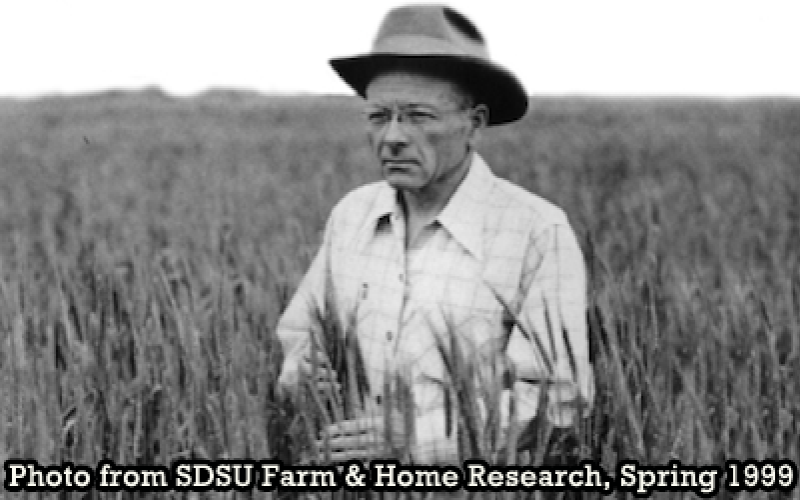
McFadden and Borlaug: Pioneering Rust-Resistant Wheat
During a brief period of time in the Dakota Territory in the late 1800’s, wheat acreage increased from just over 100,000 acres to well over a million acres. During one year in the height of this heyday, 1897, it has been stated that two-thirds of the world’s wheat was shipped from present-day Eureka, SD, and wagons bearing the crop rolled in from as far as 75 miles away.