Written collaboratively by Connie Strunk, Madalyn Shires, and Anna Lagerhausen.
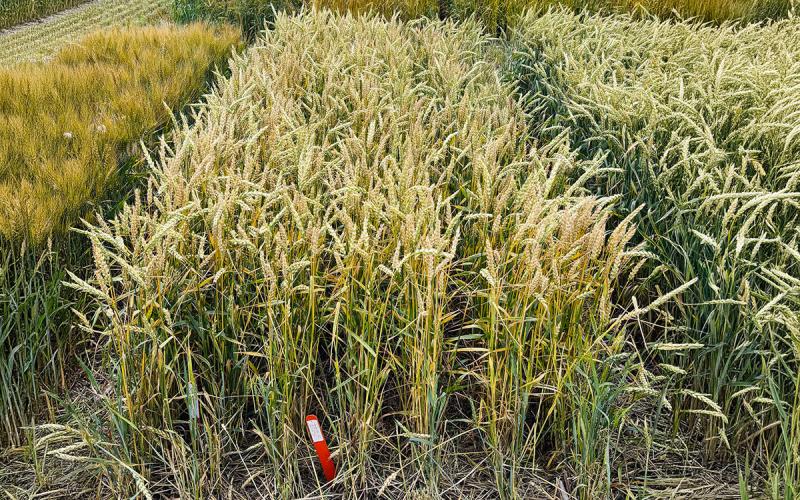
Wheat streak mosaic virus (WSMV) is one of the most damaging viral diseases of winter wheat in the Great Plains. There are no in-season treatments that cure virus-infected wheat. WSMV is transmitted by the wheat curl mite, a microscopic pest that survives and spreads by moving among living grass hosts. Controlling volunteer wheat and grassy weeds is an important management step. In this article, we present information about pre-plant and post-planting management in winter wheat fields. It is important to understand that management of volunteer plants and grassy weeds should continue after plant due to the high disease pressure in 2025 and 2026 (Figure 1).
Breaking Down the Green Bridge
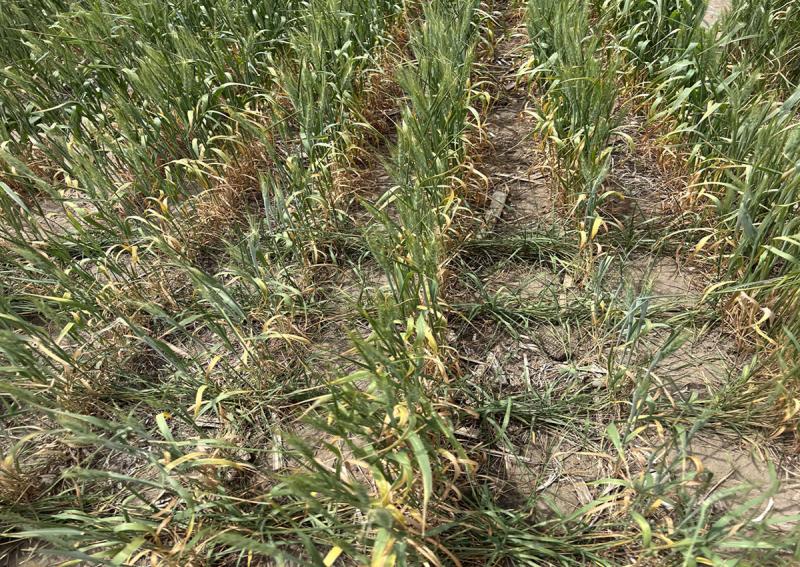
All plant viruses need a living host to survive. WSMV can only survive in living plant tissue, not in residue or soil. Wheat curl mites (vector) must feed on infected plants to acquire and transmit the virus. Volunteer wheat emerging after grain harvest is often the main source of inoculum (Figure 2), but numerous grassy weed species and volunteer corn as well as sorghum can harbor mites and virus. Hail events, harvest losses, or moisture following harvest can lead to abundant volunteer wheat growth. If this volunteer wheat becomes infected and remains alive until winter wheat emerges, mites can move directly into the new crop and transmit WSMV.
Why Weed Control Matters
Grassy weeds act as reservoirs for wheat curl mites. Fields, field borders, roadside ditches, and non-crop areas containing volunteer cereals or grassy weeds can increase the risk of fall infection.
Effective weed control accomplishes two important goals:
- Eliminates host plants that support wheat curl mite populations.
- Removes living tissue needed for virus survival between crops.
When volunteer wheat and grassy weeds are allowed to persist, they provide a continuous pathway for virus and mite survival from one wheat crop to the next.
Timing Is Critical
Volunteer wheat and grassy weeds should be controlled at least two weeks before planting to eliminate the green bridge and disrupt the wheat curl mite life cycle. It is recommended to allow even more time when herbicides are used because mites may survive temporarily on green plant tissue until plant death is complete. A well-timed burndown program can greatly reduce the risk of mites moving from dying hosts into newly emerged winter wheat.
After-Plant Management

We have done a great job controlling volunteer wheat and grassy weeds before planting has taken place, but we need to continue controlling those weeds and volunteers until we receive a killing frost. It has been shown in other states that WSMV and mites are able to continue moving and feeding on crops for several weeks to months after planting. It is recommended in years where we have had high disease pressure in the season (like 2025 and 2026), that proactive weed and volunteer crops management continue until all plant material is no longer green. In fact, we found symptomatic volunteer wheat in the second week of October 2026 showing that the mites are actively feeding and moving the virus well after winter wheat planting. Based on preliminary research, it appears that WSMV is overwintering primarily in winter wheat, so it is very important to reduce the risk of infection in the fall to slow the movement of the disease in the 2027 growing season.
Planting Date Also Influences Risk
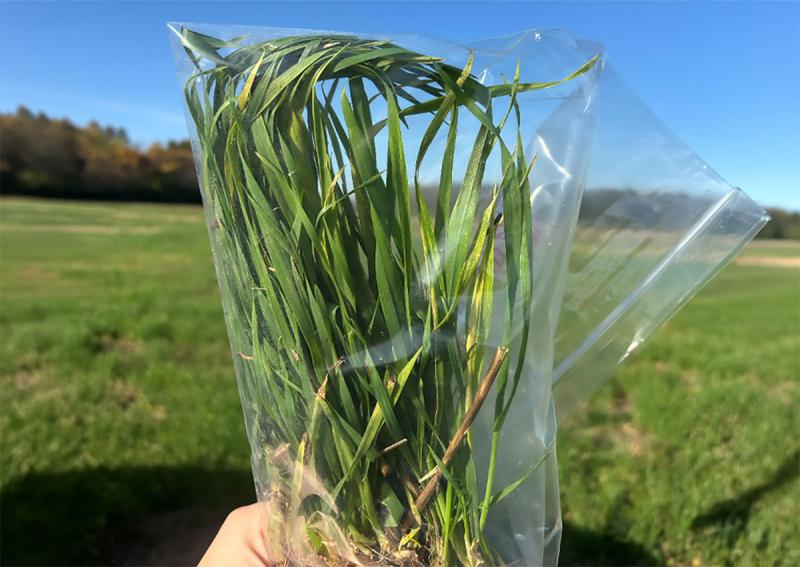
Early-planted winter wheat faces a greater risk of WSMV infection because wheat curl mites remain active during warm fall conditions (Figure 3). Emerging wheat becomes an attractive host when volunteer wheat and grasses are still present nearby.
Delaying planting until recommended dates can reduce opportunities for mite movement and virus transmission. In South Dakota, avoiding excessively early winter wheat planting has long been recognized as an important management practice for reducing disease risk.
Management Practices
Management practices which can further reduce WSMV risk:
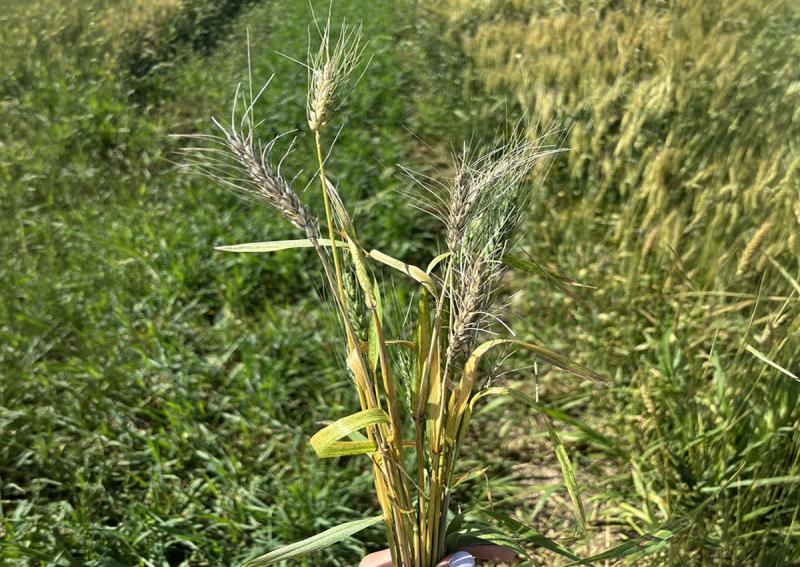
- Plant wheat varieties with tolerance or resistance to WSMV (Figure 4).
- Rotate to broadleaf crops when feasible to interrupt host availability.
- Monitor fields after hailstorms or harvest losses that may encourage volunteer wheat growth.
- Manage grassy weeds in field borders and other adjacent areas when possible paying special attention to late-season grasses which were not sprayed out the previous year.
- Eliminate volunteer wheat and other green bridges that allow mites and the virus to persist between seasons.
- Reach out to the Plant Diagnostic Clinic for confirmation of disease so that more robust management plans can be built.
Take-Home Message
When it comes to wheat streak mosaic virus, prevention is far more effective than reaction. Once wheat becomes infected, no fungicide or other in-season treatment can eliminate the virus. Plan to control volunteer wheat and grassy weeds, eliminate the green bridge, and avoid planting wheat early. By integrating weed management with disease prevention, producers can significantly reduce the risk of WSMV and protect winter wheat yield potential.